Top

Bitcoin-Yen pair sets new record amid pressure on Japan’s fiat currency

Markets·February 16, 2024, 5:33 AM

Early on Thursday bitcoin surged to a record high in terms of its valuation in Japanese yen, outpacing its valuations in other leading fiat currencies such as U.S. dollars, euros, British pounds and Australian dollars.


Currency devaluation

This increase in yen valuation can be attributed to the recent depreciation of the Japanese currency against the backdrop of continued money printing by the Bank of Japan (BoJ) and resurging inflation, which have collectively weakened sentiment surrounding the yen.


Fiat currencies, including the Japanese yen, lack backing by hard assets and derive their value solely from market perceptions. The current rally of bitcoin is indicative of the prevailing market sentiments, with the yen exhibiting particular vulnerability among major fiat currencies.


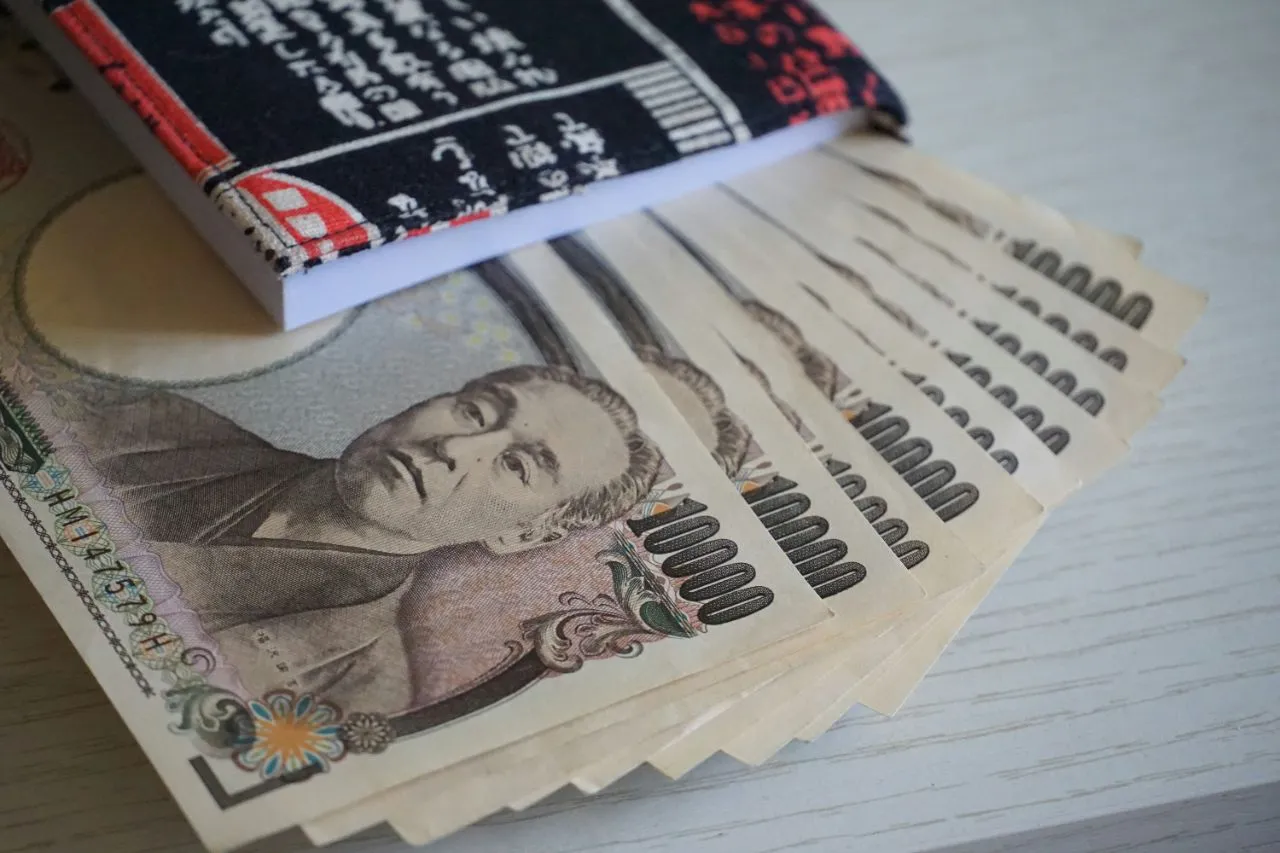
For instance, early market activity on Thursday witnessed bitcoin, often hailed by proponents as digital gold, hitting a fresh all-time high of 7.9 million yen on Tokyo-based cryptocurrency exchange bitFLYER. In contrast, the cryptocurrency's dollar-denominated price hovered above $52,000, still 32% below its peak of $69,000 in November 2021. This price disparity underscores the strain on the Japanese yen, fueled by the Bank of Japan's persistent liquidity easing measures, rising inflationary pressures and indications of economic fragility.
https://asset.coinness.com/en/news/3be884245fbab4f63de5365d4dd38b12.webp
Photo by jun rong loo on Unsplash

Entering recession

This recent surge coincides with reports confirming Japan's descent into an economic recession by the end of the previous year, slipping to fourth place behind Germany in terms of the world’s largest economies.


While central banks worldwide, including the Federal Reserve, aggressively raised interest rates in attempts to curb inflation, the Bank of Japan maintained near-zero interest rates and continued printing fiat currency. A recession characterized by inflation without corresponding growth prompts investors to seek refuge in safer havens like gold and digital gold. With that, there could be further opportunities for bitcoin to make further in-roads in Japan.


In 2023, Japan's core inflation, excluding volatile food and energy components from the consumer price index (CPI), rose by 3.1%, marking its most significant increase since 1982. Consequently, the yen depreciated to a 33-year low against the dollar, declining by 13% and 7.5% against the dollar previously, with an additional 6.4% decrease this year.


Bitcoin's persistent premium in Japanese yen terms suggests that it may continue to maintain higher valuations unless the Bank of Japan accelerates its exit from the ultra-loose monetary policy it has been pursuing. That would make yen holdings relatively more attractive compared to other assets.


Although a complete regulatory framework for digital assets in Japan is still lacking, the country has recently moved to make tax rules more crypto-friendly. Bitcoin's elevated valuation against the Japanese yen underscores the challenges facing Japan's fiat currency, driven by monetary policy decisions and economic uncertainties.


More to Read
View All
Web3 & Enterprise·

Jul 22, 2023

Bitmain to Launch Filecoin Token Mining Machines

Bitmain to Launch Filecoin Token Mining MachinesBitmain, the well-known Chinese manufacturer of Bitcoin mining machines, has made a significant announcement that marks its entry into the Filecoin ecosystem.FIL token miningAccording to that announcement made by the company on social media on Friday, the company is set to launch FIL token mining machines, which are expected to have a hash rate of up to 4,300T each and will be available for purchase at $38,888 per unit.Filecoin, created by Protocol Labs, was originally designed as a blockchain-based collaborative digital storage and data redemption solution. As an open-source, public cryptocurrency and digital remittance system, Filecoin has garnered significant attention in the market.Photo by Traxer on UnsplashDelegated stakingAlong with the mining machine development, Bitmain has introduced a delegated staking service with a low monthly fee of 0.5%. This service offers traders an opportunity to earn more through staking with minimal computational energy. Delegated staking allows users to delegate their staking rights to validators or staking pools, enabling them to partake in the rewards generated by these validators.According to a recent report by crypto market intelligence firm Messari, Filecoin’s data storage market continued to grow in Q2, 2023. Active data storage deals grew 64% when compared with the previous quarter. That deal flow resulted in increased revenue from fees, which was up 91%. Further development of the Filecoin protocol resulted in the recent introduction of the Filecoin Virtual Machine (FVM). That runtime environment for smart contracts has enabled new use cases, including liquid staking, decentralized computing, and perpetual storage.Bitmain’s venture into the Filecoin ecosystem not only supports the development of FIL token mining machines but also offers hope for FIL token holders who experienced losses. The FIL unit price peaked at $190 during the 2021 crypto bull market. The company’s involvement has positively influenced Filecoin’s price.Meanwhile Bitmain continues to be a major player in the crypto mining equipment space. 2021 has not been without its blemishes for the company though, as in April the Beijing-based company was fined $3.7 million by the Chinese authorities for a violation of Chinese tax regulations.Bitmain hashrate dominanceEarlier this month, US bitcoin miner TeraWulf purchased 18,500 mining machines from Bitmain, with a view to deploying them at its 43 MW Lake Mariner mining facility in New York State in the US. The deal had a value of $75 million.A recently published report by crypto intelligence firm Coinmetrics outlined that the majority of the Bitcoin hashrate is being processed by Bitmain’s S19 miner model. Three Bitmain miner models are responsible for 76% of the entire Bitcoin network’s hashrate, the report states.

news
Policy & Regulation·

Nov 29, 2023

Standard Chartered joins China’s CBDC pilot trials

Standard Chartered joins China’s CBDC pilot trialsStandard Chartered Bank has joined the advanced stages of China’s central bank digital currency (CBDC) pilot trials, making it one of the world’s largest multinational banks to partake in such an initiative.Photo by Eric Prouzet on UnsplashEnabling e-CNY exchangeChina initiated its CBDC pilot trials over a year ago, with it being much further ahead of other CBDC initiatives internationally in terms of development. It has now expanded its trials to include more lenders, with Standard Chartered China becoming the latest participant.This development means that Standard Chartered Bank’s users in the Asian nation will soon have access to the digital version of the Chinese yuan by seamlessly integrating its platform with China’s dedicated CBDC app. According to an announcement by Standard Chartered Bank (China) Ltd. on Monday, the bank will be enabled, through partner firm City Bank Clearing Services Co., to offer its clients the ability to purchase, exchange or redeem e-CNY.In its announcement, Standard Chartered China’s President, Zhang Xiaolei, stated:“As an international bank rooted in the Chinese market for 165 years, Standard Chartered is optimistic about the development prospects of digital renminbi.”Joining e-CNY testing programThe e-CNY pilot testing program in China has been extended to 26 cities and provinces. Standard Chartered’s Chinese subsidiary will involve itself with supply chain financing, trade financing and cross-border merchant payments as part of that pilot program.The adoption of CBDCs is anticipated to reduce reliance on physical currency notes while ensuring transparent and tamper-proof transaction histories. China’s CBDC, known as the digital yuan or e-CNY (digital renminbi), has garnered international attention for its progressive approach to digital currency.Broader digital assets sector involvementStandard Chartered’s involvement in China’s CBDC pilot marks a milestone, emphasizing the bank’s commitment to digital innovation. However, the British banking conglomerate has had a broader approach to digital assets beyond this CBDC collaboration. A report by Nikkei Asia last month suggested that the banking group was making a concerted effort to develop its digital assets-related business within the Asian region through its Singapore-based investment arm, SC Ventures.Earlier this month, SC Ventures unveiled Libeara, a platform which plans to offer the first-ever tokenized Singapore dollar government bond fund. Subsidiary companies include digital asset custodian Zodia Custody and institution-first digital asset marketplace Zodia Markets.China has been at the forefront of CBDC experimentation, with initiatives like testing offline payment systems integrated with SIM cards. This innovative approach allows users to initiate CBDC payments by simply bringing their phones close to sale terminals. The trials, initially launched in major cities such as Shanghai, Beijing and Shenzhen, have encouraged residents to embrace e-CNY for everyday transactions.While China’s advancements in CBDC trials are noteworthy, other nations, including India, Japan and the U.S., are also actively engaged in the advanced phases of CBDC-related research and development. These global efforts seek to diversify financial settlement options, providing individuals with a broader range of choices in the evolving landscape of digital currencies.

news
Web3 & Enterprise·

Jun 19, 2023

Korean Blockchain Fund Supports Web3 Game Developer Growth in Southeast Asia

Korean Blockchain Fund Supports Web3 Game Developer Growth in Southeast AsiaHashed, a Seoul-based blockchain venture fund, has spearheaded a seven-figure investment round for Decentralised Gaming Ventures (DGV), a Web3 game development support entity primarily serving Southeast Asia (SEA), according to a press release. This funding will help DGV in its mission to foster the growth of promising game developers in the region.Photo by Timo Volz on PexelsSEA as a Web3 Game HubDGV has set its sights on making SEA a hub to nurture game developers and bolster the Web3 game sector. The company has already established a studio in Singapore, where 32 talented game developers work in eight different teams, providing them with the necessary resources to design and introduce new gaming titles. Over the past year, DGV has supported the release of 15 games.Studio in SingaporeDGV further plans to help game developers in the region through alliances with renowned entertainment intellectual property (IP) owners. In the past, the company has teamed up with Singapore-based designer toys and art collectibles studio Mighty Jaxx, and recently appointed gaming veteran Derrick Sim as its Chief Operating Officer. Sim has expertise in collaborating with major entertainment IPs, including Marvel, StarCraft II, and FIFA Online 2.DGV CEO Samson Oh articulated the firm’s aspiration to forge an environment that empowers developers in SEA to create blockchain-powered Web3 games, anticipated to be the gaming industry’s future. With the support from Hashed, DGV looks to reinforce the region’s reputation as a fertile ground for innovative game developers.Hashed’s Co-Founder Ryan Kim commended DGV’s effective leadership, SEA governmental backing, and firm groundwork for expansion in the Web3 gaming industry. The investment in the firm signals the Korean fund’s belief in DGV’s seasoned team and its mission to leverage IP accessibility to advance its digital ownership initiative in the gaming realm.

news
Loading