Top

Korea’s crypto exchanges resume charging fees, shifting market shares

Markets·March 04, 2024, 8:19 AM

Korea’s prominent crypto exchanges Bithumb and Korbit have recently resumed charging trading fees, local media outlet Edaily reported. However, these changes in fee policies are reinforcing Upbit’s dominant market position while downsizing Bithumb’s and Korbit’s market shares. Meanwhile, the local banks affiliated with crypto exchanges are benefitting from an uptick in fee revenue from the recent bitcoin boom.


According to crypto data intelligence platform CoinGecko on Feb. 28, Upbit accounted for 77.4% of the local market share in crypto transactions, followed by Bithumb (20.43%), Coinone (1.73%), Korbit (0.35%) and Gopax (0.09%). 

https://asset.coinness.com/en/news/1c1710e2deb775a95dca0ad81d43423a.webp
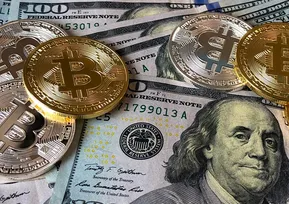
Photo by Markus Winkler on Unsplash

Shifts in market shares

As of March 2, the market shares of Bithumb and Korbit decreased by 8.59 percentage points and 0.21 percentage points, respectively. Conversely, Upbit’s dominance grew to 86.57%, up by over 9 percentage points.


A Korbit official said it’s too early to pass judgment on Korbit’s market performance, as the exchange’s policies on trading fees could change depending on the market sentiment. The person added that CoinGecko tracks only eight types of tokens traded on Korbit and does not cover all the transactions on the exchange. 


Bithumb had previously benefited from charging no fees, driving up its market share to as high as over 40% in December. Following the decision to impose a fee of 0.04% on Feb. 6, however, the exchange has been experiencing a drop in transaction volume.


Korbit also reinstated trading fees last Thursday, roughly four months after eliminating them on Oct. 10 as a promotional move. However, it's worth mentioning that the newly introduced trading fee is 0.07%, which is lower than the earlier rate of 0.2%.


Meanwhile, Gopax currently exempts fees for users who trade BTC, ETH, XRP and USDC. 


No local regulations on fees for crypto transactions 

At the moment, there are no local regulations on fees for crypto transactions, leaving the task of setting such fees to individual trading platforms. It is known that crypto exchanges in other countries, such as the U.S., set their own rates as well. 

 

More to Read
View All
Web3 & Enterprise·

May 11, 2023

Shots Fired in New OKX Ad Campaign

Shots Fired in New OKX Ad CampaignGlobal crypto spot and derivatives exchange OKX has launched a daring ad campaign that sets US-based rival exchange Coinbase firmly in its cross hairs.The formerly Chinese and now Seychelles-based exchange has pushed out a global ad campaign along the following theme: “The system doesn’t need an upgrade; it needs a rewrite.” The ads were launched on Tuesday, pointing out the ills of the traditional, centralized financial system.Photo by Merakist on UnsplashCrypto exchange rivalryThe advert doesn’t explicitly call out its rival, Coinbase. However, it is nuanced in taking a subtle dig at the US-based exchange. Exactly two months prior, on March 9, Coinbase released its own ad campaign. Coinbase claimed in its ad that “it’s time to update the system,” with OKX’s subsequent commercial having been carefully worded to poke fun at the Coinbase commercial.With a number of high profile epic failures of crypto businesses over the past twelve months, including the fall of FTX, the remaining exchanges in the business have been tripping over themselves in an effort to convince the alternative asset-investing public that theirs is the safest platform upon which they can securely trade.In its sixty second commercial, OKX poses the question “why don’t we change everything?”, set up by its claim that the conventional finance system is broken.The last of the big spendersThere’s been a notable change of strategy in the marketing activities of crypto businesses since the height of the last crypto bull run. Gone are the marketing excesses exemplified most by the now bankrupt FTX exchange.FTX demonstrated itself to be a profligate spender on all manner and means of marketing, particularly during 2021 and 2022. It paid Wall Street investor and Shark Tank star Kevin O’Leary $15 million to be a spokesperson for the company. Similar deals were struck with a range of celebrities including former NBA star Shaquille O’Neal, NFL stars such as former New England Patriots quarterback, Tom Brady, and a host of others.At the height of its marketing opulence, the fraudulently run firm signed a $135 million sponsorship deal that provided it with the naming rights to the home stadium of the NBA’s Miami Heat. 2022's Super Bowl, one of the world’s largest single marketing opportunities, saw FTX and others pay out big on advertising spend.By contrast, this year’s Super Bowl was almost a complete washout as far as crypto business participation was concerned. Meanwhile, all of the celebrities that featured in FTX’s marketing activities have found themselves the subject of multi-million dollar class action lawsuits filed by FTX creditors.A more sobering marketing strategyDespite the reputational damage that crypto has suffered due to these high profile failures, firms like OKX and Coinbase have continued to maintain a responsible level of advertising and marketing activity.That’s best exemplified by OKX’s ongoing marketing relationships with McLaren’s Formula One racing team and Manchester City Football Club. In March, US-based crypto exchange Kraken announced a marketing partnership with the Williams Formula One racing team.Crypto.com is probably the only crypto firm that spent excessively during the last bull run yet has continued to maintain a relatively high level of marketing activity. Much of that may have been due to commitments it had made during a more buoyant market. Notwithstanding that, the firm did fall foul of the UK advertising regulator, who banned its NFT promotion in December 2022.

news
Policy & Regulation·

Sep 15, 2023

Singapore’s Regulator Imposes 9-Year Ban on 3AC Founders

Singapore’s Regulator Imposes 9-Year Ban on 3AC FoundersSingapore’s central bank and financial regulator, the Monetary Authority of Singapore (MAS), has handed down a nine-year prohibition order to Kyle Davies and Su Zhu, co-founders of the failed crypto hedge fund Three Arrows Capital (3AC).Photo by Swapnil Bapat on UnsplashSevere restrictionsThe penalty relates to alleged violations of the city-state’s securities laws. The prohibition order came into effect on Wednesday, carrying severe restrictions for Davies and Zhu.During this nine-year period, Davies and Zhu are prohibited from engaging in any regulated activities in Singapore. They are also barred from managing, serving as directors, or holding substantial shares in any capital market services business within the territory of Singapore.Loo Siew Yee, the Assistant Managing Director of Policy, Payments, and Financial Crime at MAS, emphasized the seriousness of the violations in a statement released by the central bank on Thursday. Yee stated:“MAS takes a serious view of Mr. Zhu’s and Mr. Davies’ flagrant disregard of MAS’ regulatory requirements and dereliction of their directors’ duties.” She further asserted that MAS would take action against senior managers who engage in such misconduct.Securities law violationsMAS’s decision to impose these sanctions on the 3AC co-founders was based on its findings of further securities law violations during investigations into 3AC and its founders. The regulatory authority accused Davies and Zhu of failing to inform MAS when 3AC hired a new business representative, providing false information to the regulator, and neglecting to establish an appropriate risk management framework.3AC’s troubles stemmed from the crypto market crash that occurred last year, triggered by the Terra ecosystem’s collapse. The hedge fund’s leveraged crypto positions exposed it to billions in loan defaults, resulting in significant financial losses. Its lack of risk management had a cascading effect in crypto. Lenders like Celsius and BlockFi had exposure to 3AC, leading to further collapses later in 2022 as a consequence.3AC’s creditors claim that the firm owes as much as $3.5 billion, and liquidators are now seeking to recover approximately $1.3 billion from Zhu and Davies, who allegedly incurred the debt when the firm was already insolvent.Regulatory reprimandsThis action by MAS follows last June’s reprimand of 3AC, which occurred just before the hedge fund filed for bankruptcy amid widely reported insolvency issues. At that time, MAS had criticized 3AC for providing false information, failing to report directorship changes involving Zhu and Davies, and exceeding the legal assets under management threshold.It’s just the latest reprimand the duo have received from a regulator this year, though. Zhu and Davies have been busy in trying to get another start-up off the ground. Earlier this year, they launched OPNX, a crypto bankruptcy claims trading platform. The venture is based out of Dubai, and the firm reported in April that it had gotten significant VC backing.Many of those that the company claimed were backing the venture disassociated themselves from those claims. The following month, the Dubai regulator, the Virtual Assets Regulatory Authority (VARA), reprimanded the OPNX founders, having issued an investor alert relative to the firm a few weeks prior to that. VARA's complaint was that the business had been operating without having acquired the appropriate licensing.

news
Web3 & Enterprise·

Oct 10, 2023

Kbank’s Upbit Customer Deposits Total $2.2B

Kbank’s Upbit Customer Deposits Total $2.2BKbank, an internet-only bank in South Korea, is facing criticism due to its relatively high proportion of cryptocurrency customer deposits compared to other banks. Kbank reportedly manages approximately KRW 3 trillion (equivalent to $2.2 billion) in deposits from customers of cryptocurrency exchange Upbit, which accounts for about 18% of its total customer deposits.This percentage stands out, being notably higher than other banks that provide accounts to the other four crypto-to-fiat exchanges in Korea. That is according to a report by Maeil Business Newspaper, which obtained documents submitted to lawmaker Kim Hee-gon by the Financial Services Commission (FSC).According to Korean law, crypto exchanges must secure real-name bank accounts from banks to offer crypto trading services against the Korean won. Kbank offers its accounts to Upbit, the dominant player in the Korean crypto market.Photo by David McBee on PexelsNotable exposure to crypto exchangeThe FSC documents showed that Kbank’s Upbit customer deposits totaled KRW 3.09 trillion, making up 18% of its total deposits, which amount to KRW 17.2 trillion.In a striking contrast, Nonghyup Bank had 0.2% of its deposits, equivalent to KRW 557.8 billion, in Bithumb, which is the nation’s second-largest cryptocurrency exchange. Kakaobank, another internet-only bank, had 0.3% (KRW 112.2 billion) of its deposits in Coinone. Shinhan Bank held 0.01% (KRW 43 billion) in Korbit, and Jeonbuk Bank had a similarly small 0.02% (KRW 4.2 billion) in Gopax.Lawmaker Kim pointed out that Kbank has become a bank dedicated to crypto trading. Kim proposed that financial authorities take proactive measures to assess the potential risks that may emerge when Kbank utilizes Upbit customer deposits as a basis for offering credit loans. Such risky financial practices could potentially result in higher loan defaults and the emergence of a greater number of individuals with poor credit histories, which could ultimately jeopardize the stability of the financial market.Regulatory gapThe current Financial Transaction Reporting Act mandates that virtual asset service providers (VASPs) segregate customer deposits from their own assets as a measure to combat money laundering. However, it has been noted that there are regulatory gaps stemming from the absence of specific guidelines for the custody of these deposits.According to the Financial Supervisory Service (FSS), Nonghyup and Kakaobank store deposits in separate accounts within the bank. On the other hand, Kbank and Jeonbuk Bank keep deposits in corporate accounts under their respective exchange partners’ names.When deposits are stored in separate accounts within the bank, only the bank has access to those funds, and they are essentially operated in a manner similar to a trust, preventing the bank from using the funds arbitrarily. In contrast, funds held in corporate accounts can be used by the bank as a source for lending. Lawmaker Kim warned that in scenarios such as exchange bankruptcies or similar situations, banks holding customer funds in corporate accounts could face difficulties in ensuring customer protection.Each of these banks receives reserve funds from crypto exchanges in anticipation of potential compensation requirements in the event of unforeseen losses. The FSS states that as of the end of last month, the reserve amounts held by each bank were as follows: Kbank had KRW 200 billion, Nonghyup Bank had KRW 100 billion, Kakao Bank had KRW 73 billion, and both Shinhan Bank and Jeonbuk Bank had KRW 30 billion.Kbank’s Upbit customer deposits are approximately 72 times larger than Shinhan Bank’s Korbit customer deposits. However, the reserve amounts held by Kbank are only 6.7 times greater than those held by Shinhan. Lawmaker Kim emphasized the importance of banks maintaining reserve funds that are proportional to the customer deposits held in their partner crypto exchanges.Signs of recoveryMeanwhile, the Korean cryptocurrency industry, which faced a downturn in the latter half of last year due to events like the Terra collapse and FTX’s bankruptcy, has exhibited signs of recovery in the first half of this year.The Financial Intelligence Unit (FIU) of the FSC recently reported that the cryptocurrency market cap in South Korea has reached KRW 28.4 trillion as of the end of June this year. This reflects a 46% increase compared to the end of last year when it stood at KRW 19.4 trillion. Additionally, the total operating profit of domestic exchanges surged by 82% to KRW 227.3 billion over the past six months, compared to the previous figure of KRW 124.9 billion.The total market’s max drawdown (MDD) was 62%. MDD assesses the extent to which an asset has declined in value from its highest point to its lowest point within a specific time frame, before experiencing a recovery. The FIU considers this MDD to be high, urging investor caution.

news
Loading