Top

Singapore’s Regulator Imposes 9-Year Ban on 3AC Founders

Policy & Regulation·September 15, 2023, 12:50 AM

Singapore’s central bank and financial regulator, the Monetary Authority of Singapore (MAS), has handed down a nine-year prohibition order to Kyle Davies and Su Zhu, co-founders of the failed crypto hedge fund Three Arrows Capital (3AC).
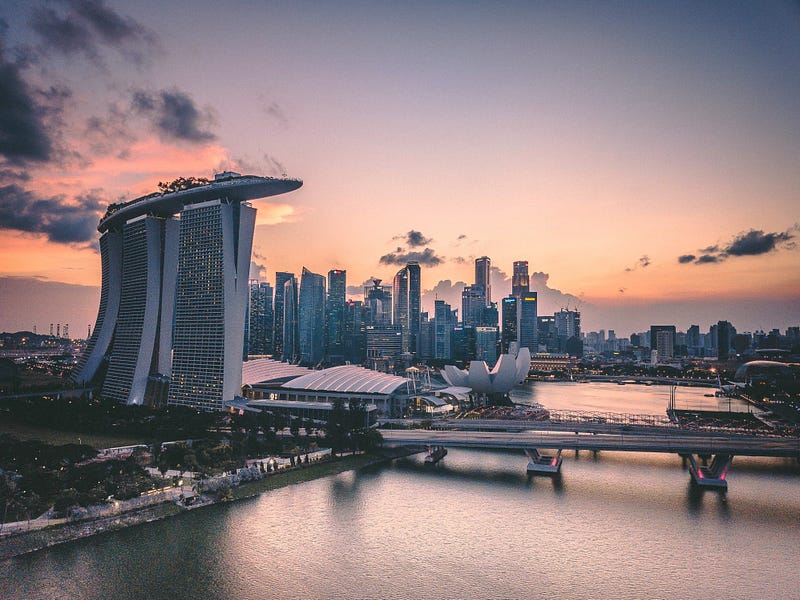
Photo by Swapnil Bapat on Unsplash


Severe restrictions

The penalty relates to alleged violations of the city-state’s securities laws. The prohibition order came into effect on Wednesday, carrying severe restrictions for Davies and Zhu.

During this nine-year period, Davies and Zhu are prohibited from engaging in any regulated activities in Singapore. They are also barred from managing, serving as directors, or holding substantial shares in any capital market services business within the territory of Singapore.

Loo Siew Yee, the Assistant Managing Director of Policy, Payments, and Financial Crime at MAS, emphasized the seriousness of the violations in a statement released by the central bank on Thursday. Yee stated:

“MAS takes a serious view of Mr. Zhu’s and Mr. Davies’ flagrant disregard of MAS’ regulatory requirements and dereliction of their directors’ duties.” She further asserted that MAS would take action against senior managers who engage in such misconduct.


Securities law violations

MAS’s decision to impose these sanctions on the 3AC co-founders was based on its findings of further securities law violations during investigations into 3AC and its founders. The regulatory authority accused Davies and Zhu of failing to inform MAS when 3AC hired a new business representative, providing false information to the regulator, and neglecting to establish an appropriate risk management framework.

3AC’s troubles stemmed from the crypto market crash that occurred last year, triggered by the Terra ecosystem’s collapse. The hedge fund’s leveraged crypto positions exposed it to billions in loan defaults, resulting in significant financial losses. Its lack of risk management had a cascading effect in crypto. Lenders like Celsius and BlockFi had exposure to 3AC, leading to further collapses later in 2022 as a consequence.

3AC’s creditors claim that the firm owes as much as $3.5 billion, and liquidators are now seeking to recover approximately $1.3 billion from Zhu and Davies, who allegedly incurred the debt when the firm was already insolvent.


Regulatory reprimands

This action by MAS follows last June’s reprimand of 3AC, which occurred just before the hedge fund filed for bankruptcy amid widely reported insolvency issues. At that time, MAS had criticized 3AC for providing false information, failing to report directorship changes involving Zhu and Davies, and exceeding the legal assets under management threshold.

It’s just the latest reprimand the duo have received from a regulator this year, though. Zhu and Davies have been busy in trying to get another start-up off the ground. Earlier this year, they launched OPNX, a crypto bankruptcy claims trading platform. The venture is based out of Dubai, and the firm reported in April that it had gotten significant VC backing.

Many of those that the company claimed were backing the venture disassociated themselves from those claims. The following month, the Dubai regulator, the Virtual Assets Regulatory Authority (VARA), reprimanded the OPNX founders, having issued an investor alert relative to the firm a few weeks prior to that. VARA's complaint was that the business had been operating without having acquired the appropriate licensing.


More to Read
View All
Web3 & Enterprise·

May 31, 2023

Japanese Expansion Sees XDC Network Pair Up with SBI Subsidiary

Japanese Expansion Sees XDC Network Pair Up with SBI SubsidiaryThe XDC Network, a leading carbon-neutral, enterprise-grade hybrid blockchain solution formerly known as XinFin, is gearing up to make inroads into the Japanese market through a partnership with SBI VC Trade, a cryptocurrency exchange subsidiary of Tokyo-based financial holding company SBI.On May 31, the Singapore-based team behind XDC Network announced its addition to SBI’s crypto exchange subsidiary, marking an important milestone in their expansion efforts. Fumiki Ozaki, CEO of SBI VC Trade, expressed his excitement about the partnership, stating, “We are delighted to expand our cryptocurrency offerings by adding XDC to our exchange. XDC Network brings a unique value proposition to the trade finance market, and we believe its addition will enhance our customers’ trading experience.”Photo by Denys Nevozhai on UnsplashToken gainsThe XDC token has been gaining significant traction recently, becoming one of the top 5 altcoin gainers in March 2023 with a 54% rise in just 30 days. The network supports Ethereum Virtual Machine-compatible smart contracts, protocols, and atomic cross-chain token transfers. It also complies with the ISO-20022 message standard, which is widely accepted for electronic data interchange between financial institutions.This particular announcement on Wednesday has resulted in XDC token appreciation of 10% over the past 24 hours alone. At the time of publication, the project’s native token stood at a unit price of $0.03456.Ecosystem development decentralizationIn a move towards decentralization, the XDC Network recently established a decentralized autonomous organization to govern the blockchain. With its deployment in May, the community will have a say in the distribution of ecosystem funds to foster further development.While the project team behind the blockchain network believes the network itself to be decentralized, many projects in crypto have grappled with the difficult issue of governance. XDC Network’s DaoFin project exemplifies its efforts to achieve a more equitable and decentralized form of network governance.SBI delving deeper into cryptoAtul Khekade, Co-founder of XDC Network, expressed enthusiasm about expanding into Japan, stating: “Japan serves as a crucial hub for international trade, and our blockchain platform aims to streamline this sector by improving transparency, traceability, and reducing costs.”SBI is also making strides to strengthen its presence in key cryptocurrency markets. In September 2022, it obtained a license to operate in Singapore, expanding its reach beyond Japan. Additionally, one of SBI’s portfolio companies, digital asset trading technology firm Clear Markets, received approval from the United States Commodity Futures Trading Commission (CFTC) to offer over-the-counter crypto derivatives products with physical settlement.In 2018, SBI partnered with crypto lender Amber in forming a joint venture company in order to take on the Japanese market. It pursued a similar strategy with crypto custody service provider Zodia Custody, forming a joint venture subsidiary to assist it in gaining exposure to the Japanese market.The partnership between XDC Network and SBI VC Trade signifies the growing interest in blockchain technology and cryptocurrency in Japan. By joining forces, XDC Network and SBI VC Trade aim to revolutionize the trade finance market by leveraging the transparency and efficiency of blockchain, ultimately benefiting businesses and consumers alike.With the shared vision of advancing the adoption of blockchain technology, both parties are poised to make a significant impact on the future of trade finance and digital asset trading.

news
Web3 & Enterprise·

Aug 03, 2023

KuCoin Halts Bitcoin and Litecoin Mining Pools Amidst Strategic Shift

KuCoin Halts Bitcoin and Litecoin Mining Pools Amidst Strategic ShiftIn an announcement on Tuesday, Seychelles-based cryptocurrency exchange KuCoin revealed its decision to temporarily suspend its Bitcoin and Litecoin mining pools, effective from 16:00:00 on August 15, 2023 (UTC).Photo by Traxer on UnsplashChanging business strategyThis move is attributed to KuCoin’s evolving business strategy, although specific details remain undisclosed. The exchange expressed its regret for any inconvenience caused and extended gratitude for users’ continued support.It appears that the company wants to focus on core business activities and for that reason, it’s terminating its mining pool activity. That said, the discontinuation was described in its statement as being “temporary” although that has been left open-ended with no indication of if or when it would bring the service back into operation.The company is open to the idea of revisiting the facilitation of mining pools in the future. “We will see if it is needed to restart based on the market and users’ demand in the future,” a spokesperson for the company told The Block.To ensure miners’ uninterrupted earnings during the suspension, KuCoin advised users engaged in cryptocurrency mining to transition their Bitcoin (BTC) and Litecoin (LTC) miners to alternative mining pools before the specified suspension date. Additionally, the exchange emphasized the importance of backing up and preserving mining records and related data, recommending users complete these actions before August 27.Presently, the KuCoin Bitcoin mining pool maintains a hash rate of 9.08 exahash per second (EH/s), while the Litecoin pool operates at 3.90 terrahash per second (TH/s). These figures contribute to the broader hash rate landscape, where the entire Bitcoin network boasts a hash rate of 349.19 EH/s, compared to the Litecoin network’s 792.16 TH/s.Workforce reductionIt is clear that the company is in the process of adjusting to current market conditions. Last week, rumors surfaced of a plan to effect a workforce reduction. That prompted KuCoin’s CEO Johnny Lyu to respond, clarifying that the exchange’s operations are running smoothly. Dismissing layoff speculation, Lyu highlighted the exchange’s steady expansion and strong growth as demonstrated by the H1 2023 report. The report showcased an increase in users and new listings, underscoring the platform’s vitality and development.Mandatory KYCIn recent months, KuCoin has also implemented mandatory Know Your Customer (KYC) requirements, obligating users to undergo verification processes. Existing customers who fail to complete KYC procedures will be unable to make deposits. With over 20 million registered accounts, the exchange felt that it needed to improve on its level of regulatory compliance and security measures.It’s highly likely that an action taken by authorities in New York in the United States in March prompted KuCoin’s decision to tighten up on KYC. At that time, the New York Attorney General said that action was being taken against KuCoin due to its failure to register as a securities and commodities broker-dealer.As KuCoin undergoes these changes, the suspension of its mining pools raises questions about the broader implications for its business strategy and the potential impact on miners within its ecosystem. That said, the firm is not alone in making changes, with most crypto exchanges having had to adjust to a business and regulatory environment that has changed considerably since the 2021 crypto bull run.

news
Policy & Regulation·

Nov 11, 2025

Japan to tighten crypto lending rules as regulator backs bank stablecoin pilot

Japan’s Financial Services Agency (FSA) is moving to close gaps in crypto regulation and support a new bank-led stablecoin pilot, as markets watch for a potential Bank of Japan rate hike. Tougher oversight of crypto lending and IEOsAccording to a CoinPost report, at the fifth meeting of its Digital Asset Working Group held last week, the FSA discussed introducing new requirements to bring crypto lending clearly within the regulatory framework. While firms managing or staking crypto must register as exchanges, some operators have avoided registration by structuring services as borrowing schemes, which are not legally treated as asset management.Photo by Possessed Photography on UnsplashThe FSA flagged that users face both credit and volatility risks, yet operators are not required to segregate customer assets or use cold wallets. Some services offer returns around 10% or tie up funds for several years, with weak risk management and exposure to re-lending defaults and staking slashing. Under the new policy direction, operators will need stronger risk management for re-lending and staking, tighter custody controls, and clearer risk disclosures and advertising. Institutional-only borrowing not offered to the public will remain exempt. Some members questioned whether the new requirements would be practical to implement for off-chain operators, noting that staking is fundamentally on-chain. The group also examined initial exchange offerings (IEOs) lacking financial audits, particularly those aimed at retail investors. Members discussed limits similar to equity crowdfunding: investments over 500,000 yen ($3,000) capped at 5% of annual income or net assets, up to 2 million yen ($13,000). Most past domestic IEOs were under 500,000 yen ($3,200). Some warned such caps could be bypassed through secondary trading, where tokens are immediately tradable. Major banks pilot stablecoinAlongside stricter rules, the FSA will support a stablecoin pilot led by MUFG Bank, Sumitomo Mitsui Banking Corporation, and Mizuho Bank. CoinDesk Japan noted the project, the first under the Payment Innovation Project, will include three additional participants. Mitsubishi Corporation will oversee operations, while Progmat and Mitsubishi UFJ Trust and Banking will handle issuance and custody. The pilot, launching this month with implementation targeted within the year, will test whether a joint stablecoin by major banks can navigate regulatory and operational challenges. Rate hike speculation mountsJapan’s calibrated digital asset push comes as speculation grows over a possible Bank of Japan (BOJ) rate hike next month. Minutes from the BOJ’s October meeting, cited by South Korean outlet Edaily, show one board member saying most conditions for a hike have been met and that financial conditions would stay easy even after an increase. The BOJ kept its rate at 0.5% at that meeting. A rate hike was described as likely if firms are seen committing to wage increases ahead of next spring’s labor talks and if no major global shocks emerge. Markets, however, remain cautious, citing uncertainty over U.S. tariff effects and whether newly elected Prime Minister Sanae Takaichi will endorse such a hawkish stance. 

news
Loading