Top

Crypto boom drives $17.5B surge in demand deposit at Korean banks

Markets·March 06, 2024, 8:20 AM

Among various accounts within a bank, a demand deposit account is considered a “station” where people can temporarily store their money and easily withdraw it for future investments. These accounts are highly liquid, since users can deposit or withdraw funds at any time without having to pay a penalty to a bank. 


Following the recent cryptocurrency boom, the five major banks in Korea – KB Kookmin Bank, Shinhan Bank, Hana Bank, Woori Bank and NH Nonghyup Bank – are seeing a significant influx of funds into their demand deposit accounts, according to local media outlet Money Today. This is partly attributed to an increasing number of youths who are seeking to invest in crypto assets, parking their money in these banks’ demand deposit accounts. Shinhan Bank and Nonghyup Bank have seen the highest increase in their deposits, owing to their affiliation with local crypto exchanges that have access to real-name accounts from these banks. 

https://asset.coinness.com/en/news/43c2e4ebf68df9e379886cc37b37ebb1.webp
Photo by André François McKenzie on Unsplash

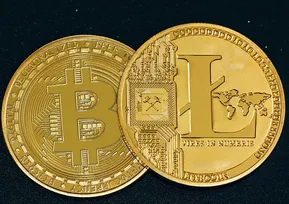
BTC’s surge attracting young investors to crypto

Experts say that these deposits could be potentially transferred to the crypto market by owners as Bitcoin’s value continues to climb. An insider from a crypto exchange noted that the bullish crypto market, spurred by the U.S. approval of spot bitcoin ETFs, is driving a number of young investors to turn to crypto investments, encouraging them to channel their deposits into buying crypto tokens. 


Data from these five major banks shows their total demand deposits by the end of February exceeded KRW 614 trillion ($460 billion), seeing a month-over-month increase of about KRW 23.5 trillion. During the same period, the banks’ combined regular savings grew by KRW 23.6 trillion, while their combined installment savings saw a decrease of KRW 13.3 trillion. This came after the government-led savings product “Youth Hope Installment Savings” reached its maturity, which returns users their principal with relatively large interest gains. 


Banks scrambling to attract crypto investors with new savings products

In response to the potential decline in interest rates in the second half of this year, an increasing number of customers are seeking to put their money into savings products with an interest rate of as low as 3%, according to a banker. In a bid to attract more users, local banks are busy introducing new savings products. 


KB Kookmin Bank launched a savings product offering a relatively high annual interest rate of up to 4%, and Shinhan Bank rolled out a savings product targeting youths with an annual interest rate of up to 3.85%. 


Meanwhile, Kbank, an online-only bank, is deemed among the largest beneficiaries of the crypto boom, as the bank saw its average daily new customers triple compared to last year. Since 2020, Kbank has served as the provider of real-name accounts to Upbit, the leading crypto exchange in Korea. 


Ha Joon-kyung, a professor at the Department of Economics at Hanyang University, said the sudden surge in demand deposits means that a significant portion of these funds will be invested in high-yielding but risky assets, including cryptocurrencies, stocks and real estate. 

 

More to Read
View All
Policy & Regulation·

Jul 04, 2023

Regional Chinese City Enables e-CNY Bus Fare Payments

Regional Chinese City Enables e-CNY Bus Fare PaymentsIt appears with every passing week, there’s a new initiative in China to bring about greater everyday use of the digital yuan. Recent days have not disappointed with the news that Jinan, the capital of China’s Shandong Province, is introducing digital yuan payments throughout its entire bus network.The city initially conducted a pilot phase by testing central bank digital currency (CBDC) payments on two bus lines. After a successful trial period, Jinan has now implemented the new payment method across all its bus routes. According to a recent report by local media outlet Shunwang-Jinan Daily, the city has updated its card readers and bus route software to facilitate digital yuan transactions for passengers.Photo by CHUTTERSNAP on UnsplashDiscounted faresTo encourage the use of the digital yuan, Jinan is offering fare discounts to passengers who opt for CBDC payments. The announcement stated that individuals could enjoy up to two discounted rides per day and a maximum of six discounted rides per month if they choose to pay with the digital yuan.The fare discounts offered for digital yuan payments serve as an incentive for passengers to adopt the new payment method. By enjoying discounted rides, individuals are encouraged to explore the benefits and convenience of using the digital yuan, further driving its adoption in everyday transactions.The acceptance of CBDC payments for bus rides in Jinan represents a significant step towards the integration of digital currencies into everyday transactions. As China continues to expand the use cases for the digital yuan, it is likely to pave the way for further adoption and exploration of CBDCs globally.Broader adoption strategyThis move aligns with the broader initiative in China to promote the adoption of the digital yuan. In April, the city of Changshu announced that it would begin paying civil servant salaries with the CBDC, including personnel at all levels of public service, public institutions, and state-owned units, starting from May.Furthermore, China has implemented its CBDC for various purposes, such as the Belt and Road initiative and cross-border trades. In Xuzhou, a city serving as a departure point for trains transporting goods to Europe, a plan was issued in April to promote the use of the CBDC in cross-border trade.Last month, e-CNY ATMs were introduced in the resort city of Sanya to enable foreign visitors to purchase the CBDC. In May, regional authorities in Jiangsu Province set about establishing use of the digital yuan within the region’s education system.On an international level, French bank BNP Paribas has partnered with the Bank of China (BOC) to facilitate the adoption of the digital yuan. This collaboration enables BNP Paribas’ corporate clients to connect with BOC’s system, allowing for real-time transactions using the digital yuan. The partnership advances China’s desire to bring the cross-border trade capabilities of the e-CNY into play on an international basis.As China continues to lead the way in CBDC implementation and explores new use cases, the digital yuan’s influence is expected to extend globally, transforming how we transact and interact with currencies in the digital age.

news
Policy & Regulation·

Dec 20, 2023

Crypto emerges as topic in Indonesian election campaign

Crypto emerges as topic in Indonesian election campaignAs Indonesia gears up for its upcoming presidential election, the country’s crypto market has become a focal point for political discourse. Gibran Rakabuming Raka, a vice presidential candidate and the eldest son of President Joko Widodo, recently unveiled his plans to foster expertise in blockchain and crypto within the Southeast Asian nation.Chosen as the running mate for presidential candidate Prabowo Subianto, the 36-year-old politician aims to elevate tech education in Indonesia, opening avenues for the younger generation, particularly in the realm of digital assets. According to a report by Indonesian online news portal detikNews, while speaking at a political gathering on Dec. 10, Gibran asserted:“We are preparing blockchain experts, we are preparing cyber security experts, we are preparing crypto experts.”Photo by Nick Agus Arya on UnsplashCrypto potentialIndonesia has emerged as being ahead of the curve in terms of crypto adoption, ranking seventh on Chainalysis’ 2023 global crypto adoption index. With an estimated 18 million crypto investors, the country boasts a robust industry association that also functions as a self-regulatory body.Local news media reported in October that the Southeast Asian country has seen a 10.1% year-on-year increase in the number of crypto investors. At the time, Tirta Karma Senjaya, Head of the Commodity Futures Trading Regulatory Agency, said, "Growth in the number of crypto investors in Indonesia continues to increase, but investors are still looking for the right time to buy crypto.”Private sector entities have also identified the raw potential. In the same month, Web3 consulting firm Tiger Research, in partnership with South Korean crypto data platform Xangle, produced a report which identified significant potential for the development of Indonesia’s Web3 market. There are over 30 crypto exchanges operating in the country, acting as the primary channel through which growth in crypto is propelled in Indonesia.Capitalizing on crypto interestThe government, under President Widodo, has actively sought to capitalize on this crypto enthusiasm, going as far as establishing a local “stock market” dedicated to crypto assets.Gibran’s proactive stance on crypto education aligns with his broader vision of positioning Indonesia at the forefront of the global digital revolution. The country’s rapidly growing tech landscape and crypto adoption make it an opportune space for fostering expertise in these cutting-edge technologies.As the presidential election approaches, Gibran’s commitment to cultivating a pool of crypto experts underscores the potential influence of the crypto industry in shaping Indonesia’s economic future.An international topicCrypto is increasingly becoming an important topic in elections globally. In the United States, many of the presidential candidates, particularly within the Republican Party, have publicly expressed their interest in crypto and blockchain. Yesterday, Ripple CEO Brad Garlinghouse took to the X social media platform on the subject, stating:”Team @Ripple is putting a stake in the ground, leading the charge with other industry leaders to support pro-innovation and pro-crypto candidates in the 2024 US election cycle. The US cannot afford to continue taking a back seat on the global stage.“With Indonesia’s election frontrunners, Prabowo and Gibran, expressing interest in the sector, it remains to be seen how this focus on crypto will resonate in the upcoming political debate on Feb. 4.

news
Policy & Regulation·

May 14, 2025

Tether eyes South Korean market as stablecoins gain momentum

Tether, the company behind USDT, the popular dollar-backed stablecoin, is seeking to establish a presence in South Korea through remote hiring, according to a report from Maeil Business Newspaper citing industry sources.Photo by DrawKit Illustrations on UnsplashRather than opening a physical office, Tether is looking for a remote employee who will focus on increasing USDT adoption in Korea, exploring business opportunities, building partnerships and navigating the local regulatory landscape. The expansion comes as stablecoins gain significant traction in South Korea. Data provided to lawmaker Min Byeong-dug from the country's five largest cryptocurrency exchanges via the Financial Supervisory Service (FSS) shows that dollar-pegged stablecoins accounted for 47% of crypto assets withdrawn from these platforms between January and March. Central bank pushes for regulationMeanwhile, South Korean officials are increasingly focused on regulating the stablecoin sector. Bank of Korea (BOK) Governor Rhee Chang-yong recently called for the swift implementation of stablecoin oversight, warning that they could bypass the country’s financial rules. During a press conference in Italy, Rhee argued that stablecoins pegged to either the Korean won or the U.S. dollar effectively function as alternative currencies and should be examined under existing money transfer laws. Rhee has emphasized that authorities must first determine whether won-backed digital tokens should be permitted at all. Last October, during a national audit, he expressed concerns about stablecoins' dependence on fiat currencies and advocated for implementing a central bank digital currency (CBDC) instead. These concerns were echoed by Ko Kyeong-cheol, head of BOK's electronic finance team, who recently highlighted at a financial law conference that stablecoins could profoundly impact the central bank's ability to carry out monetary policy, maintain financial stability and oversee payment settlements. Ko emphasized that if South Korea were to permit won-pegged stablecoins, the BOK should be involved early in the approval process to minimize potential risks to its policy objectives. On the regulatory front, Financial Services Commission (FSC) Chairman Kim Byoung-hwan has indicated that discussions on developing a stablecoin regulatory framework are likely to begin in June as part of a broader initiative. Presidential candidates weigh in on stablecoin futureThe issue has also entered the political arena ahead of South Korea's June 3 presidential election. Lee Jae-myung, the Democratic Party of Korea's presidential candidate, has advocated for a market featuring won-based stablecoins. Lee argues that quickly adopting stablecoins would help South Korea keep pace with global trends and prevent capital outflows. His platform includes introducing spot crypto ETFs and reducing digital asset trading fees.  Another candidate, Hong Joon-pyo of the People Power Party, also previously announced plans to explore the issuance of a won-pegged stablecoin before being eliminated in the party's primary election.

news
Loading