Top

Com2uS Platform celebrates X-PLANET's first anniversary with NFT airdrop

Web3 & Enterprise·March 22, 2024, 1:55 AM

Com2uS Platform, a subsidiary of South Korean game publisher Com2uS Holdings, yesterday revealed its plan for a non-fungible token (NFT) airdrop. This event is part of a celebration marking the one-year anniversary of its rebranded NFT marketplace, known as X-PLANET.


Popular intellectual properties

The NFT marketplace underwent a rebranding in March of last year, aiming to improve its integration with Com2uS' XPLA blockchain mainnet. Named X-PLANET, the platform is envisioned as a new planet where users can "explore" and "play." By November 2023, it had become the top revenue-generating local NFT marketplace, thanks in part to popular intellectual properties like the B.O.P Universe and Choushinsei Flashman. The B.O.P Universe draws inspiration from Bung O Pang Tycoon, a mobile game centered around baking pastries, while Choushinsei Flashman is a 1980s Japanese TV series known for its live-action superheroes.


NFT airdrop event

To mark the first anniversary of its rebranding, X-PLANET is hosting an NFT airdrop event on its official website. The event kicked off on March 21 and will have another round on April 4, at 6 p.m. KST, when 365 "Lucky Star" NFTs will be made available on a first-come, first-served basis. Owners of NFTs bearing lucky numbers will have the chance to earn double points during a B.O.P Universe event, which continues until April 14. 


Additional benefits are in store for those purchasing NFTs for the first time and those visiting X-PLANET’s Discord channel. Moreover, participants who spread the word about the anniversary event and the B.O.P Universe contest on social media will be entered into a draw for a chance to win a coffee coupon.
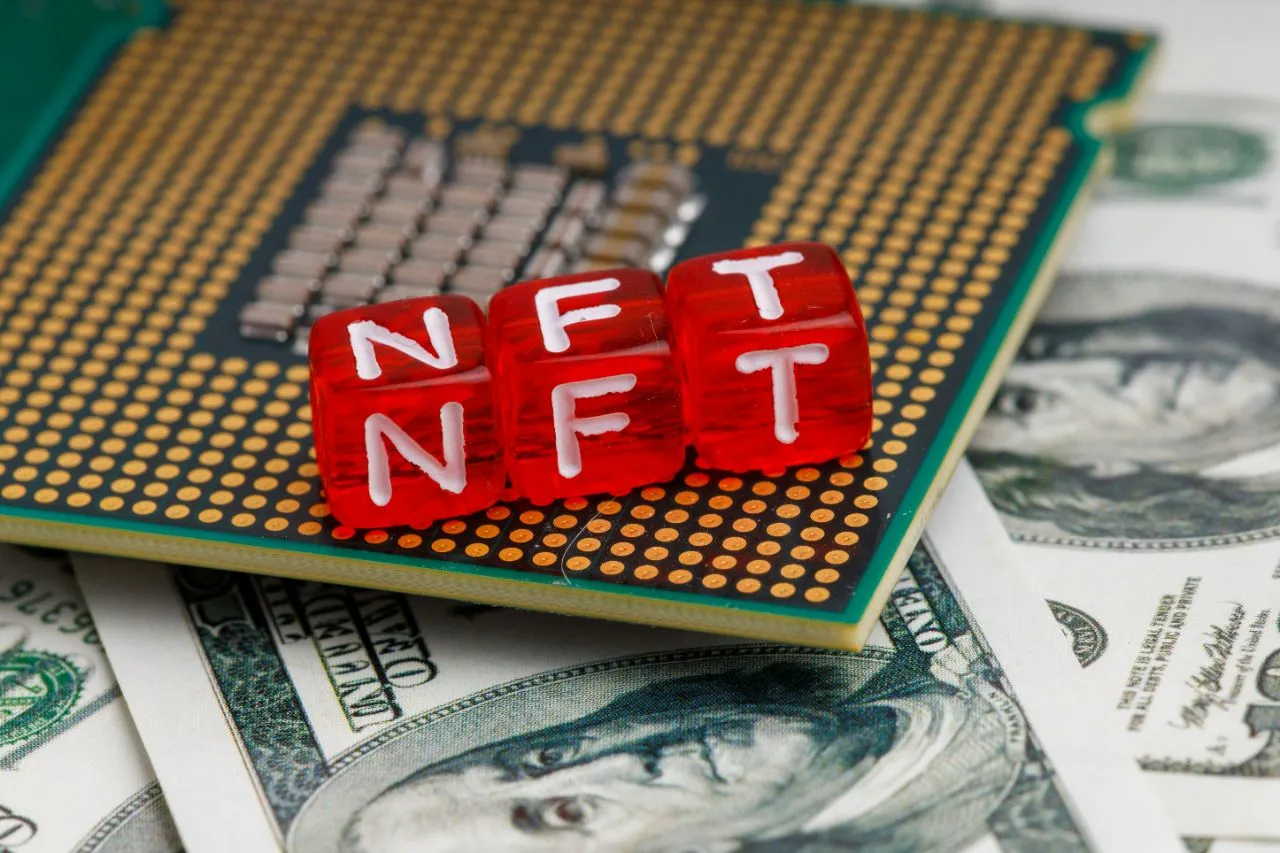
https://asset.coinness.com/en/news/85cb13377e714b91512cd7c92d2b1a41.webp
Photo by Andrey Metelev on Unsplash

NFT marketplace and blockchain ecosystem

Lee Luda, the Head of the Web3 Platform Business Division at Com2uS Platform, highlighted that the recent event was designed to show gratitude to X-PLANET users who have shown their support since the platform's rebranding. Lee further stated that as the NFT marketplace representing the XPLA ecosystem, X-PLANET is committed to evolving into a user-friendly platform. Their goal is to create an environment that not only adds value but also provides entertainment, making it a welcoming space where anyone can participate and enjoy.


Recognized for its straightforward user interface and efficient trading system, X-PLANET has been introducing a collection of valuable NFT works across various domains, including art, games and K-pop. The NFT marketplace is actively pursuing collaborations with talented artists and prominent organizations to bring meaningful NFT content to its users.



More to Read
View All
Policy & Regulation·

Aug 04, 2025

Hong Kong taxis likely test case for stablecoin payments

With the Chinese autonomous territory of Hong Kong having introduced its new Stablecoins Ordinance on August 1 and local taxi operators required to facilitate two forms of digital payment from April 1, 2026, a case is being made that this eventuality lends itself to an ideal test case for stablecoin payments.Photo by The Transport Enthusiast DC on UnsplashA perfect test caseIn an opinion piece published by Bloomberg on Aug. 3, columnist Andy Mukherjee asserted that Hong Kong taxis would be “a perfect stablecoin test case,” suggesting that the timing is ideal for stablecoins, given that a new licensing regime has come into effect via the city’s Stablecoins Ordinance.  In an interview, Franz Bergmueller, CEO of Switzerland-headquartered crypto bank AMINA Bank, said that “stablecoins for me are a killer use case.” On social media, AMINA Bank claimed that it would be “a major step in the right direction” if Hong Kong taxis start to accept stablecoin payments from customers. It emerged last December that the city’s taxi drivers would be required to install both electronic payment facilities and navigation systems, based on a filing made to Hong Kong’s Legislative Council. The filing outlined that while some taxi drivers currently offer electronic payment options, many insist on cash payment. The city’s Transport and Logistics Bureau suggested that “drivers offer at least two electronic payment options, including both QR code and non-QR code methods.” Stablecoin payments overseasThere has been some limited use of stablecoins as a payment method by taxi services in places with unstable currencies such as Argentina and Venezuela. The world’s most popular ride-hailing service, Uber, is understood to be studying the feasibility of offering stablecoin-based payments. In 2024, Asian rival Grab commenced accepting crypto, including the USDT and USDC stablecoins, as a means of payment for ride-sharing and food delivery services in Singapore. Last month, it extended that facility to its platform users in the Philippines.In June it emerged that Tawasul Transport, a taxi service in Abu Dhabi in the United Arab Emirates (UAE), had partnered with Al Maryah Community Bank (Mbank) and Abu Dhabi’s Department of Municipalities and Transport to launch a pilot program implicating the use of AE Coin, a UAE dirham-pegged stablecoin, as a means of payment. Bloomberg’s Mukherjee suggests that for entities now applying for stablecoin licensing, this new digital payment requirement for Hong Kong’s taxi services could provide an immediate segue to onboard users and make a new stablecoin product popular. Mukherjee places specific emphasis in this regard on what actions Ant Group may take. It emerged recently that Ant Group, an affiliate of the Alibaba Group, intends to apply for stablecoin licensing across Asian markets, including Hong Kong. The company is already a leader in Asia in digital payments through Alipay, which serves 1.3 billion users.Although Ant Group is based in mainland China, Hong Kong would offer the company the opportunity to test the establishment of a stablecoin for retail payments.

news
Policy & Regulation·

Sep 18, 2023

Korbit Report: SEC Commissioner Shares Insights on Crypto Regulation

Korbit Report: SEC Commissioner Shares Insights on Crypto RegulationKorbit Research Center, a division of South Korea’s cryptocurrency exchange Korbit, on Monday, released a report that provides a comprehensive summary of its interview with Hester M. Peirce, a Republican Commissioner at the US Securities and Exchange Commission (SEC), which took place on August 18. The interview was conducted by Peter Chung, the head of research at Korbit Research Center.Photo by Joshua Hoehne on UnsplashKorbit’s meeting with US crypto expertsIn August, Chung made a trip to the United States, where he met with prominent figures and companies within the cryptocurrency industry to gain a deeper understanding of the ongoing institutionalization of cryptocurrencies in the United States. Through this opportunity, Korbit intends to release a series of reports that will encapsulate the valuable insights garnered during these interactions in the US.His first interviewee of the series was Commissioner Peirce, who serves as one of the five commissioners at the SEC. These commissioners are appointed by the President of the United States with the confirmation of the US Senate. To maintain political balance and impartiality, it is mandated that no more than three commissioners belong to the same political party.Peirce assumed her role as a Commissioner at the US Securities and Exchange Commission (SEC) in January 2018, following her appointment by President Trump. Before her tenure at the SEC, she held the position of Senior Counsel on the United States Senate Committee on Banking, Housing, and Urban Affairs. She is known as an advocate for technological innovation.Token safe harbor proposalPeirce earned the nickname “Crypto Mom” due to her advocacy for encouraging innovation within the cryptocurrency industry through the implementation of reasonable regulations. One notable initiative that exemplifies her perspective is the token safe harbor proposal. This proposal suggests giving blockchain network developers a three-year grace period during which they can work on building a decentralized network while being exempted from complying with the registration rules of federal securities laws, as long as certain conditions are met.During the interview, Peirce expressed concerns about recent actions taken by the SEC, which have added to the uncertainty surrounding cryptocurrency regulations. She also emphasized the need for swift legislative action to establish a framework for cryptocurrency regulation. Peirce noted that there appears to be a tendency to prioritize the classification of virtual assets over investor protection.Suggestions for KoreaAlthough Peirce hasn’t engaged in any direct interactions with Korean regulators, she suggested the Korean government optimize regulations for its own cryptocurrency industry. Her suggestion was to minimize unnecessary intervention and instead foster an environment where the sector can naturally evolve in accordance with the principles of a free-market economy.Furthermore, Peirce delved into detailed discussions on three pivotal topics: the classification of virtual assets as securities, the need for disclosure requirements, and the significance of assessing the extent of decentralization within a network.Classification of cryptocurrenciesThe Commissioner said that it is inappropriate for the SEC to contend that most cryptocurrency projects should fall under its regulatory purview. The SEC’s argument is based on the assertion that cryptocurrencies may constitute securities because they function as a medium of value exchange in fundraising activities, much like investment contracts in traditional financial markets. Despite this, she expressed optimism regarding the recent US court’s ruling on the Ripple vs. SEC case, which she believes may help rectify misconceptions surrounding the classification of investment contracts.Balancing investor protection and investor choiceMeanwhile, she expressed her viewpoint that regulations aimed at protecting investors should stay true to the disclosure principles introduced back in 1934 when the SEC was first established. However, she also argued that the SEC should avoid imposing arbitrary restrictions on investors’ choices. During the initial phases of a cryptocurrency project, there tends to be an inherent information asymmetry between crypto project leaders and individual investors. To ensure a fair investment environment, she advocated for legal mandates for disclosure. Notably, both her token safe harbor proposal and the Responsible Financial Innovation Act proposed by US Senators Kirsten Gillibrand and Cynthia Lummis incorporate such disclosure requirements.Decentralization assessmentCommissioner Peirce also approached the assessment of decentralization with a thoughtful perspective. Her Token Safe Harbor Proposal 2.0 states that after the three-year grace period, “token transactions may not constitute securities transactions if the network has matured to a functioning or decentralized network.” However, she admitted to grappling with the challenge of precisely defining what constitutes sufficient decentralization. During the conversation, she sought Mr. Chung’s perspective on this matter. In response, Mr. Chung shared that the Korbit Research Center regularly conducts measurements and assessments of the degree of decentralization for major blockchain networks every six months.Regarding the interview, Peter Chung expressed his admiration for the high-ranking official’s openness to innovation and strong communication skills. He also voiced his hope for more open discussions in Korea that could promote sustainable growth of the country’s crypto industry.

news
Web3 & Enterprise·

Jun 28, 2023

Korbit and SK Planet Team Up to Promote NFT Membership Program

Korbit and SK Planet Team Up to Promote NFT Membership ProgramKorbit, one of South Korea’s prominent cryptocurrency exchanges, has teamed up with SK Planet, a technology affiliate of the major conglomerate SK Group, in an effort to attract new users to Road to Rich, a non-fungible token (NFT) membership program.Photo by Mo on UnsplashWin up to 0.1 BTCUnder this collaboration, Korbit users will have the opportunity to win up to 0.1 BTC by completing assigned tasks. From those participating, 511 fortunate individuals will be selected as winners. The breakdown of prizes is as follows: 500 participants will earn 0.001 BTC each as third place winners; 10 second place winners will receive 0.01 BTC each; and the single top winner will be awarded the grand prize of 0.1 BTC.Quests, rewards, and rabbit NFTsRoad to Rich was introduced earlier this month by OK Cashbag, a popular customer rewards system offered by SK Planet. Road to Rich offers users daily quests involving rabbit character NFTs. Successful completion of these tasks allows users to gain various benefits, such as OK Cashbag points, which can be used at hypermarkets, restaurant chains, and other partner businesses. To participate in Road to Rich, users need to install the UPTN Station, a decentralized wallet developed by SK Planet, which allows storage, retrieval, and transfer of NFTs.According to a report by local news outlet Newspim, Oh Se-jin, CEO of Korbit, expressed the crypto exchange’s excitement about participating in the expansion of SK Planet’s Web3 ecosystem. Oh said that Korbit is committed to collaborating with SK Planet to deliver more convenient and valuable services to customers in the Web3 space.

news
Loading