Top

Tiger Brokers brings online crypto trading to Hong Kong

Web3 & Enterprise·May 10, 2024, 12:17 AM

Tiger Brokers (Hong Kong) is gearing up to bring its virtual asset trading platform to professional investors in Hong Kong, with plans to extend the service to retail-level investors in the short to medium term.


Unified solution for equities and digital assets

Tiger Brokers is an online broker, headquartered in Beijing, with an office and operations in Hong Kong. Additionally, the company has been listed (TIGR) on the Nasdaq stock exchange in the United States since 2019. With this latest plan which it outlined in an announcement shared with Cointelegraph, the company will offer professional investors a single solution for the trading and portfolio management of both securities and digital assets. 


In merging traditional securities and crypto assets, the firm has partnered with Hong Kong’s HashKey Exchange, allowing access to 18 digital assets. That offering will include Bitcoin and Ethereum. Alongside these digital assets, the company will offer investors traditional financial products such as equities, options, futures and U.S. Treasury bonds.


Integrating traditional and digital assets within the one platform eliminates certain complexities that come with managing multiple accounts across distinct brokers and platforms. As a consequence, investors are being extended greater convenience and flexibility in terms of global asset allocation.

https://asset.coinness.com/en/news/07d213845227b28cbdaa7c3a2041676a.webp
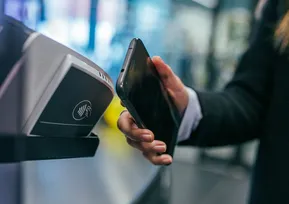
Photo by Ansel Lee on Pexels

Extending service to retail

Investors with a preference for exposure to the recently approved spot Bitcoin exchange-traded fund (ETF) products will be enabled to purchase those ETFs through the platform. 


Tiger will become the first technology-led brokerage in Hong Kong to offer an all-encompassing service supporting both traditional securities and virtual assets. The firm has incorporated competitive rates and a 24/7 trading ability into the offering in an effort to gain traction. Additionally, it has waived digital asset custody fees. 


Through the Tiger Trade platform, professional investors will be given access to this array of investment options. Initially, availability of the facility will be confined to professional investors in Hong Kong. Hong Kong residents with an investment portfolio valued above 8 million Hong Kong dollars ($1 million) and corporate entities with assets in excess of 40 million Hong Kong dollars ($5 million) qualify within the definition of accredited investors.


Once it gains the relevant regulatory approval, Tiger Brokers intends to extend the service to retail investors. The company also outlined that it is considering adding cryptocurrency spot withdrawals and deposits as features within the new service offering.


Zeng Qingfei, Chief Financial Officer of Tiger International, expressed the company's pride in leading the charge in virtual asset trading services. He emphasized Tiger Brokers' commitment to meeting the evolving needs of investors by expanding its product portfolio to include diversified investment opportunities. Through this strategic expansion, the company is aiming to equip investors with the tools they need to navigate dynamic market conditions effectively.


The company hasn’t confined its efforts to achieve further growth to Hong Kong. In recent days, it has also enabled 24-hour trading of U.S. stocks and exchange-traded funds (ETFs) in New Zealand. Through extended trading hours, Kiwi investors will have greater opportunity than ever to participate in the market.


 

More to Read
View All
Web3 & Enterprise·

Apr 25, 2024

Worldcoin executives meet Malaysian leaders 

OpenAI CEO Sam Altman's Worldcoin project aims to bolster ties with Malaysian officials amid concerns over data privacy. Sam Altman and Alex Blania, key figures behind the Worldcoin project, recently engaged in discussions with Malaysian leaders, including the nation's Prime Minister, to enhance government relations. The move comes as Worldcoin faces scrutiny and seeks to address concerns surrounding data protection.Photo by Esmonde Yong on UnsplashAddressing privacy concernsThe "proof-of-personhood" crypto project has been under scrutiny for its data collection practices. Last month, temporary bans were imposed by Spain and Portugal, halting Worldcoin's data collection activities. The project offers WLD tokens to users in exchange for iris scans to create their personal World ID, prompting privacy advocates' concerns. Government attention and oversightWorldcoin's high-profile nature, coupled with Sam Altman's involvement, has drawn significant government attention. Countries like Germany, France, Argentina, Kenya and South Korea have initiated investigations into the project's data collection practices. Despite challenges, senior government officials continue to engage with Worldcoin amidst growing concerns about artificial intelligence threats like deepfakes. Strengthening government relationsTo address regulatory concerns, Worldcoin's parent company, Tools for Humanity, appointed Trevor Traina, former U.S. ambassador to Austria, as Head of Global Affairs. Traina emphasized the importance of meeting policymakers' expectations regarding data privacy and security. New privacy measuresIn response to regulatory pressures, Worldcoin introduced "Personal Custody," discontinuing the storage of biometric data for new signups. Additionally, users can now request the deletion of their iris codes, and stricter age verification measures have been implemented to prevent minors from signing up. These measures were developed in consultation with privacy experts and data protection authorities. Despite challenges, Worldcoin has assigned over five million World IDs, according to project data. 

news
Policy & Regulation·

Apr 21, 2025

South Korean central bank eyes P2P transaction tests for CBDC pilot in October

South Korea’s central bank, the Bank of Korea (BOK), plans to begin testing peer-to-peer (P2P) transactions with its central bank digital currency (CBDC) in October, according to the Seoul Economic Daily. This will mark the second phase of its ongoing CBDC pilot, Project Hangang, which currently allows 100,000 citizens to use digital tokens for payments at both online and offline stores. In the fourth quarter, the pilot will also introduce voucher programs enabling local governments to distribute welfare benefits.Photo by Mathew Schwartz on UnsplashSandbox deadline pressureThe BOK originally planned to gather feedback from participants in the first phase and refine the system before proceeding. However, the central bank decided to speed up the timeline, as the broader project is operating under a regulatory sandbox program that provides two years of regulatory flexibility. A BOK official noted, “Since the current test ends in June, we can’t wait too long to move forward. Also, the fourth quarter timeline is still tentative.” While the BOK focuses on its CBDC, Korean commercial banks are accelerating efforts to develop stablecoin infrastructure and launch related pilot projects, Edaily reported. These initiatives reflect growing expectations that stablecoins will become a key tool for cross-border payments. Banks see this as an opportunity to attract new customers and earn fees from crypto exchanges by facilitating stablecoin transfers through their own networks. One example is Project Pax, a joint initiative involving Shinhan Bank, Nonghyup Bank and Kbank, which is testing stablecoin transfers between South Korea and Japan. Led by Japan’s digital asset platform Progmat, along with Korea’s Fair Square Lab and Korea Digital Asset Custody, the project enables Korean banks to send won-based stablecoins to Japanese financial institutions and receive yen-pegged stablecoins in return. Rising stablecoin useAn executive at a local bank expressed concern that South Korea is falling behind in stablecoin adoption. He predicted faster uptake, noting that consumers can save time and money by avoiding traditional foreign exchange processes. He also cautioned that, without action, the private sector could take the lead in building cross-border payment networks, bypassing the traditional SWIFT system. Another banker urged financial authorities to establish clear regulations for stablecoins, stressing the need for oversight as stablecoins are increasingly used to move foreign currencies out of Korea. Contrasting perspectivesHowever, BOK Governor Rhee Chang-yong remains skeptical of stablecoins, arguing that CBDCs offer far greater transparency. He pointed to the volatility of unregulated stablecoins and warned that their widespread use—especially if issued by private financial institutions—could undermine the central bank’s role as the sole issuer of legal tender. That said, financial authorities appear to be exploring a regulatory framework where CBDCs and stablecoins can coexist. Sharing his personal view, one official noted that while the future of stablecoins is uncertain, it’s important to remain open to various possibilities. He added that agencies are also reviewing recent changes in U.S. federal law, along with regulations in Japan and the EU. 

news
Web3 & Enterprise·

Aug 04, 2023

Hyosung TNS and APoT Join Hands to Promote NFT Portal Service

Hyosung TNS and APoT Join Hands to Promote NFT Portal ServiceSouth Korean IT infrastructure and financial solutions provider Hyosung TNS announced that it is teaming up with APoT Platforms, a company specializing in developing blockchains for real-world assets (RWAs), to promote NFTtown — Hyosung TNS’ portal service dedicated to providing information, news, and educational content on NFTs.Photo by Andrey Metelev on UnsplashBringing real-world assets to blockchainAPoT Platforms is equipped with technology that is able to embed data on RWAs, such as artwork and luxury goods, thereby connecting them to the blockchain. The company also maintains an extensive network of collaborative relationships with various NFT artist organizations and communities both domestically and abroad.Hyosung TNS plans to bring APoT’s artist network to NFTtown, allowing users to easily access information regarding NFT artists and their works.The two companies will also work together on other efforts, including introducing NFT artworks, digital product transfers, and events for NFT holders.NFT art exhibitionAs the first step of their collaboration, they plan to exhibit and sell works by renowned NFT artists such as Han Kwang-suk, Quiet Eye, and HAN (Han Sun-ok) this month at the Lotte Department Store Ilsan’s Spazio We;R Gallery.

news
Loading