Top

China dominates Bitcoin hashrate despite mining ban

Markets·September 23, 2024, 11:50 PM

While many people assumed that Bitcoin hashrate had moved overseas once China implemented a Bitcoin mining ban in 2021, miners within mainland China still dominate the activity.


55% of hashrate

That’s according to a report on X by Ki Young Ju, the founder and CEO of crypto data analytics firm CryptoQuant. Taking to the social media platform on September 23, the CryptoQuant CEO claimed that Chinese mining pools account for 55% of all Bitcoin mining activity. 


Since the 2021 ban, an increasing proportion of hashrate has been accounted for elsewhere, including the United States. Ju clarifies that U.S.-based mining pools now account for 40% of Bitcoin hashrate. He added:

”U.S. pools primarily cater to institutional miners in America, while Chinese pools support relatively smaller miners in Asia.”
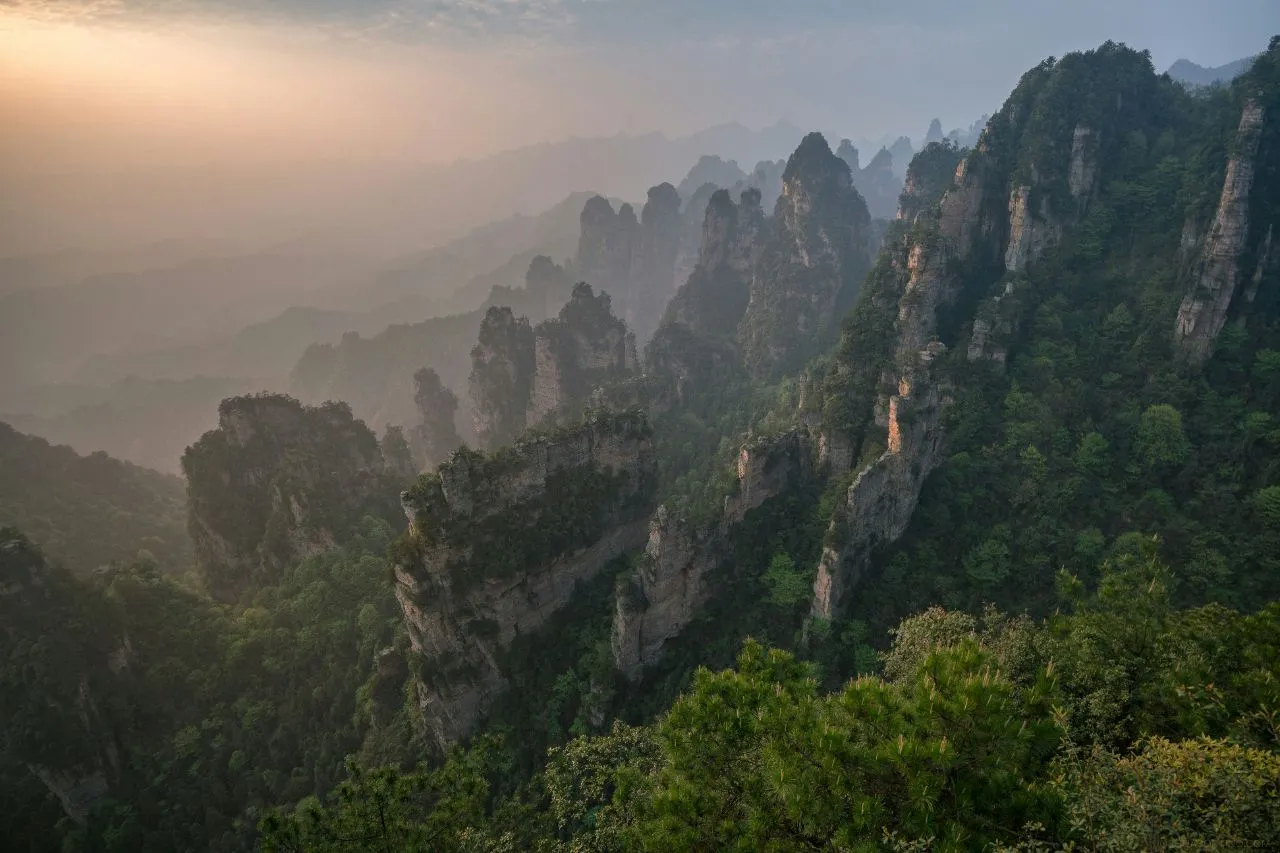
https://asset.coinness.com/en/news/b9e94c19997f3b3d63537bd2d7ee0928.webp
Photo by Joshua Sortino on Unsplash

Shift towards U.S.-based mining

While the majority of Bitcoin mining is accounted for within China’s borders, Ju acknowledges a growing shift towards U.S.-based mining. Some commentators have speculated that while officially a ban was put in place, in reality the ban presented an opportunity to jettison inefficient mining equipment, selling it on overseas, while maintaining only the most efficient miners within China.


Others such as Daniel Batten, an advisor to Nasdaq-listed Bitcoin miner Marathon Digital, went further in suggesting that the reporting of a blanket ban on Bitcoin mining within China was misleading. Instead, he believes that mining was suspended for a time and then rebooted.


Taking to X in June, Batten wrote:


“Stop referring to it as a ban. It wasn't and it plays into [mainstream media] narratives of Bitcoin mining being unwelcome by nation states.”


At the time, rather than Ju’s 55%, Batten estimated that 15% of overall hashrate was accounted for by Chinese miners.


Profitability challenges

In the months following the halving of the Bitcoin mining reward, miners have been struggling to maintain profitability. Bitbo data indicates that miner revenue weighed in at $827.56 million in August, representing a 10.5% drop when compared with $927.35 million in July. The situation has raised questions about the ongoing sustainability of securing the Bitcoin network via the current mining model. 


Yet despite these adverse conditions, miners have been maintaining the high hashrate level. JPMorgan analysts recently indicated that the Bitcoin hashrate has recovered to pre-halving levels. A report by Decrypt earlier this month claimed that some miners are aggressively purchasing new mining equipment while maintaining significant holdings of Bitcoin rather than selling it off.


Alongside what was perceived to be a ban on Bitcoin mining in 2021, China prohibited the trading of cryptocurrencies. Notwithstanding that, it’s thought that many Chinese residents have access to crypto via bank accounts in Hong Kong, connected with global crypto exchanges.


Hong Kong is perceived to be China’s sandbox for crypto with many speculating that the current pro-crypto stance taken within the Chinese autonomous territory had been approved by the authorities in mainland China. Whether China will lift its ban on crypto trading remains the subject of ongoing speculation.
 

More to Read
View All
Web3 & Enterprise·

Jan 19, 2024

Netmarble F&C prepares to lay off employees of Metaverse World subsidiary

Netmarble F&C, a subsidiary of South Korean game developer Netmarble, has taken action to lay off employees by notifying all 70 workers under its Metaverse World project to resign, according to industry sources on Friday (KST). Metaverse World, which had begun developing an IP-based metaverse platform, will be abandoned during an upcoming corporate reorganization process. Photo by julien Tromeur on UnsplashA brief journey from ambition to abandonmentMetaverse World was launched by Netmarble in 2022 by acquiring blockchain gaming platform ITAM Games and Web3 wallet developer Bono Technologies. It had been scheduled to hold a closed beta test last year, but no news of the development has resurfaced since then.  However, it was revealed today that the project will be abandoned during the corporate reorganization process. "We have been looking for a sustainable direction to take the project, but business conditions and market changes have pushed us to make the difficult decision to terminate the Metaverse World corporation, which was developing a metaverse platform,” a representative from the company disclosed. Fluctuating trendsThe metaverse first gained traction during the COVID-19 pandemic, when gatherings were limited to online spaces. Since then, the industry and other related technologies like Web3, blockchain and NFTs also garnered significant attention, with various companies snagging investments to fund their projects. However, as the attention of tech and investment firms has shifted to AI, these companies have increasingly found themselves in difficult positions. Last September, Com2Verse, the metaverse arm of content provider Com2uS Holdings', also began streamlining its workforce, organizing voluntary retirement and transition arrangements for its employees.

news
Web3 & Enterprise·

Feb 26, 2024

FOBLGATE gears up for the launch of real estate security tokens

Korean cryptocurrency exchange FOBLGATE (FOBL) last Thursday showcased its ongoing project on real estate-based security tokens at Momo Network’s second security token offering (STO) and Web3 networking party, the game media outlet Kyunghyang Games reported. Momo Networks is the company behind Momoboard, an all-in-one app that combines bulletin board, messaging and cloud storage features. The event served as an opportunity for FOBL to inform participants about the current stage of the exchange’s project and where it is headed. Initially introduced in November last year, the project is a collaboration between FOBL and prop fintech company Plus Platform, an asset management and trading platform headquartered in New York, U.S. Photo by Glenn Carstens-Peters on UnsplashReal estate-based security token projectAt the event, participants are anticipated to discuss the future of the security token market, which is currently focused on conventional real-world assets (RWAs). This new security token project is expected to innovate traditional real estate investments, offering benefits such as high liquidity, low transaction fees and easy access to investors, explained FOBL. The crypto company aims to solidify its position in the crypto market while raising public awareness of real estate security tokens. Future of virtual assetsAhn Hyun-jun, CEO of FOBL, said he plans to make his company an innovator in virtual asset development and create various types of crypto assets that extend beyond real estate-based security tokens.   Furthermore, a FOBL spokesperson stated that this networking party will serve as a forum for Web3 and STO experts to explore new technologies and innovative investment strategies, providing valuable insights for investors and market participants. 

news
Web3 & Enterprise·

Dec 01, 2023

Late Korean artist Lee Jung-seob’s ‘Bull’ NFT on auction at OpenSea

Late Korean artist Lee Jung-seob’s ‘Bull’ NFT on auction at OpenSeaNFT marketplace OpenSea is hosting an ongoing auction for a digital representation of the painting “Bull” by the late Korean artist Lee Jung-seob, Yonhap News TV reported on Tuesday. Celebrated for his distinctive lines in his paintings, Lee passed away in 1956. This auction is set to conclude on Dec. 12, with the starting bid placed at 300 WETH (Wrapped Ethereum), which is approximately equivalent to $626,000.Photo by Hans Eiskonen on UnsplashWhite bull as NFTLee’s “Bull,” featured in the OpenSea auction, is distinguished by its depiction of a white bull set against a dark green background. This particular piece is one of Lee’s unpublished works and is currently being offered for sale by a private art collector. Regarding the authenticity of the painting, the description on the OpenSea page states, “This work received a handwritten evaluation from Professor Jung Jum-sik, a founding member of the Lee Jung-seob Art Award, on November 9, 2000.”The current owner of the original artwork has expressed their intention for auctioning it as a desire to share a valuable piece of art. The painting originally belonged to poet Ku Sang and has since changed hands multiple times, experiencing some damage along the way. While the copyright for an artist’s work typically remains with their inheritors for 70 years posthumously, in the case of Lee Jung-seob, this period has already lapsed.Authenticity and NFT investmentsMeanwhile, art appraisal experts are advising caution, emphasizing the need to first confirm the authenticity of the original painting. This caution stems from the fact that the painting has not undergone evaluation by an official appraisal organization.During his interview with Yonhap, Jung Jun-mo, CEO of Korea Art Authentication Appraisal Inc., offered a word of caution regarding investment in NFTs tied to artworks with questionable authenticity. He emphasized that NFTs representing works that lack genuine authentication also hold no value in terms of authenticity. Jung advised potential investors to thoroughly verify the legitimacy of such artworks before proceeding with any investment in their NFT representations.Last year, many paintings of modern Korean artists were converted into NFTs, but they sparked controversy over issues of authenticity. Experts in art investment have since been advising thorough research prior to making any investments in these digital assets. They warn that losses incurred from transactions involving these NFTs fall squarely on the investors.

news
Loading