Top

Russia looks to implement crypto taxation and mining policy changes  

Policy & Regulation·November 21, 2024, 8:32 AM

A number of reports published by local Russian media in recent days suggest that the Russian authorities are implementing taxation and regional controls on cryptocurrency mining.
https://asset.coinness.com/en/news/843ec277b0a14f013e4a5e27ff17faf0.webp
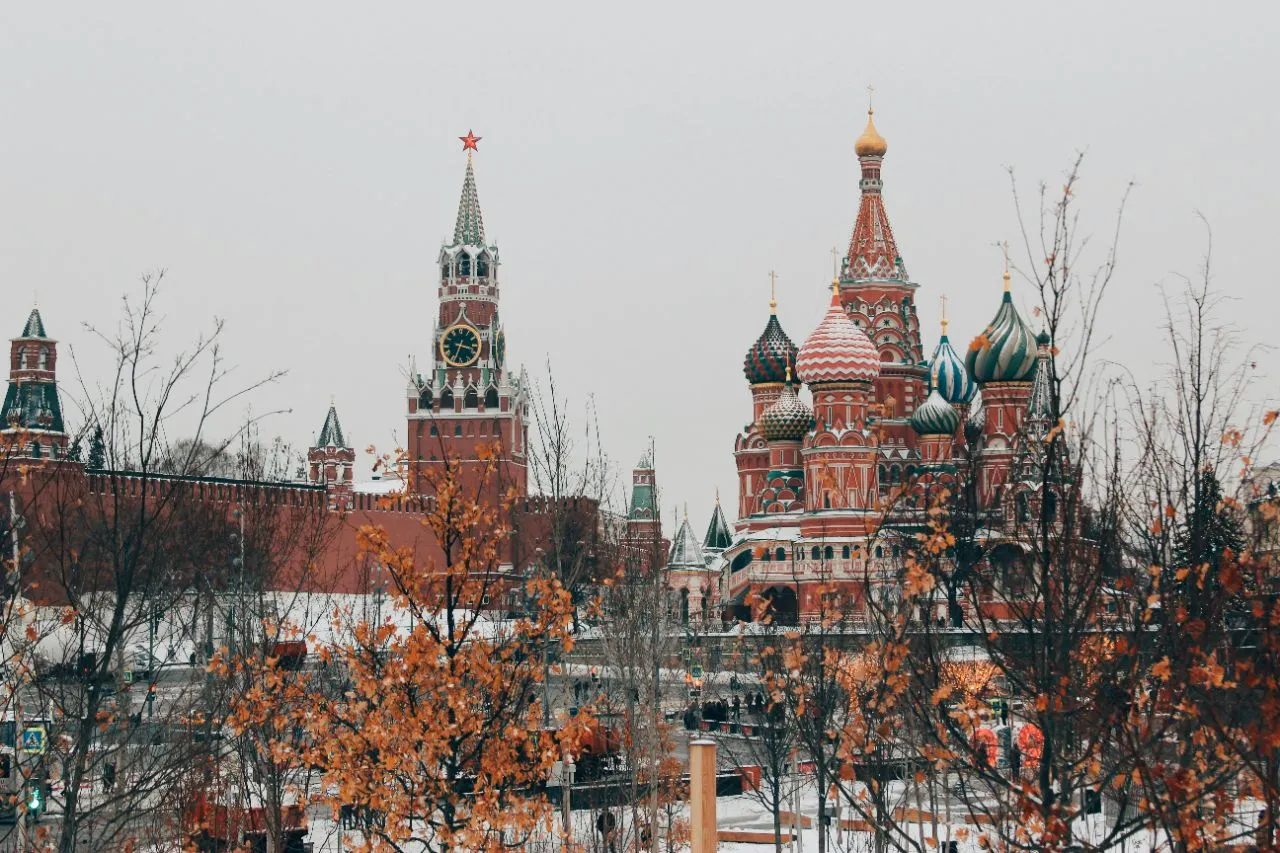
Photo by Michael Parulava on Unsplash

Regional mining ban

A report published by the Moscow Times on Nov. 19 suggests that Russia’s Deputy Prime Minister, Alexander Novak, has led a government commission that plans to implement a ban on cryptocurrency mining in specific Russian regions. 


The authorities have been motivated in enacting such a ban in order to combat power shortages. With that, a ban is being implemented on a temporary basis during the heating season. The restrictions will apply to miners located within six regions within the North Caucasus, as well as the Zabaikalsky region in Siberia and territories now controlled by Russia in Ukraine.


The ban will apply from December through to mid-March 2025, with this seasonal restriction to be applied subsequently each winter until 2031.


Back in August, Russian President Vladimir Putin signed into law legislation which legitimized cryptocurrency mining within the Russian Federation. That law recognized mining activities and the concepts of mining pools and mining infrastructure operators.


The legislation requires mining operators to register with the government. Individual miners can mine without registering so long as they stay within specified energy-use limits. Earlier this month, the authorities set a power consumption limit of 6,000 kWh per month for those unregistered miners. 


The legislation also recognized the ability of stakeholders to trade in foreign digital assets on Russian blockchain platforms, with Russia’s central bank, the Bank of Russia, retaining the ability to ban specific digital assets from being traded if such trading is deemed to be a threat to Russia’s financial stability.


15% tax proposal

Earlier this week Russia’s Interfax news agency reported that the Russian government had approved draft amendments to a bill concerned with the purchase and sale of digital currencies relative to crypto mining activity. 


According to those proposed legislative amendments, digital assets will be classified as property from a taxation perspective. Income derived from mining activities will be assessed in terms of taxation based on market value at the time of receipt of the asset.


The legislative amendments propose a 15% tax rate for cryptocurrencies. Furthermore, crypto transactions will not be subjected to value-added tax (VAT). However, income derived from such transactions will be taxable in the same way as income from transactions involving securities. Crypto mining operators will be permitted to deduct operating expenses from their taxable income.


Russia’s Finance Ministry is understood to have clarified that the taxation approach would strike a balance between Russian government interests and those of commercial operators.


With the introduction of legislation to recognize cryptocurrency mining activity earlier this year, Ki Young Ju, CEO of on-chain and market data analytics firm CryptoQuant, noted the country’s growing involvement and national-level engagement with digital assets. The coming months will determine if these latest crypto mining restrictions will dampen the level of involvement of Russia-based crypto miners.

More to Read
View All
Policy & Regulation·

Aug 26, 2023

Binance Takes P2P Service Measures in Response to Sanctioned Russian Banks

Binance Takes P2P Service Measures in Response to Sanctioned Russian BanksGlobal crypto exchange Binance has removed the option for users to conduct transactions via sanctioned Russian banks on its peer-to-peer (P2P) platform, a decision that comes on the heels of a Wall Street Journal exposé published earlier this week, shedding light on the platform’s involvement in facilitating the movement of funds for Russian users.Previously, Binance’s peer-to-peer service featured five Russian banks under sanctions as a method for ruble transfers between users. However, the company swiftly acted to address potential compliance concerns. Fittingly, this latest news was also broken by the Wall Street Journal on Friday.Dmitry Sidorov on PexelsSailing too close to the windWhen approached regarding the omission of these banks, a Binance spokesperson stated: “We regularly update our systems to ensure compliance with local and global regulatory standards. When gaps are pointed out to us, we seek to address and remediate them as soon as possible.”The Wall Street Journal’s article outlined how Binance’s peer-to-peer platform facilitated ruble-to-crypto trades that frequently involved the sanctioned Russian banks, with Rosbank and Tinkoff Bank being prominent examples.These trades often utilized layers of intermediaries to convert funds from these banks into Binance balances, as detailed by various company resources, user screenshots, and messages in official chat groups. Despite these revelations, Binance’s exchange had continued to handle significant volumes of ruble trading, according to data compiled by digital asset research firm CCData.US DoJ probeBinance’s activities in Russia could potentially contribute to its ongoing legal challenges in the United States. The US Justice Department (DoJ) has been probing the company’s actions for potential violations of American sanctions on Russia. In response to such concerns, the Binance spokesperson emphasized:“Binance aims to diligently comply with the global sanctions rules and enforces sanctions on people, organizations, entities, and countries that have been blacklisted by the international community, denying such actors access to the Binance platform.”WorkaroundsTraders, however, had reportedly found workarounds to the bank removals, as observed in the official Telegram chat group for Russian clients. Many shared that they could still engage with sanctioned banks by selecting alternative payment methods and then manually inputting their Rosbank or Tinkoff bank details.Earlier this year, an investigative report by CNBC alleged that employees of the company had told it that Binance staff regularly helped Chinese customers to bypass Know Your Customer (KYC) controls in order to access the platform. More recently, another report, once again by the Wall Street Journal, found that business in China was booming, which surprised many given that China banned crypto trading within the country in 2021.It’s apparent that the company is reacting to regulatory and legal pressures in taking the decision to make these changes to its P2P service. Perennial crypto critic US Senator Elizabeth Warren took to X (formerly Twitter) on Friday, stating:“I rang the alarm about sanctions evasion by Russia using the crypto platform Binance — and urged [the DoJ] to investigate potentially false statements it made to Congress. We need stronger crypto regulations to rein in illicit finance.“

news
Web3 & Enterprise·

Jun 19, 2023

Korean Investment Firm Partners with Open Asset to Build Security Token System

Korean Investment Firm Partners with Open Asset to Build Security Token SystemKorea Investment and Securities (KITC), one of the major securities firms in the nation, announced today that it signed a memorandum of understanding (MOU) last week with Seoul-based blockchain developer Open Asset to construct a distributed ledger system for a security token alliance led by KITC. That’s according to a report by local news outlet Dailian.Photo by Growtika on UnsplashSecurity token groupIn March, KITC initiated a security token group called “Korea Investment ST Friends” in collaboration with online banks Kakao Bank and Toss Bank, as well as Kakao Enterprise, an artificial intelligence (AI) solution provider. The primary objective of this alliance is to establish the necessary infrastructure for issuing products suitable for security tokens.Tech expertiseOpen Asset, led by its CEO Kim Kyung-up, boasts a team of tech talents. The company played a key role in the Bank of Korea’s central bank digital currency (CBDC) project and participated in the development of Kakao-backed initiatives such as the blockchain platform Klaytn and the digital wallet Klip.Future system integrationThe partnership with Open Asset aims to integrate the forthcoming distributed ledger system into KITC’s existing securities trading platform, creating synergies for its business. Additionally, the two entities are exploring the possibility of connecting the new platform with the systems of other participants in the group in the future.Choi Seo-ryong, the head of the platform division at KITC, emphasized the investment firm’s objective of establishing market standards for security tokens that offer numerous possibilities. He added that KITC will work with Open Asset to develop an innovative and efficient system.

news
Policy & Regulation·

Jul 14, 2023

Hong Kong’s Bricks-and-Mortar Crypto Shops Attract Chinese Visitors

Hong Kong’s Bricks-and-Mortar Crypto Shops Attract Chinese VisitorsHong Kong has become a thriving destination for cryptocurrency enthusiasts, particularly mainland Chinese visitors, due to the ambiguity surrounding the regulatory status of these crypto shops.Despite the illegality of cryptocurrency transactions on the mainland and the ban on overseas exchanges serving onshore clients, Hong Kong allows legal crypto trading, and according to a recent report published by the Financial Times, the autonomous Chinese territory is being accessed by residents of the Chinese mainland for the purpose of trading crypto.Photo by Chapman Chow on UnsplashSurging demandBricks-and-mortar crypto shops, lightly regulated and scattered across the city’s popular tourism and shopping districts, have flourished thanks to the surging demand from mainland Chinese visitors. These stores offer customers the convenience of purchasing digital assets with cash, often without the need to disclose the source of funds or personal information.In contrast to the strict licensing requirements imposed on online exchanges in Hong Kong’s push to become a virtual assets trading hub, these over-the-counter (OTC) crypto stores provide customers with the opportunity to buy large volumes of cryptocurrencies with minimal or no verification checks.Before the border between China and Hong Kong reopened fully in February, mainland Chinese customers accounted for less than 5% of customers at Crypto HK, an OTC crypto outfit with two branches in the city. However, this figure has now increased significantly, making up around half of their customer base.Similarly, One Satoshi, a crypto store with nine branches in Hong Kong, reported trading volumes between January and May 2023 that were 20–25% higher than the same period the previous year. They anticipate a 35–40% increase in trading for the entire year.While some store owners, like Roger Li of One Satoshi, currently decline mainland Chinese customers due to Beijing’s crypto ban, they remain optimistic that restrictions will ease. This belief is prevalent among the crypto community in Hong Kong following the city’s announcement to become a virtual assets hub in October.Regulatory anomalyHong Kong introduced a new regulatory framework for cryptocurrency exchanges in June, requiring all online platforms operating in the city to apply for a license. However, most OTC stores still operate outside the purview of Hong Kong’s Securities and Futures Commission (SFC), presenting an area of further consideration for the government.OTC stores primarily serve as a simple way for users to convert money to and from unlicensed online exchanges, according to Carlton Lai, head of blockchain research at Daiwa Capital Markets. Hong Kong’s lenient regulations and ease of starting such businesses, as long as there is sufficient capital, contribute to the higher number of OTC stores compared to other locations.While some shops welcome increased regulation in the sector, others do not require customers to provide identification, promoting quick and anonymous transactions. However, this falls short of the investor protection measures mandated for online platforms seeking licenses to trade cryptocurrencies to retail clients.The lack of scrutiny faced by Hong Kong’s OTC shops, coupled with their proximity to mainland China — a market that ranked fourth globally for crypto trading in 2022 — makes them appealing to Chinese citizens still interested in the asset class.

news
Loading