Top

DWF Labs switches headquarters from Singapore to Abu Dhabi

Web3 & Enterprise·December 03, 2024, 8:48 AM

DWF Labs, a Singapore-based crypto sector investment firm and market maker, has decided to move its headquarters to Abu Dhabi in the United Arab Emirates (UAE).


Alongside its current offices and headquarters in Singapore, the company has established offices in Dubai, Hong Kong, Switzerland, South Korea and the British Virgin Islands (BVI).

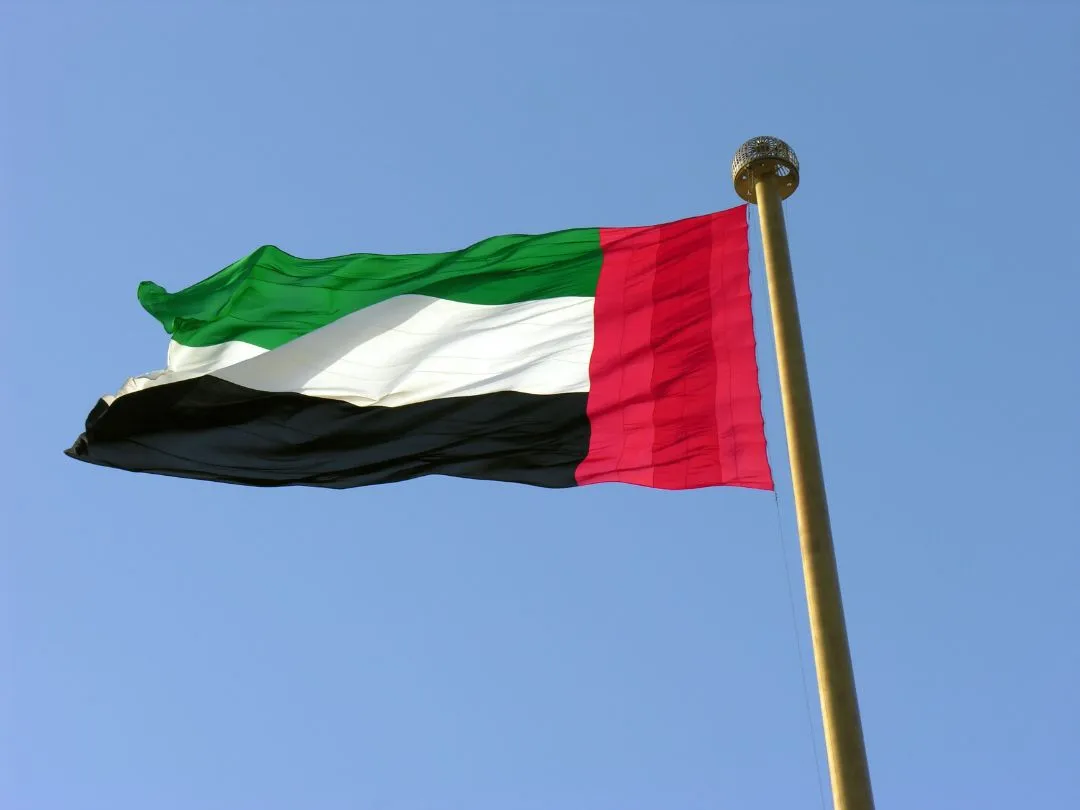
https://asset.coinness.com/en/news/9352e5a6311673bc7c05a32a0ca9990c.webp
Photo by Adnan Uddin on Pexels

Focusing on MENA growth

In an X post published on Dec. 2, DWF Labs Co-Founder Andrei Grachev announced the change of headquarters location from Singapore to Abu Dhabi, stating:


“In order to build a strong presence in the Middle East and run more RWA [Real World Assets] and financial services there, @DWFLabs is moving the headquarter to Abu Dhabi.”


Grachev added that more news in this regard will be announced soon, advising stakeholders to stay tuned regarding the matter. In the past, the DWF Labs founder has highlighted the significance of the Middle Eastern market. 


Earlier this year, he suggested that the Middle East and North Africa (MENA) market is “one of the fastest growing markets in the world,” while commenting on the firm’s partnership with the Dubai Multi Commodities Centre (DMCC), a Dubai-based ecosystem for blockchain and distributed ledger technologies. 


That isn’t the firm’s only partnership within the UAE. In September, it emerged that it had partnered with Abu Dhabi-based Web3 venture capital firm Klumi Ventures. The firms intend to collaborate in relation to the offering of strategic crypto advisory services in the UAE, investments and market making, market education and in the facilitation of over-the-counter (OTC) deals and crypto asset options.


Strategic positioning

At the time, Grachev said that the two firms were “strategically positioned to drive the digital transformation in the UAE,” with the ability to empower both new market entrants and established institutions to succeed within the digital assets arena.


It appears that Grachev has been spending a significant amount of time in Abu Dhabi of late. On Sept. 25, he posted on X that he had arrived in Abu Dhabi and was “cooking something special for the industry.” He followed up on that more recently, posting a selfie on X on Nov. 25 with the caption “Chef cooking in Abu Dhabi.”


The authorities in both Dubai and Abu Dhabi, as well as Singapore, have all been working towards attracting crypto startups to their cities. All of them have had some success in that regard, although DWF Labs’ move away from Singapore indicates how competitive this environment is and how mobile crypto startups are.


ADGM crypto hub

In the case of Abu Dhabi, most crypto sector activity has happened within the city’s international financial centre (ADGM), which has attracted projects such as the Kaia DLT Foundation, stablecoin issuer Paxos, blockchain infrastructure firm Blockdaemon, crypto custodian Liminal, crypto venture capital fund Token Bay Capital and many others.


DWF Labs was first founded in Singapore in 2022. It has established ecosystem funds and grants relative to projects such as EOS, Floki, Gala Chain, Klaytn and TON. Additionally, the firm has just announced the launch of a $20 million fund focused on meme coin projects.


More to Read
View All
Markets·

Nov 05, 2025

StanChart CEO predicts blockchain will replace cash in everyday finance

Bill Winters, the American banker who heads the British financial group Standard Chartered, appeared at the Hong Kong FinTech Week conference earlier this week, where he predicted a future in which cash will give way to blockchain-based systems for everyday transactions. According to Cointelegraph, Winters’ view aligns with that of Hong Kong regulators. At the same time, he stressed the importance of continued experimentation, noting that it remains uncertain how this transformation will ultimately take shape. Winters also commended Hong Kong’s leadership in exploring the potential of digital finance. Tech-driven finance has certainly been one of the key initiatives Hong Kong has been exploring. Recently, the Hong Kong Monetary Authority (HKMA) released its e-HKD Pilot Programme Phase 2 Report, which showed public support for tokenized deposits.Photo by Shubham Dhage on UnsplashReal-world assets gain ground on the blockchainOn-chain data also underscores the rapid growth of the tokenization sector. According to RWA.xyz, the total value of real-world assets (RWAs) deployed on-chain has climbed to $35.63 billion, up 7.8% from a month ago. A study by Ripple and Boston Consulting Group (BCG) estimates that tokenized assets could be worth $19 trillion by 2033, about 530 times their current value. Among RWA assets, the BlackRock USD Institutional Digital Liquidity (BUIDL) Fund, Tether Gold (XAUT), and Paxos Gold (PAXG) currently lead the market in terms of value. Over the past 30 days, BlackRock’s BUIDL Fund slipped 0.06%, while the two tokenized gold products, XAUT and PAXG, jumped 46.65% and 14.19%, respectively. These gains mirror gold’s bullish run in October, when its price surpassed $4,000 per ounce for the first time on Oct. 7. The momentum has since eased slightly, with gold now trading at around $3,969.55 per ounce. Tokenization brings 24/7 markets and P2P flexibilityIndustry experts point to the convenience of tokenization as a key advantage. Speaking to Yahoo Finance, Will Peck, head of digital assets at WisdomTree, explained that tokenized gold allows for around-the-clock trading and direct peer-to-peer (P2P) transactions. He added that gold and Bitcoin act as complementary stores of value, both serving as deflationary assets. Ian Kane, CEO of fintech company Firepan, said tokenized gold appeals to investors as it enables them to retain ownership, leverage their holdings for loans, and generate extra yield, while preserving their principal against debasement or devaluation. These views are not new. Earlier this month, Robinhood Markets CEO Vlad Tenev described tokenization as “a freight train” that “can’t be stopped,” predicting it will eventually transform the global financial system. Similarly, in his annual letter to investors in April, BlackRock CEO Larry Fink said the tokenization of assets could fundamentally reshape the way people invest. By digitizing ownership, tokenized venture capital funds could move beyond their closed circles, giving ordinary investors a stake in early-stage innovation and greater control over their capital. Venture capital faces hurdles in tokenization pushWhile tokenization promises greater accessibility and liquidity, not all market segments are ready for it. According to TheStreet, tokenized venture capital (VC) funds could open a traditionally closed market to more investors, but the process is more complex than it appears. In an interview with TheStreet, Elena Obukhova, founder of Supermoon Ventures, said that liquidity, not technology, is the main obstacle. Unlike tokenized company shares that can be traded freely on public markets, VC funds invest in private startups whose value may take years to materialize through an exit or acquisition. Allowing such funds to trade freely could increase volatility and pressure founders, as interim valuations might distort perceptions and weaken confidence in early-stage ventures. Still, the promise of tokenized venture finance remains within reach. Firms are testing models that limit trading periods, protect investor data, and refine valuation methods to better reflect the illiquid nature of startup investments. Since liquidity events such as initial public offering (IPOs) or acquisitions typically occur only every one to two years for early-stage startups, the path forward will depend on creating systems that can maintain stable and accurate valuations in the interim. Tokenization is rapidly emerging as a transformative force in the financial world, offering greater accessibility, liquidity, and efficiency. As more assets, from gold to venture capital, make their way onto the blockchain, the potential to reshape investment and trading markets grows. While challenges remain, particularly around liquidity and valuation in sectors like venture capital, the continued advancements in tokenization demonstrate its key role in the future of finance.

news
Markets·

May 06, 2025

3 UAE-based firms sign $3B tokenized real estate deal

MultiBank Group, a global financial derivatives company headquartered in Dubai, has partnered with two other United Arab Emirates (UAE)-based firms, real estate giant MAG and tokenized real-world asset (RWA)-focused blockchain infrastructure provider Mavryk, in a $3 billion tokenized real estate deal.Photo by Tierra Mallorca on UnsplashWhile a large proportion of MAG's business activities center around the Dubai real estate market, MAG Group is a multinational conglomerate with a portfolio that includes commercial and residential developments and high-end luxury real estate projects.  According to a press release published on May 1, this $3 billion deal implicates MAG’s luxury developments, such as The Ritz-Carlton Residences in Dubai and other properties located within the Keturah Resort and Keturah Reserve in the UAE’s most populous city. These properties will be tokenized and hosted on the blockchain through MultiBank.io’s regulated tokenized RWA marketplace. Mavryk will provide the necessary infrastructure, with the tokenized assets running on its blockchain network. The deal provides another indication of the growing role of tokenization, with it being the largest tokenized RWA deal to have been put together to date. The Mavryk Network testnet was launched in February, with Mavryk Network developer Mavryk Dynamics securing $5 million in funding to establish a tokenized RWA network economy. In this instance, Mavryk will provide support in terms of on-chain asset issuance and DeFi integrations. Not just a real estate dealTalal Moafaq Al Gaddah, senior executive vice chairman of MAG, said that the project “marks a milestone in broadening access to high-value developments and unlocking liquidity via blockchain.” Al Gaddah also commented on the MBG token, stating:“$MBG token provides ecosystem utility, including trading discounts, early access to properties, and a deflationary buyback-and-burn model.” MBG is a MultiBank utility token which features deflationary tokenomics. It will be used to enable staking and lower trading fees. The token is scheduled to be launched on June 2. MultiBank.io Founder and CEO Zak Taher highlighted the importance of the token launch alongside this tokenized real estate deal. He stated:“This isn’t just a real estate deal — it is a flagship use case for the $MBG token. By enabling seamless access to $3B in tokenized property, MultiBank becomes the bridge between regulated finance and next-generation investment infrastructure.” Dual utilityAl Gaddah referred to the duality of the tokenized real estate offering:“Tokenized assets issued by MultiBank will have dual utility. Within the MultiBank Group, they can be used as collateral for derivatives, creating a seamless bridge between traditional finance and tokenized assets.” RWA tokenization has been gaining momentum within the UAE recently. It emerged last month that the Dubai Land Department (DLD), a government agency responsible for the registration of real estate in Dubai, had signed an agreement with local regulator the Virtual Assets Regulatory Authority (VARA) to integrate tokenized real estate within existing systems.  Around the same timeframe, blockchain technology firm Serenity signed a partnership with Dubai’s MTA Real Estate to develop a tokenized real estate platform. Last year RWA-focused layer-1 blockchain project MANTRA Chain announced that it would tokenize $500 million in real estate assets in Dubai.

news
Markets·

Nov 06, 2025

Crypto and Wall Street leaders set to meet at Abu Dhabi Finance Week next month

Emerging as one of the world’s major crypto hubs, the United Arab Emirates (UAE) is set to host Abu Dhabi Finance Week, described as the region’s largest financial and investment event, in the capital next month. Scheduled to take place from Dec. 8 to 11, the conference will feature leading figures from both traditional finance and the crypto industry. Notable speakers from traditional finance include Bridgewater founder Ray Dalio, Morgan Stanley International CEO Clare Woodman, and Franklin Templeton CEO Jennifer Johnson. Representing the crypto sector will be Binance CEO Richard Teng, Solana Labs CEO Anatoly Yakovenko, Circle CEO Jeremy Allaire, among others.Photo by Saj Shafique on UnsplashHashed, ADGM host Web3 policy talksAmong the partners for the four-day event is Seoul-based venture capital firm Hashed, which opened its Abu Dhabi office last year. The expansion followed its partnership with Hub71, the city’s global tech ecosystem, which aims to help more Korean startups expand into the Emirates. According to South Korean news outlet News1, Hashed, jointly with Abu Dhabi Global Market (ADGM) Emerging Tech, will host the Web3 Leaders Roundtable. The event will feature two sessions: one exploring next-generation digital infrastructure, where artificial intelligence and blockchain converge with the real economy, and another focusing on digital asset regulations, particularly how policies can be designed to balance innovation with oversight. Bybit courts UAE talentAbu Dhabi’s growing appeal as a hub for digital asset businesses is also underscored by crypto exchange Bybit’s recent participation in the annual NYU Abu Dhabi Career Fair. Concluding on Oct. 30, the event marked the trading platform’s first talent outreach initiative in the UAE. The participation comes after Bybit obtained a full virtual asset platform operator license from the Securities and Commodities Authority (SCA) last month. The occasion gave Bybit an opportunity to engage with students and recent graduates. The growing adoption of cryptocurrency in the country is reflected in Du’s launch of a crypto mining service aimed at individual users. As one of the UAE’s two major telecom operators, Du is leveraging its nationwide data centers to allow residents to rent the necessary computing power on a subscription basis to mine digital assets, according to a report by the Emirates-based newspaper The National. Du’s cloud platform powers user miningJasim Al Awadi, Du’s chief information and communications technology officer, said the new service is powered by Cloud Miner, a platform introduced last year under the company’s sub-brand Du Tech. He explained that as the service evolves, users will gain access to a calculator that estimates their potential monthly Bitcoin earnings. Du also intends to continue enhancing and expanding its mining-as-a-service offering. The launch coincides with a period of volatility in the crypto market. On Nov. 5, Bitcoin fell below the $100,000 mark for the first time since June 23, dropping to $99,992.01 against USDT on Binance before recovering to above $103,000. 

news
Loading