Top

XRP primed for institutional adoption in Asia via tracker fund launch

Web3 & Enterprise·April 22, 2025, 8:36 AM

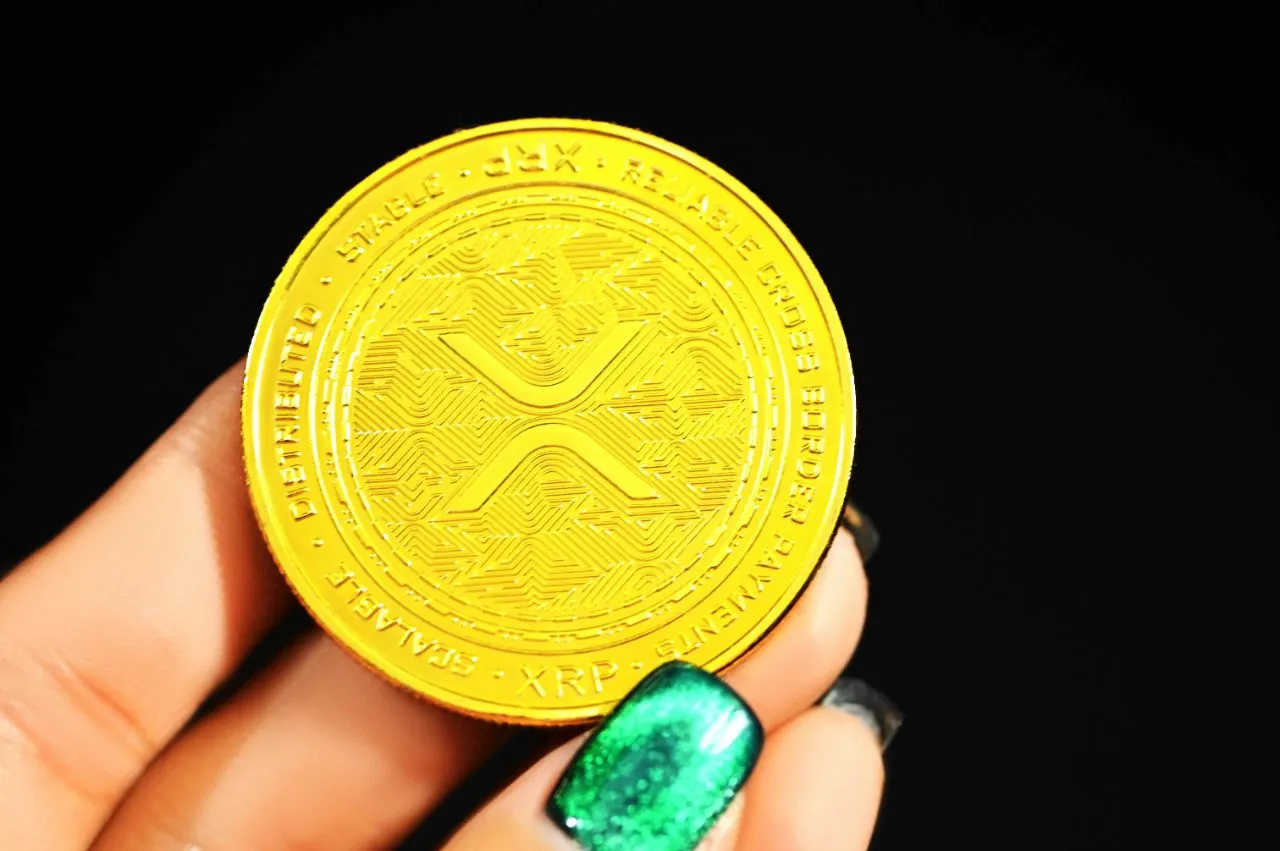
XRP, the native asset of the XRP Ledger (XRPL), a blockchain network developed by Ripple Labs, is destined for further institutional adoption in Asia due to the launch of the region’s first XRP tracker fund.


Crypto-focused institutional asset manager HashKey Capital recently announced the launch of its HashKey XRP Tracker Fund, which has been devised to track the performance of what is the world’s fourth-largest crypto asset by market cap, after Bitcoin (BTC), Ether (ETH) and U.S. dollar stablecoin Tether (USDT).
https://asset.coinness.com/en/news/99402d12198ff279c25518cd15e8a457.webp
Photo by Kanchanara on Unsplash

Enabling institutional access

The fund enables investors to gain exposure to XRP without having to take direct ownership and custody of the digital asset. Bitcoin and Ethereum exchange-traded funds (ETFs) have become popular in a number of markets, including the United States, as they allow institutional investors to gain exposure to these digital assets where they may have been uncomfortable with direct ownership due to concerns around custody and counterparty risk or regulatory concerns.


According to HashKey’s press release, investors can buy into the fund through cash or in-kind subscription and subscribe or redeem shares monthly. The fund will be measured and compared against a benchmark index provided by CF Benchmarks, a provider of crypto-related indices.


HashKey Partner Vivien Wong acknowledged the potential that XRP has in the market, stating:

“XRP stands out as one of the most innovative cryptocurrencies in today’s market, attracting global enterprises who use it to transact, tokenize, and store value.”

She added that the new fund simplifies access to XRP within the region, while catering to a growing demand for investment opportunities related to digital assets.

Potential ETF fund conversion

This marks HashKey’s third product that tracks digital asset pricing, with the company having launched both Bitcoin and Ethereum exchange-traded funds (ETFs) previously. On X, HashKey Capital outlined that the XRP Tracker Fund could potentially evolve into a fully fledged ETF, subject to regulatory approval, within the next 1-2 years.


The new fund, which was launched on April 18, also incorporates a strategic partnership with XRP developer Ripple Labs. In what is understood to be the first of a number of collaborations, Ripple will fulfill the role of being the fund’s anchor investor.

Ripple’s Managing Director for the Asia-Pacific (APAC) region, Fiona Murray, cited the development as proof that institutional adoption of digital assets continues to go from strength to strength. 


Ripple CEO Brad Garlinghouse stated last month that he expects a number of spot XRP ETFs to be approved in the United States later this year. Earlier in March, analysts at American investment bank JPMorgan had estimated that spot XRP ETF approval in the U.S. could result in net inflows of $8 billion into such products.

At the time of writing, XRP was trading at $2.09. The asset has increased in price by 300% over the course of the past 12 months, largely due to a changing regulatory environment in the United States and optimism that a settlement can be reached to end its multi-year legal battle with the Securities and Exchange Commission (SEC).


More to Read
View All
Web3 & Enterprise·

Jun 23, 2023

Japan’s Biggest Bank Explores Global Stablecoin Issuance

Japan’s Biggest Bank Explores Global Stablecoin IssuanceMitsubishi UFJ Financial Group Inc. (MUFG), the largest bank in Japan, is currently engaged in discussions with companies involved in popular global stablecoins, as well as other firms, to explore the possibility of issuing these tokens using MUFG’s blockchain platform.That’s according to a report published by Bloomberg on Thursday. The stablecoin law in Japan, which recently went into effect on June 1, has established that only licensed banks, registered money transfer agents, and trust companies within the country are authorized to issue stablecoins.Photo by CoinWire Japan on UnsplashProgmat platformMUFG is actively in talks with various parties regarding the utilization of its blockchain platform, Progmat, to mint stablecoins linked to foreign currencies, including the US dollar, with the intention of facilitating their global use.Tatsuya Saito, the Vice President of Product at MUFG, emphasized that the implementation of the legislation provides issuers and users with a sense of security when it comes to engaging with stablecoins. However, he refrained from disclosing the specific stablecoin parties that MUFG is currently in discussions with.Stablecoins play a pivotal role within the cryptocurrency sector, serving as a reliable asset for investors to hold between trades involving more volatile tokens. These tokens are designed to maintain a consistent value, often pegged to $1, and are typically backed by reserves such as cash and bonds. CoinGecko data indicates that approximately $130 billion worth of stablecoins are presently in circulation.Stablecoin stabilityNevertheless, stablecoins have faced challenges in the past when it comes to maintaining their pegs, resulting in disruptions within crypto markets. Notably, TerraUSD, a token reliant on algorithms and trader incentives, experienced a significant crash in May 2022, leading to losses of at least $40 billion. In response to such incidents, regulators have intensified their scrutiny of stablecoins. The stablecoin law in Japan encourages the issuance of stablecoins that are fully backed by fiat cash in a corresponding currency.MUFG envisions leveraging its Progmat blockchain platform to issue security tokens on behalf of third parties, with no immediate plans to develop its own stablecoin, according to Saito. He further revealed that the bank is actively exploring stablecoin projects with entertainment firms, non-financial businesses, and a consortium of Japanese financial institutions. Furthermore, overseas financial groups have shown keen interest, and Saito believes that Japan has the potential to become a global hub for stablecoin issuance.Tether dominanceTether ($USDT) holds the position of the top global stablecoin, accounting for more than 60% of the sector’s market value, while Circle Internet Financial Ltd.’s USD Coin ($USDC) occupies the second spot. Any party intending to produce stablecoins within Japan would need to comply with the country’s legislation.Saito highlighted that the regulation’s provision allowing stablecoins to be denominated in various currencies, including the US dollar, opens up opportunities for the issuance of tokens intended for global use. He expressed his belief that this presents a significant opportunity for Japan.Prime Minister Fumio Kishida’s economic agenda, known as “New Capitalism,” includes a focus on supporting the growth of Web3 firms. While Japan has taken steps to relax certain cryptocurrency regulations, such as those pertaining to token listing and taxation, it continues to be perceived as a country with relatively strict regulations.

news
Web3 & Enterprise·

Oct 17, 2023

Haru Invest Considers Server Suspension as Troubles Persist

Haru Invest Considers Server Suspension as Troubles PersistIn the wake of halting withdrawals in June, Haru Invest, a Singapore-headquartered cryptocurrency platform, is contemplating the suspension of its server. This decision is part of the firm’s ongoing efforts to streamline operations and reduce maintenance costs.Photo by David Guenther on UnsplashCost reductionCEO Hugo Lee made the announcement on Monday, underscoring the significant burden of server maintenance costs on the company’s finances. He acknowledged that this cost represents a substantial portion of their fixed expenses and is thus a top priority for the firm.Lee disclosed:“We plan to suspend the service in a few weeks, backing up all member information.”However, he also noted that the company is yet to finalize a concrete plan for the server suspension.The move to shut down the server aligns with Haru Invest’s broader strategy to lower all costs associated with its services. Lee explained:“Some of the current fixed expenditures include the upkeep of Haru Invest services, the cost of workspace like the office, and the cost of communication with our members.”The company is actively seeking ways to reduce these expenses and preserve its assets.Asset distributionAdditionally, Lee assured users that the assets conserved thus far would be included in the distribution to those who have had their funds locked on the platform since June, offering a glimmer of hope to impacted users.Nevertheless, the announcement of the server suspension has raised concerns within the Haru Invest community. Some users have expressed skepticism about the purported high costs of server maintenance, believing the firm’s claim to be exaggerated.One user, voicing this discontent, commented on Haru Invest’s Telegram channel, “Server costs cost nothing.” Another remarked: “Servers are gone soon guys, huge costs, 200 USD a month.” According to industry standards, the maintenance costs for running a server for a small to medium-sized business typically range between $35 to $500 per month.Unhappy platform usersLee’s statement regarding the impending server suspension follows the platform’s earlier decision to terminate deposits and withdrawals in June. This decision was coupled with the closure of Haru Invest’s offices and the dismissal of numerous employees, as reported by local news agencies.Haru Invest attributed these issues to the fraudulent activities of the consignment operator B&S Holdings, formerly known as Aventus. While some investors accused the firm of orchestrating a “rug pull,” Haru Invest denied these allegations and maintained its innocence. One user posted the following claim on X (formerly Twitter) last week: “Rugpull. If justice is served, the scammers will be behind bars.”In a bid to address concerns over its corporate rehabilitation application, Lee appeared in court in September, emphasizing that Haru Invest was actively cooperating with investigating agencies. However, the company has yet to provide a timeline for the recovery of users’ assets as of early October.Lee also addressed the matter in Monday’s statement: “We are also responding to the rehabilitation proceedings that some of our members have filed with the court as mentioned in our previous announcement, in addition to actively cooperating with other authorities’ investigations. ”Haru Invest is reportedly facing a class-action lawsuit with disgruntled investors alleging fraud.

news
Markets·

Jul 22, 2025

Bit Origin makes first purchase following DOGE treasury announcement

Bit Origin, the Nasdaq-listed (BTOG) pork processor turned crypto mining infrastructure firm, has acquired 40.5 million Dogecoin (DOGE), the company’s first purchase of the world’s largest memecoin by market cap since it announced that it was establishing a Dogecoin treasury. In a press release published on July 17, the Singapore-headquartered company with operations in the United States, Canada and China, set out that it would become the “first publicly listed company on a major US exchange to accumulate Dogecoin as a core asset.”Photo by Kanchanara on Unsplash$500 million treasury fundingThe firm outlined that it had entered into agreements with accredited investors, implicating the sale of $400 million in Class A ordinary shares in the company. An additional $100 million unlocked via convertible debt brought funding for its Dogecoin treasury to $500 million. Jinghai Jiang, Bit Origin’s CEO and Chairman, asserted that “what started as a joke has evolved into a globally liquid asset with a payments utility.” Jiang asserted that very few digital assets match the settlement speed and scale of community that Dogecoin offers. X Money potentialIn particular, he singled out the potential use of DOGE for X Money, a new payment system that is in the process of being established by Elon Musk’s X social media platform. Alongside many proponents of the cryptocurrency, Bit Origin is hoping that Musk will implement the use of DOGE to power X money. Jiang added:“In an age of broken institutions, Doge embodies a shared culture of optimism and resilience that transcends existing political and financial systems.” On social media, the company outlined that it believes in “Dogecoin not just as a meme, but as a future payments backbone.” Having utilized the services of Chardan Capital Markets as a placement agent, the company has already completed an initial closing of $15 million under the convertible debt facility that has been established.  On July 21, Bit Origin published another press release, detailing the acquisition of 40,543,745 DOGE with the memecoin holding having been purchased at an average acquisition cost of $0.2466 per DOGE.  Nearing inflection point for paymentsCommenting on the development, Jiang stated:“From our experience in mining, we understand the tradeoffs that define proof-of-work systems. We see Dogecoin’s utility potential for micropayments nearing an inflection point, driven by renewed developer activity and broader institutional interest in tokenization.” Dogecoin emerged in December 2013 having been developed by Jackson Palmer and Billy Markus as a joke. The project borrowed much of its code from Bitcoin. Despite having originated as a joke, the project has developed a sizeable community. The digital asset currently holds a market capitalization of $40.5 billion, according to CoinMarketCap data.  Bit Origin rebranded from China Xiangtai Food Co., Ltd. in April 2022. Up until that point, it had been involved in the pork processing business. The company pivoted to crypto mining, partnering with MineOne on a Wyoming mining facility in the United States. The facility was ordered to be shut down by the former Biden administration on the basis of it being a national security risk to have a Chinese project located within a mile of a U.S. Air Force base that houses nuclear intercontinental ballistic missiles.

news
Loading