Top

Metaplanet issues more bonds to buy Bitcoin & opens U.S. subsidiary

Web3 & Enterprise·May 07, 2025, 12:17 AM

Japanese Bitcoin treasury firm Metaplanet has opened a U.S. subsidiary company in Florida while also issuing 3.6 billion Japanese yen ($24.7 million) in bonds for the purpose of buying more Bitcoin.
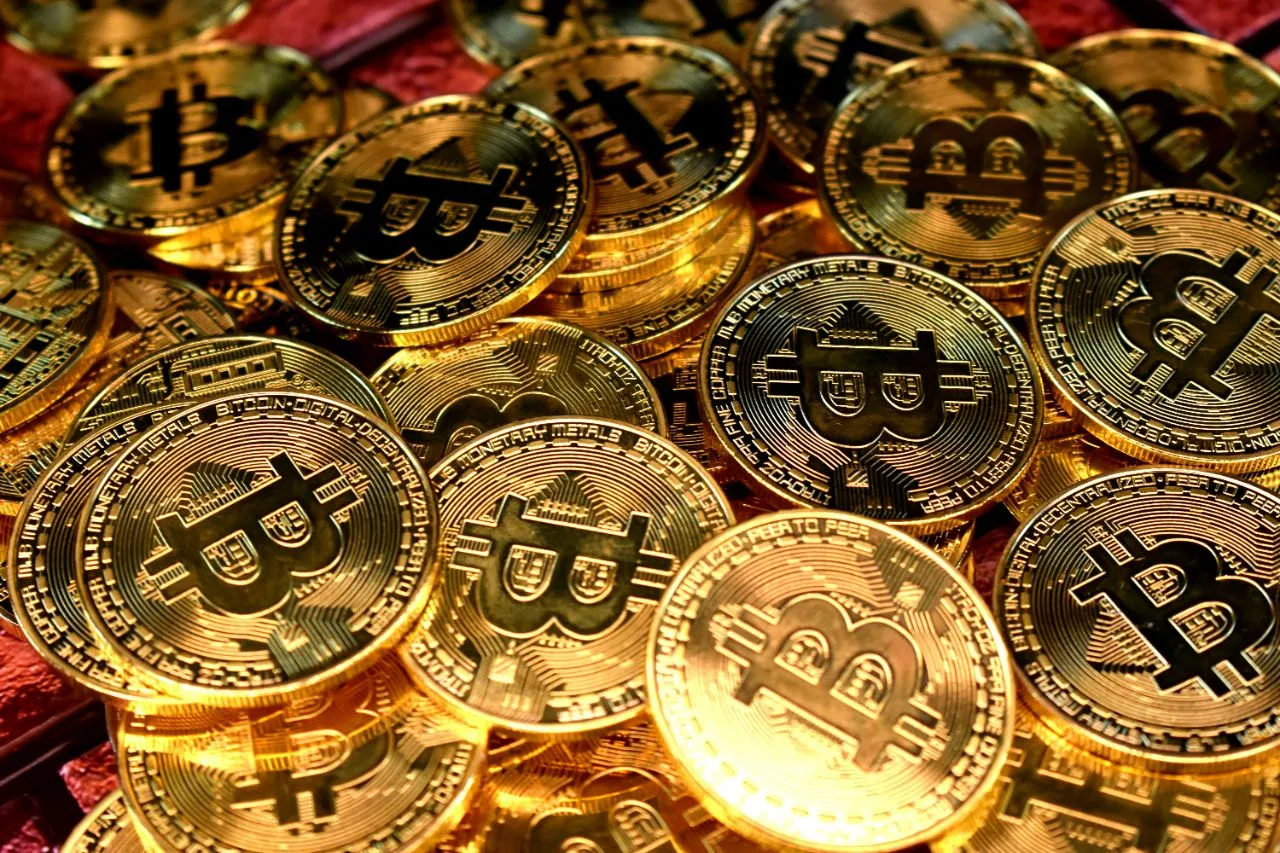
https://asset.coinness.com/en/news/946f7c120d3324c08ba0ea58b0d39489.webp
Photo by Kanchanara on Unsplash

Accelerating the Bitcoin strategy

In an announcement on May 1, the company outlined that it had established Metaplanet Treasury Corporation in Miami, Florida. The firm cited the purpose of the subsidiary as a means through which it can accelerate its overriding strategy of accumulating more Bitcoin.

Metaplanet CEO Simon Gerovich commented on X on the rationale behind locating the U.S. subsidiary in Florida, stating:

”The reason for choosing Florida is clear: the state is rapidly emerging as a global hub for Bitcoin innovation, corporate adoption and financial liberalization.”


Gerovich added that the newly formed company will enhance Metaplanet’s “around-the-clock operational capabilities across time zones.” The Metaplanet CEO sees the development as part of the firm’s evolution as a global Bitcoin treasury company. 


$250 million capital raise

The company stated that it had already established a corporate entity in the British Virgin Islands (BVI), with the U.S. addition enhancing the company’s ability “to respond to market dynamics with speed and precision.” 


Metaplanet intends to raise $250 million in funding through the Miami-based entity, having launched it with initial capital of $10 million. It’s envisaged that the U.S. subsidiary can act as a vehicle to attract institutional investment. 


Back in March it was reported that Metaplanet was investigating the idea of listing its stock in the U.S. At the time, Gerovich stated that the firm was “considering the best way to make Metaplanet shares more accessible to investors around the world.” As part of that process, Gerovich met with officials from the New York Stock Exchange (NYSE) and the Nasdaq. 


In further U.S.-related developments, the company appointed Eric Trump, second son of U.S. President Donald Trump, to its strategic board of advisors in March. Last week, Metaplanet appointed David Bailey, CEO of Bitcoin Magazine, to its strategic board of advisors.


Bond issuance

In a separate development, Metaplanet has issued 3.6 billion Japanese yen ($24.7 million) in 0% ordinary bonds to purchase additional Bitcoin. The company used its EVO FUND as the mechanism through which it issued the bonds. 


It has set out a goal of accumulating 10,000 BTC by the end of the year. Currently, the company holds 5,000 BTC. One community member believes that Metaplanet could hit this target as early as July on the basis of ongoing share dilution.

Appearing on The Bitcoin Treasuries Podcast earlier this year, Metaplanet’s Director of Bitcoin Strategy, Dylan LeClair, described how prior to adopting its Bitcoin treasury strategy in 2024, the firm was a “zombie” on the Tokyo stock exchange with the pandemic having had a negative impact on the company’s fortunes. 


He outlined that the company consolidated and dealt with some debt issues, but at that point it lacked a clear strategy. It then set out to replicate the success of U.S. Bitcoin treasury pioneer, Strategy (formerly MicroStrategy).


On May 1 Gerovich posted on X that the company had achieved unrealized gains on Bitcoin exceeding six billion yen ($41.68 million). 

More to Read
View All
Web3 & Enterprise·

Mar 27, 2024

Coinone updates its mobile app to provide better UX for crypto investors

Coinone, one of the five fiat-to-crypto trading platforms in South Korea, unveiled an upgraded version of its mobile app charts for a better user experience. According to local news source Bizwatch, the update introduces an array of indicators at the bottom of the charts to facilitate more comprehensive analysis. Additionally, the app now includes three new chart features: a display of best orders, the capability to see price alert lines and access to a 90-day transaction history. Since last year, Coinone has rolled out 20 updates aimed at enhancing the trading experience and bolstering security for its users. This year also saw several new features. Among these are the integration of TradingView charts and the addition of share buttons for announcements. Additionally, Coinone recently started providing the functionality to print statements for crypto accounts.Photo by Kanchanara on UnsplashHiring more developersThese enhancements are part of Coinone's continuous efforts to elevate customer satisfaction and refine its services. Despite the downturn that the cryptocurrency industry faced last year, Coinone took a noteworthy step by bringing on board 20 new developers this year. This move underscores Coinone's proactive stance in improving its platform and offerings amidst challenging market conditions. Coinone's focus on meeting customer demands has led to a notable reduction in inquiries. Last year, the exchange reported that its efforts to enhance customer service resulted in a decrease of more than 45% in the number of customer inquiries. Compliance amid changing regulatory environmentMarking its 10th anniversary last month, Coinone has set its sights on emphasizing investor protection and regulatory compliance in anticipation of the upcoming implementation of the Virtual Asset User Protection Act, which is slated to take effect in July.  Cha Myung-hun, the CEO of Coinone, commented on the recent updates, noting that the surge in public interest towards virtual asset investment has prompted the decade-old exchange to enhance its chart functionalities, specifically catering to novice investors. 

news
Web3 & Enterprise·

Nov 29, 2023

Dunamu reports Q3 slump amid interest rate hikes and economic slowdown

Dunamu reports Q3 slump amid interest rate hikes and economic slowdownDunamu, the operator of South Korea’s largest cryptocurrency exchange Upbit, posted a lackluster performance in this year’s Q3 due to a decrease in trading volume caused by ongoing interest rate hikes and an economic downturn.Photo by Алекс Арцибашев on UnsplashLagging performanceAccording to the Financial Supervisory Service (FSS), Dunamu’s consolidated operating revenue in Q3 was KRW 193 billion (approximately $150 million), marking a 29% decrease from the same period a year earlier (KRW 271.9 billion). Operating income came in at KRW 101.8 billion, and net profit was KRW 29.5 billion, down 39.6% and 81.6% from the same period last year, respectively.This underwhelming financial performance reflects the sluggish crypto market amid the nation’s economic downturn and the U.S. Federal Reserve’s interest rate hikes. The decrease in the exchange’s net profit in particular can be attributed to a loss in the valuation of crypto assets due to crypto price declines compared to the previous quarter.Positive outlookHowever, with the expected approval of the spot bitcoin exchange-traded fund (ETF) next year and the next Bitcoin halving, the market outlook is expected to improve gradually. Despite the current market conditions, Dunamu plans to continuously promote the mainstream adoption of blockchain services and explore new business ventures.“We will make efforts to revitalize the blockchain ecosystem and create an advanced investment environment,” Dunamu said. “We will strive to offer innovative services building on our unique technological capabilities.”

news
Policy & Regulation·

Jun 10, 2023

US DOJ Charges Two Russians With Mt. Gox Hack

US DOJ Charges Two Russians With Mt. Gox HackTwo Russian nationals have been charged by the US Department of Justice (DOJ) for their involvement in hacking of the Japanese cryptocurrency exchange Mt. Gox, and in causing the collapse of the infamous exchange.Photo by Tingey Injury Law Firm on UnsplashCulpable for collapseThe indictment, which has been unsealed, was originally filed on June 7, and identifies the individuals as Alexey Bilyuchenko, 43, and Aleksandr Verner, 29. They are accused of not only hacking the exchange but also conspiring to launder approximately 647,000 bitcoins, which is valued at around $17.1 billion based on Bitcoin’s unit price on Friday.Additionally, Bilyuchenko has been charged with collaborating with Alexander Vinnik to operate the illicit exchange known as BTC-e between 2011 and 2017. BTC-e was shut down by U.S. law enforcement in 2017, and Vinnik was later extradited from Greece to the U.S. in 2022 on charges of running BTC-e and engaging in money laundering.Mt. Gox, which experienced a major theft, declared bankruptcy and closed its operations in 2014. Bilyuchenko and Verner played a significant role in the theft, leading to the exchange’s insolvency, according to Assistant Attorney General Kenneth A. Polite, Jr. of the Justice Department’s Criminal Division. The indictment states that “in or about September 2011, [the defendants] and their co-conspirators gained and caused others to gain unauthorized access to the Mt. Gox server in Japan.”BTC-e exchange money launderingFurthermore, it is alleged that Bilyuchenko utilized his ill-gotten gains from the Mt. Gox theft to establish the BTC-e exchange, which facilitated global money laundering activities for criminals. US Attorney Ismail J. Ramsey for the Northern District of California stated that Bilyuchenko and his co-conspirators operated a digital currency exchange that enabled criminal entities, including hackers, ransomware actors, narcotics rings, and corrupt officials, to launder billions of dollars.In March, there were reports from CoinDesk about movements of BTC-e funds on the blockchain. An exchange wallet linked to BTC-e made its first transaction since 2017, transferring approximately 3,299 bitcoins to a crypto wallet in November 2022. Additionally, six years ago, the exchange wallet sent around 10,000 bitcoins to two unidentified recipients. However, the recent DOJ filing does not specify whether these recipients were Bilyuchenko and Verner.Slow processMeanwhile, the long-suffering creditors of the hacked exchange are only beginning to reach the final stages of the bankruptcy process. Japan’s bankruptcy process is incredibly slow and it’s taken the best part of ten years for it to reach the distribution phase. It became apparent in April that the bankruptcy estate was moving to distribute $4.5 billion in cash and digital assets to creditors. It’s understood that the process will be completed in October.While creditors are taking a haircut in bitcoin terms, on a US dollar basis, they are not fairing out badly given that the leading cryptocurrency has seen massive dollar price appreciation in the intervening years.

news
Loading