Top

Japanese firms expand Bitcoin holdings amid growing institutional interest

Markets·May 15, 2025, 8:03 AM

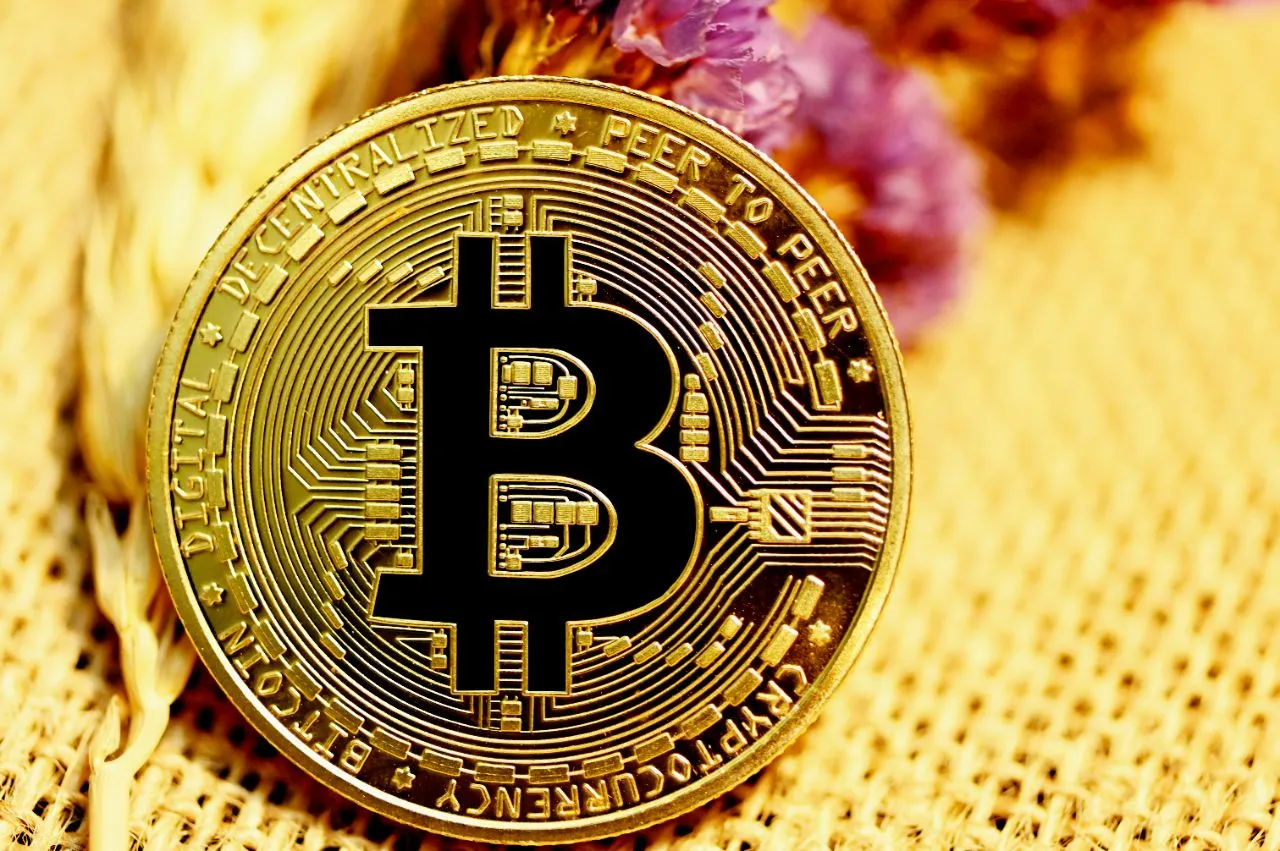
Several Japanese companies, including Remixpoint and Metaplanet, have been increasing their Bitcoin (BTC) holdings, underscoring the growing institutional interest in cryptocurrencies in the region.
https://asset.coinness.com/en/news/6ada883eea5175b8459aa46f35827f99.webp
Photo by Kanchanara on Unsplash

Remixpoint, an energy consulting firm listed on the Tokyo Stock Exchange, recently announced an additional purchase of 32.83 BTC valued at 500 million yen ($3.4 million), according to local news outlet CoinPost. This acquisition took place on May 13 at an average price of 15.23 million yen ($104,270) per BTC, bringing the company's total BTC holdings to 648.82 BTC. Remixpoint's crypto portfolio, including BTC, is now valued at 11.1 billion yen ($76 million) and also comprises Ethereum (ETH), Solana (SOL), XRP and Dogecoin (DOGE).


The firm began actively accumulating BTC late last year, motivated by multiple factors, including the positive price trend following the latest Bitcoin halving event, increased market activity after the latest U.S. presidential election and the growth in institutional participation, particularly after the approval of spot crypto ETFs in the U.S.


Metaplanet becomes a major BTC holder

Another notable player, Metaplanet, a publicly traded Japanese company specializing in Bitcoin investment, has positioned itself as one of the largest BTC holders globally. As of May 12, Metaplanet’s Bitcoin yield reached 170%, with total holdings of 6,796 BTC. This places it as the 11th largest Bitcoin holder worldwide and the largest in Asia, surpassing El Salvador, which currently holds 6,177 BTC, according to data from Arkham.


Metaplanet's ongoing Bitcoin accumulation aligns with CEO Simon Gerovich's advocacy for Bitcoin. In a March podcast, Gerovich said he encourages his friends to allocate "100% of their net worth into Bitcoin." The company’s strategic goal is to amass 10,000 BTC by the end of 2025 and 21,000 BTC by 2026. Reinforcing its influence, Metaplanet appointed Eric Trump, the second son of pro-crypto U.S. President Donald Trump, to its newly formed Strategic Board of Advisors in January.


Evolving crypto policies, including national reserves

Before Trump's second term, Gerovich expressed his expectation that other countries would follow the U.S. once it established a national Bitcoin strategic reserve—a move formalized by President Trump through an executive order in March. In a related development, Ukraine is reportedly drafting a bill to create a similar reserve in collaboration with Binance. Meanwhile, in Taiwan, lawmaker Ko Ju-Chun has been advocating for adding Bitcoin to the country's national reserves.


In a similar trend, another Japanese firm, Value Creation, disclosed plans last month to acquire 100 million yen ($660,000) worth of Bitcoin, further reflecting the growing interest among Japanese companies in crypto investments.


Complementing this corporate adoption trend, Japan's Financial Services Agency (FSA) has been shaping its regulatory framework for cryptocurrencies. The agency aims to redefine digital assets as financial products under the Financial Instruments and Exchange Act, a move viewed as an attempt to balance innovation with investor protection.


Building on this approach, an FSA discussion paper released on April 10, which remained open for public feedback until May 10, proposed classifying crypto assets into two categories: those used for fundraising and business activities, and those that are not—such as BTC and ETH. This regulatory evolution, alongside increasing corporate investment in BTC, reflects Japan's efforts to adapt to the evolving global crypto landscape.

More to Read
View All
Web3 & Enterprise·

Oct 24, 2023

GRVT Debuts zkSync’s Inaugural ‘Hyperchain’

GRVT Debuts zkSync’s Inaugural ‘Hyperchain’GRVT, the hybrid crypto exchange incorporated in the British Virgin Islands, is all set to debut as zkSync’s inaugural “hyperchain,” marking a significant milestone in the zkSync ecosystem’s evolution.zkSync represents Ethereum’s second layer solution offering cheaper and faster transactions.Photo by Shubham Dhage on UnsplashCombining CEX and DEX qualitiesPronounced “gravity,” GRVT is an innovative platform that attempts to seamlessly blend the advantages of centralized and decentralized exchanges. It promises users a Robinhood-like experience while integrating self-custodial features akin to Uniswap-style exchanges. Matter Labs, the developer brains behind zkSync, shared news of GRVT's imminent project milestone in an interview with The Block.The introduction of GRVT as the first Hyperchain within the zkSync ecosystem has broadened the horizons of potential applications for this technology, according to Matter Labs. The project stated:“There is nothing like GRVT being built, not in the zkSync ecosystem nor outside of it. By being able to design and deploy custom hyperchains connected through hyperbridges, teams like GRVT’s can build entirely new use cases.”The ability to design and deploy custom hyperchains connected via hyperbridges opens the door to entirely new use cases, affording projects like GRVT the freedom to explore innovative possibilities.A layer 3 ValidiumGRVT will play a role as a Layer 3 Validium within the zkSync ecosystem. Validiums are Ethereum scaling networks that bear similarities to zk-rollups found in Layer 2 solutions. The critical differentiator is in how they handle data. Zk-rollups maintain data on-chain, whereas Validiums securely store it off-chain. This approach enhances user security by safeguarding against front-running and market manipulation.GRVT’s alpha version is set to make its debut next month, followed by the mainnet release in the first quarter of the upcoming year. Promising a transaction speed of up to 600,000 trades per second and less than two milliseconds of latency, GRVT leverages zkSync’s “horizontally scaling” infrastructure to deliver enhanced performance.Explaining the concept of horizontally scaling, Hong Yea, GRVT’s co-founder and CEO, told The Block:“Horizontally scaling means to deploy additional underlying pairs as new hyperchains. Say BTC/USDT perpetual futures is one hyperchain and so on. And we can look to add other infrastructure components like this as new hyperchains to scale throughout, as they can interoperate. This allows high-frequency traders to trade more efficiently with high transactions per second similar to a central exchange.”Token launchGRVT enjoys the backing of CMS Holdings, Hong Kong’s digital assets wealth manager Metalpha, alongside Matter Labs and others. Yea founded the company alongside CTO Aaron Ong and CCO Matthew Quek. Although incorporated in the British Virgin Islands, the firm employs people who are based in Hong Kong, the UK, Lithuania, and Singapore.It recently disclosed that it had successfully raised $7.1 million in pre-seed and seed funding in an equity with a token warrant round, achieving a $39 million post-money valuation. The launch of GRVT’s token is anticipated in 2024.GRVT is also making a concerted effort to obtain trading licenses in various jurisdictions. Currently, it has attained a virtual asset service provider (VASP) license in Lithuania, with work ongoing to achieve licensing in Bermuda. The firm hopes to then expand in Europe and the Middle East going forward.

news
Policy & Regulation·

May 17, 2023

Korean Blockchain Game Publisher Joins UNGC to Bolster ESG Management

Korean Blockchain Game Publisher Joins UNGC to Bolster ESG ManagementWemade, a Korean blockchain game publisher, joined the United Nations Global Compact (UNGC) to bolster its environmental, social, and governance (ESG) management. The company announced its membership through a press release issued on Wednesday.Photo by Noah Buscher on UnsplashUNGC membershipSince its establishment in 2000, the UNGC has evolved into the largest corporate sustainability initiative worldwide. With a membership base of over 20,000 companies spanning across 162 countries, it serves as a platform for organizations to align their operations with ten principles encompassing human rights, labor, environment, and anti-corruption.Annual reportsUnder the guidelines of the UNGC, Wemade will fulfill its commitment by submitting an annual report called the Communication on Progress (COP). The company’s objective is not only to meet sustainable development goals but also to enhance its ESG management. Along with these endeavors, the company will strive to improve its corporate citizenship.ESG managementIn expressing his thoughts on the matter, Wemade CEO Chang Hyun-guk emphasized that the company’s inclusion in the UNGC would serve as a catalyst for driving sustainable growth through ESG management. He underscored its commitment to fulfilling corporate social responsibility and meeting global standards by practicing ESG management, given its position as a leading entity in the blockchain market.Wemade’s three main objectivesMeanwhile, Wemade is practicing ESG management centered on three main objectives: responsible environmental management, inclusive growth for future generations, and transparent governance.

news
Policy & Regulation·

Mar 28, 2025

Central Asian republics work towards crypto bank & crypto hub development

News emanating from the Central Asian republics of Kyrgyzstan and Kazakhstan in recent days points to further rollout and development of cryptocurrency sector infrastructure. A press release published on March 26 outlined that Kyrgyzstan is working on various initiatives in order to copper-fasten its position as a regional crypto hub. Those efforts include the advancement of digital asset regulation, enabling the launch of licensed crypto platforms and ongoing trials of legal frameworks relative to crypto. Photo by Steve Johnson on UnsplashA7A5 stablecoinOne initiative that may aid in the development of the digital assets sector in Kyrgyzstan is the rollout of the A7A5 stablecoin. A7A5 is pegged to the Russian ruble, with the token having been issued by Kyrgyz company Old Vector. The product was first launched in February, with the intention for it to be used on the A7 cross-border payment platform of Russian state-owned bank Promsvyazbank. Garantex, a Russian crypto exchange which had been sanctioned by U.S. and European authorities and was recently shut down, announced on Feb. 19 the listing of the A7A5 stablecoin. The stablecoin’s backers claim that it was issued “in complete accordance with the new national legislation - under the control of regulatory authorities and directed to an officially registered, regulated broker.” The stablecoin is being promoted on the basis of an annual yield of up to 20%, which has been established due to its link to the refinancing rate of the central bank of the Russian Federation. Kazakhstan crypto bank proposalMeanwhile, lawmakers in Central Asian neighbor Kazakhstan have proposed the creation of a national crypto bank. According to The Times of Central Asia, an English-language daily newspaper, Azat Peruashev, leader of the Ak Zhol political party within Kazakhstan’s lower house of parliament, put forward the proposal, which would implicate the involvement of the National Bank of Kazakhstan and a number of the country’s commercial banks. Peruashev addressed the proposal to Kazakhstani Prime Minister Olzhas Bektenov. However, the Central Asian country may have some fundamental issues to address before a crypto bank can become a reality. Currently, Kazakhstan has yet to establish a legal framework for the use of digital assets.  Last year, the authorities shut down 36 cryptocurrency exchanges which were deemed to have been operating illegally. In total, 3,500 illegal crypto exchanges have been shut down in Kazakhstan. Leading American crypto exchange business Coinbase faced a setback in the Central Asian country in November 2023 when the government cut access to its website within the country. While these crypto businesses have struggled to operate in Kazakhstan, Binance Kazakhstan successfully obtained a trading license from the Astana Financial Services Authority (AFSA) in September of last year. Earlier this month, the company added options trading and futures copy trading to the platform. Blockchain industry pioneer Kyle Chasse took to X to report on this most recent development. He suggested that given that 90% of crypto activity in Kazakhstan is off the books, the authorities are interested in launching a crypto bank so as to bring it all under their control. 

news
Loading