Top

Ripple supports Japanese Web3 initiative & crypto research within APAC

Web3 & Enterprise·June 11, 2025, 6:03 AM

Ripple Labs, the American technology company that developed and supports XRP and the XRP Ledger (XRPL), has partnered with Japan’s Web3 Salon initiative, while in a separate development, the company is also funding crypto-related academic research within the Asia-Pacific (APAC) region.
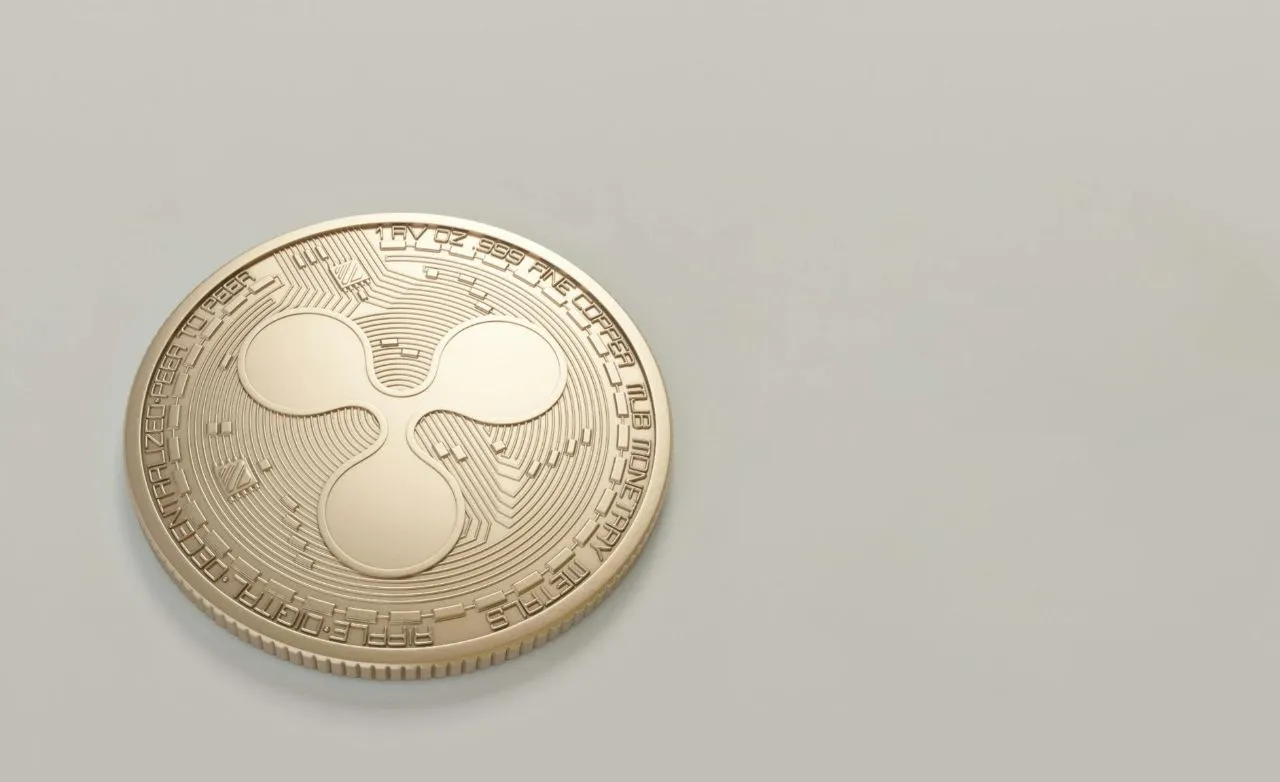
https://asset.coinness.com/en/news/1c6e63aacc8edb3e960521e94c422e6e.webp
Photo by Moose Photos on Pexels

Driving Web3 adoption in Japan

In a statement published to its website on June 9, the company outlined that it has partnered with Japan’s Web3 Salon project, a Web3 initiative with the objective of educating businesses and developers, nurturing blockchain startups and driving Web3 adoption through the provision of startup incubator programs and running hackathons and workshops.


One of Japan’s most active Web3 projects, Web3 Salon has the backing of the Japan External Trade Organization (JETRO). The project has also collaborated with a range of Japanese Web3 startups, Asia Web3 Alliance Japan (AWAJ), institutional investors and venture capital firms, as well as a number of key industry stakeholders.


Grant funding

As part of its involvement in this collaboration, Ripple will provide grant funding of up to $200,000 to Japanese startups who have developed their projects on XRPL. Ripple’s grant funding forms part of its broader initiative to finance XRPL-related startups in Japan and Korea. Earlier this month, it confirmed that it had established the XRPL Japan and Korea Fund for this purpose. 


At a broader level still, Ripple said that this latest funding commitment also falls under its one billion XRP commitment. Back in 2022 the company committed one billion XRP to advance XRPL ecosystem projects.


Christina Chan, Senior Director of Developer Growth at Ripple, commented on the development, stating:

“Ripple is proud to collaborate with Web3 Salon to unlock new opportunities in Japan’s thriving startup ecosystem. Together, we hope to fuel innovation and support the next generation of leaders.”


Supporting APAC university research

In a separate blog post published to its website on June 10, Ripple outlined that it was committing $5 million in funding within the APAC region as part of its University Blockchain Research Initiative (UBRI). The funding will cover blockchain-related academic research projects in Japan, South Korea, Singapore, Taiwan and Australia.


$1.1 million has been allocated to South Korea’s Korea University in funding that will be released over a six-year period. The funding builds on another relationship that had already been established with Yonsei University via the UBRI in 2024.


Equally, Japan’s Kyoto University had engaged with the UBRI last year. That support is now being renewed while funding is also being allocated to the University of Tokyo. The two institutions will be able to avail to funding in excess of $1.5 million.

Other APAC region educational institutions to benefit include the National Kaohsiung University of Science and Technology (NKUST) in Taiwan, the National University of Singapore (NUS) and Nanyang Technological University (NTU) in Singapore and the Australian National University (ANU) in Australia.

’An epicenter of digital finance’

Ripple called APAC “an epicenter of digital finance.” Expanding further on that assertion, it stated that the region has shown “an appetite for experimentation and boasting thriving communities for builders.” Consequently, it views the APAC region as a leader in payment technologies and digital asset adoption.


More to Read
View All
Web3 & Enterprise·

Jun 23, 2023

BitMEX CEO Calls for an End to Internal Market Makers

BitMEX CEO Calls for an End to Internal Market MakersIn a recent interview, Stephan Lutz, the acting CEO and group CFO of 100x Group, the parent company of Seychelles-headquartered global crypto exchange BitMEX, expressed his belief that crypto exchanges should phase out their internal market-making teams.Photo by Joe Roberts on UnsplashProp trading desks unnecessarySpeaking with The Block, Lutz argued that with the growth of institutional liquidity providers and high-frequency traders (HFTs) in the market, proprietary trading desks are becoming unnecessary.Lutz stated: “You have enough HFTs out there and prop shops that can perform that function.” He was referring to the role of liquidity providers in filling gaps in the market. He made these comments in response to the emergence of information earlier this week that raised questions about internal trading practices at Crypto.com, a Singapore-based exchange.BitMEX, once the world’s largest crypto derivatives exchange, also used to employ internal traders who acted as market makers. However, Lutz explained that BitMEX’s internal trading team, named Arrakis Capital, now functions primarily as a “treasury desk.” He sees this transition as a natural evolution for crypto exchanges in a market that has matured and attracted more institutional liquidity providers.Arrakis Capital currently performs limited functions, including converting commission fees earned in Bitcoin into fiat currency for operational purposes, hedging BitMEX’s exposure to tokens held as inventory, and making markets for BitMEX’s token $BMEX. Lutz clarified that Arrakis’s market-making activities are limited because external market makers find the token’s liquidity insufficient.Regarding profitability, Lutz stated that Arrakis earns “very minor returns” of up to $100,000 per month from holding T-Bills, but it incurred losses last year. He noted that Arrakis used to play a more significant market-making role when BitMEX dominated the crypto futures market. However, he assured that the trading desk was always segregated, despite accusations in the past.Fee structuresLutz acknowledged that exchanges with internal trading teams have faced increased scrutiny since the controversies surrounding Alameda Research and FTX. To differentiate between benign internal trading teams and hedge fund-like operations, Lutz highlighted several factors, including the separation of client funds and house funds, access to sensitive data, and the ability to move markets on their own exchange. Fee structures also play a role, with low or no transaction fees potentially signaling a market-making motive rather than serving as a counterparty.Lutz’s perspective suggests that crypto exchanges should rely on external liquidity providers and HFTs rather than maintaining internal market-making teams. He argues that the market has evolved. At this point he feels that these teams are no longer necessary, due to the presence of established players within the digital assets space.As regulatory scrutiny grows, ensuring transparency and avoiding conflicts of interest become crucial for maintaining trust within the crypto exchange ecosystem. The digital assets industry is far from arriving at a mature stage in its development. While many in the industry have found the stance taken by regulators to be unhelpful, the industry itself must also demonstrate its ability to iteratively move towards best practice, without that being a knee-jerk response to regulatory enforcement.

news
Web3 & Enterprise·

Jul 15, 2023

Dtcpay Looks to Extend Crypto Payment Services to Hong Kong

Dtcpay Looks to Extend Crypto Payment Services to Hong KongDtcpay, a Singapore-based payment processor catering to both fiat and cryptocurrencies, has set its sights on expanding into Hong Kong by the end of this year. The company also has plans to establish an office in Dubai, another prominent crypto hub, by 2024.Photo by Jonas Leupe on UnsplashNorth Asia potentialIn an interview with Tech in Asia, Kanny Lee, the group CEO of Dtcpay, expressed optimism about the North Asia market, citing clear regulations and rules for digital assets and the recent opening up to retail participants. Lee believes that the region holds significant potential for growth over the course of the coming years.Dtcpay generates revenue through crypto conversion rates on transactions and has already acquired approximately 12 merchants. The company aims to onboard up to 100 merchants by the end of 2023. Since the beginning of this year, the firm has experienced a fourfold increase in transaction volume.Seamless regional paymentsLee acknowledged that most consumers view tokens primarily as investments. Dtcpay’s objective is to unify various payment methods across different countries, including Indonesia, Malaysia, India, Vietnam, and Singapore, providing a seamless experience for both merchants and consumers.As an example, Dtcpay enables users to purchase cars using cryptocurrencies, significantly reducing transaction fees from approximately 4% to just 0.5% compared to cash payments. Notable partnerships in Singapore include Cars and Coffee and DM Autohaus.In June, Dtcpay secured a pre-series A funding round, raising $16.5 million from Kwee Liong Tek. Tek, the chairperson of the Pontiac Land Group, which owns renowned hotels such as the Ritz-Carlton and Conrad Hotels in Singapore, has enabled Dtcpay to target the hospitality sector. At the time Lee said that there are an increasing number of businesses expressing interest in collaborating with regulated entities in the digital assets space and combined with an increase in the adoption of digital payments, that’s turbocharging DTCpay’s business.RebrandThat focus on digital payments led to the company rebranding back in April from Digital Treasures Center to Dtcpay. It appears that Hong Kong was already on the company’s radar back then as Lee stated at the time that “in Asia, particularly the key tier 1 financial capitals such as Singapore, Hong Kong and Tokyo, [they] have experienced a rapid rate of digital adoption primarily due to transparent regulatory frameworks for digital financial inclusion.”Additionally, Dtcpay obtained a major payment institution license from the Monetary Authority of Singapore in August 2022. The company plans to launch a debit card in Q4 2023. That product will allow cardholders to convert their cryptocurrencies into multiple currencies without incurring foreign exchange fees.The company was co-founded in 2019 by Sam Lin, Band Zhao, and Alice Liu, with Lee joining the company earlier this year with a view towards expanding its area of operations beyond Singapore.With its expansion plans into Hong Kong and its focus on innovation, Dtcpay is certainly aiming to establish itself as a leading player in the crypto payment services industry, catering to the evolving needs of merchants and consumers alike.

news
Policy & Regulation·

May 29, 2024

Korean regulators pressured to approve crypto ETFs following ETH ETF approval in the U.S.

The recent 19b-4 approval of spot Ethereum exchange-traded funds (ETFs) by the U.S. Securities and Exchange Commission (SEC) is putting pressure on South Korean financial regulators to revisit their policies on digital assets. The SEC's decision to allow ETFs for Ethereum, the world's second-largest cryptocurrency, on May 24, 2024, follows its earlier endorsement of Bitcoin ETFs in January 2024. This move is seen as a significant step in merging traditional finance with the digital asset sector.Photo by DrawKit Illustrations on UnsplashKorean regulatory cautionIn contrast to the progressive stance in the U.S., the Korean Financial Services Commission (FSC) and the Financial Supervisory Service (FSS) have maintained a cautious approach regarding the integration of crypto assets into traditional securities markets. According to current regulations under the Capital Markets Act, ETFs in Korea are limited to traditional underlying assets such as financial instruments, securities, international currencies and commodities. These foundations are crucial for the creation of financial derivatives, leaving little room for digital assets under current laws. Calls for regulatory reforms and market implicationsThe decision by the SEC is expected to influence the Korean regulators to update their views on digital assets, according to local media and industry experts. Jung Eui-jung, the head of the Korean Stockholders’ Alliance, has advocated for Korea to emulate the U.S. by approving Bitcoin and Ethereum ETFs. He expressed concerns that continued regulatory hesitance could lead to investor funds migrating to more progressive markets like the U.S., potentially positioning the U.S. to broaden its crypto market further. Xangle, a digital currency data provider in Seoul, has also criticized the current regulations as outdated, emphasizing the need for revisions to accommodate the increasing relevance of digital assets in global finance. 

news
Loading