Top

Ant Group preparing to apply for stablecoin licenses in Hong Kong & Singapore

Web3 & Enterprise·June 13, 2025, 5:59 AM

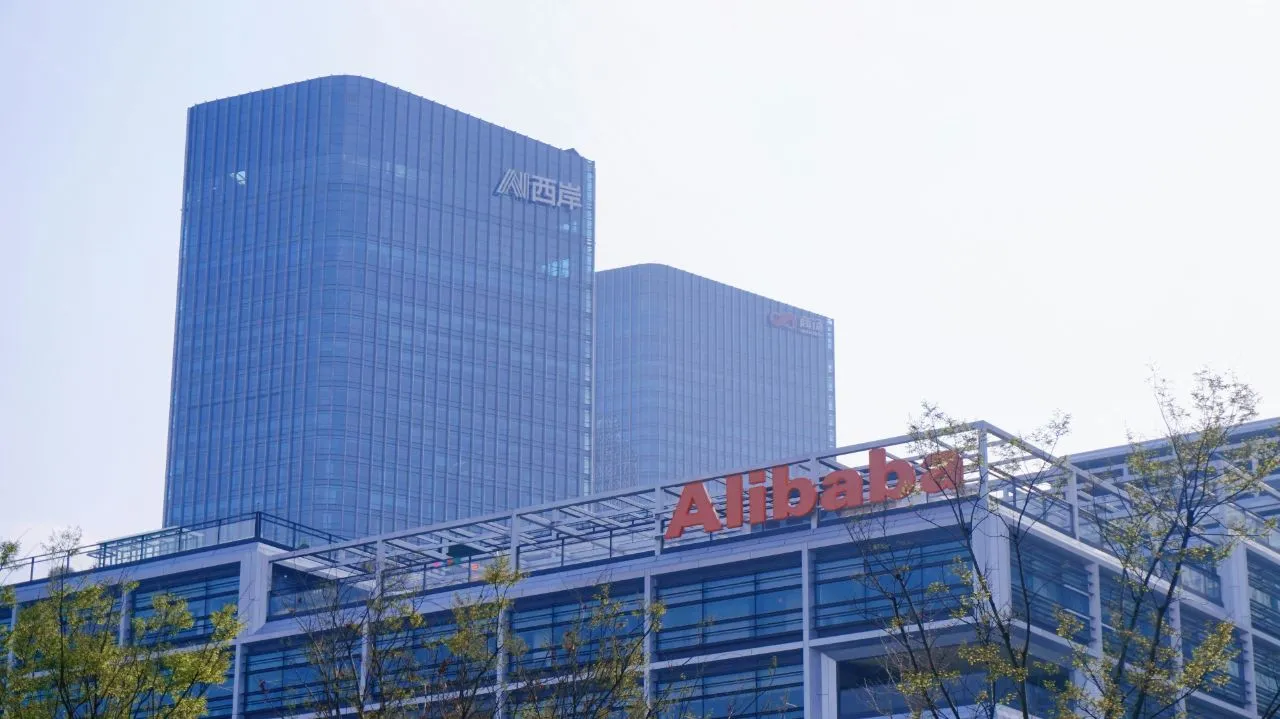
Ant Group, a Chinese financial services conglomerate and affiliate of the Alibaba Group, has plans to acquire stablecoin licenses across Asian markets and further afield.


Its Singapore-headquartered global digital payments and financial technology subsidiary, Ant International, plans to file an application for a stablecoin license in Singapore and in Hong Kong once the Chinese autonomous territory implements its stablecoin regulation later this summer. 


That’s according to a report published by Bloomberg on June 12, citing unnamed sources familiar with the matter. Beyond the Asia-Pacific (APAC) region, Ant International also plans to seek a stablecoin license in Luxembourg.
https://asset.coinness.com/en/news/8a94c7778ce55cc098baaa0d3442d6ea.webp
Photo by Ban Daisy on Unsplash

2 Hong Kong stablecoin license applications

In a statement, Ant International stated:


“We plan to apply for the fiat-referenced stablecoins (FRS) issuer's license once the process is open after the [Hong Kong] Stablecoins Ordinance takes effect on August 1.”

Additionally, Bian Zhuoqun, president of Ant Digital Technologies, another Ant Group subsidiary focused on applying digital technologies, confirmed that it too will be applying for stablecoin licensing in Hong Kong. 


Zhuoqun told reporters that the company has already opened dialogue with the regulator in Hong Kong, while also participating in a regulatory sandbox. While the company wasn’t a named participant within Hong Kong’s stablecoin sandbox, it had previously participated in Project Ensemble, an initiative run by the Hong Kong Monetary Authority (HKMA) aimed at establishing a tokenization ecosystem in the city.


Exploring stablecoin applications

On June 10, Ant International and German multinational investment bank Deutsche Bank announced a strategic partnership geared towards establishing integrated cross-border payment solutions to global merchants. 


The two firms stated that they would explore tokenized bank deposits while also looking into stablecoin applications for global payments. It highlighted the potential use of stablecoins within Ant companies, facilitating real-time cross-border treasury management, reserve management and on-ramp and off-ramp services.


Back in November, Singapore-headquartered StraitsX, a stablecoin-based payments startup, launched a cross-border payments product in association with AliPay+, Ali International’s offshore digital payments platform. A key component of the product offering is the use of the XSGD stablecoin.


Hong Kong passed its stablecoin bill last month. Last week, the city’s government outlined that the effective date for the resultant Stablecoin Ordinance has been set for Aug. 1. Under the Ordinance, only licensed institutions are authorized to offer fiat-referenced stablecoins in Hong Kong, while the issuer of such a stablecoin must be licensed in order for it to be offered to a retail investor.


Last month, multinational banking and financial services group HSBC launched Hong Kong’s first blockchain-based settlement service, utilizing tokenized deposits for swift transactions. The company collaborated with Ant International, which became the first client of the service.


Entering the financial mainstream

A Financial Times report published on June 12 asserted that stablecoins are entering the financial mainstream, a development that “could have profound implications for the global financial system.” Earlier this week, the South China Morning Post (SCMP) reported that Hong Kong’s stablecoin law could lead to a boom in digital assets.

Daniel Tse, managing director of Hong Kong brokerage firm Futu Securities, told the SCMP:

“We’re seeing a significant trend in investments related to stablecoins on our platform, which highlights the growing importance of this sector.” 

More to Read
View All
Policy & Regulation·

Aug 09, 2023

Korean Financial Authority Grants This Year’s First VASP Approval to Infinite Block

Korean Financial Authority Grants This Year’s First VASP Approval to Infinite BlockThe Financial Intelligence Unit (FIU), a division operating under the South Korean Financial Services Commission (FSC), has recently granted approval to Infinite Block, a blockchain fintech company, to function as a virtual asset service provider (VASP), as reported by the local news outlet Business Watch.37 registered VASPs in KoreaInfinite Block is the first entity to secure such approval from the national financial regulatory authority this year. This development takes the roster of registered VASPs in Korea to a total of 37.When submitting its application in May, Infinite Block declared that its business is tailored for transferring, storing, and managing virtual assets. Its core operational domain centers around virtual asset custody services.Custodian service for institutional investorsFounded last year by Jung Gu-tae, who previously served as a banker at NongHyup Bank and held a C-level position at digital asset custodian Cardo, Infinite Block leverages his extensive experience in banking and virtual assets. Building on this industry insight, Infinite Block is about to introduce Karbon Custody, a specialized service targeting institutional investors.Furthermore, Infinite Block raised about 2 billion KRW ($1.5 million) last year from renowned financial institutions including Daegu Bank, SK Securities, and Infobank. However, the company did incur an operating loss exceeding 200 million KRW due to its nascent stage and the absence of revenue streams.This accomplishment of Infinite Block is noteworthy in light of the decline observed in new VASP filings. While 2021 saw approximately 30 companies applying for VASP approval, the numbers dwindled to merely two new applications last year, followed by only one so far this year.

news
Policy & Regulation·

Jun 24, 2023

Chinese Nationals Detained in Crypto Mining Clampdown in Libya

Chinese Nationals Detained in Crypto Mining Clampdown in LibyaAuthorities in Libya have detained 50 Chinese nationals suspected of involvement in an illicit crypto mining operation in Zliten, a city located 160 kilometers east of the Libyan capital of Tripoli.The attorney general’s office in Libya made the announcement on Friday, revealing that the individuals were caught operating a cryptocurrency mining farm within an abandoned iron factory.Photo by Dmitry Demidko on UnsplashMining operation dismantledPhotos and videos released by the office of Attorney General Siddiq Al-Sour showcased the dismantling process of the extensive mining systems discovered in Zliten.This is not the first instance of Chinese miners being detained for crypto mining activities in the North African country. The development follows the recent arrest of ten other Chinese nationals in the city of Misrata on the Mediterranean coast, as well as at two sites within the capital, Tripoli. The individuals were apprehended on Wednesday while being caught “red-handed” with numerous powerful equipment used for intricate proof of work (PoW) mining calculations. The mining rigs were subsequently confiscated by the attorney general’s office.Mining banDespite the official ban on cryptocurrency mining in the country, Libya has witnessed a high prevalence of such activities, with the nation recording the highest percentage of cryptocurrency mining across the African continent in 2021. It is estimated that Libya accounted for approximately 0.6 percent of global Bitcoin production during that year.Libya’s appeal as a destination for cryptocurrency mining stems from its low electricity costs, which stand at a remarkably low rate of $0.004 per kilowatt hour. This cost is approximately 40 times cheaper than in the United States, making Libya an attractive location for miners.While energy may be cheap, the increased demand for electricity that crypto mining brings puts a strain on what was an already vulnerable power grid in the country. That has resulted in frequent and lengthy power blackouts, particularly during the summer months.A lack of oversight has also encouraged an influx of Chinese miners, albeit with these recent arrests, it appears that the Libyan authorities are stepping up the level of oversight and enforcement. The vast majority of Bitcoin miners were based in China up until a mining ban was enforced in 2021.Global issueThat event led to an exodus of miners internationally. Some established themselves legally in the United States and elsewhere. The first casualty of illegal mining was Kazakhstan. The sudden arrival of miners led to its power grid coming under pressure. As a consequence, the Central Asian country clamped down on the activity, and later regulated it.In response to these illegal activities, Libyan authorities have intensified their efforts to combat cryptocurrency mining operations. They are conducting investigations into alleged mining sites in Tripoli and Misrata, aiming to curtail these activities and mitigate the strain on the country’s electricity infrastructure.The recent arrests highlight the ongoing challenges associated with illegal mining activities in jurisdictions globally where cheap energy can be exploited, giving rise to the need for enhanced regulatory measures to address these issues.

news
Policy & Regulation·

Jul 26, 2023

Netmarble’s MARBLEX Secures Whitelist Approval for MBX Token in Japan

Netmarble’s MARBLEX Secures Whitelist Approval for MBX Token in JapanSouth Korean gaming company Netmarble made an announcement today that its blockchain subsidiary, MARBLEX, has obtained whitelist approval for its governance token MBX in Japan. This marks a significant milestone for the project, opening up new opportunities for MBX’s utilization within the Japanese market.Photo by Eliobed Suarez on UnsplashCrypto listing in JapanIn Japan, crypto assets must undergo a rigorous review conducted by the Japanese Financial Services Agency (FSA) before being listed on crypto exchanges. Boasting its stability and reliability, MBX has become the first token from a Korean blockchain gaming project to be added to the Japanese whitelist of crypto assets.As part of its expansion plan, MARBLEX is in discussions with Zaif to arrange the listing of the MBX token on the Japanese crypto exchange in October.Utility expansion planMoon Jun-ki, Business Division Director of MARBLEX, expressed confidence in MBX’s competitiveness as a verified token. He highlighted MARBLEX’s strategy to introduce a token burn policy and expand the token’s utility, all aimed at establishing a sustainable and transparent ecosystem.These comments from Moon point to MARBLEX’s overhaul plan for MBX tokenomics. As a key step in this initiative, the blockchain firm burned 67% of its total 1 billion MBX distribution on July 19.

news
Loading