Top

Grab extends crypto payment options to the Philippines

Web3 & Enterprise·July 29, 2025, 12:04 AM

Grab Holdings, the Singapore-based operator of the Grab super app, has extended its facility for crypto payments to its customer base in the Philippines.


The company, which offers ride-hailing, food and grocery delivery and digital payments within a range of services to customers throughout Southeast Asia, introduced the option of crypto payments to service users within its home market of Singapore last year. 

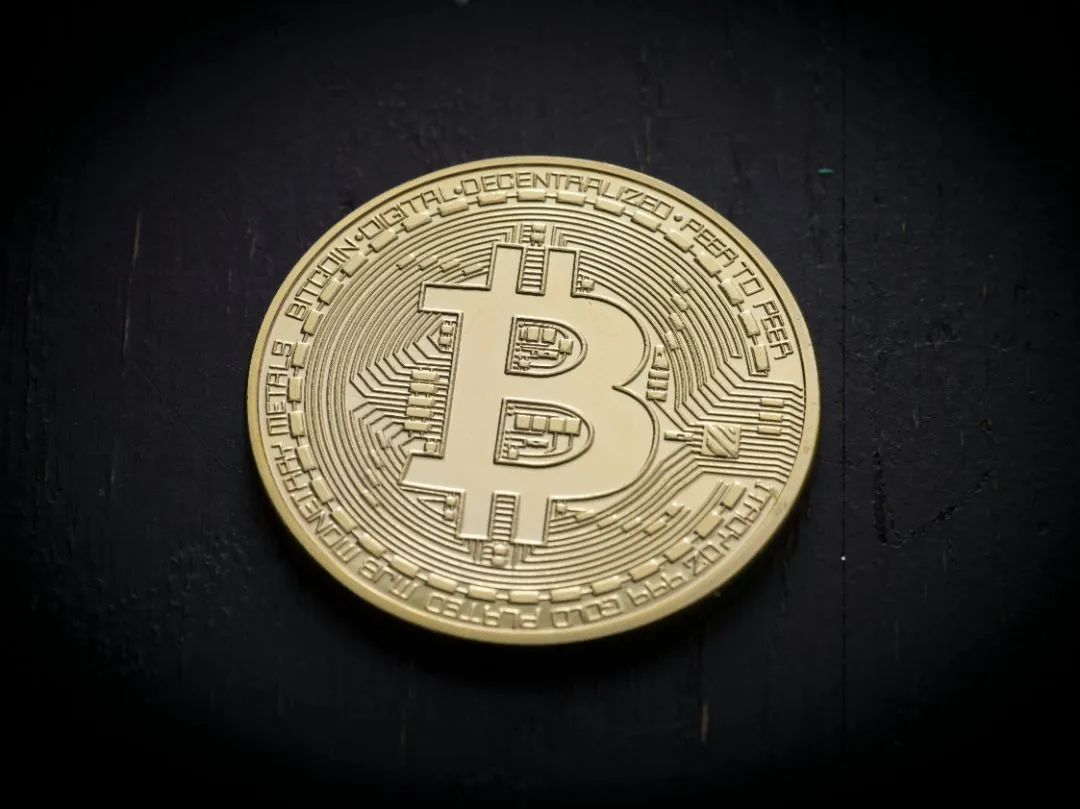
https://asset.coinness.com/en/news/70ea7ac7ad48c702bbc3ee14032f849f.webp
Photo by Kiko Ferranco on Unsplash

At the time, the company expressed the view that enabling crypto payments “added flexibility and convenience” for platform users, providing them with “a seamless and efficient way to access the company’s wide range of services.”


Philippine online news portal Philstar.com reported that Filipino users of the platform can now top up their GrabPay digital wallets with a range of cryptocurrencies, including Bitcoin (BTC) and Ethereum (ETH), as well as U.S. dollar stablecoins USDC and USDT.


In Singapore, Grab rolled out the offering in partnership with Triple-A, a company that enables businesses to pay and get paid in digital currencies. Singapore-based Crypto.com also partnered with the firm last year to enable direct crypto payments.


Financial inclusion

In extending the service to the Philippines, Grab has again partnered with Triple-A, alongside Philippine crypto exchange platform PDAX. CJ Lacsican, Grab Philippines’ vice president for cities, said that “integrating cryptocurrency as a cash-in option for GrabPay reflects [Grab’s] commitment to advancing financial inclusion in the Philippines.” 


She added that the move aims to empower a broader spectrum of Filipinos, particularly those who prefer the convenience of digital currencies and others who have limited access to traditional banking.


Triple-A CEO Eric Barbier said that the launch of GrabPay crypto top-ups went well in Singapore, with a fantastic response from Singaporean platform users. Following that rollout, Barbier believes that the Philippines is a market that’s ready for digital currencies. “This is a big step in making digital currencies easier to use in everyday life across Southeast Asia,” he added.


Driving crypto adoption

PDAX CEO Nichel Gaba suggested that the Philippines “has one of the largest crypto user bases globally,” adding that through this partnership, accessible use cases are being offered “that will both support the existing crypto community and drive greater adoption of cryptocurrency.” 


Grab first pivoted to Web3 with the integration of a Polygon-based crypto wallet in September 2023, with a view towards making crypto more accessible and usable for ordinary people. The super app, which is considered by many to be the “Uber of Southeast Asia,” has 42 million monthly transacting users (MTUs) across Cambodia, Indonesia, Malaysia, Myanmar, the Philippines, Singapore, Thailand and Vietnam. 


The development of the Grab Web3 Wallet came about as a consequence of a collaboration with USDC stablecoin issuer Circle. As part of a strategic partnership, Circle’s Web3 services platform was integrated into the Grab app.


More recently, Grab partnered with NATIX Network, a Solana ecosystem decentralized physical infrastructure network (DePIN) project, in an effort to collaborate on autonomous driving technology and mapping. 
More to Read
View All
Web3 & Enterprise·

Oct 05, 2023

BC Card Launches Innovative Card Payment NFT Service

BC Card Launches Innovative Card Payment NFT ServiceSouth Korean credit card issuer BC Card announced Wednesday (local time) that it has launched a non-fungible token (NFT) issuance service linked to card payments — the first of its kind in the country — marking a significant step in the financial industry’s adoption of blockchain technology.Photo by rupixen.com on Unsplash“The digital finance market is an area of technology and imagination, and it will continue to grow in various ways,” said BC Card Director Lee Sang-jun. “We are pioneering the industry by introducing payment-linked utility NFT services for the first time.”Revolutionizing the use of NFTsTypically, NFTs are primarily used to prove the uniqueness of digital assets based on their non-replicability, but the card issuer has now integrated them into card payments. This service offers customers proof of payments in the form of NFTs along with various other benefits.BC Card has been preparing for the NFT market to pick up momentum since 2021. After rigorous internal testing, it first developed and opened its own NFT wallet dubbed “NFTbooc” on the private Ethereum network in April last year. Since then, the NFT wallet has been improved to be more user-friendly. Notably, it was integrated into BC Card’s financial platform PayBook in order to provide customers with a more convenient means to check their personal NFT holdings and participate in events.The credit card company also issued limited edition NFTs through NFTbooc to celebrate the 40th anniversary of its foundation last year, making them available for both customers and employees. Even during the ongoing crypto winter, the company has continued efforts to integrate NFTs into customer services by facilitating NFT-based payments and emphasizing their technological value.Boosting customer engagementTo celebrate the launch of the newest service, BC Card is also holding a special event for customers until December 31. Each participant will receive random missions, such as using their card within a specific time slot or at a specific store and engaging in a minimum number of transactions. Those who complete the challenges will be airdropped certificates of completion minted as NFTs after the event is closed with the chance to win cashback rewards of up to 100% of the amount of money that they spent during the challenge.The card issuer plans to hold two additional events, which will be outlined on the PayBook and NFTbooc event pages.The card company has also applied for three NFT-related patents this year, including one for issuing NFT receipts for secondhand transactions and asset certification NFTs that can be used to prove asset details in the event of a system failure at a given financial company.

news
Policy & Regulation·

Oct 05, 2023

KDIC Seizes Crypto from Debtors Linked to Losses at Financial Firms

KDIC Seizes Crypto from Debtors Linked to Losses at Financial FirmsDuring the first half of this year, the Korea Deposit Insurance Corporation (KDIC) tracked the cryptocurrency holdings of 1,075 individuals and debtors responsible for causing losses at financial entities, including savings banks, according to documents obtained by local news outlet Herald Economy, from the office of lawmaker Kim Han-kyu, a member of the National Assembly’s National Policy Committee. From this scrutiny, KDIC identified 29 wrongful cases and proceeded to confiscate cryptocurrencies in 16 of those instances.KDIC is a semi-state body that has been instrumental in tracing and recovering assets from culpable employees at troubled financial firms and debtors in arrears. Meanwhile, methods for hiding wealth have become more sophisticated, typically unfolding behind the curtain.Photo by Georg Bommeli on UnsplashFirst crypto seizureOut of these individuals, 900 had taken out loans of at least KRW 3 billion ($2.2 million) from beleaguered financial institutions, while the remaining 175 were employees of these institutions, held responsible for their failures. This occasion represents the KDIC’s first seizure of virtual assets.Until recently, the KDIC struggled to reclaim hidden assets funneled into cryptocurrency exchanges, given their limited authority to seek documentation. KDIC’s purview mainly extended to requesting information from public institutions, banks, insurance companies, and securities firms. However, KDIC has now found a way to seize crypto assets by investigating the bank accounts linked to these exchanges. In Korea, crypto exchanges facilitating Korean won trades are legally mandated to secure real-name accounts from banks.Call for expanding KDIC’s authorityGiven the evidence of using cryptocurrencies to conceal wealth, many suggest that amendments to the Depositor Protection Act are necessary, enabling KDIC to directly request relevant data from exchanges and recover more hidden assets effectively.Furthermore in August KDIC secured a court order allowing them to liquidate these assets. Following this successful confiscation, the debtors’ cryptocurrencies have been frozen in their wallets, rendering them unresponsive to any market shifts. Discussions are now underway regarding the method of liquidating the debtors’ cryptocurrencies at market value on exchanges. This includes deliberations on whether KDIC will assume ownership of the cryptocurrencies and directly proceed with their sale.In a chat with Herald Economy, Lawmaker Kim emphasized the need for KDIC to have the authority to access information from virtual asset service providers. This would enable them to more effectively retrieve assets from responsible debtors. Kim further stated that such steps would enhance both the efficiency of debt collection and overall market fairness.

news
Policy & Regulation·

Aug 19, 2023

Taiwan Proposes New Crypto Business Category

Taiwan Proposes New Crypto Business CategoryWith regulation having trailed the crypto innovation, more recently it seems like every day brings further developments, with the latest installment seeing Taiwan take a significant step forward. Officials in Taipei are proposing the classification of crypto regulations within their own novel business category.Photo by Jack Brind on UnsplashFostering self-regulationThe move aims to potentially allow cryptocurrency-related companies to establish industry associations, ultimately fostering the creation of self-regulatory guidelines. The Ministry of Economic Affairs, in a recent announcement, unveiled its draft amendment to the Standards of Classification of Commercial Group regulations. This proposed amendment centers on the inclusion of a distinct category for digital asset services.An official from the economic ministry informed The Block that the freshly introduced business category outlines the scope of operations within the cryptocurrency sector. This encompasses various activities, such as cryptocurrency to fiat or digital token exchanges, facilitating cryptocurrency transfers, offering services for crypto storage and management, and providing assistance related to cryptocurrency issuance or sales.The official further elaborated that cryptocurrency firms will be permitted to form industry associations once the proposed business category is successfully incorporated into the relevant regulations. Seeking public input, the ministry anticipates finalizing the amendment in collaboration with the Ministry of the Interior in either mid- or late-October.Encouraging trade associationsBy allowing the establishment of industry associations, cryptocurrency companies can proactively devise self-supervisory rules that address industry-specific challenges and concerns. This move is anticipated to bolster transparency, security, and responsible conduct within the cryptocurrency ecosystem.Taiwan’s approach to virtual asset services providers (VASPs) has mandated compliance with anti-money laundering laws since the implementation of anti-money laundering regulations by the Financial Supervisory Commission in July 2021. However, the overall industry remains relatively unregulated within the country.Binance, the world’s largest cryptocurrency exchange, has recently embarked on the process of obtaining registration for anti-money laundering compliance under the FSC.Regulatory guidelines being draftedAs the regulatory landscape evolves, Taiwan’s FSC, which assumed its role as the principal regulator overseeing the crypto industry in March, is actively formulating comprehensive guidelines. These guidelines will cover trading and payment aspects associated with cryptocurrencies for VASPs.An FSC official revealed that the agency plans to unveil the VASP guidelines by the end of September. It’s understood that the guidelines will comprise thirteen regulatory principles. It’s believed that the issuance of crypto assets will be permitted but that stablecoin issuance will be prohibited. One prerequisite for the issuance of digital assets will be a requirement to accompany that issuance with a comprehensive whitepaper, detailing fundamental and necessary information that investors can review, relative to the token offering.Taiwan’s proposition of a novel business category signifies a pivotal move towards enhanced self-regulation and industry cohesion within the cryptocurrency sector. As the regulatory framework takes shape, the introduction of self-regulatory guidelines is poised to contribute to the responsible growth of the cryptocurrency industry in Taiwan.

news
Loading