Top

Korean crypto exchanges list Trump-linked cryptocurrencies

Web3 & Enterprise·September 02, 2025, 5:25 AM

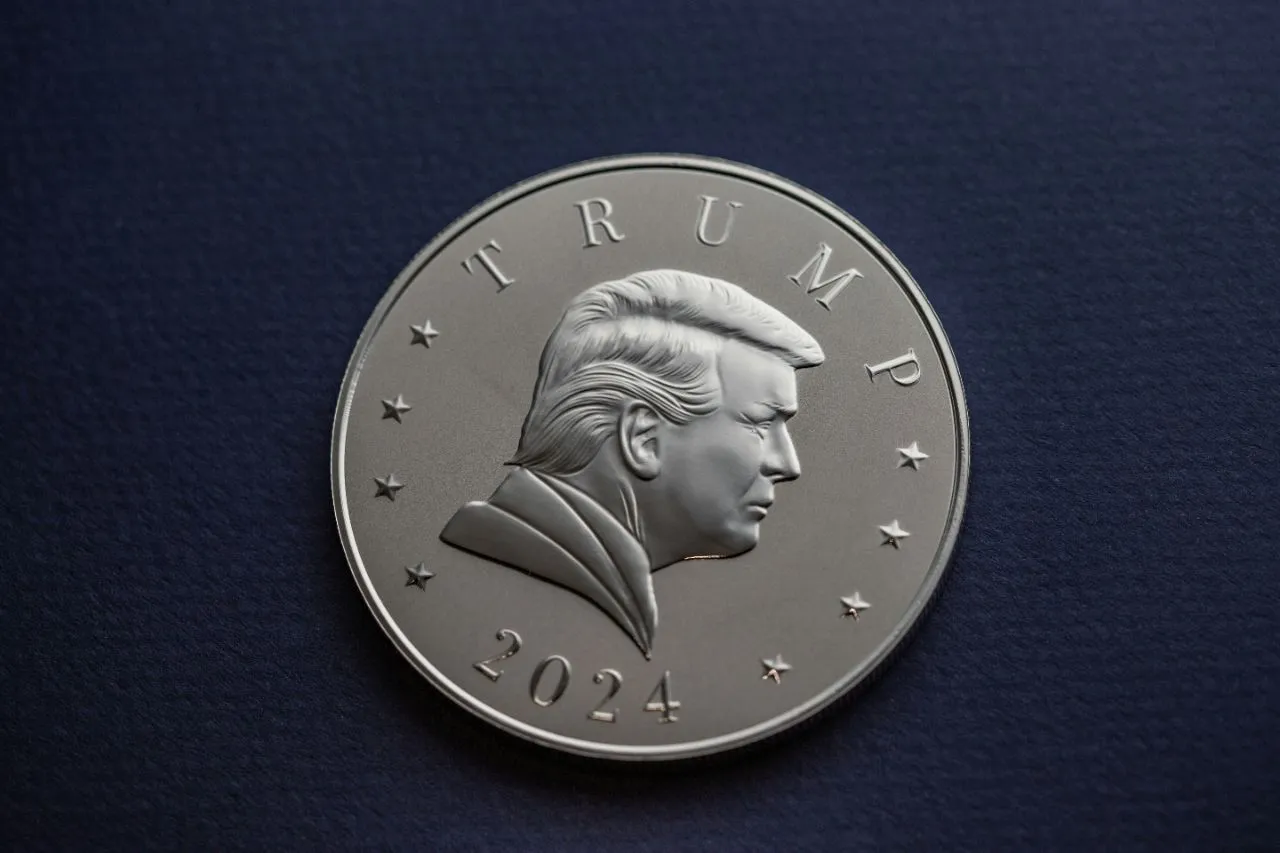
Cryptocurrencies tied to the family of U.S. President Donald Trump began trading on South Korea’s major exchanges on Monday.


Upbit, the country’s largest exchange, listed WLFI—the native token of World Liberty Financial, a DeFi platform backed by the Trump family—and World Liberty Financial USD (USD1), a stablecoin the platform says is pegged 1:1 to the U.S. dollar and backed by dollars and government money market funds. Bithumb also listed both WLFI and USD1, while Coinone listed WLFI only.
https://asset.coinness.com/en/news/8cdbcae8b4a6a0aad470e9f5784ab395.webp
Photo by Scottsdale Mint on Unsplash

From global listings to a volatile debut

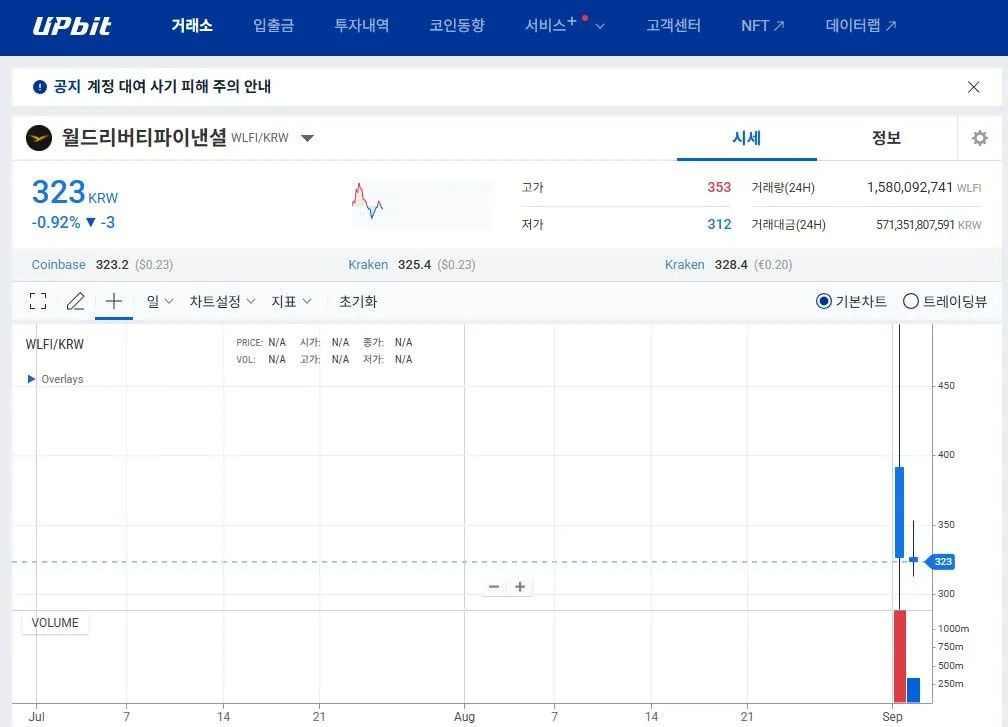
WLFI’s first session was volatile. It opened on Upbit at a floor price of 433.76 won ($0.31) and, roughly 17 hours later, was down about 25% at 323 won ($0.23) at the time of publication.
https://asset.coinness.com/en/news/ddebe18a850dcbf79d22ca0153c03238.webp
Source: WLFI/KRW spot trading pair on Upbit

The Korean launch comes alongside listings on major global venues, including Binance and Coinbase. Until its exchange listings, WLFI holders had been unable to trade their tokens. The Wall Street Journal estimated the Trump family’s holdings, representing less than a quarter of the supply, to be worth close to $5 billion after the listing. Trump’s three sons are named as co-founders of World Liberty, which says tokens allocated to founders and team members will remain locked. President Trump is described as the project’s “co-founder emeritus.”


Political controversy over crypto and holdings

The project has drawn criticism from those who argue it could serve as a conduit for influence, with partners and investors seeking political favor. In April, Democratic lawmakers Senator Elizabeth Warren and Representative Maxine Waters warned the U.S. Securities and Exchange Commission that the family’s stake posed “an unprecedented conflict of interest” in oversight of the crypto industry. Later, White House press secretary Karoline Leavitt said, “Neither the President nor his family have ever engaged, or will ever engage, in conflicts of interest.”


Controversy over public officials’ crypto exposure is not new. Recently, it was reported by The Chosun Ilbo that as of Aug. 14, Lee Eog-weon, nominee to chair South Korea’s Financial Services Commission (FSC), held 10 shares of Strategy, a Nasdaq-listed Bitcoin treasury company with 632,457 BTC in reserves. The disclosure indicates no legal violation because the holdings predate his nomination, but it highlights tension with his public views. In a letter to parliament ahead of his confirmation hearing, Lee questioned crypto’s intrinsic value and argued its volatility undermines its utility as a store of value or medium of exchange.


If Lee were not seeking a government post, his holdings of crypto-related stocks would hardly surprise South Koreans. According to Money Today, citing data from the Korea Securities Depository (KSD), Korean investors increased purchases of crypto-related U.S. equities amid expectations of U.S. rate cuts. Bitmine Immersion Technologies—a Bitcoin miner that also accumulates Ethereum as a treasury asset—was the second-most purchased U.S. stock by Koreans in August, with net buys of $252.77 million, or 7.6% of all purchases among the top 50 U.S. stocks. Stablecoin issuer Circle ranked 10th at $92.62 million, and the GraniteShares 2x Long COIN Daily ETF, which delivers twice the daily price movement of Coinbase, ranked 11th at $90.74 million. In total, crypto-related stocks and ETFs accounted for 30.4% of the top 50 U.S. equity holdings by value.


South Korea weighs spot ETFs amid investor surge

Policy is moving in tandem with market interest. Spot crypto ETFs have recently been elevated to South Korea’s national agenda, opening the door to potential approval. Analysts say such products could repatriate demand that has been flowing overseas. Kim Jin-young of Kiwoom Securities argues that expanded regulatory approval could reshape Korea’s capital market by widening investor access, drawing in institutional capital, stabilizing prices, and diversifying available crypto-linked products.


 

More to Read
View All
Web3 & Enterprise·

Nov 16, 2023

Korean pro female golfers to compete in WEMIX golf tournament this weekend

Korean pro female golfers to compete in WEMIX golf tournament this weekendThe world’s first blockchain-assisted golf tournament, WEMIX Championship 2023, will take place this weekend at the Haeundae Beach Golf and Resort in Busan. 24 female golfers from the Korea Ladies Professional Golf Association (KLPGA) — including the top 20 who earned the most WEMIX points during the preliminary Race to WEMIX Championship — are set to compete.Photo by Mick De Paola on UnsplashBringing blockchain to sportsNotably, blockchain technology is incorporated into all aspects of the tournament. This includes dynamic Real World Event NFTs that are available via NFT Is Life Evolution (NILE), Wemade’s decentralized autonomous organization (DAO) and NFT platform. These NFTs come in two categories: “ticket NFTs,” which function as admission tickets and food or parking vouchers for spectators, and “prize NFTs,” which contain WEMIX token awards for tournament winners. The total prize budget is one million WEMIX, or approximately KRW 2.4 billion ($1.9 million) as of 4:30 p.m. on Thursday (local time). The first-place winner will receive 250,000 WEMIXThe tournament venue will also have a Gallery Plaza with various activities and showcases for visitors to enjoy, like exhibitions for Volvo’s newest vehicles, photo zones and putting games. The food and beverage zone will serve BAYC-themed burgers from Californian burger brand Bored and Hungry, as well as beverages from Hide Me, Please, a Korean food and beverage NFT membership brand. BAYC is the globally renowned IP from the Bored Ape Yacht Club NFT collection.The competition’s top playersMeanwhile, the subject of many golfing enthusiasts’ interest is Im Jin-hee, the golfer who won the most WEMIX points during the Race to WEMIX Championship with 6,450 points. She secured 90,000 WEMIX for earning the top ranking, adding another personal achievement to her successful season this year. Coming in second and third place were Lee Ye-won and Kim Min-byeol. The final results of the competition were determined based on the golfers’ performances in the Lotte Rent-a-Car’s Ladies Open and the SK Shieldus-SK Telecom Championship.

news
Web3 & Enterprise·

Sep 05, 2023

Real-World Assets Emerge as a Beacon of Hope for the Blockchain Industry Amid Crypto Winter

Real-World Assets Emerge as a Beacon of Hope for the Blockchain Industry Amid Crypto WinterIn the midst of a crypto winter that has cast a shadow over the blockchain industry, a new opportunity has come to light — the tokenization of real-world assets (RWAs), or tangible assets such as gold and real estate, on blockchain networks.Photo by Tierra Mallorca on UnsplashMajor blockchain companies and industry experts gathered at Klaytn Square Lounge 2023, a blockchain and Web3 event in Gangnam, southern Seoul on Monday to discuss how RWAs could overcome the limitations of the current blockchain market.The rise of RWAsRecently, platforms like RWA tokenization project Elysia and Klaytn Foundation have started to shift their attention to RWAs as a promising avenue in the blockchain market. According to a report by global consulting firm Boston Consulting Group, the total value of the global RWA market, which reached $310 billion last year, is projected to surge to a staggering $16 trillion by 2030.“During the ongoing crypto winter, we are witnessing not only new funds pouring into blockchain projects but also existing funds leaving the market. We see RWAs as a potential solution to this,” said Seo Sang-min, Representative Director at Klaytn Foundation.Seo went on to explain that currently, virtual assets dominate most of the assets on blockchain mainnets like Klaytn, but compared to RWAs such as gold, cash, and real estate, their scale is very small. “We need to expand the utility of RWAs by placing them on the blockchain. Once they are, transaction costs will significantly decrease, and anyone will be able to trade 24/7 worldwide,” he said.Other blockchain experts at the conference also shared this sentiment. “Tokenizing RWAs is crucial because it provides investment opportunities that do not require large sums of money or lengthy waiting periods,” Luc Falempin, CEO of Tokeny Solutions emphasized. Beyond tokenizing the assets themselves, legal contracts and information about the various stakeholders involved, such as asset issuers and investors, can be recorded and shared on the blockchain, which can prove to be very convenient for investors.Revolutionizing investmentAccording to Falempin, most derivative investments involve seeking investment opportunities, creating portfolios, and enduring complicated processes for recovering investment capital that can take over ten years to complete. Additionally, ordinary investors often struggle to raise the substantial funds required for investment, creating high entry barriers. Also, investment contracts were traditionally executed on paper, which is outdated and inconvenient. However, as blockchain technology enables the tokenization of assets, these processes become much simpler.“Through RWA-backed virtual assets, even dozens of individuals can easily participate in investment, eliminating the hassle of dealing with paperwork. Introducing blockchain as a new infrastructure allows all stakeholders to easily view relevant records within the blockchain network,” he stated.The role of DAOsSo, how can investment products like RWA tokens be effectively managed within the decentralized realm of blockchain? Yoon Kim, Chief Marketing Officer of Elysia, mentioned decentralized autonomous organizations (DAOs) as a fit solution.“DAOs are a realistic method that is crucial for implementing the RWA model effectively. All stakeholders within a DAO can make modifications and creations, providing an avenue for managing tokenized assets effectively without government intervention,” Kim said.Technical hurdlesHowever, RWA tokens face several technical challenges. RWA products, which integrate the real world with the blockchain realm, could suffer from the so-called oracle problem, which refers to the inherent inability of blockchains to access external data, leading to a lack of information transparency. Even if the assets are stable, their prices on the blockchain network may differ from those in the real market. Currently, there are no established technical solutions to address these issues.“Rather than getting directly involved, we aim to move in accordance with market prices, but also seek ways to minimize risks with the help of external entities in certain cases,” said James Lim, CEO of Creder.As the crypto winter persists, the blockchain industry is looking towards RWAs as a beacon of hope, offering the potential to bridge the gap between traditional assets and the decentralized world of blockchain, despite the challenges that lie ahead.

news
Policy & Regulation·

Oct 13, 2025

UAE deepens its crypto push as Bybit wins full license and institutions move in

The United Arab Emirates (UAE) advanced its push to become a leading digital asset hub as crypto exchange Bybit received a full virtual asset platform operator license from the Securities and Commodities Authority (SCA). The permit enables Bybit to provide its entire range of products to UAE residents, the company said in an Oct. 9 press release. The clearance marks the culmination of a process that began when Bybit received preliminary approval from the SCA in February. The exchange says it is the first to complete the full licensing journey and notes that 2025 has been a year of major compliance wins, including new credentials in Europe and a return to the Indian market.Photo by Atikah Akhtar on UnsplashBitGo broadens institutional reach in DubaiInstitutional infrastructure is expanding alongside retail access. Crypto custody firm BitGo secured a broker-dealer license from Dubai’s Virtual Assets Regulatory Authority (VARA). The new authorization allows BitGo MENA to deliver regulated trading and intermediation services across the region through an integrated OTC desk and a digital platform supporting spot crypto trading in both dirhams and U.S. dollars. The UAE’s welcoming attitude toward digital assets is changing how major investors think about wealth. The Bitcoin Historian said on X that The Kanoo Group, which oversees about $20 billion in assets, intends to invest in Bitcoin. Bloomberg has reported that affluent families across the region are gradually diversifying beyond real estate and private enterprises. With around $1 trillion expected to shift to younger generations soon, many heirs are looking to allocate more toward cryptocurrencies, tokenized funds, and tokenized real-world assets (RWAs). New fund marks progress in tokenized financeThat growing appetite for digital exposure is now being met with new products. Last month Qatar National Bank (QNB) Group joined forces with Standard Chartered and DMZ Finance to launch the first regulated tokenized money market fund in the Dubai International Financial Centre. Using blockchain technology, the QCD Money Market Fund brings traditional financial assets on-chain, creating new yield opportunities for investors within the digital economy. The fund is managed by QNB Group, uses infrastructure provided solely by DMZ Finance, and has Standard Chartered serving as custodian of its assets. As the UAE deepens its role in global finance, regulators are also working to align with international standards. By 2027, it expects to adopt the OECD’s Crypto-Asset Reporting Framework (CARF), with cross-border data exchanges to begin in 2028. The Ministry of Finance has already signed the Multilateral Competent Authority Agreement to make this happen. The framework promotes automatic sharing of crypto-related tax information among member countries, underscoring the UAE’s commitment to global transparency as it expands its financial footprint. Recent developments show the jurisdiction striving for growth while strengthening oversight. Exchanges are gaining clarity on what they can offer, institutions are building trading rails, and investors are embracing tokenized products. They signal a market finding its balance between innovation and regulation. The coming years will reveal how well that balance can hold. 

news
Loading