Top

Metaplanet aspires to acquisition of digital bank

Web3 & Enterprise·July 09, 2025, 8:14 AM

The CEO of Japanese hotel operator turned Bitcoin treasury company, Metaplanet, has suggested that the firm may consider acquiring a digital bank in the future.


Simon Gerovich, the firm’s CEO and a former Goldman Sachs banker, told the Financial Times that part of the second stage of its overall strategy may involve “acquiring a digital bank in Japan and providing digital banking services that are superior to the services which retail now is getting.”
https://asset.coinness.com/en/news/c8f69e9c0e05942f96201e767f2a3f82.webp
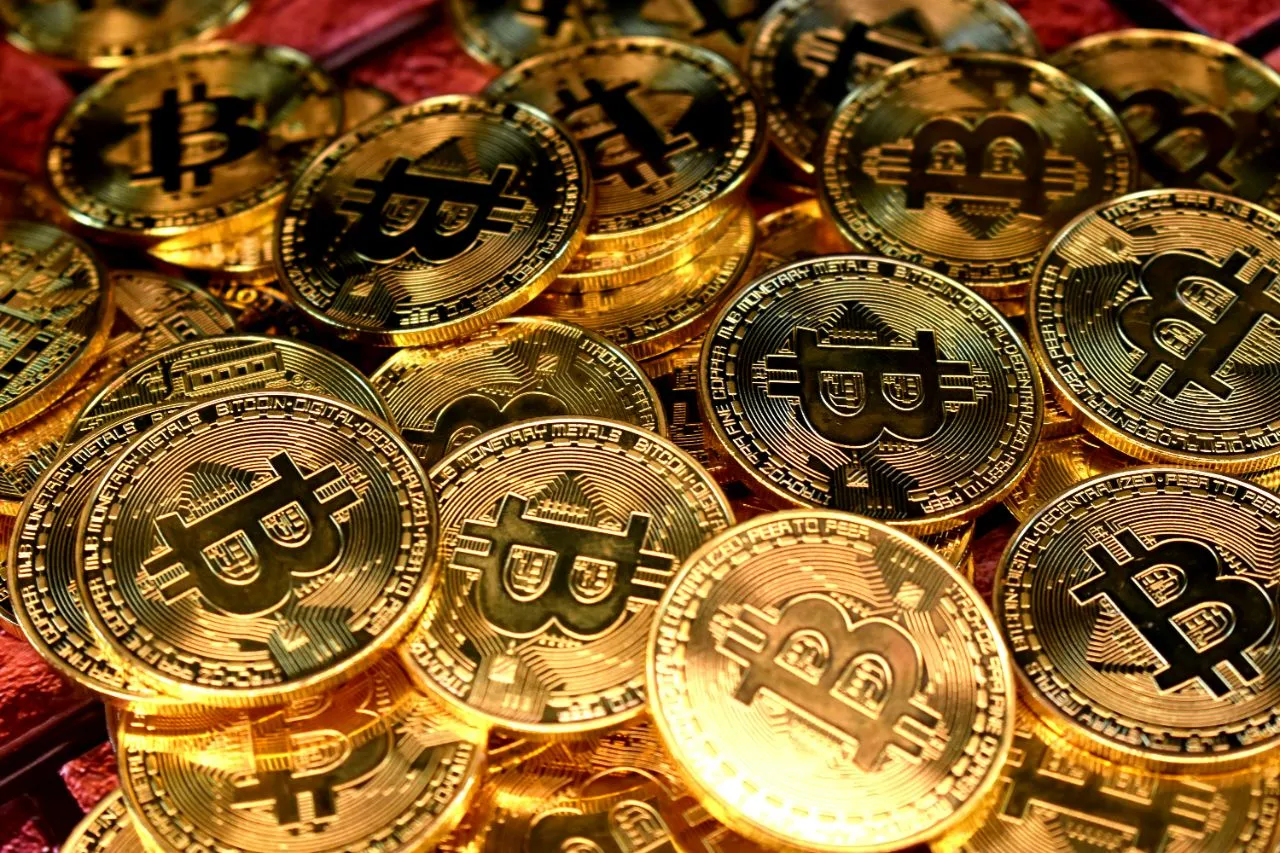
Photo by Kanchanara on Unsplash

Bitcoin gold rush

Gerovich explained that phase one of Metaplanet’s plan involves participating in what he considers to be “a bitcoin gold rush.” He added:


“We need to accumulate as much bitcoin as we can . . . to get to a point where we’ve reached escape velocity and it just makes it very difficult for others to catch up.”


Other firms are jumping on the bandwagon, as within a very short timeframe, 140 companies around the world have adopted a Bitcoin treasury strategy.


Metaplanet currently weighs in as the fifth-largest corporate holder of Bitcoin globally. Right now, the company holds 15,555 BTC. Its target is a holding of 210,000 BTC, which equates to around 1% of the total Bitcoin supply. Based on current pricing, such a holding would be worth in the region of $23 billion.


Acquiring cash-generating businesses

Once the company has accomplished its Bitcoin accumulation goals, it plans to move on to phase two, acquiring cash-generating businesses while leveraging its Bitcoin holdings in order to do so. Using Bitcoin as collateral, Gerovich said that Metaplanet will “get cash that we can use to buy profitable businesses.” 


While inroads are being made with regard to the acceptance of Bitcoin as a corporate reserve asset, it is earlier days still for its acceptance as collateral. Last month, the Federal Housing Finance Agency (FHFA) in the United States, ordered Fannie Mae and Freddie Mac, key government-sponsored players in the American mortgage market, to explore the treatment of Bitcoin as eligible collateral for mortgages.


Standard Chartered and crypto exchange OKX launched a pilot program earlier this year geared towards the use of crypto for collateral purposes. Gerovich talks in terms of Metaplanet’s phase two plan playing out at a time “when bitcoin, like securities or government bonds, can be deposited with banks and then they’ll provide very attractive financing against that asset.”


The Metaplanet CEO stated that he expects the Bitcoin accumulation phase of the plan to play out over a period of between four and six years. The Tokyo-listed firm started accumulating Bitcoin in 2024.


Some market participants are backing Metaplanet’s strategy with their own money. Global investment management firm Capital Group recently became Metaplanet’s second-largest investor.


Bitcoin treasury critics

However, the emergence of Bitcoin treasury firms has also drawn quite a few detractors. Some critics point out that many of these companies have a negative operating income. Market analyst Caleb Franzen asserted that even after buying Bitcoin, they’re still junk companies. Others point out that too many firms have jumped on the Bitcoin treasury bandwagon, making the prospect no longer attractive.


Fakhul Miah, managing director of GoMining Institutional, is also concerned about copycats. He told Cointelegraph that ”if these smaller firms crash, we could see a ripple effect that hurts Bitcoin’s image.”


More to Read
View All
Web3 & Enterprise·

Nov 04, 2023

Komainu and Crypto Garage partner to bring about institutional crypto adoption

Komainu and Crypto Garage partner to bring about institutional crypto adoptionKomainu, the crypto custodian and portfolio company of Japanese financial services conglomerate Nomura, has partnered with Crypto Garage to work towards enabling institutional crypto adoption in Japan.The digital asset custodian made the announcement of the partnership in a press release published to its website on Wednesday. The collaboration builds upon the investment by Crypto Garage's parent company, Digital Garage, in Komainu, aimed at fortifying Komainu’s market presence in Japan. The investment also unites Digital Garage with other prominent Japanese stakeholders in Komainu, including Laser Digital, the digital asset subsidiary of Nomura, alongside the Nomura Research Institute.Photo by Agathe on UnsplashCapitalizing on growing institutional interestCrypto Garage, a company that provides custody, over-the-counter (OTC) trading and settlement services in both the Japanese and international markets, has seen a growing interest from Japanese institutions in digital assets. This has spurred Komainu and Crypto Garage to develop advanced digital asset custody solutions tailored specifically to meet institutional demands, with a strong focus on security and compliance.The partnership harnesses the diverse expertise of both entities, laying the foundation for what both firms hope will be a robust and dependable digital asset management platform throughout the lifecycle of these assets. Speaking to that notion, Crypto Garage CEO Masahito Okuma suggested that the firms share a common vision, adding:“By combining forces, we will leverage our collective expertise to deliver solutions that satisfy the unique needs of Japanese institutions.”Nicolas Bertrand, CEO of Komainu, expressed his optimism regarding the collaboration and the Japanese market, stating:“Japan is a key jurisdiction for digital assets and continues to be an important part of our plans to be the most coveted institutional-grade custodian globally.”This partnership represents a significant leap forward in advancing the institutional crypto landscape in Japan. With the support of established financial entities such as Nomura Holdings Inc. and Digital Garage Inc., this venture is poised to instill confidence among Japanese institutions by demonstrating a strong commitment from the traditional financial sector.This collaboration not only demonstrates the evolving dynamics of institutional crypto services in Japan but also underscores the broader acceptance and integration of digital asset management solutions within traditional financial frameworks. It signifies a matured understanding and approach to digital asset custody and management.Komainu, established as a joint venture between Nomura, CoinShares and Ledger, operates in full compliance with regulatory standards, offering a fusion of traditional financial services with state-of-the-art security measures for institutional custody in the digital age. Earlier this year, the firm entered into a partnership with crypto exchange platform OKX, providing the company with digital asset custody services.In August, Komainu secured a trading license from the Virtual Assets Regulatory Authority (VARA) in Dubai. Meanwhile, Crypto Garage extends its services to crypto asset businesses, both within Japan and internationally, covering custody, over-the-counter (OTC) trading and settlement services for digital assets.

news
Markets·

Mar 11, 2024

Korea’s daily crypto trading volume surpasses that of stocks at nearly $9B

With Bitcoin prices hitting an all-time high, the daily crypto trading volume in South Korea has surpassed that of the stock market, local media outlet The Financial News reported.  As of yesterday at noon (KST), the local daily trading volume of cryptocurrencies over the past 24 hours stood at over KRW 11.8 trillion, or nearly $9 billion, according to data from crypto platform CoinMarketCap. Meanwhile, the daily trading volume on the Korea Composite Stock Price Index, or KOSPI, was KRW 11.4 trillion on Friday.  The total daily crypto trading volume was tallied by adding trading volume across Korea’s five major crypto exchanges – Bithumb posted KRW 8.8 trillion, Upbit KRW 2.7 trillion, Coinone KRW 176.4 billion, Gopax KRW 55.2 billion and Korbit KRW 32 billion. Photo by Alexander Mils on UnsplashUnlike stock markets which have a closing time, crypto assets are traded 24/7, which makes it difficult to do an apple-to-apple comparison. Still, the numbers clearly demonstrate retail investors’ bullish sentiment toward the crypto market.  According to the U.S. crypto exchange Coinbase, the Bitcoin price touched $70,199 on Friday (UST), just three days after the flagship coin surpassed $69,000 on March 5, an already record-breaking price in 28 months since November 2021.  Inflation and recession drive retail investors to crypto Financial experts say that Korea’s persistently high inflation and slowing economic growth are driving local retail investors to seek relatively riskier yet high-yielding assets such as cryptocurrencies. Young investors in their 20s and 30s are particularly leaning towards investing in crypto, as they fear not being able to buy houses solely with their wages. Moreover, Koreans’ average monthly real wage declined by 1.1% year-on-year, which marks a continuous decline for two consecutive years since 2022.  Despite the country’s economic slowdown, the KOSPI has actually risen, fueled by capital influx from foreign investors who are expecting a valuation increase in local firms. In contrast, local retail investors are rushing out from the stock market as they see a lack of outperforming companies.  Data from the Korea Exchange (KRX), the sole securities exchange operator in the country, showed that foreign investors purchased KRW 4.4 trillion in stocks over the past month on the KOSPI market, while local retail investors sold KRW 3.3 trillion worth of stocks during the same period.  Local crypto boom prompts ‘Kimchi Premium’ effectThe recent bullish sentiment in the Korean crypto market can largely be attributed to local retail investors, because current laws prohibit foreign investors from trading crypto assets in the country and regulations limit enterprises from making direct investments in crypto.  While the KOSPI market grapples with the so-called Korea Discount effect, which refers to the undervaluation of the Korean stock market, the local crypto market is experiencing the exact opposite trend – crypto investors are benefitting from something called the Kimchi Premium effect, a newly coined term referring to the overvaluation of crypto assets in Korean crypto markets compared to those in their foreign counterparts. As of yesterday at 14:00 (KST), Bitcoin changed hands at KRW 917.4 million on foreign exchanges while at KRW 971.8 million on Korean exchanges, per data from local crypto exchange Upbit.  Cho Dong-keun, a professor at the Economics Department at Myongji University, described the current Korean economic situation as “a competition for the country’s limited wealth”. He said that the stagnant national growth has pushed people to fight for more wealth, urging them to invest in crypto assets, adding that Kimchi Premium could substantially appeal to many retail investors.   

news
Policy & Regulation·

Jul 20, 2023

Yat Siu: Hong Kong’s Crypto Adoption Sanctioned by the Mainland

Yat Siu: Hong Kong’s Crypto Adoption Sanctioned by the MainlandIn a keynote speech at the Ethereum Community Conference (EthCC) in Paris on Wednesday, Yat Siu, Co-Founder of blockchain gaming and NFT firm Animoca Brands, shed light on Hong Kong’s rapid adoption of cryptocurrencies and Web3 technology, emphasizing its connection to developments unfolding in mainland China.Photo by Serey Kim on UnsplashDriven by the Chinese authoritiesSiu argued that the current crypto trend in Hong Kong signifies more than just the actions of the Chinese autonomous area itself, pointing to a larger agenda driven by China’s aspirations.According to Siu, the Chinese government’s release of its Web3 white paper in May, which positioned Web3 as the future of the internet, carries significant weight. Notably, this announcement came only days after Hong Kong revealed plans to allow retail crypto investments. Siu highlighted that even though China’s white paper did not explicitly mention cryptocurrencies, it is key to acknowledging the country’s commitment to advancing Web3 technologies.The news of Hong Kong’s crypto developments resonated throughout China, capturing attention even on China Central Television, the national TV channel. Siu underscored the broader implications of this coverage, suggesting that the developments in Hong Kong bear the imprint of higher authorities. He made it clear that any actions taken by Hong Kong would require the approval of China.Challenging US global hegemonyBeyond Hong Kong, Siu delved into the broader significance of Web3 as a tool to challenge the United States’ technological hegemony. He expressed concerns about the security risks associated with excessive reliance on tech giants such as Google, Apple, and Facebook. Siu argued that countries like Japan, Korea, and China view Web3 as an opportunity to break free from the dominance of US-centric technologies. This motivation is especially pronounced in China, which is actively pursuing de-dollarization.Reducing dependence on the US dollar represents a key factor driving the adoption of Web3 in these countries. Siu pointed out that the global currency’s position affords the United States significant power and influence, making it crucial for China and other nations to seek alternatives. Embracing Web3 technologies serves as a potential avenue for diminishing reliance on the US dollar and challenging the current financial status quo.While mainland China banned nearly all crypto activities in 2021, the country has remained one of the largest crypto-mining hubs worldwide, despite the prohibition. The proactive stance of Hong Kong in implementing crypto-friendly regulations has sparked hope that it could pave the way for China to eventually lift its long-standing ban.However, prominent figures within the Chinese establishment, such as CPIC Investment Management CEO Chenggang Zhou, have recently reiterated the country’s anti-crypto stance.The rapid adoption of cryptocurrencies and Web3 technology in Hong Kong provides a glimpse into broader developments unfolding in mainland China. Web3 is seen as a potent instrument for challenging US technological dominance, although whether that leads to China lifting its crypto ban is something that remains to be seen.

news
Loading