Top

BSN Foundation launches in Singapore with five global members

Web3 & Enterprise·November 17, 2023, 1:58 AM

The BSN Foundation, a Singapore-based organization dedicated to building global blockchain infrastructure, on Thursday officially announced its five founding members from different regions and sectors.
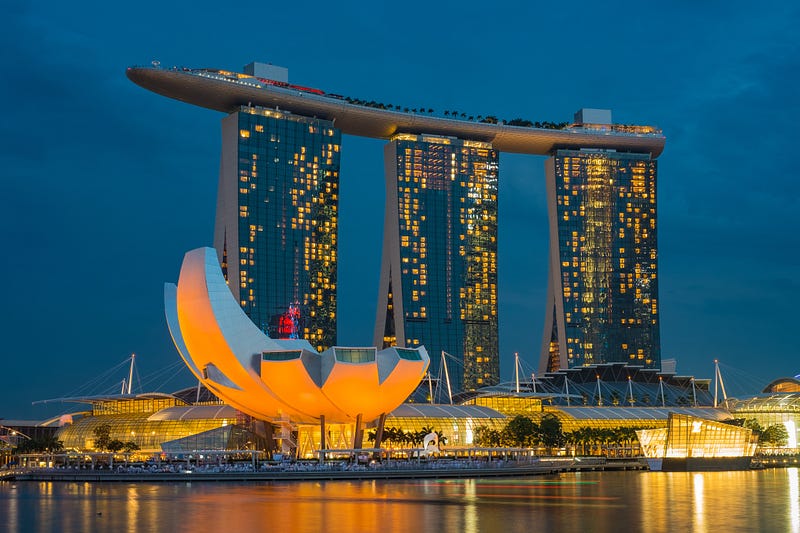
Photo by Julien de Salaberry on Unsplash


Broad representation

The founding members of the BSN Foundation include Blockdaemon, a leading institutional digital asset wallet provider; Zeeve, a Los Angeles-based blockchain infrastructure automation platform; TOKO, a Hong Kong-headquartered digital asset creation platform; GFT Technologies, a German tech firm specializing in financial services and Red Date Technology, a tech firm behind the BSN Spartan Network located in Hong Kong.

Representatives from these entities gathered at the Pan Pacific Singapore on Thursday for a launch event. The BSN Foundation will act as the governing body of the BSN Spartan Network, a public infrastructure network based on open-source virtual data centers. The launch of the foundation marks a major milestone in the BSN’s global expansion and its vision to establish a decentralized public layer of the internet.

In discussion with Cointelegraph, Tim Bailey, the Vice President of Global Business at Red Date Technology, stated:

“The BSN Foundation launch is a vital step in our global expansion, demonstrating the international recognition and support for the BSN Spartan Network’s concept and goals.” He added:

“These organizations bring expertise in areas like blockchain-as-a-service, asset tokenization, financial services, and consulting, highlighting the wide applicability and potential of the BSN Spartan Network.”

Bailey emphasized that the BSN Spartan Network is designed to change the application and governance of public chain technology. “By focusing on non-cryptocurrency public chains and a decentralized governance model, we’re not just innovating in technology but also in how global collaborations can shape the future of IT infrastructure,” Bailey stated. BSN’s strategy is focused on creating a “more stable and accessible network” for businesses around the world, distancing itself from the volatility related to traditional cryptocurrencies like Bitcoin.


Chinese origins

The BSN Spartan Network, launched in September 2022, features a non-tradable token (NTT) issued on its default chain. Each of the network’s data centers is equipped with a single registered NTT wallet for managing and holding these tokens. NTTs can be acquired using fiat currency, selected stablecoins or through various incentive programs.

The BSN Spartan Network, which originated in China as the “Blockchain-based Service Network” in early 2020, was developed with the backing of the Chinese government.

“BSN was indeed originally initiated in China. However, the BSN Spartan Network, governed by the Singapore-based BSN Foundation, is distinct from the BSN Networks in mainland China,” Bailey stated. He highlighted that the BSN Spartan Network is constructed following global standards, is entirely open source and maintains independent operations from the BSN Networks present in mainland China.


UDPN proof of concept

BSN, driven by Red Date Technology as its lead developer, had outlined plans to develop a universal digital payments network (UDPN) as early as 2021. That project continues to progress. Last month, it emerged that SC Ventures, the Singapore-based fintech investment subsidiary of British banking conglomerate Standard Chartered, had partnered with Deutsche Bank in a first proof of concept (POC) of the UDPN. That POC resulted in real-time transfers and swaps of synthetic USDC and EURS stablecoins between the two banks.

More to Read
View All
Web3 & Enterprise·

May 23, 2023

Real-World Asset Investment Platform Alterna Launches in Japan

Real-World Asset Investment Platform Alterna Launches in JapanMitsui & Co. Digital Asset Management (Mitsui & Co. DAM) has unveiled Alterna, a novel platform designed to offer retail investors the chance to invest in real-world assets (RWAs). The service launched on Monday following receipt of the necessary regulatory approvals.Photo by Louie Martinez on UnsplashRWA-backed security tokensAlterna enables users to conveniently invest in RWAs that generate stable rental income and other returns. RWAs encompass a wide range of assets, including large-scale real estate properties and infrastructure such as logistics facilities and power plants. By offering security tokens, Alterna opens the door to previously out-of-reach investment opportunities, allowing individuals to invest with a minimum of 100,000 yen. This new service represents an exciting alternative for individuals traditionally more comfortable with cash savings.The first investment opportunity on the platform will be “Stage Grand Nihonbashi Ningyocho,” a residential building located in the Nihonbashi district. The application begins on June 2.The platform’s name, Alterna, emphasizes its role as an alternative investment service, offering a fresh approach distinct from conventional options such as bank deposits, stocks, and investment trusts.More effective portfolio managementCompared to traditional investment types like stocks and bonds, RWAs offer unique risk-return characteristics. With RWA-backed investments, investors can potentially achieve more effective portfolio management. These alternative assets have been garnering interest from institutional investors as well.The Japanese Government Pension Investment Fund (GPIF), the world’s largest institutional investor, has been investing in alternative assets since 2014. To pursue yields, the GPIF has been expanding its investment portfolio in real assets like real estate and infrastructure.Easy investment with smartphonesTraditionally, retail investors encountered difficulties investing in large-scale real estate and infrastructure assets. Mitsui & Co. DAM aims to establish an environment where such investments can be made easily via security tokens using smartphones.Interest in Alterna has been substantial even before its official launch, with over 10,000 pre-registrations recorded earlier this month.

news
Policy & Regulation·

May 15, 2024

Falcon Labs fined in settlement with CFTC

U.S. regulator, the Commodity Futures Trading Commission (CFTC), has fined Seychelles-headquartered crypto prime brokerage Falcon Labs as part of an overall settlement with the company.  The CFTC had found that the company had operated as an unregistered futures commission merchant (FCM) and furthermore, that it had enabled access to digital asset exchanges without the requisite registration.Photo by Joshua Hoehne on UnsplashSettlement termsIn a press release published to its website on May 13, the CFTC set out the nature of its settlement with Falcon Labs. The parties have agreed that Falcon Labs must discontinue its activities in acting as an unregistered FCM, with particular emphasis on it having provided U.S. individuals with access to digital asset derivatives trading.  Furthermore a fine of $1,179,008 has been applied in disgorgement and in addition, Falcon will have to pay a civil monetary penalty of $589,504. These penalties have been significantly reduced by comparison with the CFTCs original ask, on the basis that Falcon Labs cooperated fully with the CFTC’s Division of Enforcement over the course of the regulator’s investigative process into the activities of the company. In its statement the regulator set out its intent relative to enforcement going forward. Ian McGinley, the CFTC’s Director of Enforcement, stated:”The CFTC is taking the fight one step further by, for the first time, charging an intermediary that inappropriately facilitated access to those exchanges. Today’s action highlights that the CFTC will not hesitate to charge any entities—exchanges or intermediaries—who are providing customers access to digital asset products and services that require registration but have failed to appropriately register.” McGinley added that “the CFTC’s enforcement program has made clear it will not tolerate digital asset exchanges that fail to register with the CFTC or comply with the agency’s rules that maintain integrity in the derivatives markets.” No admission of guiltIn responding to the CFTCs original complaint, Falcon Labs tried to up the ante in terms of compliance. It moved to improve customer identification controls. As a consequence of its market position as a trading intermediary Falcon Labs enabled customer trading on a number of digital asset exchange platforms.  That activity included facilitating U.S.-based institutional customers relative to crypto derivatives trading. It allowed its own account with various digital asset trading platforms to be used, through a system of sub-accounts, by its customers, oftentimes without adequate customer information having been sought. In reaching this settlement with the CFTC Falcon Labs has not made any admission of guilt relative to the regulator’s findings. Alongside paying the agreed upon fines, it will voluntarily agree to adhere to the implementation of improved controls and to withhold its services from user groups that are deemed to be restricted, including all U.S. nationals. Taking to the X social media platform to comment on the matter, Mike Sellig, a partner at New York-based law firm Willkie Farr & Gallagher, claimed that the settlement demonstrated that the CFTC was following in the footsteps of the Securities and Exchange Commission (SEC), establishing “a body of widely applicable precedent.”

news
Policy & Regulation·

May 03, 2023

Incheon City to Host Blockchain Conference Showcasing its Vision

Incheon City to Host Blockchain Conference Showcasing its VisionIncheon City will host a blockchain conference, Incheon Metanomics 2023, to showcase its vision at the Songdo Convensia Convention Center on May 9.The event will present the city’s goal of building a blockchain ecosystem and fostering digital economy growth. About 150 blockchain experts from around the world are expected to attend, according to Block Media.Insightful talksProminent industry figures, including Leon Sing Foong, the head of Asia-Pacific operations at cryptocurrency exchange Binance; Steve Park, Asia-Pacific head of public policy at online game platform Roblox; and Justin Kim, a solutions architect at semiconductor company AMD, will speak at the event. Foong will talk about the collaboration between crypto exchanges and governments, Park will provide insights into the future of the metaverse, and Kim will address upcoming trends in decentralized storage systems.Registration for the conference is free and open until May 4 through Event Us, with a live stream of the event available on YouTube.Incheon and DubaiIncheon has been working towards establishing a special digital economy zone within the city by utilizing blockchain technology. In March, Incheon Mayor Yoo Jeong-bok met with Ahmed Bin Sulayem, the executive chairman of the UAE’s Dubai Multi Commodities Centre (DMCC), to discuss cooperation in the blockchain industry and digital economy.The DMCC, a free trade zone in Dubai, hosts over 65,000 workers from more than 21,000 companies across 180 countries. Notably, the DMCC crypto center is home to a community of over 500 crypto firms, fostering the Web3 and blockchain economy.Similarly, Incheon operates a free trade zone that connects 147 cities with populations exceeding 1 million within a three-hour flight radius. The Incheon Free Economic Zone is appealing to global blockchain companies as it offers flexible business operations for foreign entrepreneurs.© Pexels/joon young, Park

news
Loading