Top

Conut teams up with Foblgate to provide trendy crypto news to exchange users

Web3 & Enterprise·November 14, 2023, 8:28 AM

South Korean cryptocurrency exchange Foblgate announced on Tuesday (local time) that it will collaborate with Korean cryptocurrency newsletter Conut to bring relevant news about virtual assets to a wider audience, providing readers with richer and more informative content.

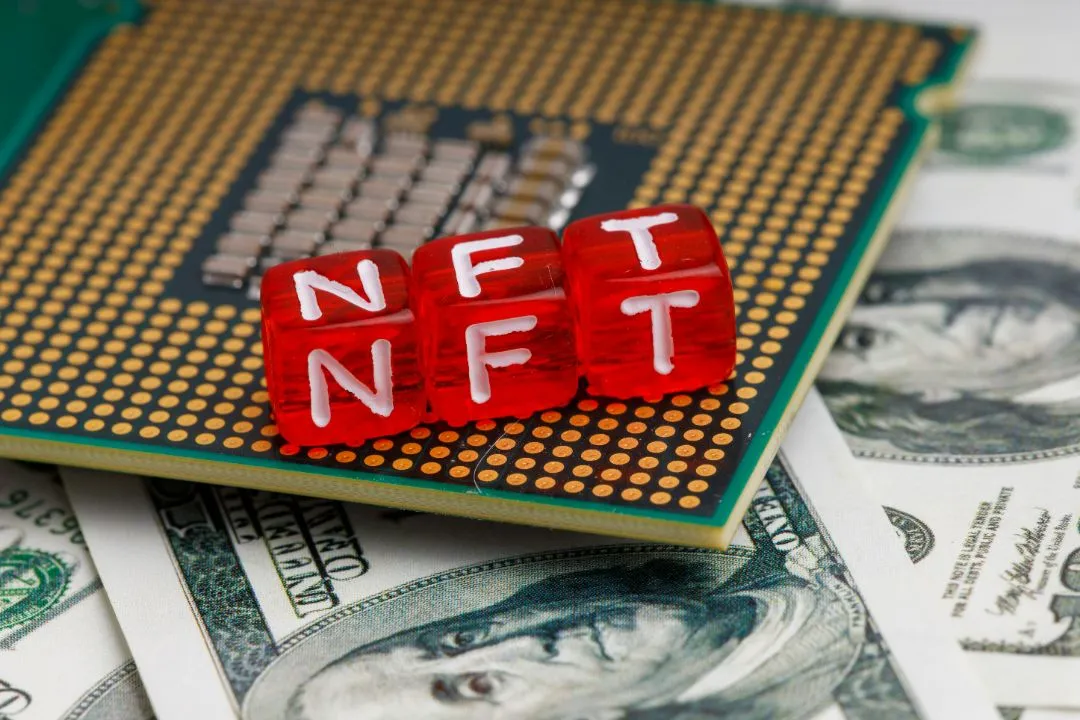
Photo by Markus Winkler on Unsplash


Publishing entertaining and insightful crypto news

Launched in 2021, Conut is dedicated to providing crypto news in a way that is fun, straightforward and appealing to younger demographics, considering that crypto is more popular among younger age groups. It simplifies complicated topics like Play-to-Earn (P2E) games, the metaverse, cryptocurrency regulations and spot bitcoin exchange-traded funds (ETFs) using trendy memes and internet vernacular instead of formal language. Currently, the newsletters are available on the official Conut website or via email subscription, which has accumulated over 8,000 subscribers as of this month. In the future, Conut plans to launch a mailing service as well as a P2E app called Coquiz to increase accessibility and reach more people who are interested in crypto and blockchain.

Through this newest collaboration with Foblgate, content from Conut’s recent newsletters will be featured on Foblgate’s main page, providing users with access to a wealth of information on a wide range of topics, from crypto basics to the latest trends.

“By making Conut’s content easily accessible to our users, we intend to promote a better general understanding of blockchain and resolve information asymmetry. We plan to explore and offer more content in the future for our users to take advantage of,” said Foblgate CEO Ahn Hyun-jun.

The founders of Conut, Lee Choong and Jo Hana, also expressed their anticipation for the collaboration, stating that it would be a great help in disseminating quality content.


Nurturing creativity

Foblgate has been an active proponent of content production and promotion. Earlier this year, the exchange co-hosted the Self-Made Genius Contest — a contest for exploring creative projects in traditional and digital art.

More to Read
View All
Policy & Regulation·

May 03, 2023

Korean Gov’t Encourages Discussions on Tax Imposition within the Metaverse

Korean Gov’t Encourages Discussions on Tax Imposition within the MetaverseThe South Korean government is planning to hold an open forum in August, encouraging citizens to discuss the possibility of imposing taxes within the metaverse, according to News1.New social frameworkOn Tuesday, Korea’s Ministry of Science and ICT (MSIT) announced the government’s plan to develop a new social framework in the digital age. To achieve this, the government will set up an open digital forum and draft a digital bill of rights.Topics to be covered in the forum include generative artificial intelligence, the metaverse, and self-driving cars.Regulation-free metaversesThe idea of imposing taxes within the metaverse has piqued the interest of cryptocurrency users. The government has reportedly decided to exempt community-based metaverses from regulations to encourage growth. This policy will enable metaverse users to provide gaming content and engage in economic activities such as trading items and distributing giveaways. However, the potential surge in economic activities in the metaverse has brought up the issue of whether tax implementation is necessary in this virtual world.Though community-based metaverses are still premature, the government acknowledges the importance of discussing potential tax imposition.While the current agenda is focused on metaverses, it remains unclear whether discussions will extend to loosening regulations for blockchain-based games.Strict gaming restrictionsCurrently, Korean law prohibits trading game items for cash to deter gambling behavior, prompting Korean game developers to publish their titles overseas first. In fact, Netmarble launched blockchain-based mobile board game Meta World: My City in regions other than Korea last month. This has led to concerns that Korea is falling behind in the global gaming industry due to strict regulations.Digital bill of rightsFollowing the open forum in August, MSIT will collaborate with other relevant government agencies, including the Culture Ministry and the Land Ministry, to draft a digital bill of rights in September.MSIT Minister Lee Jong-ho said that the government will conduct regular surveys to identify areas for improvement, assess the societal impact of technological advancements, monitor each ministry’s measures, and review public opinions.© Pexels/Nataliya Vaitkevich

news
Web3 & Enterprise·

Aug 08, 2023

Concerns Hanging Over Huobi Result in Significant Net Outflow

Concerns Hanging Over Huobi Result in Significant Net OutflowAmidst rumors swirling around its executives’ involvement in a Chinese investigation, Seychelles-headquartered cryptocurrency exchange Huobi has observed net outflows exceeding $73.3 million in the past week.Photo by Shubham Dhage on Unsplash$73 million net outflowAccording to data sourced from blockchain analytics firm Nansen, Huobi reported an outflow of tokens worth $505.9 million over the previous week, with an inflow of $432.5 million. This resulted in a net outflow of approximately $73.3 million.Notably, this net outflow seems to be gaining momentum, as the exchange witnessed an outflow of $32.9 million on Monday alone, based on Nansen data. Additionally, Huobi’s stablecoin balances experienced a significant 33% contraction, dwindling to $99.47 million within the seven-day span, as per the data.Unverified reportsHowever, the outflow of funds coincided with unverified reports. Techub News, a Hong Kong-based crypto media outlet, cited insider sources to suggest that at least three high-ranking Huobi executives had been apprehended by Chinese authorities for investigation. Huobi originated in China with Chinese founders, albeit it has based itself in Seychelles ever since the Chinese crackdown on crypto trading emerged.Huobi’s Head of Social Media, Jiayin Xie, acknowledged the rumors and likened the situation to being “invited to tea,” a colloquial Chinese expression for being summoned by authorities for questioning. Despite this, Xie expressed concern over the baseless nature of the allegations, suggesting that the path to restoration might be challenging yet necessary for the exchange’s resurgence.Justin Sun, an advisor to Huobi, responded cryptically by tweeting the number “4,” a term commonly used in the crypto community to counter FUD (fear, uncertainty, and doubt). He also retweeted Xie’s post, standing in defiance of the rumor.Alongside this specific difficulty, Huobi continues to grapple with financial challenges. Sun revealed that the exchange hadn’t posted a profit from last year’s third quarter to this year’s second quarter. Despite this, Sun remains optimistic, projecting a potential break-even in the present quarter and a return to profitability in the upcoming quarter.Crypto platform uncertaintyThe aftermath of widespread crypto platform failures in 2022 has resulted in both regulatory pushback and concern among the crypto community relative to the well-being of the platforms that remain standing. Both Huobi and Binance are front and center of this speculation and concern. The issue is that without independently verified audits carried out by reputable auditors, market participants simply have no way of telling if these platforms are solvent.Travis Kling, the Chief Investment Officer at Ikagai Asset Management didn’t mince his words in taking Houbi to task via Twitter: “You are clowns and criminals, and there’s a billion dollar hole in your balance sheet that customers will have to eat.” Kling has been equally scathing in his criticism of Binance and its founder Changpeng Zhao (CZ). Ikagai took a significant hit in the FTX collapse, and in its wake, Kling promised to speak out more and be more critical regarding emerging issues within the sector.As the net outflows coincide with reports of executive custody, the situation surrounding Huobi remains fluid. The exchange’s journey through these challenges will no doubt be closely monitored by the crypto community.

news
Policy & Regulation·

Mar 27, 2025

Asia Web3 Alliance Japan seeks collaboration with U.S. SEC

The Asia Web3 Alliance Japan, an agency that regards itself as a bridge between the Web3 ecosystem in Asia and Japan’s broader business sector, has reached out to the Securities and Exchange Commission in the United States with a view towards establishing a strategic collaboration.Photo by Clement Souchet on UnsplashFocus on Web3 regulatory innovation & tokenizationThe President of the organization, Hinza Asif, wrote to SEC Crypto Task Force Chairperson and SEC Commissioner, Hester Peirce, on the subject, on March 25. The letter, subsequently published by the SEC, sets out a proposal that centers on a strategic U.S.-Japan partnership relative to Web3 regulatory innovation and tokenization. The Japanese agency, which has set out cross-border synergy as one of its objectives, calls for collaboration between Japan’s Financial Services Agency, the Japanese Ministry of Economy, Trade and Industry and the Bank of Japan with the U.S. regulator. The Alliance proposes that the goal of that partnership would be the establishment of regulatory clarity in respect of the Web3 sector, together with the fostering of interoperability between a developing Web3 ecosystem in the U.S. and the one that’s developing in Japan. Token classification frameworkDelving deeper into proposal specifics, Asif sets out the formation of a harmonized token classification framework as a key objective. The proposal suggests that a distinction needs to be made between tokenized securities, utility tokens and non-security digital assets.  The alliance believes that right now, token classification is unclear, with projects struggling to understand what category their token falls within from a regulatory perspective. There’s a lack of token offering frameworks. While it sees that further work is required, the Asia Web3 Alliance Japan is encouraged by progress made by the SEC’s Crypto Task Force in identifying security categories. With this cross-border collaboration, the Japanese crypto advocacy group believes that there is an opportunity to achieve regulatory interoperability on an international basis. That would facilitate compliant cross-border token issuance. On that basis, the alliance suggests that standards be developed such that regulatory consistency is achieved internationally when it comes to items such as digital asset trading, custody and token issuance. The proposal sets out a need for reciprocal disclosure requirements between the two jurisdictions where cross-border token issuance is concerned. It advocates for mutual recognition of what it terms “compliant tokenized offerings.” Bringing safe harbor to JapanAnother focus area contained within the proposal is the suggestion of a need to implement a safe harbor approach in Japan for early-stage token projects in line with what has been put forward in the U.S. Peirce first put forward a token safe harbor proposal in the U.S. in 2020. It sets out to provide exemptions over a defined initial period for certain token issuances. The idea behind it is to enable these early-stage projects to innovate and mature without getting bogged down in a regulatory quagmire. The establishment of a U.S.-Japan Web3 regulatory roundtable is another strand contained within the proposal. This would provide a mechanism for ongoing dialogue between stakeholders such as regulators, industry leaders and legal experts.

news
Loading