Top

Hodlnaut to proceed to liquidation

Web3 & Enterprise·November 11, 2023, 1:42 AM

Cryptocurrency lender Hodlnaut, based in Singapore, is set to undergo liquidation, according to former interim judicial managers, Aaron Lee and Angela Ee.

The High Court of Singapore has lifted the protection order it had put in place in respect of the business and efforts to restructure it in August 2022. The decision, formalized with a winding-up order filed on Friday in the High Court, follows a period of trading in 2022 when the company incurred losses of approximately $189 million due to the collapse of the Terra ecosystem in May 2022.

The liquidators, tasked with providing regular updates to the more than 17,000 creditors, will oversee the process. Hodlnaut’s crypto assets, amounting to $13.3 million, were locked on FTX before the exchange froze withdrawals and declared bankruptcy last November. Despite a rejected restructuring plan earlier this year, the creditors opted for liquidation, deeming it more favorable to their interests. Aaron Lee and Angela Ee will now act as the appointed liquidators, overseeing the winding-up process under the Insolvency, Restructuring and Dissolution Act of 2018.
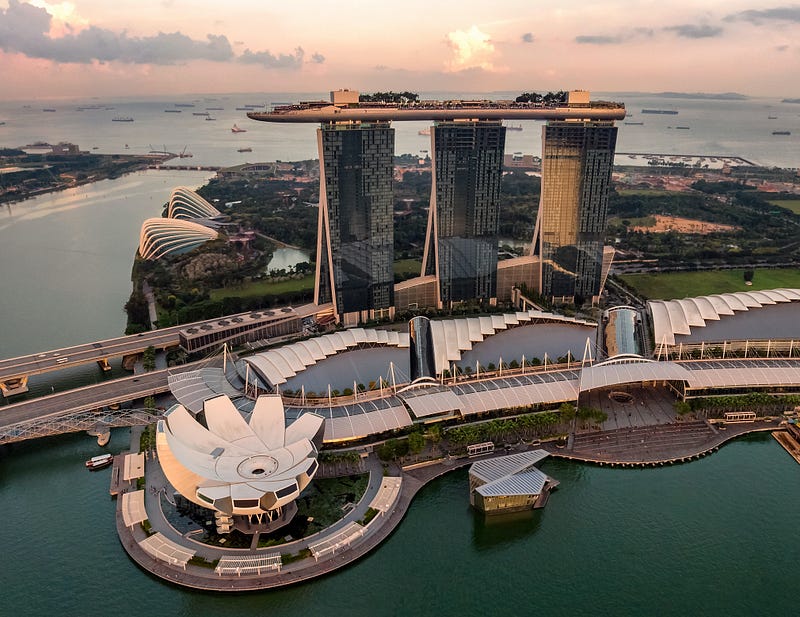
Photo by Hu Chen on Unsplash


Creditors favored liquidation

At an early stage, Hodlnaut founders Simon Lee and Zhu Juntao were in favor of a business sale as a preferable alternative to liquidation. Back in February, there appeared to be some potential of a sale, with several buyers having indicated an interest in the business. The identity of these interested parties was never revealed and the interim judicial managers of the restructuring process later confirmed that no “white knight” had emerged to buy out the business.

It became clear in April of this year that creditors preferred liquidation as opposed to attempting to restructure the business. The Algorand Foundation is a leading creditor, with a $35 million exposure to Hodlnaut. In a court filing in April, the Algorand Foundation, alongside other leading creditors Samtrade Custodian Limited and S.A.M. Fintech Pte Ltd., were noted as being opposed to a restructuring.


OPNX bid

In August it emerged that controversial crypto claims trading platform OPNX, owned by Three Arrows Capital’s (3AC) Kyle Davies and Su Zhu alongside Mark and Leslie Lamb from CoinFLEX, was mounting a bid for Hodlnaut.

OPNX had proposed to provide a capital injection of $30 million. The proposal outlined that this investment would be made in the form of FLEX tokens, the native token of the CoinFLEX platform.

Following consideration by the interim judicial managers overseeing Hodlnaut’s restructuring process, it decided not to take up the offer. It was decided that the FLEX tokens had a speculative value and that they were highly illiquid.

Additionally, no clear timeline had been provided by OPNX in respect of the repayment of creditors’ debts. Furthermore, the proposal was found to be scant on detail, particularly with regard to payments which were limited to 30% of liabilities. In August the FLEX token experienced a large drop, falling 90% in value.

More to Read
View All
Web3 & Enterprise·

Sep 06, 2024

WazirX hack: Hacker launders $10M through Tornado Cash amid legal disputes and partial withdrawals

In the aftermath of the massive $235 million hack of the WazirX cryptocurrency exchange on July 18, users and stakeholders are grappling with its devastating consequences. The breach, which compromised a significant portion of the exchange’s reserves, has led to a series of legal, financial and security-related challenges, leaving millions of users uncertain about the future of their funds. The hack and its aftermathWazirX, once a leading Indian cryptocurrency exchange, lost approximately $235 million due to a breach in one of its multi-signature wallets. This included significant amounts of Shiba Inu (SHIB), Ethereum (ETH) and other assets. The hack crippled the exchange, forcing it to temporarily shut down operations and seek a restructuring process under Singapore's insolvency laws. The WazirX hacker has since begun laundering the stolen assets through Tornado Cash, a crypto mixer known for obscuring transaction details. According to blockchain security firm Cyvers, the hacker transferred over 5,000 ETH (approximately $12 million) to a new wallet and laundered $10 million in Ethereum through Tornado Cash. This mirrors the tactics of the North Korea-backed Lazarus Group, which has used similar methods in past high-profile crypto thefts. Photo by GuerrillaBuzz on UnsplashUsers seeking redress and government interventionAs the victims of the hack face uncertainty, over 4 million active WazirX users are expected to suffer a loss of at least 43% of their funds due to the restructuring process. Frustrated by the lack of action from Indian authorities, many users have sought help from Indian Prime Minister Narendra Modi, who was visiting Singapore at the time. Users took to social media to air their grievances and demand justice, urging the government to intervene. WazirX co-founder Nischal Shetty, who is based in Dubai, added to the confusion by stating that he does not know who is responsible for safeguarding user crypto funds on the platform. His statement has fueled outrage among users, who feel abandoned by the exchange’s management. Legal and ownership disputesAmid the chaos, WazirX is also battling a legal dispute over its ownership with Binance, the world’s largest cryptocurrency exchange. Shetty has repeatedly claimed that Binance acquired WazirX, granting it significant control over the platform's operations. However, Binance founder Changpeng Zhao (CZ) refuted these claims in 2022, stating that the acquisition deal was never completed. The uncertainty surrounding the ownership of WazirX has further aggravated users, many of whom are demanding a clear statement from Binance. So far, Binance has remained silent, neither confirming nor denying its involvement. This ambiguity has intensified calls for clarification, with users fearing that a lack of transparency may worsen their chances of recovering their funds. Partial withdrawals and restructuring effortsIn response to the crisis, WazirX has initiated phased withdrawals for users, allowing them to access 66% of their Indian Rupee (INR) token balances. Initially set for September 9, the withdrawal window was moved forward, offering some relief to users. However, many are dissatisfied with the partial access to their funds and are questioning when full crypto withdrawals will resume. WazirX’s legal team has indicated that users may recover only 55% to 57% of their crypto holdings, sparking further discontent. Meanwhile, the exchange has filed a moratorium application in the Singapore High Court, seeking a six-month reprieve from legal actions as it works on a restructuring plan. Looking aheadAs the WazirX saga unfolds, the future of the exchange and its users remains uncertain. The legal battles, ownership disputes and the ongoing laundering of stolen assets pose significant challenges to the platform's recovery. For now, users can only hope that the restructuring process will bring them closer to recovering their lost funds and that authorities will step in to provide clarity and resolution. 

news
Web3 & Enterprise·

Dec 06, 2023

Korbit CEO partakes in anti-drug relay campaign

Korbit CEO partakes in anti-drug relay campaignSouth Korean cryptocurrency exchange Korbit’s CEO, Oh Se-jin, has joined the No Exit anti-drug campaign — a nationwide relay campaign launched in April by the National Police Agency, the Korean Association Against Drug Abuse and other relevant institutions to raise public awareness about the dangers of drug addiction and promote a collective effort to prevent drug-related crimes, according to local news outlet ET News on Wednesday (local time). So far, numerous figures across various sectors and industries have participated, including actor Choi Bool-am and the president of the Korean Nursing Association Kim Young-kyung.Photo by Hal Gatewood on UnsplashEncouraging collective vigilanceThe campaign’s slogan draws a metaphor between drugs and a maze that cannot be escaped once it has been entered. Participants in the campaign are obligated to share photos with a message that reads, “Do not start drugs — it is a maze with no exit”, and nominate the next participants.“I hope that all citizens will realize the seriousness of drugs through the No Exit campaign, and I aspire to contribute to creating a safer society. Korbit will fulfill its social responsibility in the cryptocurrency industry and contribute to building a healthier society,” Oh said.Next participantsOh was tagged in the campaign by Lee Hyo-jin, CEO of the peer-to-peer (P2P) financial services company 8Percent. In turn, he nominated Lee Sang-ho, CEO of HSBC’s Korea office, and Kim Ji-yun, CEO and Co-founder of DSRV Labs, as the next participants.

news
Policy & Regulation·

Jun 20, 2023

Non-Fiat Crypto Exchanges in Korea Urge Banks for Real-Name Accounts

Non-Fiat Crypto Exchanges in Korea Urge Banks for Real-Name AccountsThe Virtual Asset Exchange Association (VXA) made an announcement today regarding its recent due diligence request sent to 12 South Korean banks, as reported by local news outlet Digital Today. These banks have not yet entered into contracts to provide real-name deposit and withdrawal accounts to cryptocurrency exchanges.VXA is a group comprised of representatives from ten non-fiat crypto trading platforms in the country. Among its members, eight exchanges–Aprobit, Probit, BTX, Foblgate, GDAC, Flata Exchange, Flybit, and High Block (previously known as Huobi Korea)–participated in the request.Photo by Eduardo Soares on UnsplashPartnerships with banksThe objective of the request is to urge the banks to consider establishing partnerships with competent non-fiat exchanges. The requesters argued that such collaborations would promote fair trading in the market and provide customers with more options. They highlighted the growing presence of the virtual asset trading sector in the capital market.Uneven crypto marketAn official from VXA emphasized the key role played by real-name bank account issuers in creating a healthy environment that addresses the existing monopoly in the Korean crypto market. According to a March report published by the Financial Services Commission, non-fiat crypto trading platforms accounted for only 3 percent of the total Korean crypto market capitalization during the second half of 2022. The remaining 97 percent was attributed to fiat-supporting crypto exchanges.The official further explained that allowing more exchanges to support the trading of the Korean won currency would contribute to shaping a free market while bolstering transparency and investor protection.Legal requirementsEarlier this month, VXA also sought fair due diligence from five Korean banks that have already formed partnerships with fiat-supporting crypto exchanges. In Korea, crypto trading platforms are required by law to obtain real-name accounts from banks in order to provide cash deposit and withdrawal services.

news
Loading