Top

OKX announces delisting of 26 trading pairs

Web3 & Enterprise·November 08, 2023, 1:25 AM

Cryptocurrency exchange OKX has made a significant announcement regarding the delisting of more than 20 trading pairs, with a view towards its ongoing maintenance of strict listing criteria and performance monitoring. This decision will impact a considerable number of trading pairs across various cryptocurrencies, with the process scheduled to commence later this week.

OKX outlined details of this recent trading pair purge in a statement published to its website on Monday. Among the trading pairs set for removal are CELO-USDC, AXS-USDC, APE-BTC and the HNT-USDT trading pair, which will be delisted on Nov. 10. Notably, Bytom (BTM), a Chinese crypto project, which has experienced a substantial 46% drop in value since Monday, is also among the tokens to be delisted.

The exchange is advising users to manage their assets accordingly in preparation for the changes. Withdrawals for these tokens will cease on Jan. 10, 2024. During this transitional period, OKX recommends that users cancel any open orders linked to the impacted trading pairs to avoid automatic cancellations, which could result in processing delays.
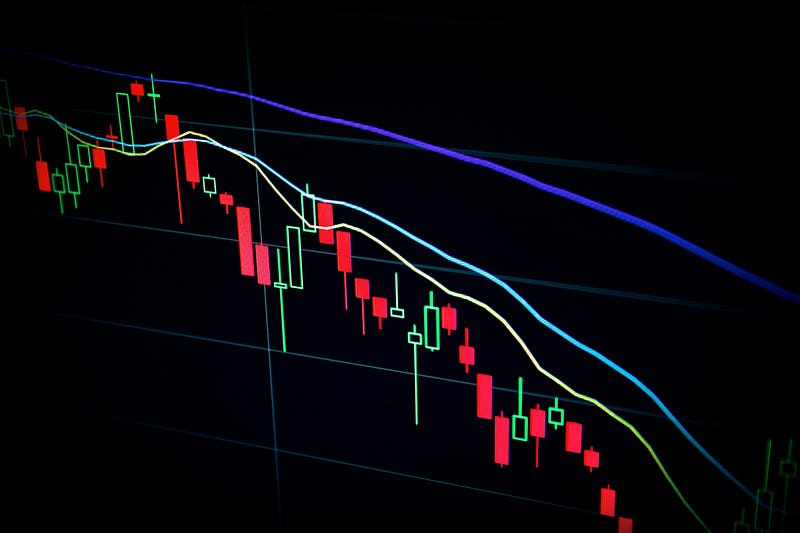
Photo by Maxim Hopman on Unsplash


SAITAMA delisting

Deposits for the affected tokens, including HNT, BTM, and SAITAMA, were halted by OKX on Nov. 3. SAITAMA, an Ethereum-centric ERC20 token, is the primary payment medium on the Saitama platform. There were mixed reactions to the delisting of the coin. One community member took to X, stating:

“I will say I do think it isn’t cool for OKX to delist #Saitama considering we didn’t get on there for the reasons specified of delisting. The listing was won through hours of Spaces and helping people get VPNs to win a contest. Regardless of what the market is doing we won fairly.”

Another Saitama project supporter took a more pragmatic view, stating:

“Delisting Is a tragedy? I don’t think so. What did the OKX listing for the token price? What is the difference between holding or selling with or without okx? Volume was too low, and this isn’t a news, so they will delist. They will relist again….#SAITAMA”

OKX has embarked upon several initiatives over the course of 2023 in an effort to further the user proposition offered by the platform. From a marketing perspective, the company took the decision in October to retire the Okcoin brand, rebranding its various sub-platforms instead to OKX.

The Seychelles-incorporated company indicated in September that it expects to have secured a virtual asset service provider (VASP) license in Hong Kong by June of next year.


Delisting banks

Tokens are not the only items to be delisted by the exchange recently. Alongside competitor Bybit, the company decided to delist sanctioned Russian banks Tinkoff Bank and Sberbank from its peer-to-peer exchange platform.

This move by OKX reflects the exchange’s efforts towards maintaining a high level of integrity and performance. Listing coins that fall below a minimum acceptable level of liquidity and trading volume can leave them much more exposed to the risk of manipulation. By adhering to stringent listing criteria and promptly addressing issues, the company is making a greater effort towards maintaining a position as a trusted and secure trading platform for cryptocurrency enthusiasts and investors.

More to Read
View All
Policy & Regulation·

Oct 16, 2025

U.S. seizes $14B in Bitcoin from crypto scheme linked to Cambodia conglomerate

The U.S. Department of Justice has filed a civil complaint to seize roughly 127,271 Bitcoin linked to an alleged fraud scheme tied to Prince Group, a multinational conglomerate based in Cambodia. That’s according to a press release from the U.S. Attorney’s Office for the Eastern District of New York. The digital assets are currently valued at approximately $14.18 billion and are now in the custody of the U.S. government. Prince Group chairman Chen Zhi, now indicted by U.S. authorities, has been named as the mastermind behind the operation. FBI Assistant Director in Charge Christopher Raia said Chen oversaw an international crypto investment scam connected to a labor trafficking network that defrauded thousands of victims worldwide.Photo by Kanchanara on UnsplashOperations across 30 nationsSince 2015, Chen Zhi has headed the Prince Group, which operates in more than 30 countries. Under his direction, the group allegedly established scam compounds across Cambodia that promoted fraudulent crypto investment scams. The operations targeted victims through social media and messaging platforms with false promises of high returns. According to the allegations, funds were stolen and laundered rather than invested, and perpetrators often built trust over time before carrying out the fraud. Authorities in Vietnam have uncovered a comparable case that did not involve the seizure of cryptocurrency. According to Tech in Asia, Hanoi police confiscated assets worth $34 million from Nguyen Hoa Binh, chairman of the tech company NextTech. The seized property includes 597 gold bars, deeds to 18 properties, and two vehicles. Investigators allege that Binh and nine associates raised funds for the AntEx cryptocurrency project by selling 33.2 billion tokens to 30,000 investors in 2021, collecting around $4.5 million. The defendants are said to have taken part in fraudulent appropriation of assets and accounting violations. Tepid business climate in VietnamThese incidents come as Vietnam’s government works to define its stance on digital assets. According to a Cointelegraph report published earlier this month, the Vietnamese Ministry of Finance said that since the announcement of the country’s five-year digital asset trading pilot plan, no companies have applied to participate. Sharing this update, the vice minister of finance expressed hope that this pilot would launch before 2026. The report points to strict requirements as a likely reason for hesitation. Licensed crypto asset service providers must hold at least 10 trillion dong, about $379 million, in capital. They are also required to back all digital assets with real and tangible assets only, and the framework explicitly prohibits using fiat currencies or securities as backing. These rules leave few options that would attract retail or institutional investors. Gemini eyes Southeast Asia as adoption growsMeanwhile, global firms continue to look to Southeast Asia as activity increases. Dow Jones Newswires reported that Gemini, the American crypto platform founded by the Winklevoss brothers, plans to expand its footprint across the region. In an interview, Saad Ahmed, Gemini’s head of Asia Pacific (APAC), said the company was strengthening its regional operations. A Chainalysis study provides context, showing that the APAC region recorded the fastest growth in on-chain activity compared to other markets in the 12 months ended June. The region saw total crypto transactions rise to $2.36 trillion from $1.4 trillion a year earlier. Although Ahmed did not share investment figures, he said Gemini’s Singapore headquarters has grown to about 65 employees, up from 15 in the final quarter of 2023. He added that the expansion reflects the company’s view of Singapore as a key base for its operations in Asia and globally. Recent criminal discoveries and tightening regulations reveal how Southeast Asia’s crypto scene remains nascent. Governments are stepping up enforcement and shaping new frameworks even as global firms expand across the region, motivated by growing adoption. How policymakers and market players respond to these early tests will define the next phase of digital asset growth in Asia. 

news
Markets·

Feb 16, 2024

Bitcoin-Yen pair sets new record amid pressure on Japan’s fiat currency

Early on Thursday bitcoin surged to a record high in terms of its valuation in Japanese yen, outpacing its valuations in other leading fiat currencies such as U.S. dollars, euros, British pounds and Australian dollars. Currency devaluationThis increase in yen valuation can be attributed to the recent depreciation of the Japanese currency against the backdrop of continued money printing by the Bank of Japan (BoJ) and resurging inflation, which have collectively weakened sentiment surrounding the yen. Fiat currencies, including the Japanese yen, lack backing by hard assets and derive their value solely from market perceptions. The current rally of bitcoin is indicative of the prevailing market sentiments, with the yen exhibiting particular vulnerability among major fiat currencies. For instance, early market activity on Thursday witnessed bitcoin, often hailed by proponents as digital gold, hitting a fresh all-time high of 7.9 million yen on Tokyo-based cryptocurrency exchange bitFLYER. In contrast, the cryptocurrency's dollar-denominated price hovered above $52,000, still 32% below its peak of $69,000 in November 2021. This price disparity underscores the strain on the Japanese yen, fueled by the Bank of Japan's persistent liquidity easing measures, rising inflationary pressures and indications of economic fragility.Photo by jun rong loo on UnsplashEntering recessionThis recent surge coincides with reports confirming Japan's descent into an economic recession by the end of the previous year, slipping to fourth place behind Germany in terms of the world’s largest economies. While central banks worldwide, including the Federal Reserve, aggressively raised interest rates in attempts to curb inflation, the Bank of Japan maintained near-zero interest rates and continued printing fiat currency. A recession characterized by inflation without corresponding growth prompts investors to seek refuge in safer havens like gold and digital gold. With that, there could be further opportunities for bitcoin to make further in-roads in Japan. In 2023, Japan's core inflation, excluding volatile food and energy components from the consumer price index (CPI), rose by 3.1%, marking its most significant increase since 1982. Consequently, the yen depreciated to a 33-year low against the dollar, declining by 13% and 7.5% against the dollar previously, with an additional 6.4% decrease this year. Bitcoin's persistent premium in Japanese yen terms suggests that it may continue to maintain higher valuations unless the Bank of Japan accelerates its exit from the ultra-loose monetary policy it has been pursuing. That would make yen holdings relatively more attractive compared to other assets. Although a complete regulatory framework for digital assets in Japan is still lacking, the country has recently moved to make tax rules more crypto-friendly. Bitcoin's elevated valuation against the Japanese yen underscores the challenges facing Japan's fiat currency, driven by monetary policy decisions and economic uncertainties.

news
Web3 & Enterprise·

Jul 25, 2023

Midas Investments Founder Launches Locus Finance

Midas Investments Founder Launches Locus FinanceIakov Levin, the founder of the recently failed Dubai-headquartered custodial crypto investment platform Midas Investments, has unveiled his latest project, Locus Finance, a DeFi platform.Photo by Shubham’s Web3 on UnsplashStarting overThat’s according to a recent report published by The Block. Locus Finance’s main focus lies in providing connectivity with high-yield tokenized vaults. In its initial stages, the company will introduce three yield-generating products, centered around Ethereum staking, DeFi expansion, and Arbitrum trading.Levin believes that investors are not interested in the intricacies of blockchains, protocols, or daily portfolio management. This is where vaults play a crucial role, catering to the retail yield market and generating profits for retail investors. In a statement Levin said:“Investors don’t want to worry about blockchains, protocols, transaction costs, and daily portfolio management. They need specific exposure in a set-and-forget style. Vaults represent a unique approach necessary for maturing the retail yield market, allowing for optimal wealth generation for retail investors.”With Locus Finance, Levin aims to learn from past experiences and provide a platform that meets the demands of retail investors seeking a more simplified and profitable DeFi experience. The company’s approach centers around yield generation and a seamless user experience, allowing users to focus on their investments without being bogged down by complex technicalities.Midas downfallMidas Investments, established in 2018, had seen significant success as a custodial crypto investment platform which offered yields on a range of digital assets. It managed assets worth over $250 million at its peak in 2021. However, the volatile market conditions in 2022 led to losses exceeding $50 million, forcing the company to close its doors in December 2022.The loss incurred accounted for 20% of the $250 million assets under management (AUM). The platform’s demise followed the collapse of prominent projects like Terra, FTX, and Celsius earlier in 2022. Those collapses prompted Midas Investments users to withdraw over 60% of their assets. That run on the platform rendered its fixed yield model unsustainable.Midas faced total liabilities of $115 million in Bitcoin, ETH, and stablecoins, with assets valued at $51.7 million. At the time of the platform’s collapse, Levin expressed his optimism about future plans. He disclosed plans to introduce an offering that would feature new investment strategies. Fast forward seven months and it appears that those plans have taken shape in the form of this newly-launched Locus Finance platform.However, Locus Finance’s success will be closely monitored in light of the challenges faced by its predecessor. A former Midas Investments customer took to Reddit three months ago to warn people to stay away from the new platform once launched.At that time, Midas Investments management had advised customers of its intention to start over via Lotus Finance. “Users lost tons of money and Midas got away with the bags. . . . I’d recommend staying as far away from them as possible,” the former customer warned.

news
Loading