Top

Taiwan police uncover $320M crypto money laundering operation

Policy & Regulation·November 02, 2023, 2:25 AM

Taiwan police have recently exposed the largest cryptocurrency money laundering case in the nation’s history, involving 320 million USDT (approximately 10.5 billion New Taiwan dollars).
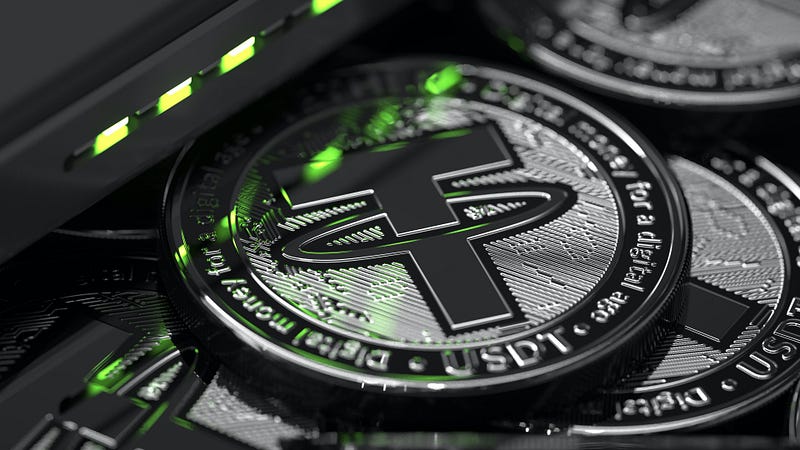
Photo by DrawKit Illustrations on Unsplash


Cross-border laundering operation

It emerged on Tuesday that the Electronic Investigation Team of the Criminal Bureau initiated their probe after uncovering a fraudulent scheme related to a counterfeit Taishin Securities mobile software last year. This led them to a merchant with the surname Qiu, the alleged mastermind behind this operation who was suspected of laundering substantial sums through virtual currency.

Qiu is believed to have maintained connections with overseas gambling and fraud groups, engaging in cross-border communication with illicit organizations in countries including Hong Kong, Malaysia and the Philippines.

Their investigation revealed that Qiu had been conducting transactions involving 320 million Tether US dollar stablecoins since February of the previous year. In June, law enforcement apprehended Qiu during one of his visits to Taiwan, along with four alleged accomplices.


High value goods

During the operation, authorities seized high-value assets from Qiu, including a Lamborghini Urus, a Lexus LM and three Audemars Piguet watches, with a combined market value exceeding TWD 13 million. The lavish lifestyle maintained by Qiu, evident from his luxury cars and high-end watches, serves as a stark reminder of the extensive underground economy driven by money laundering.

Evidence from the operation suggested Qiu’s involvement in handling illicitly obtained Tether coins worth approximately TWD 70 million. Further investigations uncovered that Qiu regularly sold virtual currency and converted it into cash to effectively obscure the money’s origins, accomplishing the goal of laundering.

In piecing the activities of the group together, police determined that victims were instructed to transfer their funds to fictitious accounts. In that way, the money found its way to crypto exchanges and individual crypto traders under the direction and control of the group.

Qiu would also retain a 1% profit margin from the laundered amount. Several other individuals were implicated in this extensive operation, including a foreign affairs officer named Liao and two other individuals named Chen and Huang. Each of these individuals is presently under investigation, with varying levels of bail and restrictions imposed.

The intricate web of transactions and the substantial amount laundered by Qiu have surpassed previous records held by the Electronic Investigation Team. As investigations continue, law enforcement is determined to uncover the full extent of this operation and trace the entirety of the money flow.

Taiwan’s legislators are currently working on producing a regulatory framework for crypto in the country. The only regulatory aspect that is covered right now is oversight relative to anti-money laundering (AML) and know-your-customer (KYC) regulation. In 2018 Yang Chin-long, Taiwan’s central bank Governor, called for a need to regulate crypto on the basis of existing AML rules, with the authorities subsequently following through on that measure.

In July 2022, the country’s Financial Supervisory Commission (FSC) penned a letter to the banking sector, banning the purchase of digital assets via credit cards.

More to Read
View All
Web3 & Enterprise·

Sep 14, 2023

Sony Network Communications and Startale Labs to Launch Joint Blockchain Venture

Sony Network Communications and Startale Labs to Launch Joint Blockchain VentureProminent Japanese internet service provider Sony Network Communications and Singapore-based Web3 company Startale Labs are undertaking a new joint venture to develop a blockchain network for facilitating the worldwide adoption of Web3.Photo by CHUTTERSNAP on UnsplashCultivating an innovative Web3 ecosystemThis comes after Sony Network Communications’ initial $3.5 million investment in Startale Labs back in June. Both companies expressed their commitment to paving the way for revolutionary Web3 applications through the development of a solid blockchain infrastructure. To do so, they said that they would leverage Sony Group’s knowledge and expertise in various sectors, such as gaming, music, entertainment, and financial services, to apply a multifaceted approach to the joint venture.“By combining Sony Network Communications’ experience in communication, the Internet of Things (IoT), artificial intelligence (AI), and solution services with Startale Labs’ insights and technical prowess in Web3, we aspire to create a global infrastructure that underpins the Web3 era, driving innovation across existing industries,” said Jun Watanabe, President and Representative Director of Sony Network Communications.The new business will be established this month under the name Sony Network Communications Labs.“This joint venture is founded on the synergy created by our respective assets and knowledge, and it is aimed at collectively developing a leading blockchain ecosystem. We are determined to discern Web3 trends and drive them globally,” said Sota Watanabe, CEO of Startale Labs.Governmental supportSony Group, Sony Network Communications’ parent company, has consistently been making strides in the Web3 realm. Sony Bank, another affiliate of the group, joined hands with Mitsui & Co. Digital Asset Management (MDM) a few months ago to establish MDM’s security token service Alterna.These efforts have been encouraged by a backdrop of active support for Web3 and crypto businesses from the Japanese government. The Japanese National Tax Agency recently announced the revised corporate taxation rules for crypto assets, which renders companies exempt from taxes on unrealized gains from cryptocurrencies if the virtual assets were issued by the company and have been continuously held since issuance, or if they have remained subject to certain transfer restrictions since issuance.Startale Labs’ popular smart contract platform Astar Network also recently launched an Ethereum layer 2 scaling solution dubbed Astar zkEVM: Supernova with Polygon Labs in a strategic move to expand Web3 adoption in Japan and onboard more enterprise partners.

news
Markets·

Jan 09, 2024

Philippines leading charge in Asia amid global bitcoin payment surge

Bitcoin's global merchant acceptance witnessed a substantial surge, growing by 174% throughout 2023, with the Philippines proving itself in leading the way within the Asian region.Photo by rc.xyz NFT gallery on UnsplashRegion facing regulatory restrictionsThat’s according to BTC Map, a provider of bitcoin merchant mapping services. The data, derived from BTC Map's open-source mapping data via OpenStreetMap, revealed that the number of venues accepting bitcoin payments surged from 2,207 at the beginning of the year to 6,126 by the year's end. This diverse array of businesses included restaurants, bars, shops and various services. The expansion of bitcoin vendors is a global phenomenon, with concentrations notably observed in Europe, the United States and Latin America. The Philippines stands out in Asia with hundreds of vendors, while regulatory restrictions in East Asia, especially China, have limited adoption. While it's great to see a high level of direct adoption among Filipino merchants, it's easy to understand why this level of adoption hasn’t been matched within Asia’s largest market. China has had a long-standing ban on cryptocurrency trading, mining or its use as a means of payment. Despite the ban, it appears that crypto trading is still alive and well in China, although beneath the surface. With mining too, while the sector shrank considerably once a ban was imposed, there is believed to be a significant ongoing level of bitcoin mining occurring still within China’s borders. However, when it comes to vendors, this is likely to be an activity that is far too visible to the authorities and with that, China’s 1.4 billion citizens are not getting the opportunity to buy goods and services with the world’s leading cryptocurrency. Compounding matters, the Chinese authorities have been working diligently on a myriad of projects to bring about day-to-day retail use of the country’s central bank digital currency, the digital yuan. Those efforts are not likely to be aligned with an accommodation of or tolerance of bitcoin payments. The increase in merchant listings showcased a slight decline from the peak in September, which reached 6,590 merchants. BTC Map's platform allows businesses and users to tag locations accepting bitcoin payments, with the rise in numbers potentially attributed to increased user contributions to the database. This surge in bitcoin adoption globally occurred against the backdrop of the cryptocurrency's price volatility throughout the year. Despite potential limitations in data collection due to its reliance on volunteer contributions, the overall trend indicates a growing acceptance of bitcoin. Ongoing challenges to adoptionA panel of bitcoin leaders at the Plan B conference in October discussed the challenges and opportunities of global bitcoin adoption. Notably, they highlighted the difficulty of onboarding new users and merchants, particularly in diverse cultural contexts. In El Salvador, where bitcoin is legal tender, obstacles persist in convincing merchants to accept bitcoin payments. Geographically, concentrations of bitcoin-accepting vendors were more prevalent in Central and South America, while Africa and Asia demonstrated fewer such establishments. The United States and Europe led in the global count of crypto-friendly merchants. The panel stressed the importance of education in overcoming these challenges, emphasizing the need for user-friendly applications to facilitate mainstream adoption, moving away from complex technologies. As bitcoin continues its global expansion, the industry recognizes the vital role education and user-friendly solutions play in fostering broader acceptance. 

news
Web3 & Enterprise·

4 days ago

Token Cat authorizes up to $1B in corporate crypto purchases

Token Cat Limited, a Nasdaq-listed Chinese automotive marketplace formerly known as TuanChe Limited, has approved a new digital asset investment policy that will allow the company to deploy up to $1 billion into cryptocurrencies as part of its treasury strategy. In a press release distributed via Chainwire, the Beijing-headquartered company said its board of directors signed off on a Crypto Asset Investment Policy authorizing the use of a portion of its cash reserves to acquire selected tokens under internal risk-management controls. Any purchased assets will be held with third-party custodians rather than managed in-house, the company said.Photo by Precondo CA on UnsplashThe initial allocation will focus on tokens tied to newer projects in areas such as artificial intelligence, RAW-to-chain infrastructure, and token–equity hybrid models. Further deployments will be evaluated over time and will remain subject to additional board approval, according to the statement. The policy will be implemented under the oversight of Sav Persico, who was recently appointed chief operating officer. Token Cat said he brings decades of experience in technology and blockchain-related businesses and emphasized that the initiative reflects a long-term approach to digital assets rather than a speculative trade. China’s regulation and softer DAT inflowsToken Cat’s decision comes even as China’s central bank continues to stress that crypto-related business activity remains off-limits domestically. According to Reuters, the People’s Bank of China (PBOC) recently reiterated that services involving virtual assets constitute “illegal financial activities” and highlighted that cryptocurrencies do not have the legal status of fiat currency. The statement was issued against the backdrop of what the central bank characterized as a renewed pickup in speculative crypto trading and broader concerns about financial risks. Beyond China, Token Cat’s move fits into a wider trend of companies experimenting with so-called digital asset treasuries (DATs), in which companies commit varying portions of their balance sheets to crypto. Those strategies, however, have seen softer momentum in recent months. Cointelegraph, citing data from DefiLlama, reported that DATs drew about $1.32 billion in fresh capital in November, the lowest monthly intake of 2024. Bitcoin-focused DATs accounted for the bulk of that activity with roughly $1.06 billion of inflows, while Ethereum-based DATs saw about $37 million in outflows. Bitwise chief investment officer Matt Hougan said on X that DATs have generally moved in tandem over the past six months, but he expects that pattern to change as investors begin to differentiate between firms with clearly articulated strategies and those without. He said a limited number of DATs could emerge with more resilient valuations, while others may continue to trade at persistent discounts. Biotech Sonnet advances HYPE-token planDespite the recent slowdown in inflows, new corporate efforts to gain exposure to digital assets continue. One example is Sonnet BioTherapeutics Holdings, a North Carolina–based biotechnology company developing immuno-oncology drugs. On Dec. 2, Sonnet said its shareholders had approved a proposed business combination with Hyperliquid Strategies Inc. (HSI) and Rorschach I LLC. That vote followed an agreement reached in July for Sonnet to merge with Rorschach to form Hyperliquid Strategies, a new entity expected to hold roughly 12.6 million HYPE tokens valued at about $583 million, along with at least $305 million in cash, for a projected combined value of $888 million. Hyperliquid is a decentralized exchange (DEX) built on its own layer-1 blockchain. Its native token, HYPE, has a total supply of one billion and is used for network governance, staking, and smart contract functions on HyperEVM, the platform’s EVM-compatible environment. Sonnet’s move, together with Token Cat’s newly adopted investment policy, adds to a steady stream of corporate initiatives testing the role of digital assets in balance-sheet management. With companies ranging from biotech firms to automotive marketplaces exploring similar strategies, the coming months will show whether crypto holdings can establish themselves as durable components of corporate treasuries. 

news
Loading