Top

OKX maintains robust asset reserves with 103% BTC backing

Web3 & Enterprise·November 01, 2023, 1:49 AM

Seychelles-incorporated cryptocurrency exchange OKX has recently released its 12th asset reserve certificate, with its latest report revealing that the company maintains reserves of 103% for its top coins, which include Bitcoin (BTC), Ethereum (ETH), Ripple (XRP), Tether (USDT) and USD Coin (USDC). The measure is meant to reassure users that their funds are well-backed and, in fact, more than covered by the exchange’s reserves.
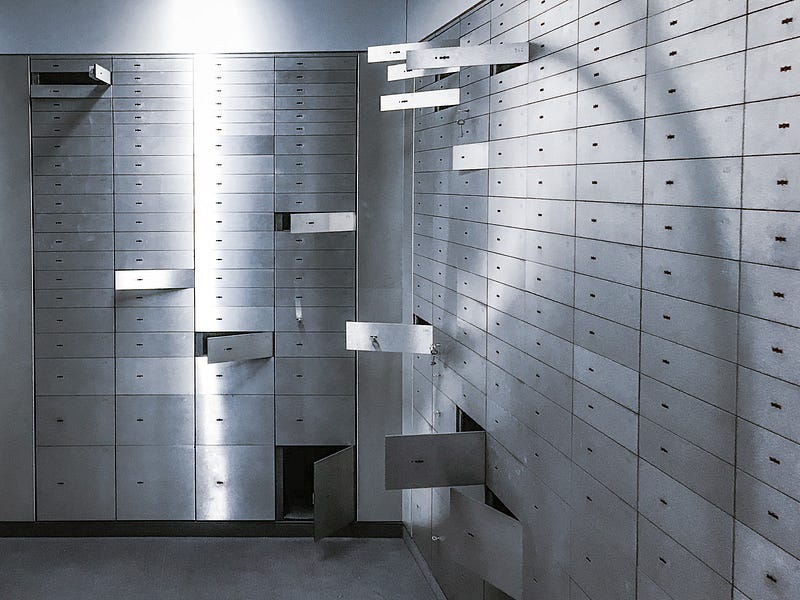
Photo by rc.xyz NFT gallery on Unsplash


Bitcoin, Ether reserve surpluses

OKX provided details on its latest asset reserve status via a blog post published to its website on Monday. Alongside providing the relevant asset reserve data, the exchange celebrated its first complete year of having utilized a proof-of-reserve-based system.

For BTC, OKX holds a substantial reserve of 140,484 BTC, effectively exceeding the 136,227 BTC held in user accounts. Similarly, ETH reserves stand at 1.46 million ETH, providing a surplus over the 1.42 million ETH owed to OKX users.

The exchange also demonstrated its considerable holdings in stablecoins, with over $5 billion in USDT reserves and over $327 million in USDC reserves. In an interview with CoinDesk recently, OKX Chief Marketing Officer (CMO) Haider Rafique, referred to the need to provide a mechanism to reassure platform users. He stated:

“Customers often express concerns in person about centralized exchanges, highlighting issues with security, solvency and downtimes, even if they don’t always voice these concerns digitally.”


Use of zero-knowledge technology

In April, OKX upgraded its proof of reserve system, opting for the use of zero-knowledge scalable transparent argument of knowledge (zk-STARK) technology. This approach allows OKX platform users to independently verify exchange solvency, confirming their assets are backed by OKX reserves. A zero-knowledge proof demonstrates the truth of a statement without sharing the statement’s contents. Therefore, no account balances are made public to other service users, maintaining user privacy.

Regular transparency is now crucial for exchanges like OKX, as it aims to provide users with the certainty that their funds are genuinely available for withdrawal at any given time. After the FTX insolvency incident, verifiable proof of reserves has become paramount in reassuring users about the safety of their investments.


Trend towards improved standards

In the wake of several high-profile crypto platform failures in 2022, many exchanges are making greater efforts towards reassuring users that their funds are safe and accounted for. This has given rise to the popularity of proof of reserve systems.

On that basis, OKX hasn’t been alone in implementing a proof of reserves-based system. In July another Seychelles-incorporated crypto platform, Bitget, announced that it could demonstrate the debt-free status of its business through its proof of reserves system.

Nic Carter, Partner at crypto venture capital and private equity firm Castle Island Ventures, has carried out some research into the various proof of reserve systems employed by a number of global crypto platforms. While accepting that the approach is not foolproof, Carter maintains that it’s still a move in the right direction. “The way PoR works is, if enough exchanges do it, the few exchanges that don’t do it end up sticking out like a sore thumb,” he states.


More to Read
View All
Web3 & Enterprise·

May 30, 2023

Dunamu’s Q1 Revenue Drops 28.6% Amid Global Liquidity Contraction

Dunamu’s Q1 Revenue Drops 28.6% Amid Global Liquidity ContractionDunamu, the operator of Upbit, a major cryptocurrency exchange in South Korea, announced today the release of its Q1 2023 report.Photo by Tiger Lily on PexelsDeclining revenueAccording to the Data Analysis, Retrieval and Transfer System (DART) of the Financial Supervisory Service (FSS), Dunamu’s consolidated sales revenue for the first quarter of 2023 was 304.8 billion KRW ($231.3 million). This figure represents a 28.6% decrease from 426.8 billion KRW ($323.9 million) recorded during the same period last year. Additionally, its operating income declined by 26.3% to 211.9 billion KRW ($160.8 million) from 287.8 billion KRW ($218.4 million). However, its net income showed an increase of 54.9%, reaching 326.3 billion KRW ($247.6 million).Global liquidity contractionDunamu attributed the decline in revenue to several factors, including the ongoing global liquidity contraction, economic downturn, and reduced investor confidence. These factors collectively impacted the company’s financial performance during the first quarter of 2023. On a positive note, Dunamu linked the net income increase to the recovery and upward movement of digital asset prices in comparison to the previous quarter.Established in April 2012, Dunamu has enjoyed noticeable growth by offering a range of services related to digital assets, securities, and asset management. In recent years, it has been tapping into new technology trends like non-fungible tokens (NFTs) and metaverses to adapt to the era of Web3 and enhancing transaction security and convenience for valuable assets.As a company with a shareholder base exceeding 500, Dunamu has been disclosing its business reports as well as quarterly and semiannual reports since 2022 in line with the Korean Capital Markets Act’s requirements.

news
Web3 & Enterprise·

Jun 23, 2023

BitMEX CEO Calls for an End to Internal Market Makers

BitMEX CEO Calls for an End to Internal Market MakersIn a recent interview, Stephan Lutz, the acting CEO and group CFO of 100x Group, the parent company of Seychelles-headquartered global crypto exchange BitMEX, expressed his belief that crypto exchanges should phase out their internal market-making teams.Photo by Joe Roberts on UnsplashProp trading desks unnecessarySpeaking with The Block, Lutz argued that with the growth of institutional liquidity providers and high-frequency traders (HFTs) in the market, proprietary trading desks are becoming unnecessary.Lutz stated: “You have enough HFTs out there and prop shops that can perform that function.” He was referring to the role of liquidity providers in filling gaps in the market. He made these comments in response to the emergence of information earlier this week that raised questions about internal trading practices at Crypto.com, a Singapore-based exchange.BitMEX, once the world’s largest crypto derivatives exchange, also used to employ internal traders who acted as market makers. However, Lutz explained that BitMEX’s internal trading team, named Arrakis Capital, now functions primarily as a “treasury desk.” He sees this transition as a natural evolution for crypto exchanges in a market that has matured and attracted more institutional liquidity providers.Arrakis Capital currently performs limited functions, including converting commission fees earned in Bitcoin into fiat currency for operational purposes, hedging BitMEX’s exposure to tokens held as inventory, and making markets for BitMEX’s token $BMEX. Lutz clarified that Arrakis’s market-making activities are limited because external market makers find the token’s liquidity insufficient.Regarding profitability, Lutz stated that Arrakis earns “very minor returns” of up to $100,000 per month from holding T-Bills, but it incurred losses last year. He noted that Arrakis used to play a more significant market-making role when BitMEX dominated the crypto futures market. However, he assured that the trading desk was always segregated, despite accusations in the past.Fee structuresLutz acknowledged that exchanges with internal trading teams have faced increased scrutiny since the controversies surrounding Alameda Research and FTX. To differentiate between benign internal trading teams and hedge fund-like operations, Lutz highlighted several factors, including the separation of client funds and house funds, access to sensitive data, and the ability to move markets on their own exchange. Fee structures also play a role, with low or no transaction fees potentially signaling a market-making motive rather than serving as a counterparty.Lutz’s perspective suggests that crypto exchanges should rely on external liquidity providers and HFTs rather than maintaining internal market-making teams. He argues that the market has evolved. At this point he feels that these teams are no longer necessary, due to the presence of established players within the digital assets space.As regulatory scrutiny grows, ensuring transparency and avoiding conflicts of interest become crucial for maintaining trust within the crypto exchange ecosystem. The digital assets industry is far from arriving at a mature stage in its development. While many in the industry have found the stance taken by regulators to be unhelpful, the industry itself must also demonstrate its ability to iteratively move towards best practice, without that being a knee-jerk response to regulatory enforcement.

news
Web3 & Enterprise·

Oct 07, 2024

Zetrix launches product to simplify KYC for Chinese nationals

Zetrix, a layer-1 blockchain project for real-world applications, has launched an electronic Know Your Customer (KYC) verification product for Chinese nationals. The Malaysian enterprise, which is a subsidiary of digital services company My E.G. Services Berhad (MYEG), has launched ZCert. The offering is available to Chinese nationals who opt to have their digital identities published to the Xinghuo BF network, a Chinese national blockchain infrastructure network developed under the guidance of China’s Ministry of Industry and Information Technology and managed by the China Academy of Information and Communications Technology.Photo by Diego Jimenez on UnsplashFirst-of-its-kind applicationZetrix acts as an international super-node relative to the Xinghuo blockchain. In a press release published by PR Newswire on Oct. 3, the company outlined that ZCert had been launched as a first-of-its-kind application, enabling Chinese nationals “to be authenticated and verified digitally overseas, paving the way for a seamless, efficient, and secure verification process for verifiers and identity holders. ” The service simplifies the issue of identity verification for verifiers located outside of China, as a consequence of Zetrix’s integration with the Xinghuo BIF network.  Connecting to ‘China Web3’Xinghuo signed a memorandum of understanding (MoU) with Zetrix’s parent company, MYEG, to establish the international super-node back in November 2022. The tie-up was seen as an opportunity to provide access to Chinese government agencies and businesses internationally.  At the time, MYEG Managing Director and Zetrix Co-Founder Wong Thean Soon said that “with the commencement of the Xinghuo International Supernode, the rest of the world can connect and be part of the China Web 3 evolution that will promote the establishment of international communities and facilitate global trade and finance.”  On this occasion, Wong said that the new product “enables a new wave of services powered by smart contracts.” He added that KYC processes can be simplified and automated, while “user data is retained by users at all times and only critical information is shared in an encrypted manner." The company has already digitized Chinese driving licenses for the purpose of overseas verification. Furthermore, it has plans to expand its offering beyond ID verification soon. In April of this year, Zetrix and MYEG signed an MOU with MaiCapital, a Hong Kong-based virtual assets manager, with a view towards collaborating on the launch of a digital asset fund or digital asset-based exchange-traded fund (ETF). Last year Zetrix engaged in a pilot project with the Bank of China with the aim of offering supply chain financing products. On a similar theme, its parent company entered into a partnership with the Philippines Bureau of Customs (BOC) and Cargo Data Exchange Center Inc. (CDEC), also in 2023. The collaboration involved the use of Zetrix’s ZTrade product, a Web3 platform that enables digitized trade document verification. Zetrix launched its ZETRIX token in October 2023 through an initial exchange offering (IEO) facilitated by the Coinstore exchange.

news
Loading