Top

Chinese food company adds Bitcoin to balance sheet

Web3 & Enterprise·May 27, 2025, 1:20 AM

DDC Enterprise, a Chinese company headquartered in Hong Kong and listed on the New York Stock Exchange (NYSE), has become the latest corporation to add Bitcoin (BTC) to its balance sheet.
https://asset.coinness.com/en/news/fec0eb9dbc898b03122415d41d8d14f9.webp
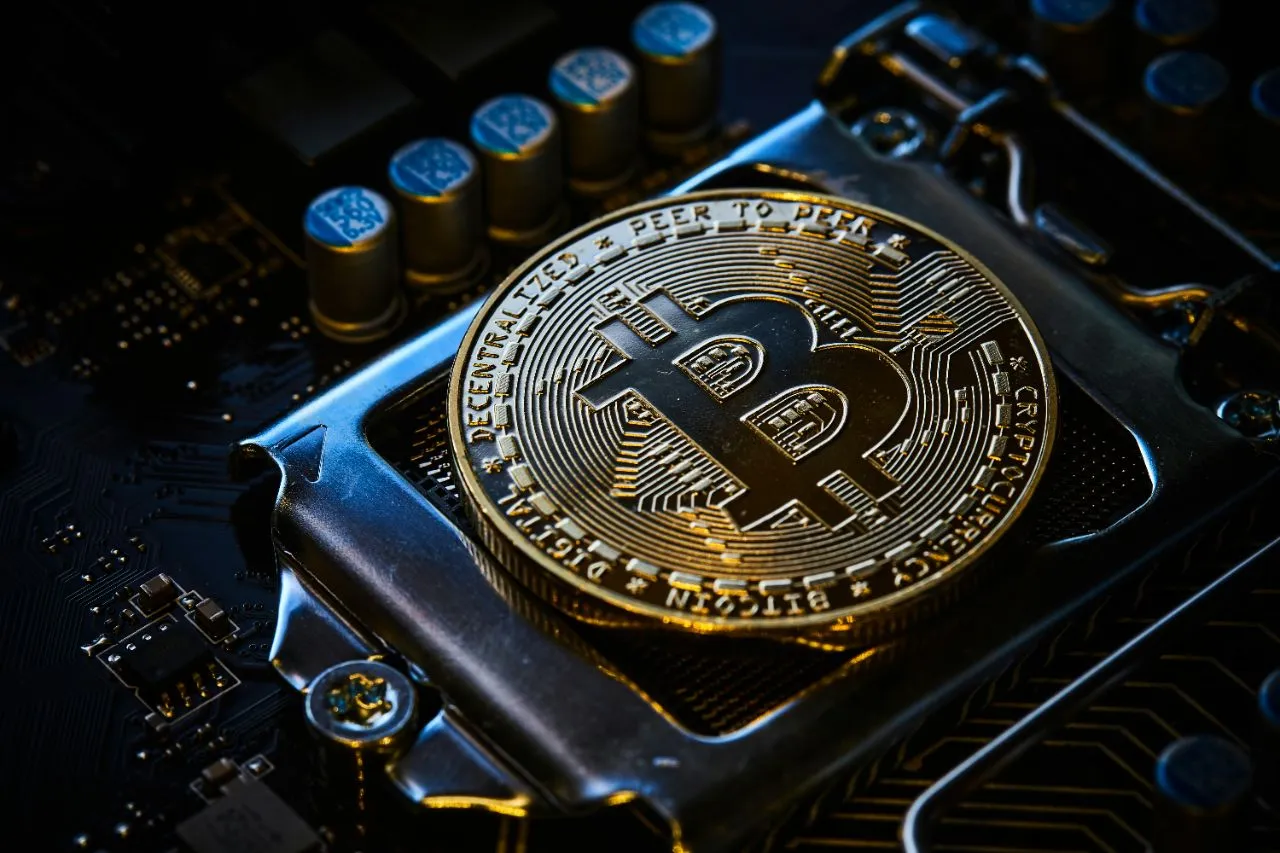
Photo by Michael Förtsch on Unsplash

Initial 21 BTC purchase

The plant-based food products company which operates under the “DayDayCook” brand published a press release via Business Wire last Friday announcing its first Bitcoin purchase. It’s likely that there was a symbolic element to the firm’s first Bitcoin purchase, given that it bought 21 BTC while Bitcoin has a supply cap of 21 million BTC.


The company completed the transaction via share exchange with an investor group, issuing 254,333 class A ordinary shares while acquiring the 21 BTC at a market price of $2,283,667. DDC outlined that it plans to make two further purchases over the coming days of 79 BTC, at which point the firm’s corporate treasury will hold 100 BTC.


Targeting 5,000 BTC

The company has a much more ambitious Bitcoin accumulation plan, however. Over the course of the next three years, it is targeting the establishment of a Bitcoin treasury holding 5,000 BTC. At current market pricing, that would amount to a Bitcoin treasury of around half a billion dollars in value. In the near term, the firm is targeting the acquisition of 500 BTC by the end of this year.


DDC Founder and CEO Norma Chu described the development as a “pivotal moment” in the company’s evolution. She said that this plan reflects DDC’s “confidence in Bitcoin as a store of value,” while demonstrating the firm’s interest in pursuing innovation. “We are fully committed to ensuring the success of this strategy, which aligns with our vision to drive long-term value for our shareholders,” she added.


Web3 innovation

According to a DDC website, the company has innovative plans that go beyond just a Bitcoin treasury. It plans to deepen community engagement through the use of NFT loyalty programs and immersive Web3 experiences. It also plans to leverage blockchain transparency in its efforts to build greater community engagement. The website sets out a vision whereby DDC can blend its culinary heritage with next-generation technologies. 


The company suggests that real-world asset (RWA) tokenization has the potential to revolutionize consumer engagement, while offering the possibility of enabling fractional ownership of product lines. It has set out a roadmap where it outlines having established a digital platform in 2012, going on to engage in content creation and content commerce over the course of a decade. 


The firm carried out an initial public offering (IPO) in 2023 and from 2025 onwards, aside from its Bitcoin treasury strategy, it plans to integrate RWA tokenization and Web3 technology into its business, while also adopting AI technologies to enhance supply chain efficiency.


DDC is one of a growing list of corporations to adopt Bitcoin as a strategic asset over the course of the past 18 months. Earlier this month, another Chinese company, Nasdaq-listed Jiuzi Holdings, an electric vehicle (EV) retailer, announced that it had adopted a plan to acquire 1,000 BTC. Hong Kong-listed game developer Boyaa Interactive holds 3,350 BTC.


More to Read
View All
Policy & Regulation·

Oct 24, 2023

Hong Kong Adapts Crypto Regulations to Broaden Market Access

Hong Kong Adapts Crypto Regulations to Broaden Market AccessHong Kong’s financial regulator has taken a further regulatory step in its evolving stance on cryptocurrency trading, widening the scope of retail access to digital assets through intermediaries.Photo by Chapman Chow on UnsplashResponding to growing demandThe move follows a surge in interest in spot Bitcoin exchange-traded funds (ETFs) and recent investigations into the unlicensed operations of the JPEX exchange. In a circular published by the Securities and Futures Commission (SFC) on Friday, the regulator explained that the policy shift was prompted by changing market dynamics and growing inquiries from the industry.The new guidelines aim to extend access to a broader clientele and facilitate the direct deposit and withdrawal of virtual assets through intermediaries, all while maintaining stringent safeguards. The circular states:”The policy is updated in light of the latest market developments and enquiries from the industry seeking to further expand retail access through intermediaries and to allow investors to directly deposit and withdraw virtual assets to/from intermediaries with appropriate safeguards.”Cautionary notesDespite this welcome expansion, there are a couple of cautionary notes included within the circular. Hong Kong remains circumspect about overseas virtual asset (VA) products, deeming them “complex” and, as a result, riskier. The circular emphasizes that “VA-related products considered complex should only be offered to professional investors.” For instance, an overseas VA non-derivative ETF is likely to fall into this category.The other condition pertains to potential clients, who will be required to undergo a one-off test to assess their knowledge of investing and ensure they possess the financial wherewithal to manage the risks associated with virtual asset trading. Furthermore, intermediaries must furnish clients with comprehensive risk disclosure statements.The regulator also places an onus on the intermediary to set a limit for each retail client, to ensure that a retail client’s exposure to virtual assets is reasonable. The circular outlines that deposit and withdrawal of client funds should only happen through the use of segregated funding accounts on an SFC-licensed platform.Crypto sector aspirationsThis shift in regulation underscores Hong Kong’s ongoing aspirations to solidify its position as a hub for virtual assets. The territory embarked on a new regulatory regime in June, enabling applications for crypto trading platform licenses. By August, the first batch of licenses was granted, allowing exchanges to cater to retail customers. This marked a notable turnaround from Hong Kong’s prior 18 months of skepticism and hostility toward the cryptocurrency sector.The timing of these regulatory changes coincides with surging interest in spot Bitcoin ETFs, with JPMorgan even suggesting that approval in the US could materialize within months. This shift in regulatory perspective in Hong Kong also follows the investigation and accusations made against the JPEX exchange for conducting unlicensed operations, leading to arrests and the promise to disclose details of licensed applicants. The JPEX scandal has also dampened public confidence in crypto in Hong Kong more recently.Hong Kong is adapting its crypto regulations to be more inclusive while maintaining a cautious approach toward complex overseas virtual asset products. This regulatory shift underscores the region’s determination to foster its status as a leading hub for virtual assets, following a change of heart from its previous stance of skepticism and reluctance towards the crypto industry.

news
Policy & Regulation·

Feb 09, 2024

Settlement approved but sealed by judge in BlockFi-3AC case

A settlement agreement between failed crypto lender BlockFi and bankrupt Singaporean crypto hedge fund Three Arrows Capital (3AC) has received approval from a U.S. judge. However, the specifics of the settlement remain sealed, citing concerns raised by yet another failed crypto platform, FTX. Dispute resolvedDuring a hearing on Feb. 6, New Jersey Bankruptcy Court Judge Michael Kaplan resolved the dispute, which saw BlockFi claiming $129 million owed by 3AC, while the Singapore-based firm contended that BlockFi owed it $280 million. Judge Kaplan's decision to keep the settlement agreement sealed stemmed from a perspective that unsealing it would be counterintuitive. BlockFi had filed a motion to seal the settlement terms last month. The U.S. Trustee objected to the seal, asserting that the debtors hadn't provided sufficient justification for sealing the agreement.Photo by mk. s on UnsplashSensitive settlement termsBlockFi justified the need for confidentiality, citing the sensitive commercial nature of the terms, which could potentially impact ongoing litigation involving FTX. The approval of the settlement now paves the way for BlockFi to proceed with distributions from the lending estate to its 100,000 creditors, with the firm owing up to $10 billion. Central to the dispute were preferential payments, transactions made just before bankruptcy that could have given the recipient more than they would have received through court proceedings. The resolution of counterclaims between BlockFi and 3AC follows mediation ordered by Judge Kaplan in October, likely culminating from a two-day hearing starting on Jan. 5 aimed at resolving the matter conclusively. This settlement follows another agreement between 3AC and Genesis, settling $1 billion in claims by 3AC. The company filed for bankruptcy in July 2022, attributing the extreme fluctuations in cryptocurrency markets as the reason for its collapse. Projected 46% 3AC creditor recoveryAccording to a December report to creditors by Teneo, it's estimated that 3AC creditors will receive approximately 45.74% of their claims from the bankrupt estate. As of Dec. 18, 2023, 3AC's assets were valued at $1.16 billion, while recognized claims for distribution stood at $2.7 billion. In an ongoing effort to secure 3AC's assets, a British Virgin Islands (BVI) court froze $1 billion in assets belonging to 3AC's founders, amid the liquidation process. This move is part of a broader strategy to seek recoveries from the founders and Kelly Chen, wife of one of the co-founders. 154 claims totaling $3.4 billion were filed against the 3AC estate, with $200 million not admitted for distribution and $322 million rejected or expected to be rejected. Additionally, claims worth $76 million are currently under dispute. BlockFi, along with eight affiliates, filed for Chapter 11 bankruptcy in November 2022. The firm cited significant exposure, including obligations owed to BlockFi by FTX-linked hedge fund Alameda Research, assets on the FTX platform and an undrawn credit line from FTX. 3AC’s collapse in June 2022, followed by FTX's downfall, led to BlockFi's bankruptcy filing in late November 2022. In a separate development, OPNX, a crypto bankruptcy claims platform launched by 3AC co-founders Su Zhu and Kyle Davies, announced its cessation of operations, with plans to shut down by Feb. 14.  

news
Web3 & Enterprise·

Jan 10, 2024

Partnerships enable AsiaNext to launch crypto derivative trading

AsiaNext, a Singapore-based institutional digital asset trading venue, has officially rolled out its cryptocurrency derivatives trading platform.Photo by Kirill Petropavlov on UnsplashWintermute and B2C2 collaborationsThe launch involves notable trading members such as Wintermute and London-headquartered liquidity provider B2C2. B2C2 is a subsidiary company of Japanese financial services conglomerate SBI Holdings. SBI acquired the company in August of last year with B2C2 expressing the view that the acquisition would represent an opportunity for the company to broaden its client base. SBI partnered with Swiss financial infrastructure firm Six Group in a joint venture to establish AsiaNext back in 2020 with a view towards driving institutional digital asset liquidity. Meanwhile, Wintermute’s involvement with AsiaNext in this instance follows its move in 2023 to expand its Singapore base, where it conducts its derivatives business. In November, Wintermute Asia conducted its first-ever options block trade through the CME Group, one of the world’s leading derivatives marketplaces. Wintermute's Founder & CEO, Evgeny Gaevoy, highlighted the significance of the partnership with AsiaNext in the context of traditional financial institutions seeking alternative exposure to digital assets. Gaevoy stated: "Partnering with AsiaNext enables us to elevate our derivatives offering, positioning Wintermute in the foreground of the expanding digital asset ecosystem." The AsiaNext platform asserts that it provides enhanced risk management with reduced counterparty and settlement risk. Additionally, AsiaNext offers capital efficiencies through intraday margining and settlement processes, supporting high-frequency trading and ensuring availability 24/7 for crypto derivatives trading. Chong Kok Kee, CEO of AsiaNext, emphasized the platform's commitment to providing a secure environment for institutional investors to explore digital assets in the region. By prioritizing regulation and rigorous governance, AsiaNext aims to establish itself as a trusted venue for exposure to digital assets. B2C2 CEO Thomas Restout commented on the positive nature of the collaboration. He stated:”We’ve witnessed [AsiaNext’s] unwavering commitment to governance and risk management, alongside their focus on aligning closely with our needs. This instills a high level of confidence in our partnership. Being at the forefront of digital asset adoption, we are pleased to provide liquidity on the venue through our collaboration.” Licensing approvalsIt's worth noting that AsiaNext obtained a Recognized Market Operator (RMO) license from the Monetary Authority of Singapore (MAS) in September. However, this license specifically pertains to tokenized securities, and as such, the crypto derivatives trading operates through a separate subsidiary. In June the company had acquired in-principle approval for a Capital Markets Services (CMS) license. On the digital securities front, SIX Digital Exchange (SDX) and Osaka Digital Exchange (ODX), operated by SIX and SBI respectively, play key roles in secondary markets, showcasing the partners' commitment to advancing regulated digital securities markets. Launched in late 2021, SDX was the world's first regulated digital securities market. SBI followed suit with the recent launch of ODX on Christmas Day. The anticipated approval of the first U.S. spot bitcoin ETFs adds a timely dimension to the launch, potentially driving increased demand for hedging strategies in the market. 

news
Loading