Top

Saudi Arabia’s NEOM Forms $50M Animoca Brands Partnership

Web3 & Enterprise·October 31, 2023, 1:26 AM

Hong Kong’s Animoca brands, a gaming and metaverse venture capital firm, is embarking on a partnership with Saudi Arabia’s NEOM Investment Fund, focusing on pioneering Web3 initiatives.

Animoca announced the initiative via a statement published to its website on Monday. NEOM is an ambitious project aiming to create a futuristic urban oasis in northwest Saudi Arabia, serving as a nexus for technology, commerce, entertainment, and tourism. It is planning to invest $50 million in Animoca.
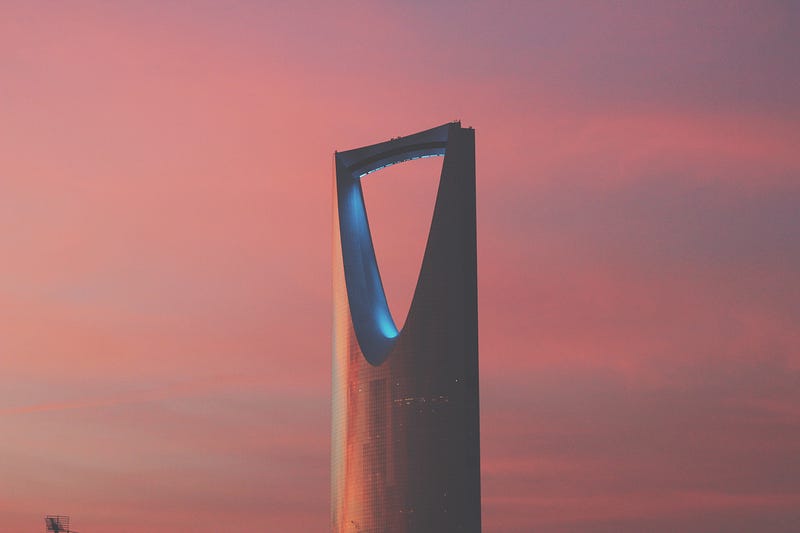
Photo by Hala AlGhanim on Unsplash


Developing Web3 service capabilities

This collaboration will see Animoca harness its expertise to develop Web3 service capabilities with broad global applications in tandem with NEOM, aligning with NEOM’s vision of becoming a cutting-edge tech hub of the future.

Animoca Brands has been a prominent player in the Web3 investment arena for several years. In July 2022, the company’s valuation soared to $6 billion, with backing from notable entities such as Singapore’s state investment fund, Temasek. Despite its ambitious goal to secure $2 billion for its metaverse fund in November of the same year, those expectations were significantly tempered following the FTX collapse. Consequently, in March, Animoca revised its target to a more modest $800 million.


In-house market making

A report by The Block on Friday revealed that Animoca has been making efforts to pitch an in-house market making service to fledgling Web3 businesses within its portfolio. That service has been presented by the company to more than 400 startup projects in which it has been an investor over recent months.

The key market makers in the crypto space include Wintermute, Keyrock, and GSR. This move by Animoca potentially puts Animoca in direct competition with these primary crypto-sector market makers. An in-house digital asset team has been tasked with offering the service. An Animoca spokesperson stated:

“Its primary role, much like the treasury teams in many large corporations, is to optimize the utilization of the company’s balance sheet. The team does conduct market-making to ensure there is enough buy/sell liquidity for certain tokens, which is similar to the function that third-party market makers conduct, except that we choose to perform this in-house for scale and efficiency.”


Saudi diversification

As part of its Vision 2030 initiative, Saudi Arabia has been looking to diversify away from its predominantly oil-based economy. In an interview last month, Animoca Brands Founder Yat Siu outlined that the Middle Eastern country is embracing new technologies such as artificial intelligence (AI) and blockchain, encompassing blockchain-based gaming and Web3.

In July it emerged that the Saudi Central Bank (SAMA) and the Hong Kong Monetary Authority (HKMA) were looking to extend the level of collaboration between the two territories relative to international payments and tokenization.

This renewed interest from state-backed funds in Animoca suggests a potential shift in the Web3 venture capital landscape, coinciding with broader indications of a thaw in the crypto winter. The collaboration with NEOM and the injection of $50 million underscore the growing recognition of Web3’s potential, cementing Animoca Brands’ position as a key player in the ever-developing Web3 space.


More to Read
View All
Policy & Regulation·

May 02, 2023

Bhutan Quietly Mining Bitcoin Since $5,000

Bhutan Quietly Mining Bitcoin Since $5,000The tiny nation of Bhutan continues to be full of surprises recently where crypto is concerned, with the latest report suggesting that the kingdom has been mining bitcoin for a number of years already.© Pexels/Pema GyamtshoAccording to a recent report in The Bhutanese, a Bhutan-based publication led by investigative journalist, Tenzing Lamsing, the landlocked nation had been mining bitcoin over the course of a “few years” already, in an effort to diversify its sovereign portfolio.Long-term investment strategyUjjwal Deep Dahal, CEO of Druk Holding and Investments (DHI), told the publication that the venture was part of a long-term investment strategy. DHI is the commercial arm of the Royal Government of Bhutan. It was formed pursuant to a Royal Charter in 2007 with the mandate of making investments on behalf of Bhutan while optimizing usage of resources.The mining activity had centered on Bitcoin although there was a small provision for Ethereum-based mining when Ethereum was a mineable proof-of-work (PoW)-based blockchain network. It’s unclear of the precise timeline but the report outlines that DHI has engaged in the mining space over a number of years, and at a time in which the Bitcoin unit price was as low as $5,000.Exploiting cheap hydroNestled in the Himalayas, Bhutan has considerable hydroelectric resources. Bitcoin mining is ordinarily an expensive exercise but in scenarios where there are plentiful energy resources with a marginally cheaper cost of production than the average, it can be an attractive and profitable enterprise. Dahal outlined that these conditions enabled DHI to reinvest profits back into additional mining equipment.The precise time-frame of DHIs entry into Bitcoin mining is open to speculation. However, we do know that the Bitcoin unit price was last below $5,000 at the onset of the pandemic in March 2020. Prior to that, Bitcoin had risen above $5,000 in April 2019 following an acute bear market in 2018.Crypto lender entanglementsBhutan and DHI hit the crypto radar last month when it was revealed that the kingdom had made significant investments into and out of failed crypto lenders Celsius and BlockFi. Dahal has said that the royal charter-mandated firm had taken out loans with both crypto lenders and had fully repaid those loans. However, that may have been something that happened later than anticipated. The Bhutanese company had a $30 million loan from BlockFi. BlockFi liquidated the Bitcoin collateral associated with that loan in 2022 but it left a shortfall of $800,000. The failed lender subsequently sued DHI. As of an April 13 court filing, BlockFi submitted a voluntary dismissal of the lawsuit to the courts, presumably because the shortfall was subsequently paid by DHI.In the case of Celsius, DHI had withdrawn $65 million from the lending platform prior to it declaring bankruptcy. Consequently, the matter has been the subject of speculation relative to the potential for the Celsius bankruptcy estate to pursue DHI for a clawback of the withdrawn funds.

news
Markets·

Jan 07, 2026

South Korean crypto investors move to sidelines as market slump persists

As the cryptocurrency market’s sluggish performance stretches into another year, South Korean investors have largely engaged in a wait-and-see approach. According to local media outlet Dailian, users are now checking prices only occasionally rather than trading actively, a shift evidenced by sharp declines in engagement metrics at the country’s two dominant exchanges, Upbit and Bithumb.Photo by NordWood Themes on UnsplashHigh retention, low activityData from Mobile Index reveals a stark contrast between user retention and actual activity. Throughout 2025, monthly active user (MAU) levels remained relatively stable—Upbit recorded as many as 4.7 million MAUs, while Bithumb reached approximately 2.7 million at its peak. This suggests that while the market downturn has dampened enthusiasm, it has not driven users to exit the ecosystem entirely. However, the time users spent on these platforms plummeted as liquidity dried up. In January 2025, ample market liquidity drove aggressive trading behavior; Upbit users spent an average of 7 hours and 30 minutes on the app during the month. By December, that figure had crashed to just 2 hours and 30 minutes—a 66.4% decline. Bithumb experienced a similar contraction, with average monthly usage falling from 233 minutes in January to 120 minutes in December. Aggregate usage followed the same downward trajectory. On Upbit, total monthly time spent across the user base fell from 35.66 million hours in January to 10.54 million hours in December. Bithumb saw total hours drop from 10.63 million to 4.65 million over the same period. The altcoin freezeThis reduction in screen time correlated directly with collapsing trading volumes. Upbit’s daily trading volume shrank from approximately 270 trillion won ($187 billion) in January to 52 trillion won ($36 billion) in December. Bithumb saw a proportional decline, dropping from 85 trillion won ($59 billion) to 24 trillion won ($17 billion). Analysts attribute this trend to a capital concentration in major assets like Bitcoin, which hit a new all-time high in October. Conversely, altcoins—which typically account for a disproportionately large share of trading volume in South Korea—failed to spark a rebound. Despite aggressive listing strategies—Upbit listed 73 new tokens and Bithumb added 156 last year—the influx of new assets failed to prompt a broader rally. One industry expert noted that none of the newly listed tokens managed to stand out, adding that the decline in Bitcoin prices later in the year further soured sentiment toward altcoins. The expert also highlighted that stronger performance in traditional asset classes, including U.S. and South Korean equities and gold, drew capital away from the crypto sector. However, another analyst offered a less pessimistic interpretation, suggesting that 2025 was not a year of investor exodus but rather one of dormancy. Investors chose to stay on the sidelines due to a lack of clear profit opportunities, implying that a resurgence in altcoin momentum could restore trading activity. Institutional giants push forwardDespite the retail lull, traditional financial institutions are actively exploring the sector, positioning themselves for future utility. Last month, BC Card signed a memorandum of understanding with U.S.-based exchange Coinbase to test USDC payments at South Korean merchants. The pilot program aims to integrate Coinbase’s Base blockchain wallets with BC Card’s QR payment infrastructure. Simultaneously, the broader card industry is preparing for the second phase of crypto legislation, which is expected to focus on stablecoin regulation. Nine credit card companies—including Samsung Card, Shinhan Card, and KB Kookmin Card—plan to form a task force this month under the Credit Finance Association (CREFIA). This initiative will focus on building an end-to-end system for stablecoin-based card payments and merchant settlements, including pilot tests for stablecoin-linked debit cards usable at standard payment terminals. Investment interest also remains alive in the corporate sector. Mirae Asset Financial Group is reportedly considering acquiring Korbit, the country’s fourth-largest exchange, through its subsidiary Mirae Asset Consulting. Market observers estimate the potential deal could be valued at up to 140 billion won ($97 million). 

news
Markets·

Dec 08, 2023

CarrieVerse token CVTX listed on Bitget

CarrieVerse token CVTX listed on BitgetWeb3 metaverse and NFT platform CarrieVerse’s governance token CVTX will be listed on global cryptocurrency exchange Bitget on Dec. 13, according to an article published by South Korean news outlet Money Today. This is the eighth exchange listing for the altcoin, following Gate.io, GOPAX, BingX and more. This comes as part of the platform’s efforts to expand its Web3 ecosystem.Photo by Maxim Hopman on UnsplashCVTX’s versatilityBuilt on Polygon, CVTX is integrated into the tokenomics ecosystem of CarrieVerse and its card strategy role-playing game (RPG) SuperKola Tactics. It is also the governance token for the CarrieVerse blockchain gaming platform Cling. CVTX can be traded for USDT on all of the exchanges it is listed on except for GOPAX, which offers a CVTX/KRW pair. KRW stands for Korean won.Global expansionLast month, CarrieVerse also joined the Dubai Multi Commodities Centre (DMCC), the UAE’s largest free-trade zone for blockchain and crypto companies, as a metaverse service provider. The platform has received approval to set up a local subsidiary there, which will serve as a base to expand its ecosystem, particularly in the Middle East and North Africa (MENA) region.“The market value of CarrieVerse and CVTX is expected to significantly increase once the platform is released in target regions. This will serve as a foundation for more listings on major domestic and international exchanges,” the company said, adding that its number of daily active users has exceeded 5,000.Bitget’s substantial presenceBitget is a cryptocurrency derivatives exchange registered in Seychelles, with global offices in Japan, South Korea, Canada and more. As one of the top ten derivatives exchanges in the world according to CoinMarketCap, Bitget handles over five million users and more than 500 cryptocurrencies. It is also registered on South Korea’s two largest exchanges, Upbit and Bithumb, as a market that facilitates deposits and withdrawals after the implementation of the crypto Travel Rule. The Travel Rule, enforced by the intergovernmental Financial Action Task Force, states that VASPs must share personal information about customers when facilitating crypto transactions that exceed a certain amount as a means of preventing related crimes.

news
Loading