Top

Kbank’s Upbit Customer Deposits Total $2.2B

Web3 & Enterprise·October 10, 2023, 9:13 AM

Kbank, an internet-only bank in South Korea, is facing criticism due to its relatively high proportion of cryptocurrency customer deposits compared to other banks. Kbank reportedly manages approximately KRW 3 trillion (equivalent to $2.2 billion) in deposits from customers of cryptocurrency exchange Upbit, which accounts for about 18% of its total customer deposits.

This percentage stands out, being notably higher than other banks that provide accounts to the other four crypto-to-fiat exchanges in Korea. That is according to a report by Maeil Business Newspaper, which obtained documents submitted to lawmaker Kim Hee-gon by the Financial Services Commission (FSC).

According to Korean law, crypto exchanges must secure real-name bank accounts from banks to offer crypto trading services against the Korean won. Kbank offers its accounts to Upbit, the dominant player in the Korean crypto market.
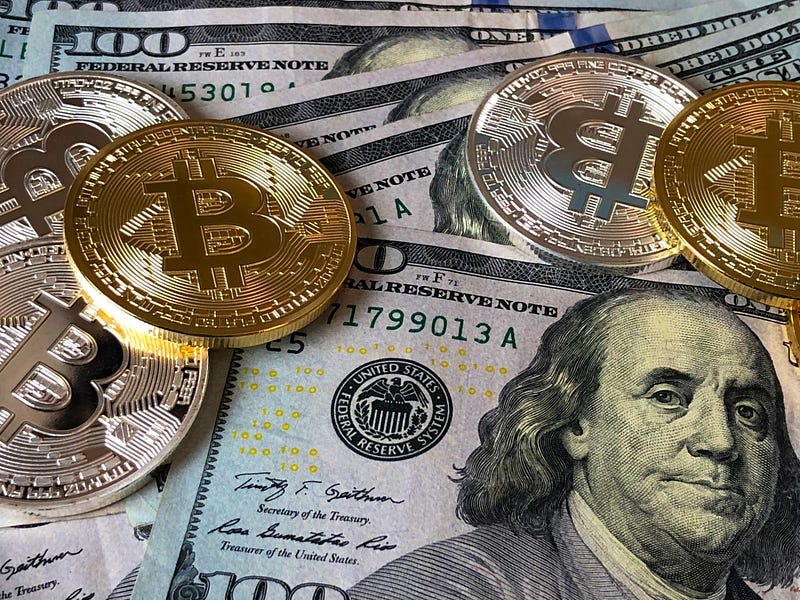
Photo by David McBee on Pexels


Notable exposure to crypto exchange

The FSC documents showed that Kbank’s Upbit customer deposits totaled KRW 3.09 trillion, making up 18% of its total deposits, which amount to KRW 17.2 trillion.

In a striking contrast, Nonghyup Bank had 0.2% of its deposits, equivalent to KRW 557.8 billion, in Bithumb, which is the nation’s second-largest cryptocurrency exchange. Kakaobank, another internet-only bank, had 0.3% (KRW 112.2 billion) of its deposits in Coinone. Shinhan Bank held 0.01% (KRW 43 billion) in Korbit, and Jeonbuk Bank had a similarly small 0.02% (KRW 4.2 billion) in Gopax.

Lawmaker Kim pointed out that Kbank has become a bank dedicated to crypto trading. Kim proposed that financial authorities take proactive measures to assess the potential risks that may emerge when Kbank utilizes Upbit customer deposits as a basis for offering credit loans. Such risky financial practices could potentially result in higher loan defaults and the emergence of a greater number of individuals with poor credit histories, which could ultimately jeopardize the stability of the financial market.


Regulatory gap

The current Financial Transaction Reporting Act mandates that virtual asset service providers (VASPs) segregate customer deposits from their own assets as a measure to combat money laundering. However, it has been noted that there are regulatory gaps stemming from the absence of specific guidelines for the custody of these deposits.

According to the Financial Supervisory Service (FSS), Nonghyup and Kakaobank store deposits in separate accounts within the bank. On the other hand, Kbank and Jeonbuk Bank keep deposits in corporate accounts under their respective exchange partners’ names.

When deposits are stored in separate accounts within the bank, only the bank has access to those funds, and they are essentially operated in a manner similar to a trust, preventing the bank from using the funds arbitrarily. In contrast, funds held in corporate accounts can be used by the bank as a source for lending. Lawmaker Kim warned that in scenarios such as exchange bankruptcies or similar situations, banks holding customer funds in corporate accounts could face difficulties in ensuring customer protection.

Each of these banks receives reserve funds from crypto exchanges in anticipation of potential compensation requirements in the event of unforeseen losses. The FSS states that as of the end of last month, the reserve amounts held by each bank were as follows: Kbank had KRW 200 billion, Nonghyup Bank had KRW 100 billion, Kakao Bank had KRW 73 billion, and both Shinhan Bank and Jeonbuk Bank had KRW 30 billion.

Kbank’s Upbit customer deposits are approximately 72 times larger than Shinhan Bank’s Korbit customer deposits. However, the reserve amounts held by Kbank are only 6.7 times greater than those held by Shinhan. Lawmaker Kim emphasized the importance of banks maintaining reserve funds that are proportional to the customer deposits held in their partner crypto exchanges.


Signs of recovery

Meanwhile, the Korean cryptocurrency industry, which faced a downturn in the latter half of last year due to events like the Terra collapse and FTX’s bankruptcy, has exhibited signs of recovery in the first half of this year.

The Financial Intelligence Unit (FIU) of the FSC recently reported that the cryptocurrency market cap in South Korea has reached KRW 28.4 trillion as of the end of June this year. This reflects a 46% increase compared to the end of last year when it stood at KRW 19.4 trillion. Additionally, the total operating profit of domestic exchanges surged by 82% to KRW 227.3 billion over the past six months, compared to the previous figure of KRW 124.9 billion.

The total market’s max drawdown (MDD) was 62%. MDD assesses the extent to which an asset has declined in value from its highest point to its lowest point within a specific time frame, before experiencing a recovery. The FIU considers this MDD to be high, urging investor caution.
More to Read
View All
Web3 & Enterprise·

Jun 01, 2023

Bithumb Shuts Down Crypto Research Center Amid Trading Volume Slump

Bithumb Shuts Down Crypto Research Center Amid Trading Volume SlumpBithumb, a cryptocurrency exchange based in South Korea, is shutting down its research center less than a year after its launch, according to a report by news agency Newsis. The closure is seen as a strategic move to enhance business performance in response to the recent decline in trading volume.Photo by Kelly Sikkema on UnsplashCostly research centersEstablished on June 8 last year, the Bithumb Economic Research Institute is reportedly ceasing operations tomorrow. Research centers are often perceived as costly endeavors, particularly when the company is experiencing poor financial performance. In the traditional financial sector, small and medium-sized securities firms typically prioritize restructuring their research divisions when dealing with profitability challenges.Relevance of research hubsAn official from a Korean cryptocurrency exchange told Newsis that research centers can be a financial burden during times of low trading volumes and subpar performance. Nonetheless, the official underscored the need to furnish investors with refined information through these research hubs, encouraging exchanges to cultivate an environment conducive to informed decision-making based on high-quality data.Since its inception, Bithumb’s research organization has published 55 reports aimed at forecasting cryptocurrency market trends using comprehensive macroeconomic and crypto data analysis. These reports have contributed to drawing investors to the sector.Global restructuring trendThe wave of workforce reductions in the crypto industry isn’t isolated to South Korea; it’s a global phenomenon. Chinese reporter Colin Wu, known for his crypto news platform Wu Blockchain, shared via Twitter that Binance, the world’s largest cryptocurrency exchange, is planning to lay off roughly 20% of its staff, totaling about 8,000 employees.In response to these concerns, Binance CEO Changpeng Zhao, also known as CZ, wrote a tweet yesterday. According to CZ, employee layoffs are a weekly occurrence within the company, based on considerations such as alignment with corporate culture. As an example, he mentioned the remote work environment and how it may not be suitable for everyone. However, CZ reassured that Binance remains engaged in hiring, with a focus on enriching its talent pool.

news
Web3 & Enterprise·

Jun 19, 2023

Mitsui & Co. and Animoca Brands to Drive Web3 Innovation in Japan’s Digital Landscape

Mitsui & Co. and Animoca Brands to Drive Web3 Innovation in Japan’s Digital LandscapeTokyo-based trading and investment company Mitsui & Co. (Mitsui) has announced today a strategic partnership with Hong Kong-based Web3 gaming firm Animoca Brands. This new partnership aims to utilize Mitsui’s extensive business network to foster new ventures that contribute to the distribution and advancement of Web3 technology in Japan. The companies will particularly focus on utilizing blockchain technology to address issues such as wellness and carbon credits.Mitsui expects this collaboration to strengthen its presence in the blockchain and digital assets space. The goal is to promote the development of a digital society and improve the lives of Mitsui’s customers.Photo by Shubham’s Web3 on UnsplashAnimoca Brands’ Web3 expertiseAnimoca Brands, a well-known company specializing in digital entertainment, blockchain, and gamification, has an impressive portfolio of over 450 Web3 investments. This includes popular non-fungible token (NFT) based online video game Axie Infinity and NFT marketplace OpenSea. Animoca Brands actively promotes digital property rights and the establishment of the open metaverse, a blockchain-based virtual space that ensures permissionless access and user ownership of data.Mitsui’s blockchain initiativeMitsui also initiated a blockchain-related project through its affiliate Mitsui & Co. Digital Asset Management (MDM). Just last month, MDM launched Alterna, a security token platform that grants retail investors access to previously inaccessible real-world assets (RWAs), such as large-scale real estate properties and infrastructure. To expand the reach of Alterna, MDM has partnered with Sony Bank, a member of the Sony Financial Group, to introduce the platform to the Tokyo-based online bank’s clients.

news
Markets·

Jul 11, 2023

Singapore and the Philippines Lead Crypto Interest in Southeast Asia

Singapore and the Philippines Lead Crypto Interest in Southeast AsiaSingapore and the Philippines have emerged as the frontrunners in Southeast Asia’s crypto landscape in 2023, capturing the majority of regional interest.Research carried out by Malaysian cryptocurrency data aggregator CoinGecko reveals that on a per capita basis, Singapore holds a 43.5% share of crypto interest, followed closely by the Philippines with 40.3%.Photo by Kenneth Koh on UnsplashRegional crypto hubSingapore has established itself as a crypto hub not only within Southeast Asia but also in the wider Asia region. It was previously ranked as the third most crypto-curious country globally and has consistently been one of the top Web3 gaming countries for three consecutive years.Other countries in Southeast Asia, including Malaysia, Thailand, Vietnam, and Indonesia, also contribute to the region’s crypto interest, although at more modest levels. Combined, these countries represent 14.7% of the per capita crypto interest in the region so far this year.GameFi driving interestIn the Philippines, crypto interest is primarily driven by GameFi, and the country has maintained its position as the leading Web3 gaming country from 2021 to 2023. The Philippines witnessed the Axie Infinity mania, with local gaming guilds and inspiring rags-to-riches success stories. Additionally, it was among the top countries embracing meme coins earlier this year, alongside Malaysia.Vietnam shares a strong interest in GameFi, placing it among the top Web3 gaming countries for three consecutive years. Thailand and Indonesia have witnessed substantial trading volumes on their crypto exchanges, with $37.94 billion and $23.97 billion respectively in 2022.Notably, Malaysia has a significant presence in the crypto industry, despite its relatively smaller impact. The country is home to two prominent crypto data tools, CoinGecko and Etherscan, which were founded by Malaysian teams and are headquartered in the country.In contrast, smaller Southeast Asian economies such as Cambodia, Myanmar, Brunei, Laos, and Timor-Leste have a combined share of only 1.5% of regional crypto interest per capita. While these markets remain largely untapped, their low adoption rates are unlikely to improve in the near term. Except for Brunei, which is a wealthy nation, the smaller Southeast Asian economies are categorized as lower-middle income countries.Regarding the specific cryptocurrencies drawing attention in Southeast Asia in 2023, Layer 1, GameFi, meme coins, and DeFi-related crypto have emerged as the most popular categories. The top-ranking cryptocurrencies within these narratives account for 22.2% each of the region’s interest so far this year.The Philippines, as the top Web3 gaming country, showcases three GameFi cryptocurrencies — Smooth Love Potion (SLP), Ronin (RON), and Wemix (WEMIX) — among its most popular choices. Malaysian investors also show interest in DeFi projects like Maple (MPL) and BoringDAO (BORING), in addition to Bitcoin.Singapore’s popular crypto choices include The Graph (GRT), Bitcoin (BTC), and Pepe (PEPE). Vietnam demonstrates ongoing interest in Aptos (APT) and privacy tool Bob (BOB), while Thailand focuses on Gala (GALA) and Canto (CANTO). Finally, Indonesia monitors Not Financial Advice (NFAI) and AirSwap (AST).Overall, Singapore and the Philippines lead the way in crypto interest within Southeast Asia, while other countries in the region also contribute to the evolving crypto landscape.

news
Loading