Top

Seoul and Baobab Partners Face Controversy Over Unpaid Prize Winnings for SWF2023 Hackathon

Policy & Regulation·October 24, 2023, 8:53 AM

The city of Seoul has come under public scrutiny for failing to pay the winners of the Seoul Web3 Festival (SWF2023) Hackathon a cash prize worth KRW 150 million (approximately $112,000). The Seoul Metropolitan Government has argued that since it was simply a naming rights sponsor, the responsibility for paying the prizes lies with Baobab Partners, who co-hosted the event. However, critics argue that the city did not properly vet Baobab Partners more rigorously before hosting the event.
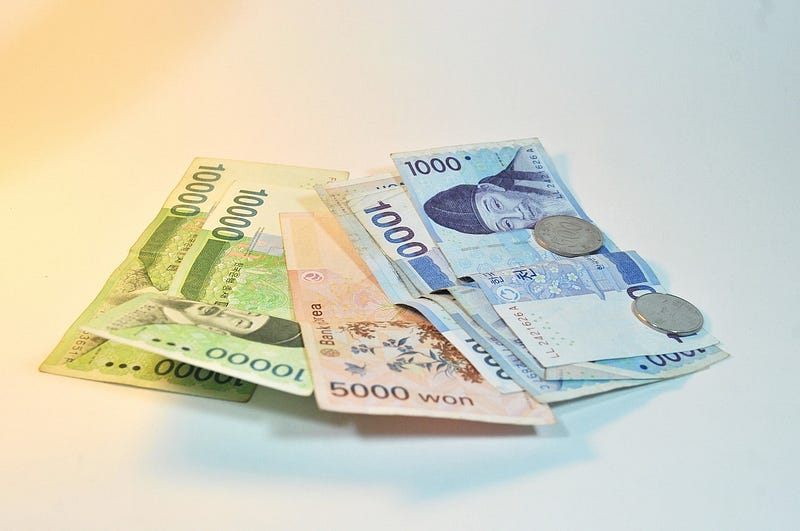
Photo by okaybuild on Pixabay


Unpaid prizes linger

The SWF2023 Hackathon took place from July 31 to August 2 at Dongdaemun Design Plaza (DDP) and was co-hosted by the city of Seoul, the Seoul Design Foundation, and Baobab Partners. It offered a total prize pool of KRW 150 million attracting 417 participants who made up 115 teams.

However, although over two months have passed since then, the winners are yet to be paid their prize money. “Baobab Partners initially proposed the SWF2023 event, and they were responsible for gathering the necessary sponsorship funds to run the event,” said a city representative.

According to industry sources on Monday, the company’s CEO, Choi Jin-beom, issued a handwritten apology last Friday regarding the incident. “We promised to pay the winners by today, but we were unable to deliver on that promise. We explored multiple avenues, including investors, new contractors, and other assets, but were ultimately unable to secure the funds to do so,” he said. “The narrative that the funds were diverted elsewhere or invested in cryptocurrencies or stocks is untrue,” he added, clarifying that related information was transparently disclosed to the city of Seoul.


Baobab Partners’ swift rise raises industry eyebrows

Baobab Partners had previously participated as an event planner at last year’s Blockchain Week in Busan, which turned out to be a success. “We also spoke with the Busan city government, who gave a positive opinion of the company,” the representative added. It was under this context that Seoul entered into a naming rights agreement with Baobab Partners. The agreement stipulated that the company would be in charge of attracting and managing sponsorships, and the prize money and operational costs would be covered by corporate sponsorship funds.

Nevertheless, questions have arisen within the industry about Baobab Partners’ short track record and its successive collaborations with public organizations. Baobab Partners is a startup that was founded in May 2021. In November of the same year, the firm signed memoranda of understanding with three blockchain companies during NFT Busan 2021, a large-scale NFT fair held in the southern port city to share the latest blockchain trends. As a result of its efforts, it was listed alongside prominent companies such as Coinone and Onther despite only six months passing since its establishment. Subsequently, Baobab Partners relocated from Seoul to Busan, and the following year, it participated as an event planner at Blockchain Week in Busan.


Accumulating allegations

Speculation suggests that this success was not solely due to Baobab Partners’s capabilities. The company’s CEO is believed to have political connections, according to an anonymous industry insider. Choi denied such claims and stressed that its technical expertise should not be downplayed, citing the fact that Baobab Partners was the first entity in Korea to develop virtual reality (VR) banking technology and had received a KRW 15 billion investment from Finger, a KOSDAQ-listed company.

Baobab Partners has also been mired in controversy over supposedly unpaid wages. In response to a claim made by an industry source that many former employees of Baobab Partners have still not received their due wages, a Seoul representative stated that there is no such dispute according to conversations with company representatives, seeking to dispel the dispute. Choi further explained, “We didn’t have wage disputes until last year. The difficulty in paying wages began in January this year due to the failure to execute promised investment funds.”

The city said that it is currently conducting legal examinations and looking into necessary measures for two matters involving Baobab Partners, including the handling of hackathon winnings.

More to Read
View All
Policy & Regulation·

Oct 15, 2025

South Koreans warm to stablecoins as interest surges, but central bank urges caution

South Korea is moving closer to the global stablecoin trend as public curiosity and real-world trials accelerate, even as the country’s central bank signals it wants tight guardrails. A recent analysis from Shinhan Card, reported by Money Today, finds that internet searches for “stablecoin” in South Korea jumped 403% in the first half of this year compared with the previous six months, based on data from major portals such as Google and Naver. Mentions on social media rose 359% over the same period. The spike reflects growing expectations that U.S. dollar-pegged tokens could make cross-border payments faster and cheaper by enabling near-instant settlement at prevailing foreign-exchange rates. Interest has been reinforced by user reviews of actual payment experiences, which climbed between May and July. Crypto-linked cards, including RedotPay and Bybit’s offerings, are already usable domestically and allow top-ups with leading stablecoins such as USDT and USDC. One user described buying a cup of coffee at a local shop with a RedotPay card via Apple Pay. The small purchase underscores how crypto rails are edging into routine spending.Photo by Oat Appleseed on UnsplashFrom curiosity to checkoutTrading venues remain the main arena. According to CryptoQuant, transactions in USDT and USDC on the country’s five leading exchanges totaled nearly $71 billion from January through August, underscoring stablecoins’ central role in crypto liquidity and price discovery. Stablecoin interest in Korea shows a skew toward younger users and men, with men making up 74% of related searches and women 26%. By age, people in their 20s–40s accounted for 66% of searches, while those aged 50 and above represented 34%. Public debate is widening alongside adoption, with some online commenters predicting that stablecoins could chip away at the influence of traditional card networks. At the same time, banks, card companies, and exchanges are bracing for the arrival of a won-pegged counterpart, as the government and parliament prepare a regulatory framework and aim to introduce a bill as early as this month. Domestic card issuers, drawing on their merchant networks and settlement systems, are already exploring how to integrate won-backed tokens in ways that maximize convenience and scalability. Adoption meets skepticismSkeptics counter that Korea’s existing payments infrastructure is already world-class, leaving only marginal gains for a won stablecoin. They also argue that cross-border benefits would be modest because the won lacks reserve-currency status and broad global demand. The Bank of Korea (BOK) has struck a notably conservative tone. Governor Rhee Chang-yong has previously questioned the benefits of a won-denominated stablecoin and warned of risks to the monetary system. Earlier this month, in documents submitted to a lawmaker and reported by The Herald Business, the BOK advised that parliament consider granting it authority to require issuers to deposit reserves at the central bank when necessary. According to the bank, such a measure would strengthen user protection during heavy redemptions, curb money-supply growth outside its control, and ensure that any seigniorage benefits flow to the public. That approach could reduce issuer profits, since deposits at the BOK would not earn interest, just as is the case for commercial banks. The documents also recommend sizing reserves to match the total stablecoin supply, while clarifying that not all of it would necessarily need to be held at the central bank. Issuance path and next stepsAs for who should issue a won-pegged token, the BOK favors starting with a consortium of banks, citing their track record on compliance and the need for a controlled pilot that lets regulators assess and mitigate risks before widening access. The developments suggest a country exploring how stablecoins might integrate into an already sophisticated payments network. Consumers are showing interest, exchanges are handling large flows, and regulators are shaping the legal framework that will define the place of any future won-based digital currency. 

news
Policy & Regulation·

Apr 12, 2023

Official Says Hong Kong Should Invest in Web3 Economy

Official Says Hong Kong Should Invest in Web3 EconomyAccording to Hong Kong’s financial secretary, Paul Chan, this is the perfect time for Hong Kong to promote the development of Web3, the next-generation version of the World Wide Web that is decentralized and distributed through the use of blockchain and similar technologies.©Pexels/Tara WinsteadLearning from the dot com boomDespite the recent instability of the virtual assets market and the collapse of some digital asset exchanges, Chan has pointed out that the quality of the real economy has improved since the dotcom bubble burst in 2000, and surviving market players have focused on technological innovation, applications and value creation.In remarks made via a blog post published on Sunday, Chan argues that the development of Web3 is going through the same process. He suggested that the next stage of development would be to focus on developing blockchain technology more deeply to find wider application for it, which would improve existing business models, ultimately benefiting users and improving the quality of the real economy.To accelerate the development of Web3, Chan allocated HK$50 million (US$6.4 million) to the Cyberport business park to organize major international conferences and youth workshops in his latest budget released in February.VASP licensingChan also announced that authorities would introduce a licensing regime for virtual asset service providers (VASPs) in June to ensure appropriate supervision and minimize risks in the innovation and development of Web3. Furthermore, the government is looking into regulating stablecoins or cryptocurrencies with their value pegged to another currency or commodity.According to some local experts, Hong Kong should not delay in pushing Web3 development, and the government should work out clear policies to attract overseas investors and Web3 developers to set up offices in Hong Kong.Working towards a Web3 hubFrancis Fong Po-kiu, honorary president of the Hong Kong Information Technology Federation, told the South China Morning Post that the government could help by building up infrastructure such as data and supercomputing centers to help small and medium-sized enterprises to adopt more advanced technology.Although IT sector veteran Joseph Leung Wai-fung agreed that Hong Kong was lagging Singapore in terms of Web3 development, he suggested that the government should step up efforts to attract overseas investors and Web3 developers by working out clear policies to support them in setting up offices in Hong Kong. He also pointed out that Web3 covers key areas such as artificial intelligence, the Internet of Things, blockchain technology, and metaverse augmented reality, and that every international smart city should explore this area.The recent fluctuations in virtual asset markets and the collapse of some online trading platforms have cast doubts on the future of Web3, but Chan believes that competent market players who survive a “burst bubble” can focus on innovation and make significant strides.The government’s efforts to accelerate the development of Web3 through the allocation of HK$50 million to the Cyberport business park, the introduction of a licensing regime for virtual asset service providers, and the regulation of stablecoins, are steps in the right direction. However, more needs to be done to attract overseas investors and Web3 developers to set up offices in Hong Kong and to build up infrastructure such as data and supercomputing centers to help small and medium-sized enterprises to adopt more advanced technology.

news
Web3 & Enterprise·

Feb 13, 2024

SUI hits new ATH following blockchain academy collaboration

The SUI token has surged to an all-time high (ATH) price after the revelation of the project’s partnership with the American University of Sharjah (AUS) in the United Arab Emirates (UAE) to establish the AUS-Sui Blockchain Academy. SUI is the native token of the Sui blockchain, a layer one blockchain network and smart contract platform that’s striving to make digital asset ownership private, secure and accessible. The AUS-Sui Blockchain AcademyAccording to a press release published via regional news media outlet Zawya on Monday, the AUS-Sui Blockchain Academy is situated within the multidisciplinary Center of Entrepreneurship, Innovation and Sustainable Development, within the AUS. It’s been set out to align with the principles of entrepreneurship, innovation and sustainability with the objective of fostering responsible and impactful technological advancement relative to blockchain. The Academy aims to equip the next generation of leaders and innovators with the necessary knowledge to harness Web3 technology so as to address future global challenges. Dr. Greg Siourouni, Managing Director of the Sui Foundation, expressed enthusiasm for the blockchain education initiative, emphasizing its role in advancing Sharjah's goal of becoming a leading educational and research hub.Photo by Ainur Kamaev on UnsplashPrice surgeIn response to the announcement, SUI's token price has surged. While it’s up 4% over the course of the past 24 hours, the token is now standing at a record-high unit price of $1.79 since its launch in May 2023. The positive momentum in SUI's price underscores market enthusiasm for the layer-1 blockchain platform's educational initiatives. However, other in-roads being made by the project may also be playing a role. Last September the project launched zkLogin, a Web3 authentication solution that enables dApp users to login using social media accounts. The following month, the Sui Foundation announced a $50 million ecosystem fund in an effort to bolster growth relative to the Sui network. AUS and SUI blockchain education initiativesThis latest initiative is part of Sharjah's vision to position itself as a regional powerhouse for education and research, particularly in the realm of technology and blockchain. It’s not the first blockchain-centric collaboration that the university has engaged in. In June of last year, Dubai-headquartered crypto spot and derivatives trading platform Bybit partnered with AUS to establish a scholarship fund of $272,000. That endeavor is supporting fintech and blockchain studies for the benefit of 20 students. The Sui Foundation too has established a track record where educational initiatives are concerned. It has previously introduced several programs, including a Web3-focused curriculum at the Wheeler Institute for Business and Development at the London Business School. Additionally, it awarded $400,000 in Sui Academic Research Awards (SARAs) to 15 universities worldwide and introduced a Web3 curriculum for high school students. SUI's partnership with AUS to establish the AUS-Sui Blockchain Academy reflects its commitment to advancing education and innovation in the blockchain space, while its price surge is suggestive of market optimism for its future endeavors. 

news
Loading