Top

UBS Pioneers Tokenized Money Market Fund on Ethereum

Web3 & Enterprise·October 05, 2023, 12:18 AM

Underscoring what is very much an ever-evolving financial sector, large-scale investment manager UBS Asset Management has taken a pioneering step by launching a pilot project for a tokenized money market fund on the Ethereum blockchain.
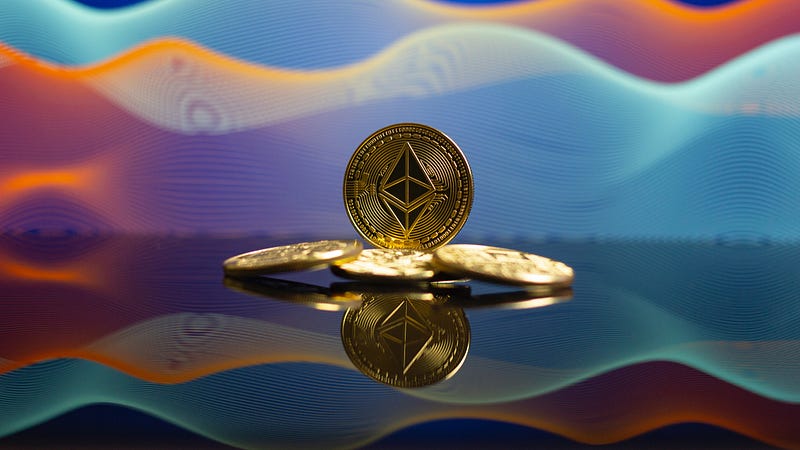
Photo by Bastian Riccardi on Unsplash


Blurring the lines of TradFi

The initiative, announced by UBS in Singapore on Monday, promises to streamline the traditionally cumbersome processes of fund subscriptions and redemptions. Additionally it highlights the increasing integration of blockchain technology into traditional finance, effectively blurring the boundaries between the two worlds.

The UBS project aligns with Singapore’s Variable Capital Company (VCC) fund structure and falls within the scope of Project Guardian, championed by the Monetary Authority of Singapore (MAS).

Structured in this way, UBS believes that the project design lends itself to the ability to bring various forms of real-world assets (RWAs) to the blockchain. Furthermore, it establishes a favorable rapport with regulatory authorities in Singapore, a jurisdiction known for its forward-thinking, crypto-friendly financial regulatory environment.


Public blockchain use

This new offering relies upon a smart contract that’s run on the Ethereum public blockchain, encapsulating the money market fund. Through this smart contract use, the subscription and redemption processes can be simplified. That will represent a major change, given that those processes have traditionally been laden with paperwork and delays.

In the first iteration, large TradFi firms like UBS considered the use of private blockchains but as Matt Hougan, the CIO of crypto asset manager Bitwise, pointed out, this particular initiative is indicative of a shift towards public blockchains. Hougan stated:

“Remember when TradFi projects were built on private blockchains? They are all being built on Ethereum today. Progress.”


RWA tokenization potential

The tokenization of real-world assets has the potential to revolutionize digital asset investments by offering transparency, security, and trust. It not only paves the way for a better understanding of digital assets but also accelerates their adoption. UBS’s pilot project represents another significant move in this direction.

With increasing support from regulatory bodies like MAS, the fusion of digital assets with traditional financial structures is likely to witness a myriad of large-scale implementations in the not too distant future.


UBS Tokenize

UBS harnessed the power of its in-house tokenization service, UBS Tokenize, to seamlessly conduct the controlled pilot of the tokenized money market fund. The initiative falls squarely within the purview of UBS’s global distributed ledger technology strategy, which aims to elevate fund distribution and issuance to greater levels of efficiency by leveraging the capabilities of both private and public blockchains.

UBS Tokenize also featured in a separate initiative earlier this year in Hong Kong, facilitating the issuance of digital structured notes on the Ethereum blockchain via the Bank of China Investment (BOCI).

The momentum behind the tokenization of real-world assets has been building in recent years, with various protocols focusing on real-world assets consistently outperforming other sub-sectors of decentralized finance.


More to Read
View All
Policy & Regulation·

Dec 24, 2025

Japan moves toward municipal blockchain bonds as crypto tax reforms face delays

The Japanese government is moving to modernize municipal finance through blockchain technology, though the timeline for much-anticipated cryptocurrency tax reforms appears to be drifting further into the future. Municipal bonds as security tokensAccording to a Dec. 23 Nikkei report cited by CoinDesk Japan, policymakers decided to begin preparing to issue local government bonds as security tokens. The government aims to submit the necessary legislation during the ordinary Diet session in 2026. Concrete measures, shaped by requests from local municipalities, are expected to be finalized ahead of next year. Advocates say that issuing bonds as blockchain-based security tokens would modernize local government finance by reducing friction in issuance and settlement and enabling real-time tracking of investor data.Photo by Luke Stackpoole on UnsplashCrypto tax reform seen as taking timeWhile the digitization of bonds progresses, the schedule for easing the tax burden on crypto investors is reportedly facing setbacks. CoinPost reported that, according to sources, the transition to a separate tax on crypto gains is now expected to take place in January 2028, a delay from the initially envisioned target of January 2027. The legislative groundwork is still slated for the 2026 Diet session, where amendments bringing crypto assets under the Financial Instruments and Exchange Act (FIEA) will be deliberated. However, the current cautious policy approach prioritizes investor protection and adjustments to the tax reporting framework, making a delay in implementation more likely. The proposed amendments address the steep tax liabilities currently faced by domestic investors. Under Japan’s current system, crypto gains are treated as miscellaneous income, taxed comprehensively with salary and other earnings at rates that can reach roughly 55% when including local taxes. The plan, which the ruling coalition has been coordinating, aims to align crypto taxation with that of stocks and forex trading. It would introduce a flat 20% separate tax rate and allow loss offsets and carryforwards of up to three years, bringing crypto closer to other financial assets. It would also ease tax filing by potentially adopting a framework similar to the designated accounts used in Japan’s securities market, reducing the reporting burden on digital asset investors. The slow pace of these regulatory changes has drawn criticism from the private sector. Tomoya Asakura, CEO of SBI Global Asset Management, a subsidiary of SBI Holdings, took to the social media platform X to voice concerns about the pace of reform. Asakura characterized the process as "extremely slow," warning that the lag places Japan behind jurisdictions such as the U.S., Asia, and the Middle East. He argued that continued delays would further impede domestic initiatives in Web3 and digital finance. Bybit to pull out next yearAmid this shifting regulatory landscape, foreign entities are adjusting their operations. Dubai-based crypto exchange Bybit, which is not registered with Japan’s Financial Services Agency, announced on Dec. 22 it will phase out services for Japanese users to remain compliant with local rules. The exchange has stopped onboarding Japanese residents or nationals since 12:00 p.m. UTC on Oct. 31, and accounts held by customers in Japan will be gradually restricted starting next year. 

news
Policy & Regulation·

Feb 09, 2024

Settlement approved but sealed by judge in BlockFi-3AC case

A settlement agreement between failed crypto lender BlockFi and bankrupt Singaporean crypto hedge fund Three Arrows Capital (3AC) has received approval from a U.S. judge. However, the specifics of the settlement remain sealed, citing concerns raised by yet another failed crypto platform, FTX. Dispute resolvedDuring a hearing on Feb. 6, New Jersey Bankruptcy Court Judge Michael Kaplan resolved the dispute, which saw BlockFi claiming $129 million owed by 3AC, while the Singapore-based firm contended that BlockFi owed it $280 million. Judge Kaplan's decision to keep the settlement agreement sealed stemmed from a perspective that unsealing it would be counterintuitive. BlockFi had filed a motion to seal the settlement terms last month. The U.S. Trustee objected to the seal, asserting that the debtors hadn't provided sufficient justification for sealing the agreement.Photo by mk. s on UnsplashSensitive settlement termsBlockFi justified the need for confidentiality, citing the sensitive commercial nature of the terms, which could potentially impact ongoing litigation involving FTX. The approval of the settlement now paves the way for BlockFi to proceed with distributions from the lending estate to its 100,000 creditors, with the firm owing up to $10 billion. Central to the dispute were preferential payments, transactions made just before bankruptcy that could have given the recipient more than they would have received through court proceedings. The resolution of counterclaims between BlockFi and 3AC follows mediation ordered by Judge Kaplan in October, likely culminating from a two-day hearing starting on Jan. 5 aimed at resolving the matter conclusively. This settlement follows another agreement between 3AC and Genesis, settling $1 billion in claims by 3AC. The company filed for bankruptcy in July 2022, attributing the extreme fluctuations in cryptocurrency markets as the reason for its collapse. Projected 46% 3AC creditor recoveryAccording to a December report to creditors by Teneo, it's estimated that 3AC creditors will receive approximately 45.74% of their claims from the bankrupt estate. As of Dec. 18, 2023, 3AC's assets were valued at $1.16 billion, while recognized claims for distribution stood at $2.7 billion. In an ongoing effort to secure 3AC's assets, a British Virgin Islands (BVI) court froze $1 billion in assets belonging to 3AC's founders, amid the liquidation process. This move is part of a broader strategy to seek recoveries from the founders and Kelly Chen, wife of one of the co-founders. 154 claims totaling $3.4 billion were filed against the 3AC estate, with $200 million not admitted for distribution and $322 million rejected or expected to be rejected. Additionally, claims worth $76 million are currently under dispute. BlockFi, along with eight affiliates, filed for Chapter 11 bankruptcy in November 2022. The firm cited significant exposure, including obligations owed to BlockFi by FTX-linked hedge fund Alameda Research, assets on the FTX platform and an undrawn credit line from FTX. 3AC’s collapse in June 2022, followed by FTX's downfall, led to BlockFi's bankruptcy filing in late November 2022. In a separate development, OPNX, a crypto bankruptcy claims platform launched by 3AC co-founders Su Zhu and Kyle Davies, announced its cessation of operations, with plans to shut down by Feb. 14.  

news
Web3 & Enterprise·

Nov 21, 2023

SKYPlay and 3D Factory join forces to bring Web3 to everyday life

SKYPlay and 3D Factory join forces to bring Web3 to everyday lifeSKYPlay, a Seoul-based blockchain gaming platform, announced Monday (local time) that it has signed a business agreement with 3D Factory to create content that integrates Web3 into everyday life, thus facilitating the rapid expansion of Web3 technology.Photo by Medienstürmer on UnsplashSynergizing Web3 realmsThrough this business agreement, SKYPlay aims to combine its Web3 capabilities in gaming and art with 3D Factory’s Web3 capabilities in sports. The two enterprises will ultimately establish a technological foundation for accelerating the integration of Web3 into society and expanding its uses.Pioneering paths in gaming, sports and moreEstablished in 2021, SKYPlay is a Play-to-Earn (P2E) platform that offers several games and related services, including a gaming community and forum, to some 300,000 users. Previously, the company secured large-scale investments worth $3 million and $10 million from Hong Kong-based startup accelerator 1st Soul Group and U.S.-based investment group LDA Capital, respectively. It is also expected to participate in an outer space mission led by NASA and SpaceX through a partnership with Web3 community BitBasel.3D Factory is a global blockchain-based meta platform that provides a range of services like gaming, NFT sales and metaverse memberships. Notably, it is deeply engaged with Spanish soccer. Having signed an NFT sponsorship agreement with the Spanish Football Federation (RFEF) in November last year, 3D Factory was able to create its own metaverse. This partnership involves not only the Spanish national team but also club teams in the Copa del Rey and Super Cup competitions, featuring some of the world’s biggest football teams like Real Madrid FC and FC Barcelona.

news
Loading