Top

GSR Gets on Path Towards Full Regulatory Approval in Singapore

Policy & Regulation·October 04, 2023, 1:15 AM

GSR Markets Pte. Ltd., the Singaporean subsidiary of the global crypto trading firm GSR, has reached a significant milestone in its quest to become a fully licensed entity within the city-state. On Monday, the Monetary Authority of Singapore (MAS) granted GSR in-principle approval for a Major Payment Institution (MPI) license.
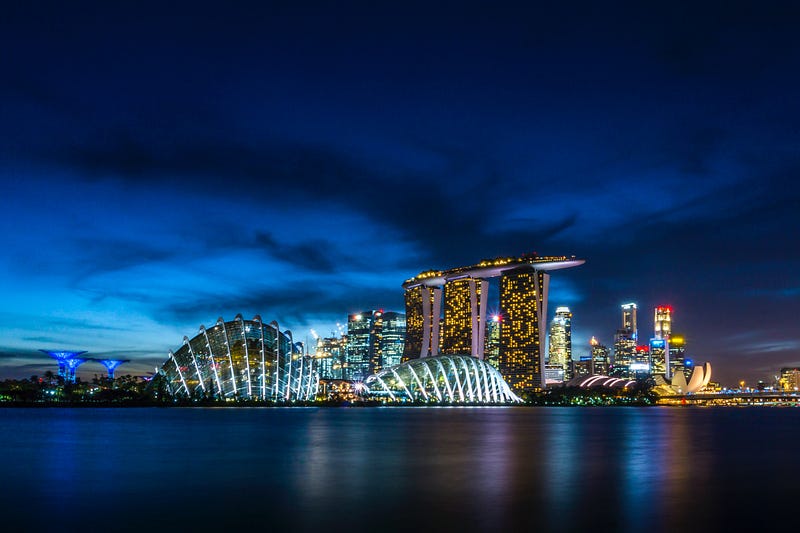
Photo by Mike Enerio on Unsplash


Trading licenses filtering through

This development mirrors similar approvals granted to other crypto firms in the region, solidifying Singapore’s status as a hub for crypto and Web3 innovations. The approval of GSR’s MPI license follows hot on the heels of Coinbase Singapore’s announcement of securing a full Major Payment Institution license from MAS.

Other companies such as Circle, Blockchain.com, and Crypto.com have also obtained MPI licenses this year. These developments underscore the competitive yet regulated landscape of the cryptocurrency market in Singapore.


In-principle approval

The in-principle approval from MAS empowers GSR to provide crypto and fiat-related services to Singaporean residents and entities. This includes the ability to conduct payment services without the limitations of single transaction thresholds (SGD 3 million) and monthly limits (SGD 6 million). GSR’s CEO, Jakob Palmstierna, expressed gratitude for MAS’s constructive oversight, which has played a pivotal role in shaping the evolving digital asset landscape in Singapore. Palmstierna stated:

“We are immensely grateful to MAS for their constructive oversight, which helps shape a growing digital asset ecosystem that we feel proud to be a substantial part of.”

Meanwhile, GSR’s COO Xin Song, emphasized the importance of this approval, stating that it enables them to “deepen our local client partnerships and continue in our critical role as a liquidity provider within the ecosystem.”

GSR’s presence in Singapore aligns with the country’s burgeoning crypto-friendly environment. Recent surveys indicate that 25% of Singaporeans view cryptocurrency as the future of finance, with 32% having some involvement in crypto ownership. Moreover, Singapore boasts over 700 Web3 companies, positioning itself as a pivotal market for the expansion of the crypto and Web3 economy.


Company ambitions

GSR, established in 2013 in New Jersey, offers a diverse range of services, including over-the-counter crypto trading, derivatives trading, market making, and venture capital investments. The firm is no stranger to regulatory compliance, holding Money Service Business licenses across several US states.

The company was founded by former Goldman Sachs Executives Rich Rosenblum and Cristian Gil. At the height of the last crypto bull run, the crypto market maker had plans “to add 100 hires every six months for the next few years.” No doubt that ambition has been scaled back since then, given the protracted bear market which has followed.

Last month, Gil became embroiled in a spat with Andrei Grachev of rival market making firm, Singapore-based DWF Labs.

GSR’s recent attainment of in-principle approval for a Major Payment Institution license from MAS reinforces Singapore’s position as a leader in the crypto space. The firm’s interest in pursuing a compliant route forward and its role as a liquidity provider bode well for both GSR and the broader crypto community in the Asia-Pacific region.
More to Read
View All
Web3 & Enterprise·

Jul 21, 2025

DV8 completes capital raise to fund Bitcoin strategy

DV8, a Thai company that recently pivoted to become Southeast Asia’s first Bitcoin treasury firm, has carried out an initial capital raise to fund its new strategy. Up until recently, DV8’s business activites were confined to media, innovation and technology. It emerged earlier this month that the company was being acquired by a group of Bitcoin-focused investors.  The consortium includes privately-held Bangkok-headquartered investment firm Kliff Capital, hedge fund manager UTXO Management and Taipei-headquartered crypto-backed venture capital firm Sora Ventures. It also includes Simon Gerovich, the CEO of Metaplanet, Asia’s largest Bitcoin treasury company.Photo by Thought Catalog on UnsplashThai market potentialAt the time, Sora Ventures founder Jason Fang told Decrypt that there is great potential in the Thai market, giving DV8 the potential “to be the next Metaplanet on SET [Stock Exchange of Thailand]." The company recently appointed Chatchaval Jiaravanon as its new chairman. Jiaravanon currently serves as the founder and chairman of Water Asia and Charoen Energy, while independently owning Fortune magazine.  Alongside Jiaravanon, new appointments have also been made to the company’s board as it looks to revamp its leadership team to deal with the challenge of pivoting and pursuing a Bitcoin treasury strategy. Share issuanceA filing with SET on July 16 has revealed that the company has proceeded to raise 241 million baht, equivalent to $7.44 million. In raising this capital, the company issued 301,491,057 new shares. The shares were issued under DV8-W2 warrants with a strike price of 0.80 baht per share. Over the course of the past 12 months, a plethora of corporations around the world have adopted Bitcoin either as a strategic asset to hold on their balance sheets or they’ve taken matters further and followed companies like Strategy (formerly MicroStrategy) and Japan’s Metaplanet, with the Bitcoin treasury becoming the central focus of the business. Bitcoin treasury debateThe practice has proven to be controversial with some believing that Michael Saylor’s Strategy has found a workable approach using leveraged debt financing within TradFi to accumulate Bitcoin. Others like short seller Jim Chanos has called the Strategy approach “financial gibberish.” Chanos recently debated Bitcoin investor Pierre Rochard on the subject on The Investor's Podcast. The podcast provoked a discussion on X, with Grok, the AI bot integrated within X, coming down in favor of Rochard’s pro-Strategy argument, prompting Chanos to tell Grok that it was drunk and to stop posting.Aside from those companies that have pivoted entirely to Bitcoin treasury firms, many others who have started to accumulate some Bitcoin have been struggling companies.  Vincent Liu, chief investment officer at Taipei-headquartered Kronos Research said recently that “when struggling firms make sudden moves, it often feels like a short-term stunt or hype play." On the other hand, he added: “When a company builds a BTC treasury with strategy, conviction, and clear communication, it signals strength.” Taking to social media on July 14, Belgian economist and Bitcoin investor Tuur Demeester set out his thoughts on the opportunity that Bitcoin treasury companies are exploiting: “Who else in this world can borrow at below 0.5% interest rates, when real inflation is above 10%? Bitcoin Treasury companies seem to have found, or are creating, a growing hole in a giant dam.”

news
Markets·

Jan 09, 2024

Philippines leading charge in Asia amid global bitcoin payment surge

Bitcoin's global merchant acceptance witnessed a substantial surge, growing by 174% throughout 2023, with the Philippines proving itself in leading the way within the Asian region.Photo by rc.xyz NFT gallery on UnsplashRegion facing regulatory restrictionsThat’s according to BTC Map, a provider of bitcoin merchant mapping services. The data, derived from BTC Map's open-source mapping data via OpenStreetMap, revealed that the number of venues accepting bitcoin payments surged from 2,207 at the beginning of the year to 6,126 by the year's end. This diverse array of businesses included restaurants, bars, shops and various services. The expansion of bitcoin vendors is a global phenomenon, with concentrations notably observed in Europe, the United States and Latin America. The Philippines stands out in Asia with hundreds of vendors, while regulatory restrictions in East Asia, especially China, have limited adoption. While it's great to see a high level of direct adoption among Filipino merchants, it's easy to understand why this level of adoption hasn’t been matched within Asia’s largest market. China has had a long-standing ban on cryptocurrency trading, mining or its use as a means of payment. Despite the ban, it appears that crypto trading is still alive and well in China, although beneath the surface. With mining too, while the sector shrank considerably once a ban was imposed, there is believed to be a significant ongoing level of bitcoin mining occurring still within China’s borders. However, when it comes to vendors, this is likely to be an activity that is far too visible to the authorities and with that, China’s 1.4 billion citizens are not getting the opportunity to buy goods and services with the world’s leading cryptocurrency. Compounding matters, the Chinese authorities have been working diligently on a myriad of projects to bring about day-to-day retail use of the country’s central bank digital currency, the digital yuan. Those efforts are not likely to be aligned with an accommodation of or tolerance of bitcoin payments. The increase in merchant listings showcased a slight decline from the peak in September, which reached 6,590 merchants. BTC Map's platform allows businesses and users to tag locations accepting bitcoin payments, with the rise in numbers potentially attributed to increased user contributions to the database. This surge in bitcoin adoption globally occurred against the backdrop of the cryptocurrency's price volatility throughout the year. Despite potential limitations in data collection due to its reliance on volunteer contributions, the overall trend indicates a growing acceptance of bitcoin. Ongoing challenges to adoptionA panel of bitcoin leaders at the Plan B conference in October discussed the challenges and opportunities of global bitcoin adoption. Notably, they highlighted the difficulty of onboarding new users and merchants, particularly in diverse cultural contexts. In El Salvador, where bitcoin is legal tender, obstacles persist in convincing merchants to accept bitcoin payments. Geographically, concentrations of bitcoin-accepting vendors were more prevalent in Central and South America, while Africa and Asia demonstrated fewer such establishments. The United States and Europe led in the global count of crypto-friendly merchants. The panel stressed the importance of education in overcoming these challenges, emphasizing the need for user-friendly applications to facilitate mainstream adoption, moving away from complex technologies. As bitcoin continues its global expansion, the industry recognizes the vital role education and user-friendly solutions play in fostering broader acceptance. 

news
Markets·

Aug 28, 2025

Crypto rally drives surge in South Koreans’ offshore disclosures

Fueled by a crypto rally and higher overseas stock balances, South Korea’s National Tax Service (NTS) reported a sharp jump in disclosures of offshore accounts. On Aug. 26, the agency said 6,858 taxpayers declared overseas financial accounts this year, with a combined balance of 94.5 trillion won ($67.6 billion), up 38.3% in filers and 45.6% (29.6 trillion won or $21.2 billion) in value from last year.Photo by Piotr Łaskawski on UnsplashCrypto gains drive offshore filingsWithin that, reports of overseas bank deposits and cryptocurrency accounts rose to 46.4 trillion won ($33.2 billion) this year, more than 12% above 2024. That figure excludes stock accounts, which alone totaled 48.1 trillion won ($34.4 billion). Tax officials attributed the increase largely to the surge in crypto prices and higher balances in overseas stock holdings. The trend is underscored by CoinMarketCap data: the crypto market cap now stands roughly at $3.87 trillion, up 86% from $2.08 trillion a year ago. By asset type, the largest share of filers reported overseas bank deposits (3,197 people), followed by cryptocurrency (2,320) and stocks (1,992). By value, stock accounts dominated with 48.1 trillion won ($34.4 billion), compared with 23.5 trillion won ($16.8 billion) in bank deposits and 11.1 trillion won ($7.94 billion) in cryptocurrencies. Korean law requires residents and domestic corporations to disclose foreign financial accounts if their combined balance exceeds 500 million won ($358,000) on any month-end date during the year. Reports must be filed with the local tax office by June of the following year. The NTS said it will step up enforcement against suspected non-filers, using cross-border information-exchange data to verify offshore holdings. Penalties will include administrative fines, penalty notices, criminal referrals, public naming of violators and the collection of back taxes. The agency added that it is preparing to share crypto transaction data under the OECD’s Crypto-Asset Reporting Framework (CARF) and urged anyone subject to the rules to promptly file amended or late reports for overseas crypto accounts. The recent bullish sentiment in crypto, which fueled the uptick in foreign financial disclosures, has also been driving public interest in digital assets and boosting expectations for altcoins. A survey by CoinNess and Kratos conducted between Aug. 18 and 22 with 2,000 respondents found that 38.5% expect a limited bull run in a handful of altcoins, either with strong real-world use cases or serving as the underlying assets of launched ETFs. Another 28.5% predicted gains would remain centered on Bitcoin and Ethereum, while 20.7% anticipated a broader altcoin season reminiscent of past cycles. The remaining 12.3% forecast the end of the rally and the start of a downturn. Won stablecoins: policy and risksPolicy momentum around stablecoins is also picking up in South Korea. The Financial Services Commission (FSC) plans to introduce a bill in October governing won-pegged stablecoins as part of the second phase of the Virtual Asset User Protection Act. The legislation is expected to set rules for issuance, collateral management and internal controls. Amid these changes, companies are showing growing interest in launching won-based stablecoins. Kaia, an EVM-compatible, layer-1 blockchain, recently signed a memorandum of understanding (MOU) with blockchain solutions provider Open Asset to collaborate on projects tied to Korean won–backed stablecoins. The partnership will focus on issuance, distribution, service launches and developing practical use cases. Circle President Heath Tarbert has recently joined calls for a won-backed stablecoin. In an interview with The Korea Economic Daily, he underscored South Korea’s world-class payments infrastructure and said a digital won could help the country play a leading role in blockchain finance. Blockchain transactions, he noted, operate differently from traditional payment rails, making some form of digital currency, whether a stablecoin or a central bank digital currency (CBDC), a necessity. Meanwhile, at a recent meeting with top executives from the country’s four major financial groups, Tarbert ruled out collaborations on won-denominated stablecoins. Instead, he promoted Circle’s dollar-pegged stablecoins and suggested exploring joint initiatives centered around them. Not everyone sees stablecoins as a net positive. NICE Investors Service, a local credit rating agency, warned in a recent report that if banks issue won-based stablecoins, their interest income could suffer. The agency said adoption would likely weigh on banks, benefit securities firms and leave credit card companies largely unaffected. It added that a large shift of funds into stablecoins could shrink banks’ deposit base and weaken their intermediary role. Still, banks that issue stablecoins directly could soften the blow by tapping new fee-based revenue streams. 

news
Loading