Top

Shanghai Court Recognizes Unique Traits of Bitcoin

Policy & Regulation·September 28, 2023, 9:29 AM

The Shanghai Second Intermediate People’s Court has added a layer of legitimacy to Bitcoin despite China’s prevailing anti-crypto stance.

In a recently published report, the court recognized digital currencies such as Bitcoin as being unique and non-replicable. It went further still in singling out Bitcoin as being distinct from the thousands of other cryptocurrencies that are currently in existence.

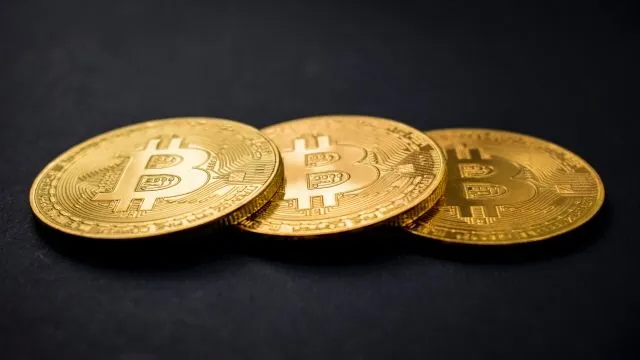
Photo by Zhou Xian on Unsplash


Sun chimes in

The significance of this development has caught the attention of Justin Sun, the Founder of the TRON blockchain network, who took to the X social media platform (formerly Twitter) to share insights from the report. Sun wrote:

”The Second Intermediate People’s Court of Shanghai believes that with the development of internet technology, digital currencies represented by Bitcoin possess uniqueness and non-replicability.”


Legal attributes

Delving deeper into the report’s content, it becomes evident that the court was engaging in a discussion about the legal attributes of Bitcoin and how judicial decisions should be approached in cases involving cryptocurrencies.

One striking aspect of the report is how it acknowledges the usage of cryptocurrencies in illegal financial activities, such as illicit fundraising. In this instance, the court has indirectly acknowledged the financial nature of cryptocurrencies, including Bitcoin, despite the fact that a ban has been in place on trading Bitcoin and other cryptocurrencies since 2021.

That said, the report also notes that due to the regulatory stance on cryptocurrencies, the legal attributes of digital currencies remain ambiguous, creating challenges in their judicial handling. Despite some courts attempting to disregard the “monetary” and “property” attributes of digital currencies, these efforts have proved unsuccessful.


Inherent characteristics

Regarding the monetary attribute, the courts still identify the sale price of digital currencies in their judgments. When it comes to property attributes, these courts struggle to ignore the inherent property value presented by digital currencies during legal proceedings.

While acknowledging Bitcoin’s decentralized nature and lack of centralized control, the article still underscores its “major functions of currency,” such as scalability, circulation, storage, and means of payment, making it a global currency.


Future implications

The legal opinion expressed by the Shanghai court provides a notable boost to the legitimacy of Bitcoin and other digital currencies. It asserts that these tokens undeniably possess value, even if the People’s Bank of China chooses not to formally recognize them.

Moreover, the court’s inclination toward classifying cryptocurrencies as personal property aligns with another report from the Chinese courts as well as rulings in other jurisdictions, such as Singapore. Similarly the Shanghai court acknowledges that Bitcoin can be acquired through various means, including mining, inheritance, and buying and selling.

The court’s recognition of the enduring value of cryptocurrencies echoes the sentiment that value is a collective human judgment. In this respect, the Shanghai court’s perspective aligns with the reality that many Chinese citizens continue to use digital currencies as a medium of exchange despite the existing ban.

The Shanghai court’s unintentional validation of Bitcoin’s unique attributes and value may have broader implications for the legal status and recognition of cryptocurrencies in China and beyond. This latest development could contribute to a more nuanced approach to cryptocurrency regulation and legal interpretation in the future.

More to Read
View All
Web3 & Enterprise·

May 15, 2023

Korean Drama Studio Unveils Web3-Based Project Featuring BTS Universe

Korean Drama Studio Unveils Web3-Based Project Featuring BTS UniverseChorokbaem (CRB) Media, a renowned South Korean drama production studio, has revealed an innovative content distribution project based on Web3 technology, featuring the popular BTS universe, as reported by the Maeil Business Newspaper.Photo by Shubham’s Web3 on UnsplashBTS Universe-based dramaCRB Media announced on Monday its participation in Paris Expo Porte de Versailles, where it showcased a minute-long teaser of “YOUTH,” a drama that centers around the universe of K-pop sensation BTS. This new initiative by the Korean production studio aims to transcend the limitations of existing online streaming platforms.The Most Beautiful Moment in LifeThe production of “YOUTH” has been in the works since 2020 and revolves around the story that goes back to BTS’s 2015 album, “The Most Beautiful Moment in Life.” The BTS Universe has already seen successful adaptations across various entertainment platforms, including novels, webtoons, and short films.Web3 fan engagementAn official from CRB Media said that Web3 technology allows network participants to be both content consumers and providers, enabling fans who were previously passive consumers to monetize their engagement and foster an even more vibrant independent fandom culture.24 episodes starting in 2HThe drama series “YOUTH” comprises a total of 24 episodes, with one or two episodes set to be released weekly starting in the second half of this year.The series is directed by Kim Jae-hong, known for his work on “Beloved Eun-dong” and “Steal Heart,” and written by Kim Soo-jin, the talented screenwriter behind notable productions such as “Dazzling,” “Weightlifting Fairy Kim Bok-joo,” and “Songgot: The Piercer,” among others.CRB Media’s legal issuesMeanwhile, it’s been reported that the Seoul Southern District Prosecutors’ Office’s Financial Investigation Division 2 executed a search and seizure operation on CRB Media last week. The raid was conducted after the prosecution obtained circumstantial evidence indicating the studio’s potential role in an embezzlement scandal. The case involves Kang Jong-hyun, who stands accused of misappropriating a colossal sum of 62.8 billion KRW ($46.9 million) from affiliates of Bithumb, a major Korean cryptocurrency exchange. Kang is currently under suspicion as the clandestine owner of the exchange.

news
Policy & Regulation·

Jan 19, 2024

Two Asian nations turn down spot bitcoin ETFs

In a contrasting move to the recent approval of several spot bitcoin exchange-traded funds (ETFs) by the U.S. Securities and Exchange Commission (SEC), regulators in both Singapore and Thailand have turned down permission to list spot bitcoin ETFs.Photo by Dmytro Demidko on UnsplashBitcoin not a qualified assetAccording to local news media on Wednesday, Singapore's Monetary Authority (MAS) has announced its decision not to permit the listing of spot ETFs in the country. The MAS argues that cryptocurrencies, including bitcoin, do not meet the criteria for qualified assets within the context of ETFs. This regulatory divergence means that retail investors in Singapore won't see the introduction of spot bitcoin ETFs domestically. However, they still have an avenue to trade such ETFs as they can turn to local brokerages for access to overseas markets. Despite this allowance, the MAS emphasizes the need for these retail investors to exercise caution due to the inherent high volatility and speculative nature of cryptocurrency trading. A spokesperson from the regulatory authority clarified that while collected investment schemes (CIS), falling under the Securities and Futures Act regulation, include ETFs, they do not encompass bitcoin or any other cryptocurrency. Future potentialWhile MAS may be turning down spot bitcoin ETFs at this point, there’s potential for a change of heart in the future. The FIMA Bill is currently working its way through the city-state’s legislative process. If enacted, it would give broader regulatory oversight of crypto to MAS. Lasanka Perera, CEO of Independent Reserve Singapore, recently suggested that the bill could make an ETF more likely. Thailand says noMeanwhile, Thailand’s Securities and Exchange Commission (SEC) has stated that it currently does not plan to allow asset management firms to launch spot bitcoin ETFs in the country. Thai securities brokerage firms have been encouraging investors to consider investing directly in U.S. spot bitcoin ETFs. The Thai SEC clarified that while it closely monitors these developments, there is no immediate policy to allow spot bitcoin ETFs in Thailand. The regulator emphasizes that Thai investors can still engage in digital asset investments through domestic exchanges licensed by the SEC under the Digital Assets Decree. India, too, doesn’t appear to have been looking favorably on the potential for such products. The governor of the Reserve Bank of India (RBI) said last week that “the way we look at crypto remains unchanged, irrespective of who does what.” Asian optimismIn the wake of ETF approval in the U.S., many industry commentators had suggested that Asia would respond positively. Australian venture capitalist Mark Carnegie has suggested that the developing bull market would be “an Asian story.” Yat Siu, co-founder of Hong Kong’s Animoca Brands, expressed the view that U.S. ETF approval would have a substantially positive impact within the Asian region. Hong Kong appears to be the most positive in the region in its outlook with regard to embracing spot bitcoin ETFs. Immediately following approval in the U.S., a Hong Kong legislator spoke out to encourage a proactive response relative to launch of similar products within the Chinese autonomous territory. Meanwhile, recent news reports indicate that spot bitcoin ETFs experienced substantial trading volume, accumulating $10 billion just three days after their approval in the U.S. 

news
Web3 & Enterprise·

Mar 26, 2024

DigiFT launches RWA depository receipt tokens

DigiFT, a Singapore-based regulated exchange for real-world assets (RWAs), has brought its latest product offering to the digital asset market by introducing its U.S. Treasury bill depository receipt (DR) tokens. These tokens offer investors fractional ownership in U.S. Treasury bills, providing an avenue to engage with the traditionally secure U.S. debt market without requiring significant upfront capital, as detailed in a press release issued by the company on Monday.Photo by Karolina Grabowska on PexelsDemocratizing market accessThe conventional route to investing in U.S. Treasury bills typically demands substantial financial resources. DigiFT's DR tokens aim to democratize access to this market by enabling investors to purchase fractional shares of these bills. Henry Zhang, the founder and CEO of DigiFT, highlighted the innovative nature of the DR structure, noting its capacity to address challenges within the current market and empower investors with direct ownership of assets and returns. Zhang emphasized the company's intent to expand the scope of traditional financial assets in the Web3 space, leveraging the DR model to enhance investor protection and transparency. The DigiFT U.S. Treasury Tokens (DRUST) represent the inaugural offering in a series under the DR structure. These DR tokens, a type of security token, offer fractional ownership of an underlying asset. In the case of DigiFT, these tokens are specifically backed by U.S. Treasury bills, providing investors with exposure to the secure US debt market. Each DRUST token is directly backed by AA+ rated, highly liquid and short-term U.S. Treasury Bills, offering stability and tailor-made solutions for stablecoin issuers and Web3 product developers seeking regulatory-compliant treasury and cash management options. Pursuing regulatory complianceIn its latest announcement DigiFT has outlined its intention to pursue regulatory compliance, a facet intended to instill confidence and assurance among investors. Having been established in 2021 and previously operating within the Monetary Authority of Singapore's (MAS) FinTech Regulatory Sandbox, DigiFT obtained a Capital Markets Services (CMS) license and was acknowledged as a Recognised Market Operator (RMO) in December 2023. By adhering to regulations, DigiFT aims to simplify the investment process and broaden accessibility for investors. DigiFT highlights that institutional and accredited investors can access DRUST tokens from authorized self-custodial wallets using fiat currency or stablecoins, providing flexibility and convenience. Growing popularityThe growing popularity of tokenized funds, particularly those tied to U.S. treasuries, is evident in recent reports. Moody’s revealed a surge in the value of tokenized funds, driven by the increasing tokenization of U.S. treasuries. Both public and private blockchains are witnessing the inclusion of various assets, reflecting a broader trend toward asset tokenization. Tokenized funds offer numerous benefits, including enhanced liquidity, accessibility, reduced costs, fractionalization, decreased reliance on intermediaries, shortened settlement times, automated processes through smart contracts and improved transparency. Last June, Hong Kong-based cryptocurrency firm Finblox provided details of a tokenized version of U.S. Treasury Bills it has been working on. In November, the Bureau of the Treasury in the Philippines announced the issuance of one-year tokenized bonds to the value of $179 million. Binance Research has identified real-world asset tokenization as a key theme in crypto for 2024, noting its potential to improve transparency and efficiency by bringing off-chain assets onto blockchain networks.

news
Loading