Top

Two Asian nations turn down spot bitcoin ETFs

Policy & Regulation·January 19, 2024, 2:50 AM

In a contrasting move to the recent approval of several spot bitcoin exchange-traded funds (ETFs) by the U.S. Securities and Exchange Commission (SEC), regulators in both Singapore and Thailand have turned down permission to list spot bitcoin ETFs.
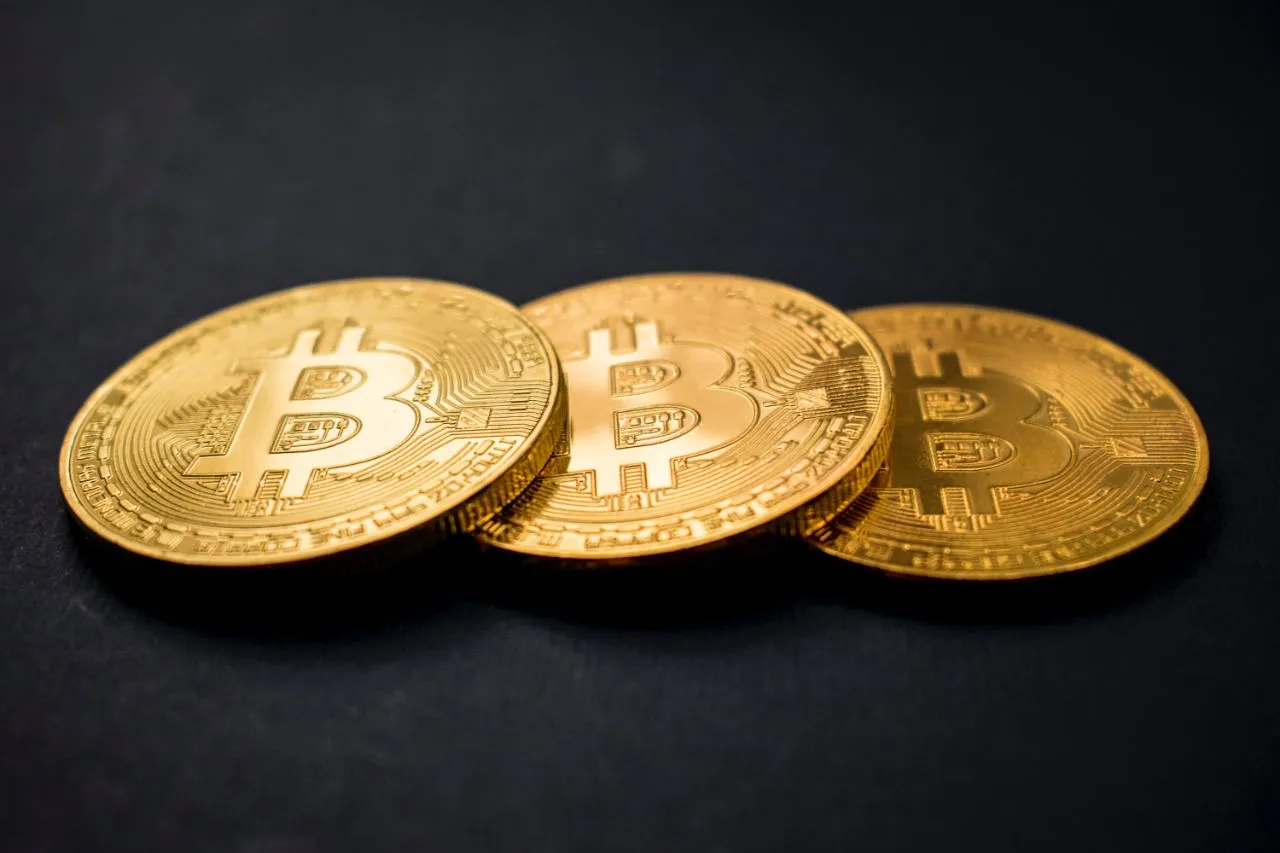
https://asset.coinness.com/en/news/5c20fe2ebeb33d6997e51486fa52cb42.webp
Photo by Dmytro Demidko on Unsplash

Bitcoin not a qualified asset

According to local news media on Wednesday, Singapore's Monetary Authority (MAS) has announced its decision not to permit the listing of spot ETFs in the country. The MAS argues that cryptocurrencies, including bitcoin, do not meet the criteria for qualified assets within the context of ETFs.


This regulatory divergence means that retail investors in Singapore won't see the introduction of spot bitcoin ETFs domestically. However, they still have an avenue to trade such ETFs as they can turn to local brokerages for access to overseas markets. Despite this allowance, the MAS emphasizes the need for these retail investors to exercise caution due to the inherent high volatility and speculative nature of cryptocurrency trading.


A spokesperson from the regulatory authority clarified that while collected investment schemes (CIS), falling under the Securities and Futures Act regulation, include ETFs, they do not encompass bitcoin or any other cryptocurrency.


Future potential

While MAS may be turning down spot bitcoin ETFs at this point, there’s potential for a change of heart in the future. The FIMA Bill is currently working its way through the city-state’s legislative process. If enacted, it would give broader regulatory oversight of crypto to MAS. Lasanka Perera, CEO of Independent Reserve Singapore, recently suggested that the bill could make an ETF more likely.


Thailand says no

Meanwhile, Thailand’s Securities and Exchange Commission (SEC) has stated that it currently does not plan to allow asset management firms to launch spot bitcoin ETFs in the country.


Thai securities brokerage firms have been encouraging investors to consider investing directly in U.S. spot bitcoin ETFs. The Thai SEC clarified that while it closely monitors these developments, there is no immediate policy to allow spot bitcoin ETFs in Thailand. The regulator emphasizes that Thai investors can still engage in digital asset investments through domestic exchanges licensed by the SEC under the Digital Assets Decree.


India, too, doesn’t appear to have been looking favorably on the potential for such products. The governor of the Reserve Bank of India (RBI) said last week that “the way we look at crypto remains unchanged, irrespective of who does what.”


Asian optimism

In the wake of ETF approval in the U.S., many industry commentators had suggested that Asia would respond positively. Australian venture capitalist Mark Carnegie has suggested that the developing bull market would be “an Asian story.”


Yat Siu, co-founder of Hong Kong’s Animoca Brands, expressed the view that U.S. ETF approval would have a substantially positive impact within the Asian region. Hong Kong appears to be the most positive in the region in its outlook with regard to embracing spot bitcoin ETFs. Immediately following approval in the U.S., a Hong Kong legislator spoke out to encourage a proactive response relative to launch of similar products within the Chinese autonomous territory.


Meanwhile, recent news reports indicate that spot bitcoin ETFs experienced substantial trading volume, accumulating $10 billion just three days after their approval in the U.S. 

More to Read
View All
Policy & Regulation·

Aug 09, 2023

North Gyeongsang Province Recruits Youth for Metaverse Content Competition

North Gyeongsang Province Recruits Youth for Metaverse Content CompetitionNorth Gyeongsang Province has announced that it is recruiting participants for the Youth Metaverse Content Development Competition, which will provide young people with an opportunity to showcase their ideas and technical skills in the metaverse.Photo by GuerrillaBuzz on UnsplashThe competition is part of the Youth Metaverse Creation Festival, which aims to push young individuals to participate directly in policymaking, prepare for their crucial role in the oncoming metaverse era, and strengthen their digital capabilities.Participation requirementsParticipants are required to complete an assignment in the form of their choice related to fields that the youth are interested in. Young people from high schoolers up to those aged 34 are eligible to participate. Both Korean nationals and foreigners are invited to sign up either individually or as a team.Eight teams will be selected in the first round of document evaluation this month. Afterward, a second round of presentations will take place in October to choose the three final participating teams.Winning rewardsThe first round of selected teams will receive 3 million KRW (approximately $2,300) for their assignment and a head-mounted display, among other benefits. The finalists will not only be awarded 6 million KRW but also be given the chance to participate in various startup support programs throughout North Gyeongsang Province through expert consultations.

news
Web3 & Enterprise·

Jan 13, 2024

Telcoin makes users whole in exploit recovery

Singapore-regulated Telcoin, a developer of financial applications for mobile users, has successfully restored user balances following an exploit that saw approximately $1.2 million worth of funds transferred from affected accounts.Photo by Martin Sanchez on UnsplashUnauthorized withdrawal of assetsThe incident, which occurred in late December, was attributed to an error in the interaction between Telcoin's digital wallet and a proxy contract on Polygon. In a blog post which was published on Wednesday, the company shared a full post-mortem analysis report which it commissioned Hong Kong-based blockchain security firm BlockSec to carry out, relative to the exploit. The fault in the proxy contract's implementation caused a technical conflict that allowed for the unauthorized withdrawal of assets. Fortunately, no admin keys were compromised, ensuring that the broader Telcoin ecosystem remained unaffected. In response to the security breach, Telcoin took action by immediately freezing the use of its application as a precautionary measure. The team initiated an investigation and committed to releasing updates promptly to address the issue and restore normalcy. The identified address associated with the exploit was 0x35d2775e5f95596509951b140d68fc5b9185ff98. TEL token freefallDespite the initial market turbulence, with the price of the Telcoin (TEL) token plummeting, the cryptocurrency has demonstrated resilience. On Dec. 25, TEL fell from a peak price of $0.00235146 to $0.00122535, representing a 48% decrease. At the time of writing, the price has slightly rebounded, trading at $0.001335. Nevertheless, it's still down 40% over the course of the past month's trading. In a social media direct message to CoinDesk recently, Telcoin's founder and CEO, Paul Neuner, expressed pride in how his team responded to the issue, stating: “Making the decision to preemptively restore affected user wallets from our company treasury was a no-brainer, and I’m proud of the team for making that happen in record time.” Regulatory standingTelcoin's regulatory standing played a crucial role in instilling confidence during this challenging time. Although headquartered in Tokyo, the company is regulated in Singapore as a Major Payment Institution (MPI) by the Monetary Authority of Singapore (MAS). The firm is also registered and regulated in other global markets, including Canada and Australia. Telcoin maintains offices in Singapore, Tokyo, Dubai and Los Angeles. The company had been active in trying to shape regulation in the United States in 2023, with company executives having made repeated visits to Washington D.C. to meet with Financial Services Committee members and staffers on Capitol Hill. In April of last year, the company extended its service offering to the European market, starting out initially in Lithuania.It appears that the restoration of Telcoin's application services led to a significant boost in user confidence. The company reported a 400% increase in deposits compared to the previous month. Users responded favorably to Telcoin's swift resolution of the security breach, with a ratio of $3.60 being deposited for every $1 withdrawn in the first day since the service restoration. Telcoin's measures, collaboration with security experts and the surge in user deposits appear to have resulted in a resilient recovery. The saga highlights the importance of prompt and transparent responses in maintaining trust in the face of crypto security issues.  

news
Web3 & Enterprise·

Jan 17, 2024

Klaytn Foundation and Finschia Foundation to jointly launch largest blockchain network in Asia

The Klaytn Foundation and Finschia Foundation have jointly submitted a governance proposal to launch a new mainnet created by merging their respective blockchain ecosystems. The proposals have been submitted for open discussion, with voting scheduled for Jan. 26 to Feb. 2, according to an official announcement on Wednesday (KST).Photo by Shubham's Web3 on UnsplashThe main objective of this initiative is to create Asia’s largest Web3 ecosystem by combining key features of both blockchains. To do so, the two foundations plan to share their technologies, services and business networks and fortify connections between their partners like their mother companies Kakao and LINE, who have contributed to their development and expansion. “We are excited to be taking the first step toward unlocking the enormous synergy of merging the public blockchains started by Kakao and LINE, which are both leading IT companies in Asia,” the two foundations said. “We will give our best to make this merge an opportunity to innovate and lead the Asian blockchain industry in both technology and adoption.” An unprecedented mainnet ecosystemThe merger will bring together Klaytn and Finschia’s networks in different Asian countries, like Klaytn’s leverage in South Korea, Singapore and Vietnam, and Finschia’s service network in Japan, Taiwan, Thailand and Abu Dhabi. Once the combined ecosystem is launched, it will offer over 420 decentralized apps (dApps) and services, 45 governance partners and some 450 Web3 resources, becoming a mammoth Web3 network capable of swaying the trajectory of the Asian market. In addition, the blockchain will be connected with both Kakao and LINE messengers – two well-known messenger apps in Asia – opening up access to a vast continental user base of over 250 million people. The integration is also expected to catalyze the creation of new Web3 infrastructure in Asia, boosting scalability and liquidity. Future business plansThe joint foundation is specifically set to undertake projects in areas like RWA tokenization, GameFi, DeFi verticals, messenger-based Web3 services and digital commerce through partnerships with Japanese, South Korean and Southeast Asian firms. By leveraging its access to Kakaotalk and LINE users, the new public blockchain has the potential to be a springboard for IT and entertainment enterprises in Asia. Improved tokenomicsWhat may especially interest shareholders and users alike is a new native token that will be issued on the merged network, replacing the foundations’ respective tokens KLAY and FNSA. Holders of KLAY and FNSA will be able to swap their tokens for the new one. The proposed tokenomics system for the new token emphasizes sustainable value creation. This includes a lower base inflation rate and a 3-layer burning model created to encourage deflation as activity on the network increases. 24% of newly issued tokens will also be burned immediately as a trustworthy Zero Reserve Tokenomics measure. This will all be supported via an ecosystem fund and infrastructure fund that are constantly replenished via block rewards, rather than relying on reserves.Enhanced governance and interoperabilityKlaytn and Finschia also plan to bring together their experiences in practicing good governance to build a  permissionless node validation system to put the spotlight on users and the community, promoting transparency, trust and openness. To support the seamless migration and interoperability of existing dApps and services on Klaytn and Finschia, the merged chain will support the smart contract platforms EVM and CosmWasm. Ethereum and Cosmos builders will thus be able to gain access to the network. The foundations are set to host an upcoming event called Klaytn Community Town Hall on Friday to introduce the proposal and facilitate open dialogue and feedback.

news
Loading