Top

DigiFT launches RWA depository receipt tokens

Web3 & Enterprise·March 26, 2024, 1:39 AM

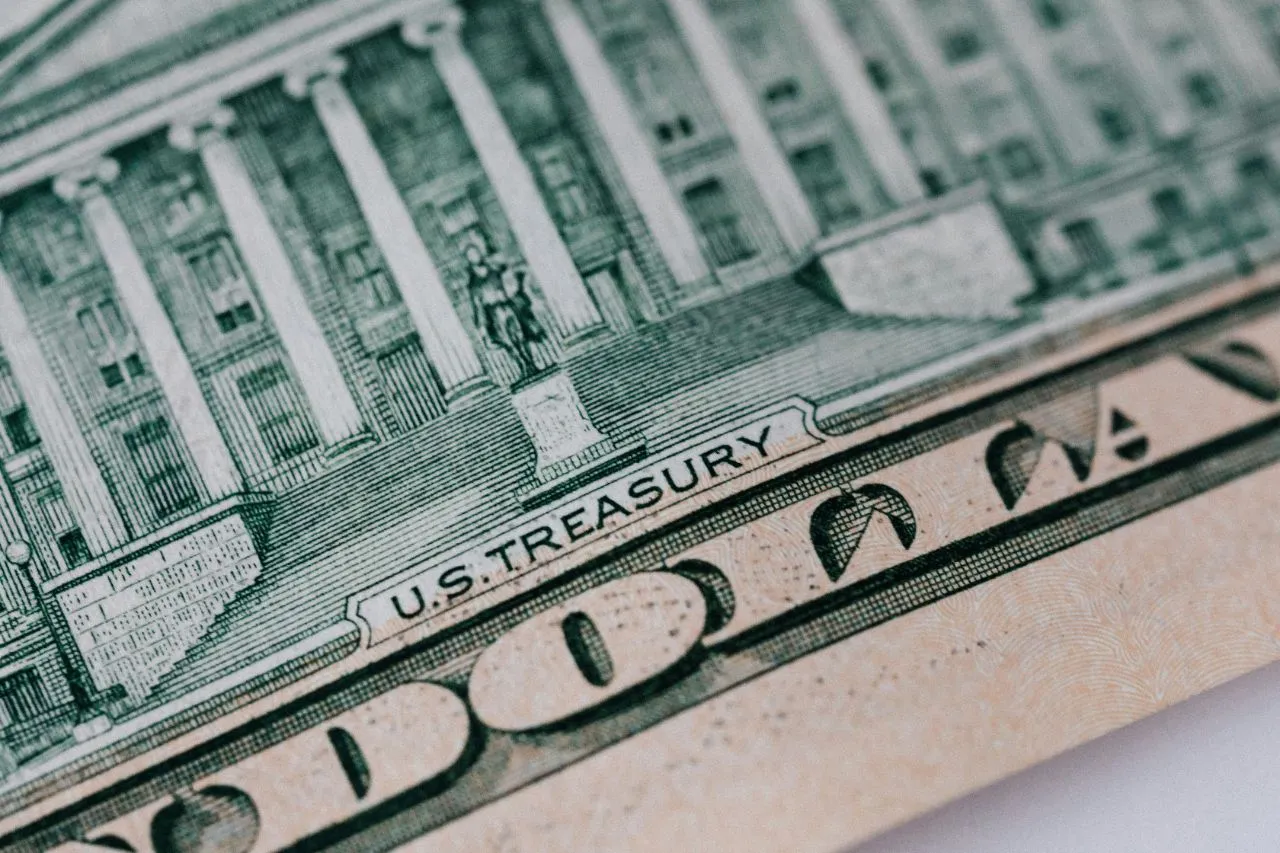
DigiFT, a Singapore-based regulated exchange for real-world assets (RWAs), has brought its latest product offering to the digital asset market by introducing its U.S. Treasury bill depository receipt (DR) tokens.


These tokens offer investors fractional ownership in U.S. Treasury bills, providing an avenue to engage with the traditionally secure U.S. debt market without requiring significant upfront capital, as detailed in a press release issued by the company on Monday.
https://asset.coinness.com/en/news/1ecf60f0f90dd844d6578b39e3b9b41b.webp
Photo by Karolina Grabowska on Pexels

Democratizing market access

The conventional route to investing in U.S. Treasury bills typically demands substantial financial resources. DigiFT's DR tokens aim to democratize access to this market by enabling investors to purchase fractional shares of these bills. Henry Zhang, the founder and CEO of DigiFT, highlighted the innovative nature of the DR structure, noting its capacity to address challenges within the current market and empower investors with direct ownership of assets and returns.


Zhang emphasized the company's intent to expand the scope of traditional financial assets in the Web3 space, leveraging the DR model to enhance investor protection and transparency.


The DigiFT U.S. Treasury Tokens (DRUST) represent the inaugural offering in a series under the DR structure. These DR tokens, a type of security token, offer fractional ownership of an underlying asset. In the case of DigiFT, these tokens are specifically backed by U.S. Treasury bills, providing investors with exposure to the secure US debt market.


Each DRUST token is directly backed by AA+ rated, highly liquid and short-term U.S. Treasury Bills, offering stability and tailor-made solutions for stablecoin issuers and Web3 product developers seeking regulatory-compliant treasury and cash management options.


Pursuing regulatory compliance

In its latest announcement DigiFT has outlined its intention to pursue regulatory compliance, a facet intended to instill confidence and assurance among investors. Having been established in 2021 and previously operating within the Monetary Authority of Singapore's (MAS) FinTech Regulatory Sandbox, DigiFT obtained a Capital Markets Services (CMS) license and was acknowledged as a Recognised Market Operator (RMO) in December 2023. By adhering to regulations, DigiFT aims to simplify the investment process and broaden accessibility for investors.


DigiFT highlights that institutional and accredited investors can access DRUST tokens from authorized self-custodial wallets using fiat currency or stablecoins, providing flexibility and convenience.


Growing popularity

The growing popularity of tokenized funds, particularly those tied to U.S. treasuries, is evident in recent reports. Moody’s revealed a surge in the value of tokenized funds, driven by the increasing tokenization of U.S. treasuries. Both public and private blockchains are witnessing the inclusion of various assets, reflecting a broader trend toward asset tokenization.


Tokenized funds offer numerous benefits, including enhanced liquidity, accessibility, reduced costs, fractionalization, decreased reliance on intermediaries, shortened settlement times, automated processes through smart contracts and improved transparency.


Last June, Hong Kong-based cryptocurrency firm Finblox provided details of a tokenized version of U.S. Treasury Bills it has been working on. In November, the Bureau of the Treasury in the Philippines announced the issuance of one-year tokenized bonds to the value of $179 million.


Binance Research has identified real-world asset tokenization as a key theme in crypto for 2024, noting its potential to improve transparency and efficiency by bringing off-chain assets onto blockchain networks.

More to Read
View All
Policy & Regulation·

Nov 01, 2023

Terraform Labs seeks summary judgment to dismiss SEC allegations

Terraform Labs seeks summary judgment to dismiss SEC allegationsLawyers representing bankrupt Singaporean crypto firm Terraform Labs and its co-founder, Do Kwon, have requested a summary judgment from a New York judge in their legal battle against the United States’ Securities and Exchange Commission (SEC).If granted, such a dismissal could potentially spare them from a full-blown trial. In their motion, the legal team argued vehemently that they are innocent of the SEC’s allegations, maintaining that the regulator has failed to provide any compelling evidence of wrongdoing.Photo by Bermix Studio on UnsplashDefining a securityThe motion, which was filed last Friday in the U.S. District Court for the Southern District of New York, asserts that the implicated cryptocurrencies of Terra Classic (LUNC), TerraClassicUSD (USTC) and Mirror Protocol (MIR), together with its Mirrored assets (mAssets), are not securities as claimed by the SEC in its complaint.The heart of the matter revolves around the SEC’s assertion that Terraform Labs offered or sold securities, a claim vehemently denied by the defendants. The SEC initially brought the case in February, referencing algorithmic stablecoin TerraUSD, which famously collapsed in May 2022.Lawyers claim case is unsubstantiatedBoth Kwon and Terraform Labs’ attorneys argued that despite over two years of investigation, more than 20 depositions, and the exchange of a staggering two million pages of documents, the SEC’s case remains unsubstantiated.The SEC’s original complaint in February accused Kwon and Terraform of raising substantial sums from investors by offering and selling an inter-connected suite of crypto asset securities, many of which were unregistered transactions. SEC Chair Gary Gensler added that Terraform and Kwon had failed to provide investors with full disclosures, notably concerning LUNA and TerraUSD.A key element of the dispute centers on the SEC’s allegation that Kwon and Terraform moved millions of dollars into Swiss bank accounts for personal gain. According to the agency’s complaint, the company and Kwon transferred 10,000 bitcoins to a financial institution based in Switzerland. The legal team representing Kwon and Terraform vehemently denies this allegation, characterizing it as baseless and unfounded.Flawed stablecoin designAlgorithmic stablecoins, such as TerraUSD, operate using market incentives via algorithms to maintain a stable price. Terra was tied to Luna, a governance token, in an attempt to stabilize prices. Unfortunately, the collapse of TerraUSD in 2022 destroyed in excess of $40 billion in value held by investors. It also had a domino effect, leading to a series of other crypto platform collapses later in 2022.Judge Jed Rakoff, presiding over the case in the Southern District of New York, had previously denied an attempt by Terraform Labs and Kwon to have the case dismissed. This new motion for summary judgment represents their latest effort to put an end to the legal proceedings.In a separate but related action, lawyers representing Terraform Labs Co-Founder Daniel Shin asserted that Shin played no role in the collapse of TerraUSD. In a Seoul district court, they emphasized that Shin had nothing to do with the collapse despite being indicted in South Korea in April on various charges, including fraud.

news
Web3 & Enterprise·

Jun 12, 2025

Bullish files for IPO in the U.S.

Digital asset exchange business Bullish has filed confidentially for an initial public offering (IPO) in the United States. The Financial Times reported on June 11 that the IPO had been filed with the Securities and Exchange Commission (SEC) in recent weeks. Choosing to file the IPO confidentially will have enabled the firm to delay public disclosure, allowing it to progress with its preparation for the IPO and reveal financials closer to the point at which it goes public. Back in February, Bloomberg reported that the company was looking at the possibility of executing an IPO, with investment banking and financial services firm Jefferies understood to have been advising the firm. This latest report confirms that Jefferies will work as the lead underwriter in relation to the IPO deal.Photo by Markus Winkler on PexelsHong Kong tiesBullish is a subsidiary company of Block.one, a blockchain software company founded by Brendan Blumer and Dan Larimer, best known for having established the EOS.IO blockchain network. Both companies have strong ties with Hong Kong.  The Bullish exchange is licensed by the Hong Kong Securities and Futures Commission (SFC). It has also obtained licensing from the Gibraltar Financial Services Commission (GFSC) and the German Federal Financial Supervisory Authority (BaFin).  The exchange business is jointly operated by corporate entities registered in Hong Kong and Gibraltar. The company maintains offices in Hong Kong, Gibraltar, Singapore, New York, London, Frankfurt and the Cayman Islands.  The business is also being backed by Hong Kong billionaire Richard Li and American entrepreneur Peter Thiel, co-founder of PayPal, Palantir Technologies and Founders Fund. Blumer, who is based in Hong Kong, founded Bullish in 2021 and currently serves as Bullish chairman. The company is understood to have in the region of 275 employees with Tom Farley leading it as CEO. Farley previously fulfilled the role of president at Intercontinental Exchange’s NYSE group. Positive climate for crypto IPOsAmid a more positive crypto climate in the United States, crypto-related IPOs appear to be back in favor. Leading stablecoin issuer Circle executed an IPO earlier this month with the offering being 25x oversubscribed. Following the success of the Circle IPO, BitMEX co-founder Arthur Hayes asserted on X that it would lead to a plethora of crypto-related IPOs over the next few years. He likened that anticipated wave of IPOs to the flurry of initial coin offerings (ICOs) that occurred back in 2017. Earlier this month American crypto exchange platform Gemini confidentially filed for an IPO in the U.S. A Bloomberg report published in March suggested that rival exchange business Kraken is planning an IPO for Q1 2026.  There has been some speculation that Ripple, the American technology company that developed and supports XRP and the XRP Ledger (XRPL), may be a prime candidate for an IPO. Taking to the X social media platform, “Pentoshi,” a pseudonymous crypto market analyst with over 860,000 followers on X, said that a Ripple IPO “feels only logical.” The analyst added that if the company executed an IPO, it would likely weigh in at “some insanely stupid valuation.” 

news
Policy & Regulation·

Apr 19, 2023

Korea’s DAXA Prohibits Relisting of Delisted Cryptos for a Year

Korea’s DAXA Prohibits Relisting of Delisted Cryptos for a YearThe Digital Asset Exchange Alliance (DAXA) in Korea will prohibit the relisting of cryptocurrencies delisted from its member exchanges for a year, according to Korean media outlet Edaily.©Pexels/Jan van der WolfDAXA’s arbitrary regulationSome criticize this regulation, arbitrarily created by DAXA, which consists of five major Korean cryptocurrency exchanges (Upbit, Bithumb, Coinone, Korbit, and Gopax), as this rule poses a significant impact on crypto issuers and investors.In fact, a blockchain industry insider said that when cryptos are designated by DAXA as a risky asset, their operators receive a notification from the group that relisting is possible after a year once delisted. So far, assets that have been delisted or designated as such are WEMIX, PCI, BASIC, SRM, and OMG.Coinone’s relisting of WEMIXDAXA added this stipulation, as it faced criticism for the absence of relisting regulations in its guidelines when Coinone, one of its members, exclusively relisted the WEMIX token. This raised doubts about the self-regulation of the industry because DAXA had decided the delisting of WEMIX on the grounds that the information on its circulation supply was unreliable.Crypto enterprises are complaining about DAXA’s devising of strict penalties when delisting processes are not transparent. DAXA has stated that a consensus has been reached for the first draft and it will be continuously revised.Stronger DAXA presenceThe Korean crypto industry forecasts that this regulation will empower DAXA’s presence in the crypto scene, considering that its members are responsible for 98% of the domestic trading volume.Experts note that DAXA needs to establish fairness and transparency in order for it to gain trust as a self-regulatory body. Park Yong-beom, Chairman of the Korea Society of Blockchain, said rules on listing and delisting have to be fair and transparent, and if market participants find them unconvincing, it would undermine the credibility and authority of the self-regulatory body.In an interview with Economic Review, Former KB Kookmin Bank CEO Lee Kun-ho suggested that DAXA should prioritize market vitalization and ecosystem strengthening. He believes that instead of focusing on market management and supervision, DAXA should concentrate on enhancing investor protection.

news
Loading