Top

Daehong and Animoca Brands Partner to Leverage NFTs in Expanding Web3 Projects

Web3 & Enterprise·September 27, 2023, 3:33 AM

Daehong Communications, the marketing solutions arm of South Korean industrial conglomerate Lotte Group, has recently inked a partnership with Animoca Brands, a blockchain gaming company headquartered in Hong Kong.

Animoca Brands gained attention earlier this year by raising $5.5 million through the sale of its Mocaverse NFTs. Mocaverse is the membership NFT collection for the Animoca Brands ecosystem. The Hong Kong-based publisher is also the owner of the renowned metaverse gaming platform, The Sandbox.

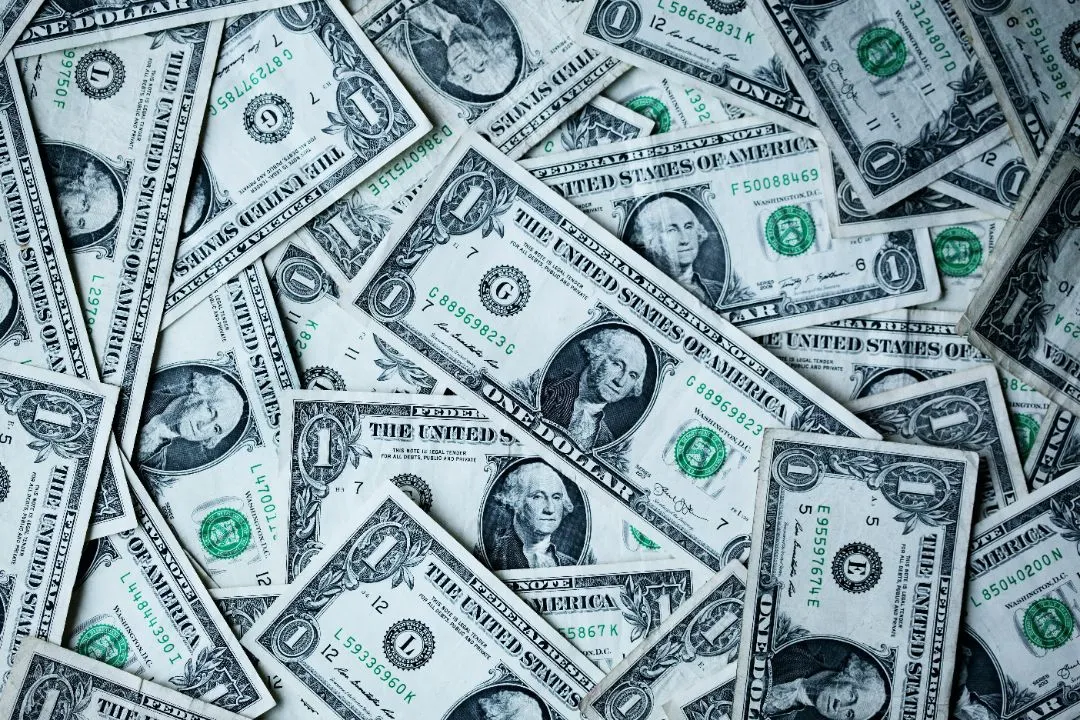
Photo by Shubham’s Web3 on Unsplash


Connecting two worlds of NFTs

This collaboration between Daehong Communications and Animoca Brands is intended to expand their respective Web3 projects, focusing on domains like games, communities, and tickets. As a move under this collaboration, Daehong’s Bellygom and Bellyland NFTs will see integration with Mocaverse. Daehong oversees the Bellygom NFT project, while the pink bear character of the project is a promotional tool for Lotte Homeshopping, a media commerce arm of Lotte Group.

Moreover, holders of Mocaverse NFTs are set to experience a variety of games, missions, and rewarding systems introduced by Bellyland — Daehong’s second collection of the Bellygom NFT project.


Bellygom’s expansion efforts

In recent times, Daehong has been actively driving the growth of the Bellygom NFT project by revealing the project’s details on GitBook in both Korean and English. Furthermore, Daehong has forged alliances with several burgeoning Web3 projects, including decentralized wellness ecosystem Yogapetz, Web3 social media platform Phaver, and Web3 social network CyberConnect.

This partnership marks a strategic confluence of marketing solutions and blockchain gaming, aiming to spearhead innovations in a variety of Web3 projects, especially those related to gaming and community building. These efforts are poised to contribute to broadening the horizon of decentralized technologies.

More to Read
View All
Web3 & Enterprise·

Nov 21, 2025

Grab joins hands with StraitsX to enable stablecoin retail payments across Asia

Grab, the Nasdaq-listed Southeast Asian superapp, has signed a strategic memorandum of understanding (MOU) with StraitsX, a Singapore-based stablecoin payment infrastructure provider, to develop Web3 wallets and a payment network powered by stablecoins. A Nov. 18 press release said Web3 wallets will be added to the Grab app, allowing merchants in Asia to accept stablecoin payments from local and overseas customers.Photo by Grab on UnsplashXSGD and XUSDUnder the partnership, Grab users may be able to hold and use stablecoins like XSGD and XUSD, which are pegged to the Singapore dollar and U.S. dollar respectively, and convert between fiat and other stablecoins in-app, provided they meet regulatory compliance requirements. Grab expects the integration to facilitate real-time cross-border settlement with transparent foreign-exchange rates, improving efficiency through faster, cheaper, and compliant transactions. The superapp operator seeks to create a single, interoperable Web3 payment framework that eliminates the need to switch between country- or method-specific systems. Merchants are expected to benefit from enhanced liquidity and capital management via programmable settlement features enabled by smart contracts and on-chain treasury tools. ASEAN’s regulatory gapsThis industry development comes amid growing interest in digital finance among intergovernmental organizations. In a blog post, Yasuto Watanabe, Director of the ASEAN+3 Macroeconomic Research Office (AMRO), noted the private sector’s growing involvement in stablecoins, outlining their advantages and risks. He said stablecoins offer greater accessibility and enable faster, cheaper transactions compared with traditional banking.  Stablecoins are widely used for remittances in Southeast Asia, particularly in the Philippines and Vietnam, and are also a common tool for small businesses engaged in cross-border trade. Watanabe also warned of risks such as anonymity-driven money laundering and capital control evasion. He also pointed to concerns that the rise of U.S. dollar–denominated stablecoins could undermine monetary sovereignty. In this context, the AMRO Director underscored the importance of the ASEAN+3 region addressing existing gaps through concerted action. 12M USDT seized in Thailand crackdownGovernment concerns are reflected in recent crypto-related crimes making headlines. In a recent case, Thai authorities, in coordination with the U.S. Secret Service, detained 73 individuals and confiscated assets valued at more than 522 million baht. About 400 million baht of that total was in USDT (12 million USDT). Tether said in an announcement that it supported law enforcement in the operation. The emergence of stablecoins is clearly transforming the traditional financial landscape. Companies are racing to harness new technologies, while regulators focus on combating illicit activity and strengthening consumer protections. As the sector evolves, new opportunities and risks will surface, and the balance between innovation and safety will be a key question moving forward. 

news
Policy & Regulation·

Nov 01, 2023

Terraform Labs seeks summary judgment to dismiss SEC allegations

Terraform Labs seeks summary judgment to dismiss SEC allegationsLawyers representing bankrupt Singaporean crypto firm Terraform Labs and its co-founder, Do Kwon, have requested a summary judgment from a New York judge in their legal battle against the United States’ Securities and Exchange Commission (SEC).If granted, such a dismissal could potentially spare them from a full-blown trial. In their motion, the legal team argued vehemently that they are innocent of the SEC’s allegations, maintaining that the regulator has failed to provide any compelling evidence of wrongdoing.Photo by Bermix Studio on UnsplashDefining a securityThe motion, which was filed last Friday in the U.S. District Court for the Southern District of New York, asserts that the implicated cryptocurrencies of Terra Classic (LUNC), TerraClassicUSD (USTC) and Mirror Protocol (MIR), together with its Mirrored assets (mAssets), are not securities as claimed by the SEC in its complaint.The heart of the matter revolves around the SEC’s assertion that Terraform Labs offered or sold securities, a claim vehemently denied by the defendants. The SEC initially brought the case in February, referencing algorithmic stablecoin TerraUSD, which famously collapsed in May 2022.Lawyers claim case is unsubstantiatedBoth Kwon and Terraform Labs’ attorneys argued that despite over two years of investigation, more than 20 depositions, and the exchange of a staggering two million pages of documents, the SEC’s case remains unsubstantiated.The SEC’s original complaint in February accused Kwon and Terraform of raising substantial sums from investors by offering and selling an inter-connected suite of crypto asset securities, many of which were unregistered transactions. SEC Chair Gary Gensler added that Terraform and Kwon had failed to provide investors with full disclosures, notably concerning LUNA and TerraUSD.A key element of the dispute centers on the SEC’s allegation that Kwon and Terraform moved millions of dollars into Swiss bank accounts for personal gain. According to the agency’s complaint, the company and Kwon transferred 10,000 bitcoins to a financial institution based in Switzerland. The legal team representing Kwon and Terraform vehemently denies this allegation, characterizing it as baseless and unfounded.Flawed stablecoin designAlgorithmic stablecoins, such as TerraUSD, operate using market incentives via algorithms to maintain a stable price. Terra was tied to Luna, a governance token, in an attempt to stabilize prices. Unfortunately, the collapse of TerraUSD in 2022 destroyed in excess of $40 billion in value held by investors. It also had a domino effect, leading to a series of other crypto platform collapses later in 2022.Judge Jed Rakoff, presiding over the case in the Southern District of New York, had previously denied an attempt by Terraform Labs and Kwon to have the case dismissed. This new motion for summary judgment represents their latest effort to put an end to the legal proceedings.In a separate but related action, lawyers representing Terraform Labs Co-Founder Daniel Shin asserted that Shin played no role in the collapse of TerraUSD. In a Seoul district court, they emphasized that Shin had nothing to do with the collapse despite being indicted in South Korea in April on various charges, including fraud.

news
Markets·

Nov 10, 2025

Bitcoin pullback tests sentiment as analysts revisit long-term targets

Despite Bitcoin’s recent decline, a South Korean analyst says investors’ trust in the market remains intact. He added that a U.S. crypto market structure bill, which Congress could approve as early as December, may give investors a chance to buy the dip ahead of a potential rebound. According to Etoday, Hong Sung-wook of NH Investment & Securities, one of South Korea’s major brokerage firms, noted that the crypto market has given back all gains made since mid-October, with Bitcoin briefly slipping below $100,000. Most altcoins also saw steep declines, erasing the advances they posted following roughly $19 billion in liquidations around Oct. 10. In this environment, Solana’s year-to-date performance has turned negative despite the recent launch of spot Solana ETFs in Hong Kong and the U.S., while Ethereum has similarly surrendered its earlier gains.Photo by Michael Förtsch on UnsplashContext from past declinesHong framed the latest pullback in a historical context. Since 2018, Bitcoin has recorded a daily closing price drop of more than 20% on seven occasions. The latest decline of about 21% from peak to trough, he said, is broadly in line with previous downturns. He added that Bitcoin is now less likely to experience the extreme volatility seen in earlier years, citing growing institutional participation and its increasing use in so-called “debasement trades,” or hedges against fiat currency inflation. Building on this, Hong attributed the recent weakness primarily to the liquidation wave and the temporary hit to sentiment. However, he argued that confidence could recover faster than in past stress events, emphasizing that trust in the market has not been fundamentally damaged, unlike in prior downturns triggered by unexpected “black swan” shocks. Policy progress could lift market moodIn the near term, Hong pointed to progress on the U.S. crypto market structure bill as a potential catalyst. Further movement on the bill, he said, could help improve sentiment, similar to the supportive reaction seen around the passage of the stablecoin GENIUS Act. Other market observers have expressed a comparable view on Bitcoin’s outlook. BeInCrypto underscored three key factors supporting its stance in an analysis published on FXStreet. First, citing Glassnode’s Accumulation Trend Score, it noted that Bitcoin has managed to hold above the $100,000 level thanks to a balance between whale sell-offs and continued accumulation by other investors. Second, expectations for U.S. interest rate cuts projected for December are seen as another supportive element. Third, Bitcoin continues to trade above its 50-week moving average (WMA), a technical level that has underpinned the market since BTC moved above it in 2023; even when brief sell-offs have pushed prices below this line, buyers have stepped in to restore it by the weekly close. Warning signs of weakening momentumAt the same time, signals of moderating momentum have emerged. Another BeInCrypto report pointed to CryptoQuant’s Bitcoin Bull Score, an on-chain metric that gauges the asset’s upside potential, which fell to zero on Nov. 6, its lowest level since January 2022, just before the market entered its last major bearish phase. This more cautious tone is reflected in institutional forecasts as well. Crypto financial services firm Galaxy Digital last week lowered its year-end price target for Bitcoin from $185,000 to $120,000. The firm cited heavy whale sell-offs, shifting investor focus toward AI, gold, and stablecoins, and the weak performance of Bitcoin-focused digital asset treasury (DAT) companies as key reasons for its downgrade. Even so, Galaxy Digital said it continues to view Bitcoin as a structurally strong asset.From a longer-term perspective, some high-profile experts have also trimmed their expectations. According to Decrypt, Ark Invest CEO Cathie Wood told CNBC she now sees Bitcoin reaching about $1.2 million in a bullish scenario by 2030, down from her previous $1.5 million target. She attributed the revision mainly to the rapid growth of stablecoins, which are expanding faster than Bitcoin and emerging as a new payment method, a trend she suggested could dilute some of Bitcoin’s potential price momentum over time.

news
Loading