Top

Crypto Exchange HTX Reports $8 Million Hack Over Weekend

Web3 & Enterprise·September 27, 2023, 12:43 AM

Crypto exchange HTX confirmed on Monday that it fell victim to a hack over the weekend, resulting in losses amounting to 5,000 ETH ($8 million).

HTX stakeholder Justin Sun, Founder of layer one blockchain TRON, disclosed the breach via an X post. In a series of subsequent X posts, Sun assured users and stakeholders that the exchange had promptly covered the losses, and current user deposits remained secure. He also emphasized that the platform was operating normally despite the security incident.

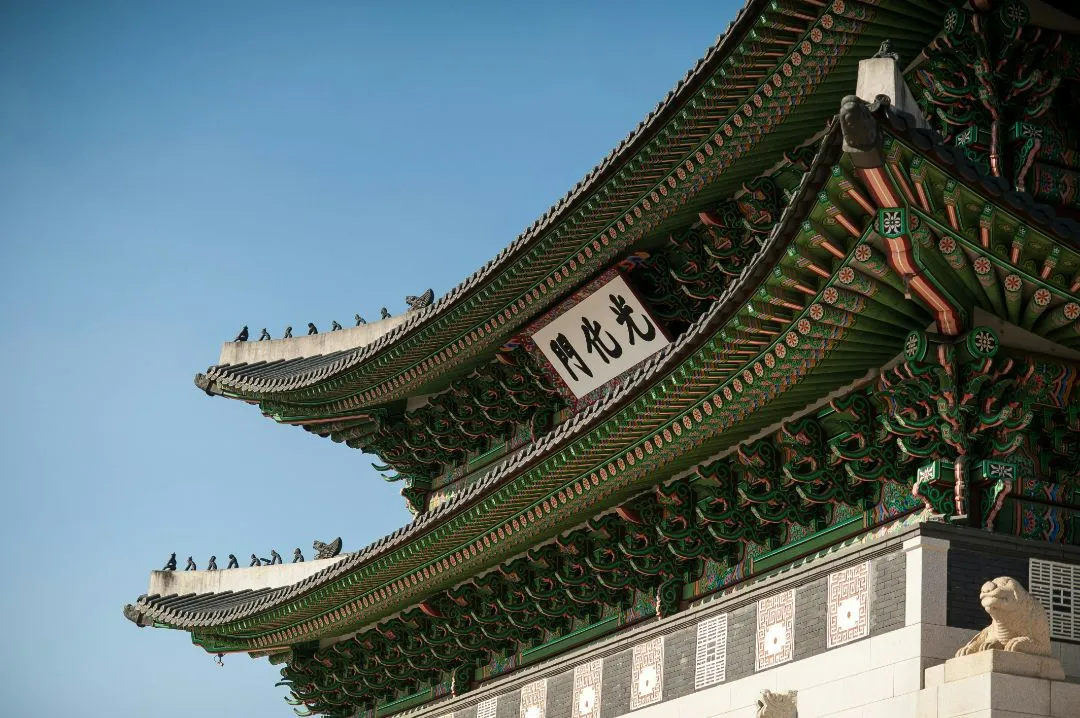
Photo by GuerrillaBuzz on Unsplash


Hacker incentive

The TRON Founder also extended an offer to the hacker responsible for the breach. He proposed a 5% reward for the return of the remaining funds, a figure notably lower than the 10% often offered to hackers in similar situations. Additionally, Sun dangled the possibility of a job at the exchange. That’s an unusual response to a cryptocurrency hack and one that had one commentator speculating upon the notion that the hacker belonged to the notorious North Korean Lazarus hacking group, pondering the prudence of such a move.

Data from DeFi data aggregator DeFiLlama revealed that Seychelles-based HTX, formerly known as Huobi, witnessed nearly $10 million in outflows, with a remaining $2.73 million in customer deposits as of the latest data.


Hacker’s identity may be known

The hacker, who received a series of messages from an address identified as an HTX hot wallet by Nansen, was presented with a stark choice. The messages, written in both English and simplified Chinese, claimed to have uncovered the hacker’s true identity and urged the return of the stolen funds to the address 0x18709E89BD403F470088aBDAcEbE86CC60dda12e. In return, HTX offered a 5% “white hat bonus” valid until October 2, 2023. If the funds were not returned by that date, law enforcement would be involved, the message warned.

The hack came shortly after Justin Sun shared a promotional video in which he depicted himself defeating a hooded figure symbolizing a hacker “shorting crypto” with a single punch while on a spaceship journey to what appeared to be Mars.


Insolvency fears

On Tuesday, Sun outlined that the exchange had established a “SAFU” (Safe Asset Fund for Users) fund for platform users. However, taking to X on Monday, Adam Cochran, Managing Partner at Cinneamhain Ventures, claimed that there was a likelihood that the HTX business is insolvent. Cochran maintains that available data suggests a shortfall in crypto holdings relative to HTX users' assets.

Travis Kling, Founder and Chief Information Officer of Ikigai Asset Management, went one further on X, stating:

”Not “probably”. Huobi is insolvent.”

Kling, a long-time critic of Binance, went on to suggest that if Huobi were to collapse, that event would likely lead to Binance unraveling also.

HTX originated in China and nowadays maintains offices in Singapore, Japan, South Korea, Hong Kong, and the UK. It has long been speculated that Justin Sun has a controlling stake in the HTX business. Sun has denied that assertion, instead suggesting that he is a member of HTX’s “Global Advisory Board.”

More to Read
View All
Policy & Regulation·

2 days ago

Korean regulator targets concentrated control at crypto exchanges in phase 2 bill

South Korea’s financial regulator is preparing a second major cryptocurrency bill that would expand investor protections, strengthen stablecoin safeguards, and potentially impose governance changes at the country’s largest exchanges, as domestic token projects warn that regulatory uncertainty is curbing growth. The Financial Services Commission (FSC) is drafting the Digital Asset Basic Act, a so-called “phase two” bill that follows an earlier virtual asset user protection regime which took effect in July 2024. According to Yonhap News, the bill is expected to address stablecoin risks by requiring issuers to hold reserve assets in instruments such as bank deposits and government bonds, and to deposit or place in trust at least 100% of outstanding issuance with banks or other designated custodians. It would also extend existing financial-sector rules to crypto firms in areas including disclosures, terms and conditions, and advertising. In addition, the proposal could impose no-fault liability on virtual asset service providers for losses stemming from hacks or system failures, in line with standards under Korea’s Electronic Financial Transactions Act, which governs traditional financial institutions and payment services.Photo by Timothy Ries on UnsplashGovernance dominance at exchangesA separate report by KBS said the draft bill includes measures to overhaul governance at South Korea’s four major crypto exchanges—Upbit, Bithumb, Coinone, and Korbit—which together serve about 11 million users. The FSC has raised concerns about concentrated control by founders and major shareholders, and is considering a governance framework similar to that applied to alternative trading systems (ATS) under Korea’s Capital Markets Act. That could include limits designed to prevent any single shareholder from holding too much control, capping controlling stakes at around 15% to 20%. Under Korea’s current Capital Markets Act, an ATS is generally barred from holding more than 15% of voting shares, including those held by related parties, with limited exceptions allowing stakes of up to 30%. If similar limits were applied to crypto exchanges, the changes could affect Dunamu, the operator of Upbit. Dunamu Chairman Song Chi-hyung holds a stake in the mid-20% range and, under the proposal as described, could face pressure to sell roughly 10% of his holdings. The proposal could have implications for the deal, as Dunamu is pursuing a merger with Naver Financial through a comprehensive stock swap. While the bill’s broad outlines are taking shape, regulators are still working to narrow differences over stablecoin rules, and the final proposal is expected to be submitted to the National Assembly next year. Key unresolved issues include eligibility requirements for stablecoin issuers, whether to establish an interagency consultative body during the licensing process, initial capital thresholds, and whether a single entity should be allowed to both issue and distribute stablecoins. The core dispute centers on who should be allowed to issue stablecoins. The Bank of Korea is said to favor limiting issuance to consortia in which banks hold at least a 51% stake, while the FSC is believed to oppose writing a mandatory bank ownership threshold into law, arguing that such a requirement could limit broader participation by technology firms. ‘Kimchi coin’ listings stall amid cautionEven as policymakers push ahead, regulatory uncertainty is curbing growth among South Korean blockchain projects. News1 reported that Upbit listed only one token from a domestic project in 2025, out of 54 tokens added for trading since the start of the year—the native token of Story, a peer-to-peer intellectual property network powered by blockchain and co-founded by Korean entrepreneur Lee Seung-yoon. Upbit also removed 10 tokens during the period, seven of which were so-called “kimchi coins,” a colloquial term for tokens originating in South Korea or developed by Korean teams. Industry participants attribute the removals to increasingly risk-averse behavior by exchanges amid regulatory uncertainty, which can complicate promotional efforts and trust-building while constraining early-stage liquidity. TradFi players seek crypto integrationsWhile local token projects face headwinds, interest from traditional financial institutions appears to be picking up. Chosun Biz reported that Mirae Asset Financial Group is considering an acquisition of Korbit, with its non-financial affiliate Mirae Asset Consulting seen as a potential buyer of shares from major shareholders NXC and SK Planet. Industry analysts estimate the deal could be worth up to 140 billion won ($97 million). The group’s founder, Park Hyeon-joo, has said he is developing a strategy to bridge traditional and digital assets, arguing that it is time to prepare for the next wave of financial innovation. In payments, EBN Industrial News reported that BC Card has signed a memorandum of understanding (MOU) with U.S.-based crypto exchange Coinbase to test USDC payments in South Korea. The pilot would integrate BC Card’s QR payment system with wallets on Coinbase’s Base blockchain to assess whether USDC can function as a viable payment method at local merchants. 

news
Web3 & Enterprise·

May 07, 2023

Alibaba Cloud Partners With Avalanche to Deploy Metaverses

Alibaba Cloud Partners With Avalanche to Deploy MetaversesChina’s Alibaba Cloud, a subsidiary of the e-commerce behemoth Alibaba Group, and one of the world’s largest cloud computing companies, has entered into a partnership with layer one blockchain project Avalanche.The cloud division of the Chinese tech giant has built a launchpad which will allow businesses to deploy metaverses, hosted on the Avalanche blockchain.Photo by C Dustin on UnsplashEnter the CloudverseAlibaba has named the launchpad “Cloudverse”. In accessing the Cloudverse, businesses will be enabled in customizing, launching and maintaining their very own metaverses, running on top of the Avalanche blockchain. In a tweeted message on Thursday, the Avalanche project team stated that “Alibaba Cloud’s millions of clients can easily deploy custom metaverses and unlock new dimensions for consumers.” It’s clear that the blockchain specialist sees the value in linking up with an entity with the market reach that Alibaba Cloud can provide. Expanding on that, it stated: “Cloudverse gives businesses an easy, white-glove, and cost-effective way to expand their brands to the Web3 virtual world.”Singapore’s MUA DAOAlongside Alibaba Cloud and Avalanche, a Singapore-based project is participating in the collaboration. Metaverse Union of Architects Decentralized Autonomous Organization makes for quite a long-winded entity, meaning that the project is more commonly known as MUA DAO. The DAO sees its mission as helping entities to overcome the technological hurdles of the crypto world by offering the largest virtual reality guild of architects, thus making available a large number of capable builders for the metaverse.Taking to Twitter on Thursday, the project outlined that the partnership marked a significant milestone for the DAO. “As the metaverse middleware, #MUADAO will support Cloudverse from creation and customization to continual operation in #MUAverse,” it outlined.MUA DAO sees the likely outcome of the collaboration as leading to a cost effective mechanism through which Asia-Pacific businesses can expand into the Web3 world, empowering clients to create custom metaverses and unlocking new customer experiences.MUA DAO terms its offering as “MUAverse, describing it as “a one-stop Metaverse Middleware Infrastructure developed and operated by MUADAO, designed to empower enterprises and businesses in the creation, operation, and management of digital assets.”Avalanche’s unique structureThe three entities coordinated the announcement of the collaboration to coincide with the Avalanche Summit II conference, which commenced on Wednesday in Barcelona, Spain and runs until Friday.As a layer one blockchain, Avalanche has a unique structure which enables subnets, sets of nodes or validators which can be built on top of blockchains. Subnets offer the advantage of allowing developers to customize them on an application-specific basis. Such a blockchain infrastructure will be beneficial in facilitating customizable blockchain solutions relative to the proposed Cloudverse.Blockchain credentialsRecently, Alibaba announced its intention to open a Web3 incubator lab in Japan. The lab will be a collaboration between Alibaba, Tokyu Land Corporation and Skeleton Crew Studio. One of its principal objectives will be to enable game developers to learn about and harness blockchain technology relative to virtual reality gaming.Additionally, Alibaba Cloud intends to launch a blockchain node service in Japan at a later stage in 2023. In a further nod to its blockchain credentials, Alibaba Cloud was also a co-organiser of Hong Kong’s recently-held Web3 Festival, alongside Amazon Web Services and Hong Kong-based Cyberport.

news
Policy & Regulation·

Nov 07, 2023

Hong Kong regulators consider opening up crypto ETFs to retail

Hong Kong regulators consider opening up crypto ETFs to retailHong Kong regulators are now exploring the possibility of allowing retail investors to participate in spot crypto exchange-traded funds (ETFs).The CEO of Hong Kong’s Securities and Futures Commission (SFC), Julia Leung, was cited by Bloomberg on Sunday as having indicated that provided that the necessary regulatory approvals and checks are in place, the regulator may be open to the notion of retail participation where spot crypto ETFs are concerned. Leung emphasized the regulator’s openness to innovative technology that enhances efficiency as long as it addresses potential new risks.Photo by Markus Winkler on Pixabay‘Happy to give it a try’She stated: “We welcome proposals using innovative technology that boosts efficiency and customer experience. We’re happy to give it a try as long as new risks are addressed. Our approach is consistent regardless of the asset.”While both the United States and Hong Kong currently permit futures-based cryptocurrency exchange-traded funds (ETFs), the adoption of such instruments has been relatively modest in comparison to the broader fund industry.In Hong Kong, there are currently ETF listings for products like Samsung Bitcoin Futures Active, CSOP Bitcoin Futures and CSOP Ether Futures, with a total combined asset value of approximately $65 million. In June, Hong Kong’s largest ETF manager, Hang Seng, suggested that it too was considering a crypto product offering.In accordance with the SFC’s digital asset regulations, individual investors already have the opportunity to trade prominent cryptocurrencies like Bitcoin and Ether on licensed cryptocurrency exchanges since June 1. Presently, BC Technology Group Ltd.’s OSL and HashKey Exchange are the only platforms in Hong Kong with permits for cryptocurrency trading. Additionally, there are expectations that mandatory regulations concerning stablecoins will be introduced over the course of the next year.Prioritizing investor protectionLeung expressed the regulator’s cautious approach, stating:“As the crypto ecosystem evolves step-by-step to the point where we’re comfortable, then we’re happy to open up more access to the wider investing public.”Notably, Hong Kong also recently unveiled its Web3 plans, highlighting its commitment to embracing blockchain and decentralized technologies.Hong Kong introduced a specialized regulatory framework for virtual assets in June which are designed to attract businesses while prioritizing investor protection. That need to protect consumers has been underscored recently by the alleged fraud that has subsequently been uncovered involving HK$1.6 billion ($204 million) at the unlicensed JPEX cryptocurrency exchange in the city.Market reactionThe significance of such a move isn’t lost on crypto market participants. Taking to X, one wrote: “Seismic shift. Hong Kong’s play could reshape the Asian crypto landscape. #Bitcoin ETFs? A strategic move to anchor HK as the digital nexus of Asia.” Another claimed that this “might redefine the crypto landscape and fuel the next bull market.”A report published by the Hong Kong Stock Exchange in April found that crypto ETFs have the potential to play a significant part in the next phase of digital asset innovation in Asia.Leung emphasized the importance of a strong and comprehensive regulatory structure, highlighting the SFC's efforts to enhance transparency in processing license applications for virtual asset exchanges.Moreover, the Hong Kong Monetary Authority (HKMA), the Chinese autonomous territory’s central bank, is actively exploring the possibility of offering guidance to banks regarding the provision of digital asset custodial services. These services are considered vital for nurturing the growth of a digital asset ecosystem and ensuring investor security.

news
Loading