Top

Tether Alters ToS in Singapore Restricting USDT Redemption

Policy & Regulation·September 26, 2023, 1:19 AM

Tether, the issuer of the world’s largest stablecoin, USDT, has made substantial revisions to its Terms of Service (ToS), which may have a significant impact on its user base in Singapore.

News of the change emerged on Monday, with Dr. Julian Hosp, CEO of Cake Group, the project team behind Singapore-based Cake DeFi, taking to social media and providing a copy of an email from Tether’s Compliance Department, confirming the change. That notification read:

”Tether has changed its terms of service to, among other things, restrict its onboarding standards. Corporates controlled by; another entities, directors, shareholders residing in Singapore are no longer permitted to be Tether customers.”

In his commentary, Hosp stated that he wouldn’t be in a position to confirm “if redeeming $USDT into $USD is actually possible, due to being in #Singapore.”
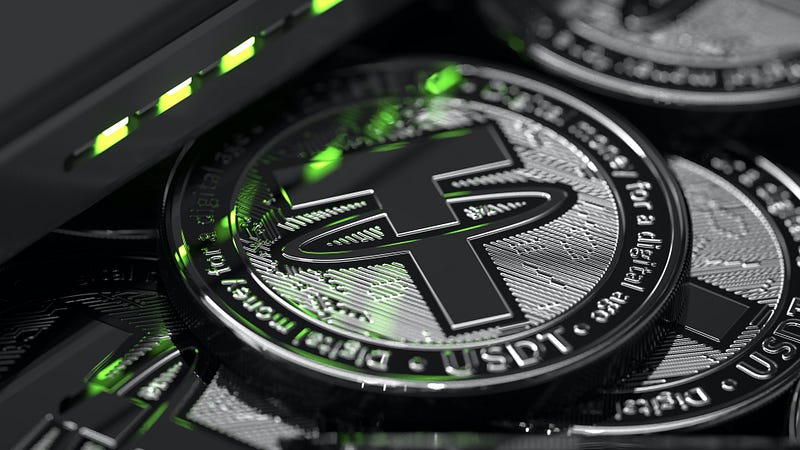
Photo by DrawKit Illustrations on Unsplash


ToS Change in Context

Within the cryptocurrency ecosystem, eyebrows have been raised regarding the timing of Tether’s ToS change, as it has coincided with a major instance of crypto-related money laundering. Conversely, some argue that the issue could be specific to Cake DeFi. The DeFi protocol had been flagged for enhanced due diligence (EDD), suggesting that the modification in Tether’s ToS might potentially be a result of a partnership issue between the two entities.

Stablecoins like USDT play a pivotal role in the digital asset ecosystem, serving as a bridge between the volatile world of cryptocurrencies and the stability of traditional fiat currencies like the US dollar. Any disruption in their usage can trigger a domino effect in the crypto markets.

The cryptocurrency sector is grappling with regulatory uncertainties worldwide, and Singapore is no exception. The Monetary Authority of Singapore (MAS) has been actively reviewing and updating its crypto-related regulations to align with international standards and mitigate risks to financial stability.

The precise motive behind Tether’s decision to restrict USDT redemption for specific customers in Singapore remains unclear. Notwithstanding that, Tether’s Chief Technology Officer (CTO) Paolo Ardoino expressed the view that the matter is being misunderstood. He tweeted:


Spreading FUD

”Before spreading FUD [fear, uncertainty and doubt] it would be great if you guys did take a look at webarchive… This is Jan 2022…. And if you open the link below: Last updated: May 12, 2020… Again, take a moment to search and verify information before YOLO [you only live once] posting.”

Clearly Ardoino is making the point that the ToS change is consistent with existing compliance policy which has been in place since 2020. Notwithstanding that, in reviewing related records, media outlet Protos found that USDT issuance and redemption after May 2020 demonstrate that the firm continued to do business with Singapore-based entities. The publication cited UQPAY specifically, a Singapore-based payments processor. It was found to have issued USDT between May 14 and May 18 in 2020.


More to Read
View All
Web3 & Enterprise·

May 18, 2023

Coinbase Effects International Expansion By Extending Singapore Offering

Coinbase Effects International Expansion By Extending Singapore OfferingIn further proof of Coinbase’s recently-adopted strategy of focusing on global expansion, the company has just extended the range of its product offering to Singaporean customers.Photo by Meriç Dağlı on UnsplashNo Fees on USDCThe move was announced by way of a blog post published to the company’s website on Tuesday. The expansion entails the introduction of fee-less purchases of the USDC stablecoin for users who buy it with the Singaporean dollar (SGD). Furthermore, it is enabling Singaporean customers to earn rewards on the USDC that they hold on the platform. USDC trading pairs are being added that will allow users to trade USDC directly with over two hundred digital assets.Taking staking overseasAdditionally, Coinbase Global is rolling out staking to the Singaporean market. Users will be empowered with the ability to stake the following digital assets: ETH, SOL, ADA, ATOM, and XTZ.It’s interesting that Coinbase feels enabled in rolling out a digital asset staking service in this overseas market. In March of this year, the company received a Wells Notice — a formal notice informing the recipient that there are firm plans to bring enforcement actions against it — from the Securities and Exchange Commission (SEC) in the United States. The notice was sent in relation to digital assets covered under Coinbase’s staking product offering, Coinbase Earn.In highlighting the issue, the company bemoaned the fact that the SEC had gone down the route of issuing a Wells Notice without it expressing a single specific concern about any specific digital asset offered by the platform in advance of taking the action.Global strategyCoinbase Founder and CEO Brian Armstrong has been outspoken in criticizing the regulatory approach to crypto in the United States. He expressed that at the time of having received the Wells Notice earlier this year, and again last week, when he and key Coinbase executives visited Abu Dhabi and Dubai in the United Arab Emirates.On the day of SEC Chair Gary Gensler’s appearance before the House Financial Services Committee on Capitol Hill in Washington, D.C. a few weeks ago, Armstrong signaled that unless there was a more accommodating regulatory approach taken to crypto in the US, Coinbase would increasingly be looking to expand operations overseas.A short time later, it emerged that the company had obtained a license to trade in Bermuda. At last week’s Dubai Fintech Summit, Armstrong applauded the regulatory approach taken by the UAE and indicated that the company is interested in opening a base in Abu Dhabi.Positive survey resultsAgainst this background, it’s not surprising to hear that Coinbase has expanded its service offering in Singapore, another aspiring global hub for crypto business. As part of reviewing and updating its business offering in the city state, Coinbase carried out a survey of prospective customers in Singapore. It found that 25% of Singaporeans consider crypto as the future of finance, on a par with findings in the US, and higher than the 17% reported in the UK.Among its other findings, security concerns and price volatility of digital assets are still a barrier to entry for many. Of those who are already crypto-native, they tend to trade higher trade amounts, and with greater frequency, if from higher income backgrounds.

news
Web3 & Enterprise·

Oct 12, 2023

CarrieVerse Token CVTX Listed on BingX

CarrieVerse Token CVTX Listed on BingXBlockchain-based Web3 metaverse platform CarrieVerse has recently listed its native token CVTX on the cryptocurrency exchange BingX.Photo by m. on UnsplashMultipurpose tokenBuilt on Polygon, CVTX is integrated into the tokenomics ecosystem of CarrieVerse and its card strategy role-playing game (RPG) SuperKola Tactics. It is also the governance token for the CarrieVerse blockchain gaming platform Cling. It is currently tradable on other international exchanges in addition to BingX, such as Gate.io, MEXC Global, BitMart, and ProBit Global, as well as the Korean exchange GOPAX. CVTX can be traded for USDT on all of the above exchanges except for GOPAX, which offers a CVTX/KRW pair. KRW stands for Korean won.“CVTX has expanded its global presence one step further. We will continue to strive for market expansion through listings on leading exchanges, building on the excitement inspired by gaming and staking,” said David Yoon, CEO of CarrieVerse.About BingXFounded in 2018, BingX is a Singapore-based digital asset exchange that offers spot derivatives, copy trading, and grid trading services to over five million users across 100 countries worldwide. Its spot trading volume over the past 24 hours at the time of publication, according to recent data from CoinMarketCap, stands at $602 million. Notably, it allows for easy transfer of assets between Korean exchanges Bithumb and Coinone, having passed their Travel Rules requirements last year.

news
Web3 & Enterprise·

Nov 16, 2023

OKX collaborates with Polygon Labs on layer-2 network launch

OKX collaborates with Polygon Labs on layer-2 network launchSeychelles-incorporated OKX, one of the world’s largest cryptocurrency exchanges, has collaborated with blockchain development firm Polygon Labs to unveil the testnet for its latest zero-knowledge layer-2 network, named “X1.”Photo by Shubham Dhage on UnsplashIntroducing “X1”The company announced initial details on X1 via a press release published on Tuesday. This Ethereum-based ZK network has been constructed using the Polygon Chain Development Kit (CDK), with OKX playing a pivotal role as a core contributor to the CDK. Substantial engineering resources are being invested by OKX to strengthen the Ethereum scaling solution.The new network will serve to bolster the utility of OKX's native token, OKB. OKB will be used for X1’s gas fees. There has been a lot of chatter about the utility of exchange tokens following the collapse of FTX, as that platform was over-reliant on its native token in propping up the exchange. Similarly, critics are speculating that a comparable dynamic may be at play at Binance, relative to its native token BNB.Likely buoyed by news of this development, OKB observed a 10% unit price increase on Tuesday. However, that move has retraced downwards in the meantime.ZK proof technologyX1 has been designed with ZK proofs, a method through which one party can convince another that a particular claim is true without disclosing details of the claim itself. In this way, X1 ensures high security and scalability while mitigating transaction costs. The network seamlessly aligns with Ethereum, facilitating the secure deployment of EVM-based dApps and connectivity with a wide array of smart contracts, wallets and tools. OKX underscores X1’s status as its new native network.Chief Innovation Officer of OKX, Jason Lau, expressed optimism about X1, deeming it integral to the firm’s efforts in guiding users into the realm of Web3. Lau emphasized the scalability and accessibility of X1, especially for developers who can leverage it to construct user-friendly Web3 applications while maintaining interoperability with other networks.The collaboration with Polygon Labs marks another milestone in the evolution of Polygon’s CDK. Launched in August, the CDK enables the development of layer-2 blockchains on Ethereum, emphasizing zero-knowledge proofs. Networks deployed using the CDK gain the ability to connect to a shared ZK bridge, fostering interoperability.Sandeep Nailwal, co-founder of Polygon, underscored the significance of X1’s adoption of Polygon CDK technology, envisioning a future where CDK-deployed chains interoperate and coexist within a larger network of ZK-powered layer 2s in the Polygon CDK ecosystem. The CDK has gained traction, with various Layer 2s, including Immutable zkEVM, IDEX, Palm Network and Astar zkEVM, currently in development using this technology.Industry trendA trend is developing among crypto exchange platforms and their involvement in establishing layer two networks. Earlier this year, U.S. crypto platform Coinbase introduced the Base network, an Ethereum layer-2 network that focuses on offering a safe, low-cost and developer-friendly mechanism to build on-chain.Last week, it emerged that another leading U.S.-based crypto platform, Kraken, is on the lookout for a development partner to enable it in building out its own layer-2 blockchain network. According to those reports, it’s understood that Kraken is considering partnering with Polygon Labs, Matter Labs or the Nil Foundation.As this OKX-Polygon Labs collaboration progresses, the industry will continue to observe how X1, with its innovative technology stack and seamless integration with Ethereum, contributes towards broader Web3 development.

news
Loading