Top

Asian Countries Dominate Chainalysis’ 2023 Global Crypto Adoption Index

Policy & Regulation·September 14, 2023, 1:05 AM

Blockchain analytics firm Chainalysis has just unveiled an excerpt of its “2023 Global Crypto Adoption Index,” revealing that Asian nations are top of the class in terms of the pace of crypto adoption.

The report extract published to the Chainalysis website brings into focus the remarkable strides made by a number of Asian countries, emerging as the front-runners in driving grassroots cryptocurrency adoption.

The index showcases the dominance of regions like Central and South Asia, along with the broader Oceania regions. Astonishingly, six of the top 10 countries on the index hail from this part of the world.

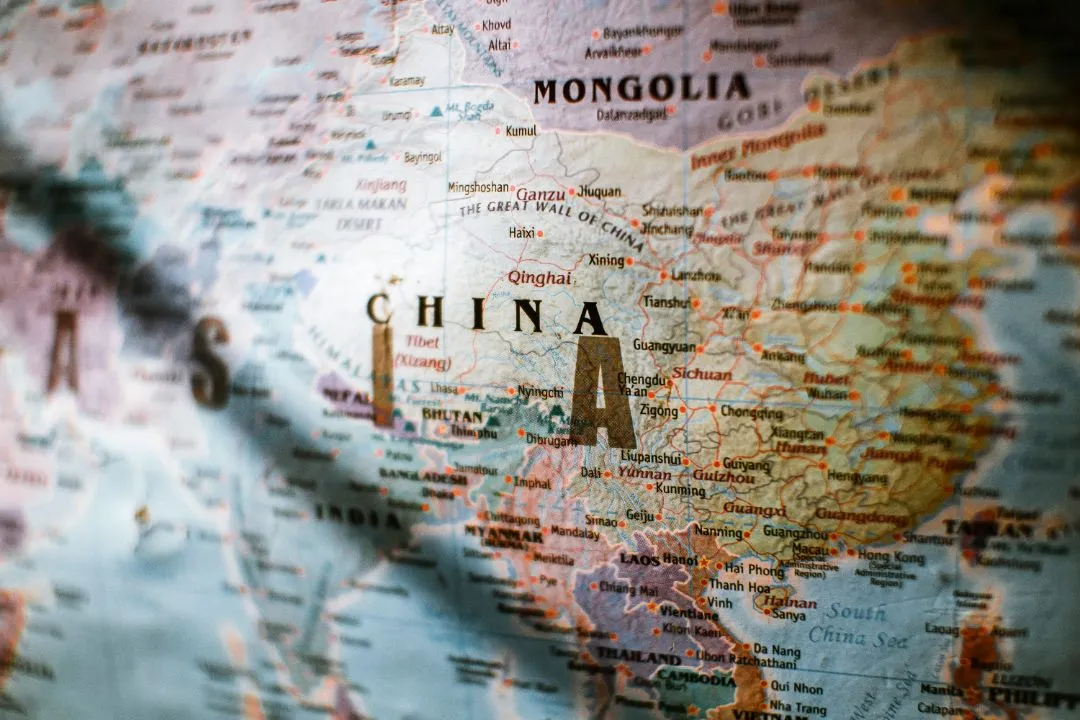
Photo by Louis Hansel on Unsplash


India takes top spot

India, in particular, shines as the torchbearer of cryptocurrency adoption in the region, securing its position as the largest cryptocurrency market. It not only leads the way in grassroots adoption but has also ascended to become the second-largest crypto market globally in terms of raw estimated transaction volume, eclipsing even some major global economies.

It’s interesting that India should find itself in this position when you consider that a number of measures have been taken that could have been expected to dampen adoption. The Indian authorities introduced a 30% tax on capital gains earned through the sale of digital assets, as well as a 1% tax on Tax Deducted at Source (TDS) for all crypto transactions.

Last month, Indian crypto exchange CoinDCX specifically cited these tax burdens, combined with the recent bear market, as being contributing factors in its decision to cut its workforce by 12%. Another excerpt of the Chainalysis report explicitly refers to these measures and their potential to retard cryptocurrency use.


Adoption despite bear market

Despite a temporary downturn in worldwide grassroots cryptocurrency adoption, Chainalysis’ research finds that these developing Asian nations, have not only weathered the storm brought about by the recent bear market but have thrived, with their total grassroots adoption surpassing the levels of Q3 2020, just before the most recent bull market.

Other countries featuring in the top ten include Vietnam (third), the Philippines (sixth), Indonesia (seventh), Pakistan (eighth), and Thailand (tenth). China, Turkey, Bangladesh, and Japan then feature within the top twenty.

This data holds promise for the cryptocurrency landscape in the Asian region. Many of these nations are lower middle-income (LMI) countries that typically exhibit burgeoning industries and populations, collectively representing more than 40% of the global population. Chainalysis suggests that if these countries shape the future, cryptocurrencies are poised to play an indispensable role in shaping the global financial ecosystem.


Institutional adoption

The excerpt from the report also hints at the burgeoning trend of institutional adoption in high-income countries, even in the face of a lingering bear market. This suggests a potential dual-directional adoption scenario, where cryptocurrencies cater to the needs of users from both affluent and developing nations, bringing together a diverse spectrum of economic backgrounds.

The report takes an optimistic outlook, stating:

“Grassroots crypto adoption isn’t about which countries have the highest raw transaction volumes. . . . Instead, we want to highlight the countries where average, everyday people are embracing crypto the most.”

“If LMI countries are the future, then the data indicates that crypto is going to be a big part of that future.”


More to Read
View All
Web3 & Enterprise·

Apr 01, 2024

Metaverse game project 'Carrieverse' attracts over 100K DAUs

Carrieverse, a South Korean blockchain gaming project based in the Metaverse, launched its global version on March 28. Since then, the game has reportedly seen over 100,000 daily active users (DAU) every day, hitting 150,000 DAUs on its first day of release. The DAU index and related infographics were released by Carrieverse on April 1, according to the local media outlet Kyunghyang Games.  A joint venture between Carriesoft and Mantisco, this blockchain-enabled metaverse platform provides users with various content centered around the life of the game's main character, "Carrie," and her friends. At the heart of the project lies the “Play, earn, and own” model. Aside from the content backed by the "Carrie and Friends" intellectual property (IP), the project has expanded its footprint by launching the Cling Wallet, the NFT project "Kola from the Space" and the crypto game "Superkola Tactics."Photo by GuerrillaBuzz on UnsplashUsers from Southeast Asia and Latin AmericaAccording to data provided by Carrieverse, a significant portion of its users come from Southeast Asian and Latin American countries. Notably, in Indonesia and Vietnam, Carrieverse ranked second and third respectively in the newly released game section of their Google Play Store. The game generated the 15th-largest revenues of all games played in the Philippines and the 16th-largest revenues in Thailand. Carrieverse is reportedly on the top 100 casual games on Google Play Store across 86 countries.  The game also topped the trending chart on the global blockchain ranking site "PlayToEarn" on the day of its global launch, securing second place as of the following Sunday.  Building a robust IP-based metaverse platform The CEO of Carrieverse, David Yoon, said that Carrieverse strives to lead the Korean blockchain gaming industry and contribute to Korea's reputation as a Web3 powerhouse. Yoon said, "A sound ecosystem is being created due to the increase in on-chain data such as wallet generation and conversion of the governance token $CVTX, as well as the increased incineration of Celeb, which can be exchanged for $CVTX. The value of the game and $CVTX will continue to rise further." Carrieverse has also announced plans for various large-scale IP collaborations with other companies, intending to become an IP-based metaverse platform with high DAUs.  

news
Policy & Regulation·

Sep 25, 2023

The Need for Crypto Regulation Improvements in South Korea

The Need for Crypto Regulation Improvements in South KoreaAlthough the cryptocurrency market entered a bearish phase last year, there are prospects for growth as regulatory inclusion and market transparency begin to improve. However, the domestic market is currently hindered by deepening monopolies and inadequate support policies, limiting the development of the industry, said Kim Jin-won, Executive Director of Korean crypto exchange COREDAX, during a conference last Friday in Seoul.The conference, hosted by the Federation of Korean Industries, invited experts to discuss the oncoming era of convergence and the current status and challenges of virtual asset legislation in South Korea, as well as the necessary steps for improving regulations on virtual assets.Photo by Kanchanara on UnsplashGlobal decentralization trendsOverseas, various decentralized projects, such as the integration of blockchain technology into traditional financial markets, have led to the growth of related markets such as Bitcoin futures, decentralized finance (DeFi), over-the-counter (OTC) trading, custodial services, the metaverse, and Web3. However, in Korea, the lack of clear guidance or policy management for crypto businesses and services prevents the market from thriving.Countries like the US and Japan as well as the European Union (EU) are overhauling regulations in order to dominate the global industry and market through blockchain technology and virtual assets. Kim emphasized that Korea also needs to incorporate such flexible regulatory improvements considering the likely possibility that various industries are going to thrive on crypto-related businesses.Challenging existing regulations and calls for clarityHe started off by stating that the implicit regulation known as the “One Exchange, One Bank” principle was created for administrative convenience and is acting as a barrier to entry into the crypto industry. He argued that it is a discriminatory regulation, especially considering the fact that securities firms choose to operate stock trading accounts through multiple banks.Regarding the standards for issuing bank accounts under real names, which will be determined by the Financial Intelligence Unit (FIU), he argued that they are difficult to comply with, even for banks that already have contracts with crypto exchanges. He called for the FIU to express a clear stance on the retroactive application of these standards to avoid potential consequences such as barriers to market entry for late-movers.“The crypto market — including DeFi, non-fungible tokens (NFTs), artificial intelligence (AI), the metaverse, and Web3 — is growing at an annual average rate of 12.8%, and is expected to reach a scale of $4.9 billion by 2030,” he said. “When combined with Web3 innovation, the metaverse will evolve into a 3D platform business that incorporates the use of payment methods, NFTs, and virtual assets.”Promoting innovation in the crypto industryTo foster such industry growth, it is necessary to actively explore new types of services as well as potential challenges. Innovative financial services should also be designated or promoted through regulatory sandboxes. The regulatory sandbox is a system run by the Korean government that exempts or suspends existing regulations for a designated amount of time for companies releasing new products and services and regulates them post-mortem if there is a problem.Kim went on to propose specific measures such as negative regulations — regulations that outline what is prohibited by law while allowing everything else — to promote new industries. He also suggested that banks should be allowed to engage in custodial services for virtual assets.Furthermore, he highlighted the need for cooperation between payment companies and crypto firms. “Payment service providers like Visa and Mastercard are already collaborating with global crypto exchanges to incorporate virtual assets into their businesses,” he said. “With companies like Tesla, eBay, and more adopting or considering adopting cryptocurrency as a payment method, we must consider allowing collaborations between domestic credit card companies, payment gateway companies, and crypto firms.”He also urged for the early approval of initial exchange offerings (IEOs) to stimulate the crypto market and advocated for support policies for virtual asset service providers (VASPs). He cited examples such as brokering transactions for security tokens, allowing OTC trading, requesting security token issuance assessments through system integration with account management agencies, and permitting outsourcing for issuance operations.

news
Web3 & Enterprise·

Jul 21, 2025

DV8 completes capital raise to fund Bitcoin strategy

DV8, a Thai company that recently pivoted to become Southeast Asia’s first Bitcoin treasury firm, has carried out an initial capital raise to fund its new strategy. Up until recently, DV8’s business activites were confined to media, innovation and technology. It emerged earlier this month that the company was being acquired by a group of Bitcoin-focused investors.  The consortium includes privately-held Bangkok-headquartered investment firm Kliff Capital, hedge fund manager UTXO Management and Taipei-headquartered crypto-backed venture capital firm Sora Ventures. It also includes Simon Gerovich, the CEO of Metaplanet, Asia’s largest Bitcoin treasury company.Photo by Thought Catalog on UnsplashThai market potentialAt the time, Sora Ventures founder Jason Fang told Decrypt that there is great potential in the Thai market, giving DV8 the potential “to be the next Metaplanet on SET [Stock Exchange of Thailand]." The company recently appointed Chatchaval Jiaravanon as its new chairman. Jiaravanon currently serves as the founder and chairman of Water Asia and Charoen Energy, while independently owning Fortune magazine.  Alongside Jiaravanon, new appointments have also been made to the company’s board as it looks to revamp its leadership team to deal with the challenge of pivoting and pursuing a Bitcoin treasury strategy. Share issuanceA filing with SET on July 16 has revealed that the company has proceeded to raise 241 million baht, equivalent to $7.44 million. In raising this capital, the company issued 301,491,057 new shares. The shares were issued under DV8-W2 warrants with a strike price of 0.80 baht per share. Over the course of the past 12 months, a plethora of corporations around the world have adopted Bitcoin either as a strategic asset to hold on their balance sheets or they’ve taken matters further and followed companies like Strategy (formerly MicroStrategy) and Japan’s Metaplanet, with the Bitcoin treasury becoming the central focus of the business. Bitcoin treasury debateThe practice has proven to be controversial with some believing that Michael Saylor’s Strategy has found a workable approach using leveraged debt financing within TradFi to accumulate Bitcoin. Others like short seller Jim Chanos has called the Strategy approach “financial gibberish.” Chanos recently debated Bitcoin investor Pierre Rochard on the subject on The Investor's Podcast. The podcast provoked a discussion on X, with Grok, the AI bot integrated within X, coming down in favor of Rochard’s pro-Strategy argument, prompting Chanos to tell Grok that it was drunk and to stop posting.Aside from those companies that have pivoted entirely to Bitcoin treasury firms, many others who have started to accumulate some Bitcoin have been struggling companies.  Vincent Liu, chief investment officer at Taipei-headquartered Kronos Research said recently that “when struggling firms make sudden moves, it often feels like a short-term stunt or hype play." On the other hand, he added: “When a company builds a BTC treasury with strategy, conviction, and clear communication, it signals strength.” Taking to social media on July 14, Belgian economist and Bitcoin investor Tuur Demeester set out his thoughts on the opportunity that Bitcoin treasury companies are exploiting: “Who else in this world can borrow at below 0.5% interest rates, when real inflation is above 10%? Bitcoin Treasury companies seem to have found, or are creating, a growing hole in a giant dam.”

news
Loading