Top

BitGo CEO Emphasizes Separation of Trading and Custody to Prevent Crypto Bankruptcies

Policy & Regulation·September 07, 2023, 5:51 AM

Mike Belshe, Founder and CEO of digital asset trust company BitGo, emphasized the importance of separating cryptocurrency trading and custody to prevent incidents similar to those involving Mt. Gox and FTX in his keynote speech at Impact, the main conference of Korea Blockchain Week (KBW) 2023.

Established in 2013, BitGo is currently the world’s largest provider of virtual asset custody services, serving more than 1,500 institutions in over 50 countries, including the US, Switzerland, and Germany. Major exchanges like Bitstamp, Korbit, Bullish, Gate.io, and Crypto.com entrust BitGo with safeguarding their virtual assets.


Clear division

During his speech, Belshe repeatedly stressed the need for custody services for the sustainability of the virtual asset ecosystem, asserting that separating trading and custody can enhance trust in the industry and attract traditional financial institutions.

Unlike stock markets, where payment institutions and custodians are separate entities, this kind of separation does not exist in the virtual asset market. To steer traditional financial institutions toward the virtual asset ecosystem, this issue needs to be addressed, Belshe said.

He went on to cite the Mt. Gox hack in 2014 and the FTX collapse last year as examples that underscored the importance of virtual asset custody. Mt. Gox, once the world’s largest Bitcoin exchange, reportedly lost some 650,000 to 850,000 Bitcoins — worth more than $450 million at the time — due to a hacking incident, leading to its bankruptcy. FTX also faced insolvency after it was revealed that it inflated its assets using its native token FTT and that its management was misusing customer investment funds.

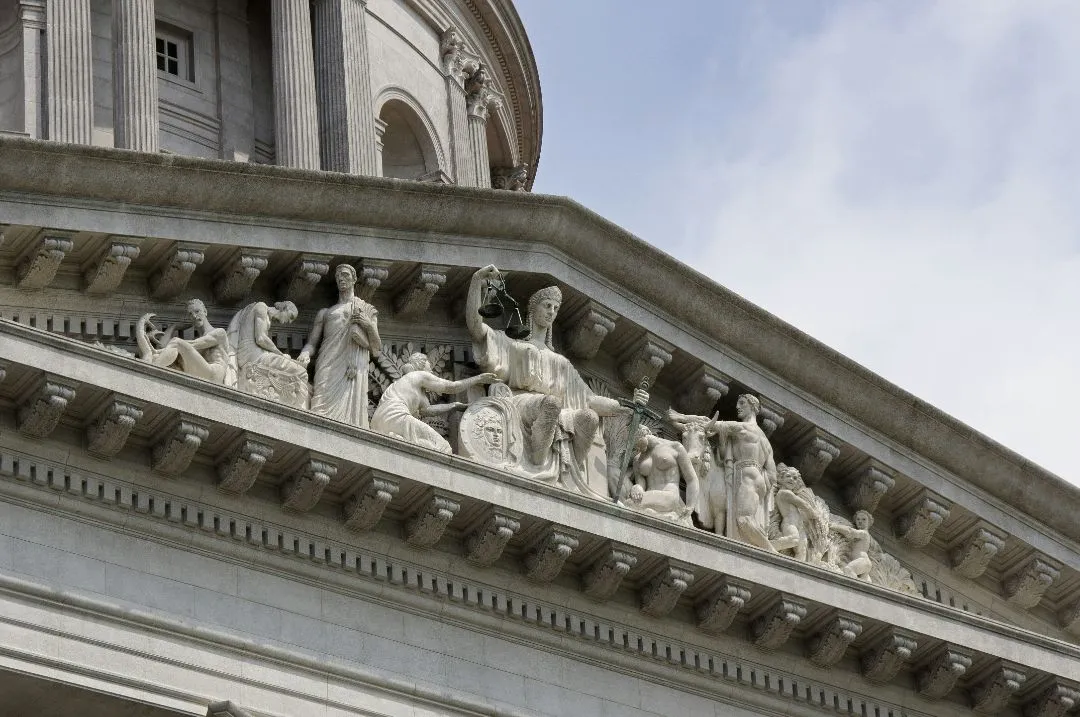
Photo by Melinda Gimpel on Unsplash

Belshe suggested that when Mt. Gox employees discovered the Bitcoin theft during the hack, it was already too late. If custody had been treated separately, the theft could have been detected much faster. Regarding the FTX debacle, he argued that even with just a few auditors, the problems in that situation could have been apprehended. FTX’s ability to provide custody of customer assets themselves led to unauthorized activities, including cross trading and insider trading, ultimately resulting in the misuse of customer funds.


Korea’s favorable conditions

Belshe also assessed that South Korea is well-positioned for the establishment of virtual asset custody systems due to its high trading volume and a solid commitment to drafting crypto-related legislation. Seven such bills are currently underway, reflecting the authorities’ determination to address problems in the ecosystem. Korea thus has the potential to establish itself as a hub in Asia, he said.

Indeed, BitGo’s partnership with Hana Bank to establish a joint venture for digital asset custody services in Korea is driven by these factors. Through its entry into Korea, BitGo aims to share its extensive knowledge and experience in digital asset business institutionalization and investor protection. It will also apply the expertise and strategies it has accumulated through close communication with regulatory authorities and supervisory agencies in various countries, including the US, to support the integration of virtual assets into the regulated framework in Korea.

Belshe commented that through this partnership, BitGo will seek to enhance its understanding of Korea and utilize its technology and expertise to boost confidence in the Korean cryptocurrency market.

More to Read
View All
Policy & Regulation·

May 23, 2023

Huobi Falls Foul of Malaysian Regulator

Huobi Falls Foul of Malaysian RegulatorMalaysia’s Securities Commission, the regulator responsible for investor protection and market integrity in the South East Asian country, has closed down the Malaysian operations of Seychelles-headquartered global crypto exchange Huobi.Photo by Zukiman Mohamad on PexelsThe regulator announced the shutdown via a press release published to its website on Monday. The Commission outlined that it has taken action against both the exchange, Huobi Global Limited, and its CEO Leon Li. It cites “operating illegally in Malaysia,” given that it was operating as an unregistered digital asset exchange (DAX) as the rationale for the decision.With the enforcement action has come an order to Huobi from the regulator to “cease circulating, publishing or sending any advertisements, whether in email or on social media platforms, to Malaysian investors, and to stop its operations in the country, including to disable its website and mobile application on several platforms such as Apple Store, Google Play and any other digital application platform.”Compliance concernsThe Securities Commission is putting the onus on the Huobi Global CEO to ensure that this order is complied with. The regulator said that it had concerns about the platform’s compliance with local regulatory requirements. It further outlined that it is an offense in Malaysia to operate a DAX without having completed registration with the Commission as a Recognized Market Operator (RMO) under Section 7 (1) of the Capital Markets and Services Act 2007.The Malaysian regulator also took the opportunity to warn citizens that they should only seek to trade on platforms that are registered RMOs and that for right now, those that have funds on the Huobi platform should withdraw their assets and cease trading on the platform.Expected newsHuobi doesn’t seem to have made an official statement relative to the Malaysian Security Commission’s decision via its official media channels. However, it did provide the following response to CoinTelegraph on Monday:“In response to recent reports, we would like to clarify that the situation outlined pertains to the previous Huobi entity and former shareholders. This is not associated with the current Huobi platform, which adheres to strict regulatory compliance globally.”Taking that response at face value, the company doesn’t seem to be particularly bothered about the enforcement action. It seems as if Huobi were already prepared for this eventuality, by starting a new corporate entity from scratch.In August 2022, the Malaysian regulator issued Huobi Global with a lesser enforcement action by adding the company to its investor alert list. It chastised the firm for operating without regulatory approval.Malaysia hasn’t been a hotbed of activity where crypto and digital assets have been concerned and certainly doesn’t compare with Asian centers like Hong Kong and Singapore who are actively chasing crypto business. However, in March of last year, the country’s Deputy Minister of Communications and Multimedia, Zahidi Zainul, said that the Southeast Asian country should recognize crypto assets like Bitcoin as legal tender.In 2021, Malaysia’s central bank joined a Bank of International Settlements (BIS)-led trial to explore the proof of concept of a central bank digital currency (CBDC), in order to enhance technical and policy capabilities should there ever be a need to issue one.

news
Policy & Regulation·

Nov 03, 2023

Hong Kong unveils comprehensive tokenization regulations

Hong Kong unveils comprehensive tokenization regulationsChristopher Hui, Hong Kong’s Secretary for Financial Services and the Treasury, shared a roadmap for upcoming regulations within the tokenization sector during his address at the Hong Kong Fintech Week 2023.Photo by Simon Zhu on UnsplashJPEX no hindrance to Web3 growthHui’s announcement at the event on Thursday comes on the heels of the JPEX scandal, a Dubai-based crypto exchange that collapsed amid allegations of having defrauded Hong Kong-based platform users. Hui emphatically stated that the JPEX incident would not deter Hong Kong’s commitment to expanding the Web3 market. Hui stated:“We’ve been asked many times whether JPEX will affect our determination to grow the Web3 market — the answer is a clear ‘no.’”In June, Hong Kong implemented new regulations for cryptocurrency exchanges, opening up locally regulated crypto trading services to retail customers via virtual asset service providers (VASPs). However, the majority of the forthcoming regulatory efforts will extend beyond the crypto sector, focusing on areas such as token issuance, wallets and other related components.Regulatory impact on TradFi and DeFiHui indicated the intention to expand virtual asset regulations, suggesting a potential impact on decentralized finance (DeFi). The planned regulations within the tokenization domain are poised to influence not only the crypto industry but also traditional finance (TradFi).These regulations include the issuance of a circular concerning intermediaries engaging in tokenized securities. Additionally, they entail a circular regarding the tokenization of Securities and Futures Commission (SFC)-authorized investment products. Lastly, they’re inclusive of consultations with banks on digital asset custody services with the involvement of the banking regulator. Furthermore, a joint consultation on stablecoin regulations will be issued by the Treasury and the Hong Kong Monetary Authority (HKMA).Focus on positive impact of tokenizationEddie Yue, CEO of the HKMA, echoed Hui’s sentiments by discussing the positive impact of tokenization. He anticipates that tokenization will fuel the adoption of blockchain payments, particularly involving stablecoins and tokenized deposits. Yue believes that central bank digital currencies (CBDCs) will serve as the foundation and a crucial element for achieving interoperability within this ecosystem.He emphasized the need to tackle crucial questions, such as the legal definitions of tokenized securities and whether Delivery versus Payment (DvP) can be successfully implemented for tokenized securities. Additionally, Yue pointed out the intricate legal considerations and interoperability challenges that are currently being discussed within the central bank community.First tokenized green bond issuanceYue also highlighted Hong Kong’s first-of-its-kind issuance of tokenized green bonds in February and revealed that discussions with the industry are already underway for the next bond.“We, ourselves, assisted the government to issue the world’s first-ever tokenized government green bond earlier this year in order to demonstrate the compatibility of Hong Kong’s legal and regulatory environment with this very new issuance format,” he stated. However, despite the promising outlook, Yue remained grounded on the subject, acknowledging the significant challenges in the tokenization landscape.In a related development, HSBC recently disclosed that it is conducting experiments with tokenized deposits in collaboration with Ant Group as part of the HKMA sandbox.

news
Web3 & Enterprise·

Jun 27, 2023

Algorand Foundation and DWF Labs Partner for Ecosystem Growth

Algorand Foundation and DWF Labs Partner for Ecosystem GrowthThe Algorand Foundation has joined forces with DWF Labs, a global digital asset market maker and Web3 investment firm, in a strategic partnership aimed at accelerating the growth of the Algorand ecosystem.An announcement of the collaboration was made on Monday, with the expectation that it will provide more opportunities for developers, businesses, and the wider blockchain community where the Algorand layer one blockchain is concerned.Photo by Shubham Dhage on Unsplash$50M token purchaseDWF Labs has committed to purchasing $50 million worth of $ALGO tokens, the native cryptocurrency of the Algorand network. This infusion of funds will enhance liquidity within the Algorand ecosystem, bolstering stability and growth.Beyond the token purchase, the partnership is reinforced by a memorandum of understanding (MOU), establishing a comprehensive funding framework to support projects built on the Algorand blockchain. This commitment will foster innovation across various sectors such as decentralized finance (DeFi), art and music, gaming, oracles and bridges, and infrastructure.Ecosystem collaborationsWeb3 investment firms like DWF Labs play a pivotal role in accelerating the growth of blockchain ecosystems. By investing in startups and projects that complement existing blockchain platforms, DWF Labs creates synergies that drive growth.It’s not the first time that DWF Labs has collaborated with blockchain network ecosystem projects. Earlier this month, the firm announced a deal with the project team behind layer one blockchain TRON, that will see it become a liquidity provider to that TRON network.In April, DWF entered into a partnership with the EOS Network Foundation (ENF) which included a $45 million $EOS token purchase agreement, with a further $15 million allocated towards investment into EOS ecosystem projects.Andrei Grachev, Managing Partner of DWF Labs, expressed enthusiasm for the partnership, highlighting Algorand’s technological superiority, security, and commitment to environmental sustainability and social impact.Through funding and strategic collaboration, DWF Labs will support the creation of diverse applications, services, and solutions within the Algorand ecosystem. This will foster the ALGO network effect, attracting more users and driving further growth.Algorand network stability and growthThe Algorand Foundation and DWF Labs partnership aligns with ongoing efforts to drive blockchain network adoption. Algorand’s platform offers scalability and security, while DWF Labs’ expertise and financial support will propel the ecosystem’s growth and adoption.The Algorand network is a proof of stake (PoS)-based blockchain network. It aims to accelerate the convergence between existing TradFi and emerging decentralized networks and technologies.The $50 million investment in ALGO tokens injects liquidity into the ecosystem, promoting stability and facilitating economic activities. The partnership’s funding framework ensures that projects built on Algorand receive the necessary resources.Collaborations like this drive blockchain adoption and development. The Algorand Foundation and DWF Labs share a vision of innovation and collaboration, fostering a thriving ecosystem.As the blockchain industry expands, strategic alliances play a crucial role in accelerating innovation and establishing interconnected ecosystems. The collective efforts of the Algorand Foundation and DWF Labs contribute to blockchain’s advancement, leading towards a decentralized future with transparency and inclusivity.

news
Loading