Top

Com2uS USA CEO Highlights Importance of Transition from Web2 to Web3 Gaming

Web3 & Enterprise·September 06, 2023, 9:28 AM

Lee Kyu-chang, CEO of South Korean game developer Com2uS’ American branch, stressed the important role of Web3 games in encouraging gamers to embrace blockchain technology during a discussion at the Korea Blockchain Week (KBW) 2023 event held at the Shilla Hotel in Seoul on Tuesday.
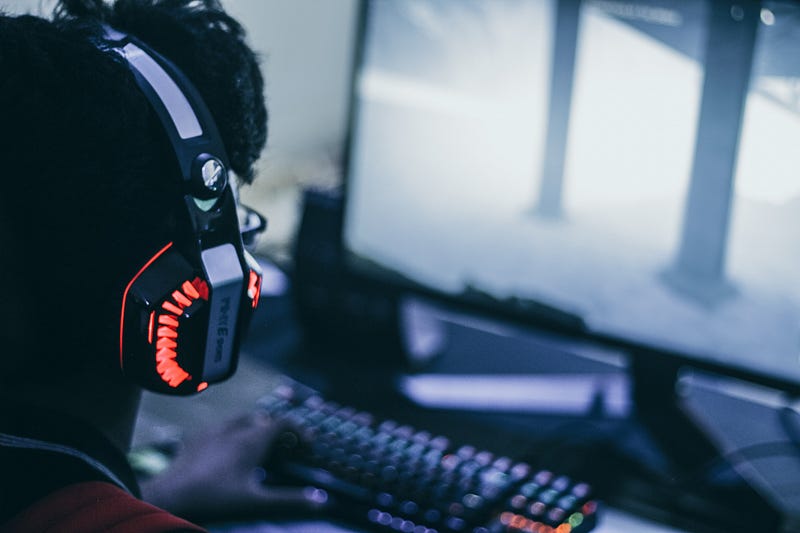
Photo by Fredrick Tendong on Unsplash

Lee shared various insights on the topic that Com2uS Group has gained through its experience in developing blockchain games. “We view blockchain not as a platform but as a tool,” he said.


Nurturing Web3 adoption among gamers

In particular, the CEO emphasized the need for Web2 users to transition to Web3. Indeed, Com2uS is aiming to migrate to Web3, although it is still majorly involved in Web2 businesses.

However, there stands a roadblock to achieving this widespread transition. “Gamers do not understand Web3. What they want is for good games to be released. And if they’re not good, they won’t play them regardless of whether they’re Web2 or Web3,” Lee explained, arguing that fun Web3 games will have gamers naturally learning about Web3.

Due to these reasons, the conversion rate for gamers is currently quite low. To remedy this, Lee proposed that facilitating the transition for Web2 gamers to Web3 is a more sustainable method than directly targeting only Web3 users. The latter strategy is not ideal due to the fact that there aren’t many Web3 users yet in the first place, and more importantly, existing ones are not typically gamers.


Balancing the shift

The Com2uS Group has thus chosen to concentrate on Web2 while gradually transitioning to Web3. “We must remember that the transition is slow. We went through a similar process when shifting from PC to mobile gaming,” Lee cautioned.

“Our company’s mission is to make people want to play games with ownership rights and make them want to own game assets.”


More to Read
View All
Policy & Regulation·

Sep 16, 2023

Politician Responds as Buterin Questions Hong Kong’s Crypto Credentials

Politician Responds as Buterin Questions Hong Kong’s Crypto CredentialsIn a measured response on Friday, Johnny Ng, a member of Hong Kong’s Legislative Council, addressed the comments made by Ethereum co-founder Vitalik Buterin concerning Hong Kong’s future stance on cryptocurrencies.Photo by Florian Wehde on UnsplashInvitation extendedNg extended an invitation to Buterin to visit Hong Kong, allowing him to gain a more nuanced understanding of the region’s dynamics. Ng also expressed his intent to collaborate with relevant institutions and enterprises to provide Buterin with insights into Hong Kong’s current situation.Vitalik Buterin had voiced his concerns at the Web3 Transition Summit in Singapore on Thursday. Buterin stated:“If any crypto project wants to make Hong Kong their home, they would want to have some confidence — not just that it’s friendly now but that it will continue to be friendly years from now when all kinds of unknown, regulatory and political and other kinds of events are going to happen.”He acknowledged that he did not possess an in-depth understanding of Hong Kong’s intricacies, particularly in light of recent developments in its relationship with mainland China. Buterin emphasized the need for crypto projects to have confidence not only in Hong Kong’s current crypto-friendliness but also in its ability to maintain this stance amidst unforeseen regulatory, political, and other events.In response to Buterin’s remarks, Ng reassured him that Hong Kong’s crypto-related policies were not prone to sudden changes. He highlighted that these policies had been formulated with broad social consensus and underwent comprehensive procedural assessments. Ng asserted: “Therefore, I can tell Mr. Vitalik that Hong Kong’s policies are very stable.”He further elaborated on Hong Kong’s legislative process, emphasizing the stages of government policy drafting, public consultation, discussions within multiple committees of the Legislative Council, and the General Assembly’s review.Best-prepared crypto jurisdictionIn a separate development, Hong Kong has maintained its position as the best-prepared jurisdiction for widespread cryptocurrency adoption in 2023, according to a recently published study. The Chinese autonomous territory secured the top rank for the second consecutive year.This recognition is based on a crypto readiness score (CRS) that takes into account factors such as the presence of crypto ATMs, the regulatory environment, accessibility, and legality.In contrast, the United States slipped to third place, experiencing a 6.5% drop in its CRS score from the previous year. Switzerland emerged as the second-best-prepared jurisdiction, with its CRS score surging by over 9%.The Dutch demonstrated the highest per capita interest in crypto, while Hong Kong stood out for having the most crypto ATMs per square foot due to its smaller landmass. Within the United States, New York became the most crypto-ready state, boasting a CRS of 9.80, owing to a robust legislative environment and a thriving crypto and blockchain industry.Chainalysis crypto adoption reportMeanwhile, India emerged as the global leader in crypto adoption in 2023, according to a recently compiled Chainalysis report. The report also highlighted other lower middle-income nations, such as Nigeria and Thailand, ranking prominently in crypto adoption. India’s crypto market has surged to become the second-largest globally by raw estimated transaction volume.Johnny Ng’s response to Vitalik Buterin’s comments is indicative of the measured and informed approach of Hong Kong’s leadership regarding cryptocurrencies. With a stable and consensus-driven regulatory framework, Hong Kong remains a key player in the evolving landscape of digital currencies.

news
Policy & Regulation·

Jan 10, 2024

Report finds Asian nations strengthening regulatory oversight of crypto

In a global effort to bolster regulatory control over the cryptocurrency sector, Asian nations feature prominently among 17 jurisdictions globally, who have implemented tighter cryptocurrency regulations in 2023. That’s the view expressed by blockchain analytics firm TRM Labs in a report published on Monday.Photo by CARTER SAUNDERS on Unsplash2023 notable for regulatory tighteningThe increased scrutiny comes on the heels of several crypto meltdowns in 2022, including the collapse of major platforms like Terraform Labs, Celsius, BlockFi and FTX, resulting in a market rout that wiped out trillions of dollars in value. The subsequent year witnessed an extraordinary surge in regulatory measures globally, with governments prioritizing consumer protection in the volatile crypto space. TRM Labs' report indicates that the jurisdictions strengthening consumer protection measures accounted for 80% of the 21 studied, representing 70% of global exposure to cryptocurrencies. As the crypto ecosystem grappled with the aftermath of the FTX collapse at the beginning of 2023, regulatory actions surged, shaping a transformative year for the industry. The TRM Labs report emphasizes that nearly half of the jurisdictions tightening crypto regulations in 2023 prioritized increasing consumer protection measures. Additionally, international organizations, including the G20, Financial Action Task Force, Financial Stability Board, International Monetary Fund and the International Organization of Securities Commissions, played a role in shaping global frameworks and policy recommendations for cryptocurrency regulation. While prominent regulatory moves included the European Union's implementation of the Markets in Crypto Assets Regulation (MiCA) in June, Asian countries were particularly active in rolling out regulatory controls and measures relative to digital asset markets.  Stronger measures in SingaporeSingapore, recognized as an early adopter of crypto regulation, took significant steps in November to curb retail speculation in cryptocurrencies. The city-state’s central bank and financial regulator, the Monetary Authority of Singapore (MAS), brought in these restrictions following a year-long public consultation process, together with a review of cryptocurrency platforms. The country set itself apart from other jurisdictions by becoming one of the first to finalize rules governing stablecoins. That regulatory action included the establishment of a comprehensive framework relative to stablecoin operations. South Korea and Australia increased scrutiny of the cryptocurrency sector, contributing to the global trend of regulatory tightening. Hong Kong licensingHong Kong introduced a new licensing regime for centralized crypto exchanges, aligning with its goal to become a global hub for virtual asset businesses. Following its major initiative in October 2022 to support the virtual asset sector, it has since implemented a mandatory licensing regime for centralized crypto exchanges, allowing them to accept retail investors. Eleven companies, including OKX, one of the largest exchanges by trading volume, have submitted applications for the license in the city. In December, Hong Kong followed Singapore’s lead, by proposing stringent rules for stablecoin issuers, prohibiting unlicensed companies from selling stablecoins to the city's retail investors through regulated channels or actively marketing their tokens within the city. These rules are considered challenging for stablecoin issuers and may potentially deter major stablecoin operators like Tether and USDC from entering the city, according to experts. As Hong Kong solidifies its regulatory stance, it positions itself alongside other major players, contributing to the global evolution of cryptocurrency oversight.

news
Web3 & Enterprise·

Sep 04, 2023

MARBLEX Introduces New Update to Multichain Service

MARBLEX Introduces New Update to Multichain ServiceSouth Korean gaming developer Netmarble announced last Friday that its blockchain subsidiary, MARBLEX, has updated its multichain service Warp.Photo by Shubham Dhage on UnsplashCross-chain accessibilityWarp is a bridge service that enables the exchange between its native token, MARBLEX (MBX), and bridge token, MBXL, while allowing MBX tokens to move across blockchain networks. With this update, BNB Chain users can now access services within the MBX ecosystem, including games and NFTs. The recent update is expected to attract an influx of BNB Chain users after MARBLEX previously entered into a strategic partnership with the network in February to expand its multichain ecosystem.Furthermore, MARBLEX intends to continue applying its convenient user-friendly service approach by maintaining its existing system for gas fee payments.Celebratory eventsMARBLEX is hosting special events worth a total of $240,000 to mark the new update, including an offering of liquidity pools in two forms — BNB-MBX pairs and USDT-MBX pairs — on the decentralized exchange PancakeSwap. The company also plans to reward MBX for staking in Syrup Pools within PancakeSwap, which are special staking processes where users can earn free tokens.The developer also plans to hold an online community event for service users.

news
Loading