Top

ONEUNIVERSE Holds Second NFT Sale for Champions Arena

Web3 & Enterprise·August 16, 2023, 8:30 AM

South Korean metaverse developer ONEUNIVERSE said Wednesday it is holding its second sale of non-fungible tokens (NFTs) in celebration of the upcoming release of its newest AAA Web3 game, Champions Arena.

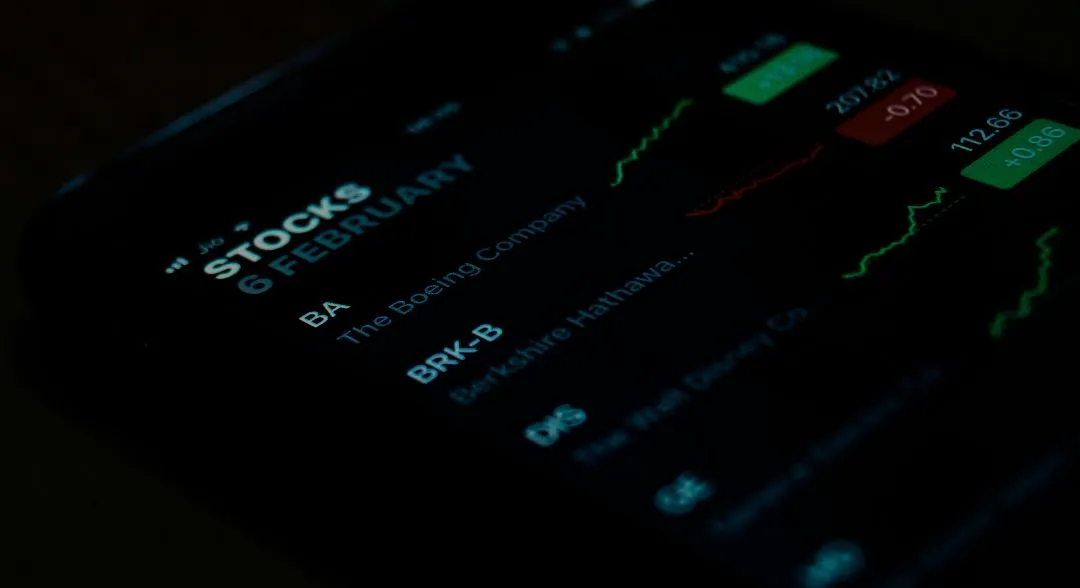
Photo by Stefan Gall on Unsplash


Fueling earnings

The NFTs, called Champion NFTs, will play a pivotal role in boosting the core Play-to-Earn (P2E) feature of the game. Players must possess Champion NFTs in order to earn victory points, or VPs, within the game’s central hub called the Arena. These VPs can then be converted to and distributed as Gala (GALA), the native token of the game’s publisher Gala Games.

The amount of VP that a player can acquire depends on factors such as the quantity and ranking of the Champion NFTs in their collection, as well as their tier ranking. Hence, more Champion NFTs means more VPs.

“We are delighted to meet the demand of gamers who are eager to purchase NFTs leading up to the official release of Champions Arena. Through this sale, our goal is to ensure that as many users as possible can experience one of the core functionalities of the game — earning — right from the initial launch,” said Choi Won-jong, Chief Business Officer of ONEUNIVERSE.


Global launch and exclusive offers

Champions Arena will launch globally at 5 PM PT on August 23 as a mobile and PC game with the exception of South Korea and select countries, according to Gala Games. The NFTs will be available for purchase on the Gala Games official website starting today until the launch. They will be packaged within “Champion Boxes” that contain one of 18 different playable Champions, including those in the highest tier of Legendary.

There is also an exclusive 30% discount event running until 3 PM on August 21.

More to Read
View All
Web3 & Enterprise·

May 11, 2023

Shots Fired in New OKX Ad Campaign

Shots Fired in New OKX Ad CampaignGlobal crypto spot and derivatives exchange OKX has launched a daring ad campaign that sets US-based rival exchange Coinbase firmly in its cross hairs.The formerly Chinese and now Seychelles-based exchange has pushed out a global ad campaign along the following theme: “The system doesn’t need an upgrade; it needs a rewrite.” The ads were launched on Tuesday, pointing out the ills of the traditional, centralized financial system.Photo by Merakist on UnsplashCrypto exchange rivalryThe advert doesn’t explicitly call out its rival, Coinbase. However, it is nuanced in taking a subtle dig at the US-based exchange. Exactly two months prior, on March 9, Coinbase released its own ad campaign. Coinbase claimed in its ad that “it’s time to update the system,” with OKX’s subsequent commercial having been carefully worded to poke fun at the Coinbase commercial.With a number of high profile epic failures of crypto businesses over the past twelve months, including the fall of FTX, the remaining exchanges in the business have been tripping over themselves in an effort to convince the alternative asset-investing public that theirs is the safest platform upon which they can securely trade.In its sixty second commercial, OKX poses the question “why don’t we change everything?”, set up by its claim that the conventional finance system is broken.The last of the big spendersThere’s been a notable change of strategy in the marketing activities of crypto businesses since the height of the last crypto bull run. Gone are the marketing excesses exemplified most by the now bankrupt FTX exchange.FTX demonstrated itself to be a profligate spender on all manner and means of marketing, particularly during 2021 and 2022. It paid Wall Street investor and Shark Tank star Kevin O’Leary $15 million to be a spokesperson for the company. Similar deals were struck with a range of celebrities including former NBA star Shaquille O’Neal, NFL stars such as former New England Patriots quarterback, Tom Brady, and a host of others.At the height of its marketing opulence, the fraudulently run firm signed a $135 million sponsorship deal that provided it with the naming rights to the home stadium of the NBA’s Miami Heat. 2022's Super Bowl, one of the world’s largest single marketing opportunities, saw FTX and others pay out big on advertising spend.By contrast, this year’s Super Bowl was almost a complete washout as far as crypto business participation was concerned. Meanwhile, all of the celebrities that featured in FTX’s marketing activities have found themselves the subject of multi-million dollar class action lawsuits filed by FTX creditors.A more sobering marketing strategyDespite the reputational damage that crypto has suffered due to these high profile failures, firms like OKX and Coinbase have continued to maintain a responsible level of advertising and marketing activity.That’s best exemplified by OKX’s ongoing marketing relationships with McLaren’s Formula One racing team and Manchester City Football Club. In March, US-based crypto exchange Kraken announced a marketing partnership with the Williams Formula One racing team.Crypto.com is probably the only crypto firm that spent excessively during the last bull run yet has continued to maintain a relatively high level of marketing activity. Much of that may have been due to commitments it had made during a more buoyant market. Notwithstanding that, the firm did fall foul of the UK advertising regulator, who banned its NFT promotion in December 2022.

news
Policy & Regulation·

Apr 11, 2023

Japan Progresses With Web3 White Paper Release

Japan Progresses With Web3 White Paper ReleaseJapan has released a white paper on Web3, with the aim of promoting the growth of the crypto industry in the country. The white paper, titled “Web3 for All: The Future of the Digital Economy in Japan”, outlines a number of proposals to make the regulatory environment for crypto more friendly and conducive to growth.©Pexels/DSDDeveloping a roadmapThe Japanese government has been looking at ways to foster innovation in the crypto industry, which has been gaining traction in recent years. With the release of the Web3 white paper, the government is hoping to provide a roadmap for the development of the industry in the country.One of the key proposals in the white paper is the establishment of a regulatory sandbox for crypto startups. The sandbox would provide a safe space for companies to experiment with new ideas and technologies, without the risk of falling foul of regulations. This would help to encourage innovation and entrepreneurship in the industry, and could lead to the creation of new products and services.Another proposal in the white paper is the introduction of a digital asset exchange license. This would allow companies to operate crypto exchanges in Japan, provided they meet certain regulatory requirements. This would help to create a more stable and reliable marketplace for cryptocurrencies in the country, and could attract more investors to the industry.Blockchain R&D hubThe white paper also proposes the establishment of a blockchain research and development hub. This would bring together academics, researchers, and industry experts to collaborate on the development of new blockchain technologies. The hub would help to promote innovation and knowledge sharing, and could lead to breakthroughs in the field.In addition to these proposals, the white paper also calls for the creation of a new government agency to oversee the development of the crypto industry in Japan. The agency would be responsible for implementing and enforcing regulations, as well as providing guidance and support to companies in the industry.The release of the Web3 white paper has been welcomed by the crypto industry in Japan. Many industry insiders see it as a positive step towards creating a more supportive environment for innovation and growth. Some have also praised the government for taking a proactive approach to the development of the industry, and for recognizing its potential to drive economic growth in the country.White paper concernsHowever, there are also some concerns about the proposals outlined in the white paper. Some worry that the regulatory sandbox may not provide enough protection for consumers, and that it could lead to the proliferation of untested and potentially risky products and services. Others have raised concerns about the potential for government interference in the industry, and the impact this could have on innovation and entrepreneurship.Despite these concerns, it is clear that the release of the Web3 white paper marks a significant milestone in the development of the crypto industry in Japan. With its proposals for a regulatory sandbox, digital asset exchange license, blockchain research and development hub, and new government agency, the white paper provides a roadmap for the growth of the industry in the country. It remains to be seen how these proposals will be received and implemented, but they are certainly a step in the right direction for the future of the crypto industry in Japan.

news
Policy & Regulation·

May 02, 2023

Bhutan Quietly Mining Bitcoin Since $5,000

Bhutan Quietly Mining Bitcoin Since $5,000The tiny nation of Bhutan continues to be full of surprises recently where crypto is concerned, with the latest report suggesting that the kingdom has been mining bitcoin for a number of years already.© Pexels/Pema GyamtshoAccording to a recent report in The Bhutanese, a Bhutan-based publication led by investigative journalist, Tenzing Lamsing, the landlocked nation had been mining bitcoin over the course of a “few years” already, in an effort to diversify its sovereign portfolio.Long-term investment strategyUjjwal Deep Dahal, CEO of Druk Holding and Investments (DHI), told the publication that the venture was part of a long-term investment strategy. DHI is the commercial arm of the Royal Government of Bhutan. It was formed pursuant to a Royal Charter in 2007 with the mandate of making investments on behalf of Bhutan while optimizing usage of resources.The mining activity had centered on Bitcoin although there was a small provision for Ethereum-based mining when Ethereum was a mineable proof-of-work (PoW)-based blockchain network. It’s unclear of the precise timeline but the report outlines that DHI has engaged in the mining space over a number of years, and at a time in which the Bitcoin unit price was as low as $5,000.Exploiting cheap hydroNestled in the Himalayas, Bhutan has considerable hydroelectric resources. Bitcoin mining is ordinarily an expensive exercise but in scenarios where there are plentiful energy resources with a marginally cheaper cost of production than the average, it can be an attractive and profitable enterprise. Dahal outlined that these conditions enabled DHI to reinvest profits back into additional mining equipment.The precise time-frame of DHIs entry into Bitcoin mining is open to speculation. However, we do know that the Bitcoin unit price was last below $5,000 at the onset of the pandemic in March 2020. Prior to that, Bitcoin had risen above $5,000 in April 2019 following an acute bear market in 2018.Crypto lender entanglementsBhutan and DHI hit the crypto radar last month when it was revealed that the kingdom had made significant investments into and out of failed crypto lenders Celsius and BlockFi. Dahal has said that the royal charter-mandated firm had taken out loans with both crypto lenders and had fully repaid those loans. However, that may have been something that happened later than anticipated. The Bhutanese company had a $30 million loan from BlockFi. BlockFi liquidated the Bitcoin collateral associated with that loan in 2022 but it left a shortfall of $800,000. The failed lender subsequently sued DHI. As of an April 13 court filing, BlockFi submitted a voluntary dismissal of the lawsuit to the courts, presumably because the shortfall was subsequently paid by DHI.In the case of Celsius, DHI had withdrawn $65 million from the lending platform prior to it declaring bankruptcy. Consequently, the matter has been the subject of speculation relative to the potential for the Celsius bankruptcy estate to pursue DHI for a clawback of the withdrawn funds.

news
Loading