Top

Next Month’s Hackathon Event in Seoul Draws Attention from Ethereum Developers

Web3 & Enterprise·August 14, 2023, 6:05 AM

Tickets for Ethcon Korea 2023, a conference dedicated to Ethereum developers and hackathon enthusiasts, are now available for purchase.
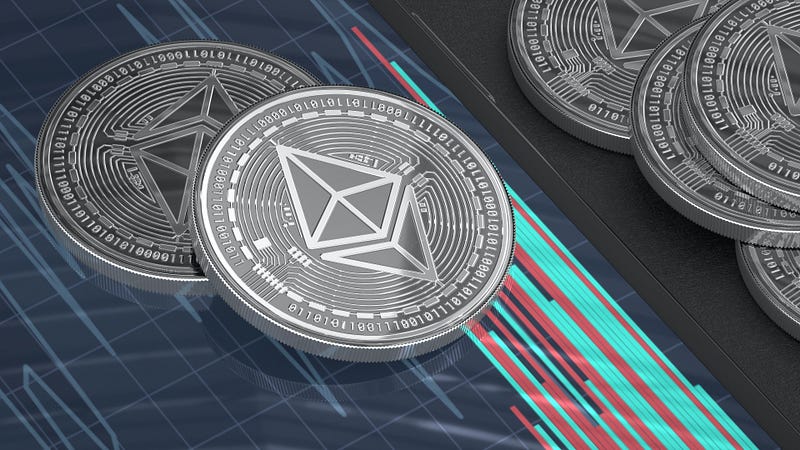
Photo by DrawKit Illustrations on Unsplash


Tickets now available

The Ethcon Korea organizing committee announced today that tickets are now on sale through the official event website. Participation in the hackathon is open to programmers who stake $79, while conference enthusiasts can buy their tickets at the price of $69.

With the goal of expanding the Ethereum development ecosystem, Ethcon Korea is the only non-profit Ethereum developer conference in Korea, benefiting from the sponsorship of the Ethereum Foundation. This year’s event will take place in Seoul between September 1 and 3, consisting of four main parts: the conference, an educational workshop, a hackathon, and a demo day.


Vitalik Buterin to deliver a keynote speech

At the conference, Ethereum co-founder Vitalik Buterin is set to deliver a keynote speech, which will be followed by presentations of prominent developers and researchers from both home and abroad. Industry experts will participate in the workshop to share valuable insights, bolster participants’ technical skills, and cultivate a collaborative environment, encouraging them to showcase their potential in hackathon projects.


Hackathon backed by quadratic funding

The three-day hackathon will be backed by the quadratic funding method, an idea initially proposed by Vitalik Buterin together with Harvard economist Zoë Hitzig and Microsoft researcher E. Glen Weyl. Quadratic funding is a democratic and inclusive funding mechanism that puts more emphasis on smaller contributions from a larger group of contributors.

The organizing committee noted that Ethcon Korea 2023 will not only encourage developers to pursue learning but will also drive growth within the blockchain industry. The group also added that the event will play a role in increasing the global recognition and understanding of the Korean Ethereum community.

Ethcon Korea 2023 is sponsored by many renowned organizations including Ethereum layer-2 projects Optimism and Polygon, decentralized oracle network Chainlink, and blockchain investment group Hashed. Contributions from these sponsors and proceeds from ticket sales will be allocated towards event operations and the establishment of a prize pool.

The organizing committee is recruiting individuals who are interested in contributing as volunteers or offering their expertise as hackathon advisors. Those interested in participating in these roles can apply through the official event website. The application window for these roles will remain open until the end of this month.


More to Read
View All
Policy & Regulation·

Aug 29, 2025

Ex-PBOC governor warns on stablecoin speculation, questions case for yuan peg

China’s former central bank governor has warned that speculation in stablecoins could threaten financial stability, Bloomberg reported, citing a post from the Beijing-based think tank CF40 Research. His remarks run counter to calls from some economists and industry figures for a yuan-backed stablecoin as the U.S. advances its digital-asset policy agenda. Zhou Xiaochuan, who led the People’s Bank of China (PBOC) from 2002 to 2018, delivered the comments at a closed-door meeting in mid-July. He argued that China’s payment rails—spanning third-party platforms, the central bank digital currency (CBDC), digital wallets, and clearing infrastructure—are already highly efficient, leaving little scope for stablecoins to deliver meaningful cost savings. He also rejected the premise that conventional cross-border payments come at steep costs. Zhou identified price manipulation driven by speculative trading as the chief risk to financial and asset markets, adding that current safeguards in the U.S., Hong Kong, and Singapore remain inadequate.Photo by Mitchell Luo on UnsplashOnshore controls push yuan stablecoins offshoreAny debate over a yuan-linked token must also contend with China’s currency structure. The onshore yuan (CNY) is subject to strict capital controls and limited cross-border convertibility, while the offshore yuan (CNH) trades more freely. As a result, any prospective yuan stablecoin would likely reference the CNH; pegging directly to the CNY would conflict with Beijing’s capital rules. An earlier Reuters report has indicated that Beijing is weighing whether to authorize a yuan-pegged stablecoin to promote international use of the currency. Analysts caution that such a token would almost certainly be confined to offshore markets, even if regulators proceed. U.S. sets federal guardrails for stablecoinsMeanwhile, policy moves in the U.S. are gathering pace. In July, President Donald Trump signed the Guiding and Establishing National Innovation for U.S. Stablecoins (GENIUS) Act into law, creating a federal framework for stablecoins. A White House fact sheet says the law requires issuers to maintain 100% reserves in liquid assets such as U.S. dollars or short-term Treasuries and to publish monthly disclosures on reserve composition. The administration has argued that dollar-backed stablecoins could bolster demand for Treasuries and reinforce the dollar’s reserve-currency role. Hong Kong has emerged as comparatively receptive to digital assets. The special administrative region’s Stablecoins Ordinance entered into force on Aug. 1, establishing a licensing regime to oversee Hong Kong dollar–backed stablecoins. Earlier this month, CMB International Securities, a subsidiary of China Merchants Bank, became the first Chinese bank-affiliated institution to offer trading in Bitcoin, Ethereum, and Tether (USDT). Industry voices are also pressing the case for stablecoins. At the WebX conference in Tokyo on Aug. 25, Binance co-founder Changpeng Zhao (CZ) argued that CBDCs are becoming obsolete, while stablecoins—typically backed by real assets—enable wider transactions and are gaining market traction. He said CBDCs remain rarely implemented due to limited demand and suggested China appears more open to stablecoins after years of tighter oversight, pointing to Hong Kong’s efforts to build an ecosystem. Potential PBOC stimulus may lift cryptoChina remains a consequential force in global crypto markets. A recent report suggested that potential PBOC stimulus could fuel an altcoin rally. With China accounting for 19.5% of global GDP, shifts in its monetary stance are seen as important drivers of worldwide liquidity. Following July data showing a 0.1% month-on-month decline in retail sales, a 0.4% rise in industrial production, and an uptick in unemployment to 5.2%, analysts expect measures to support growth. Any additional liquidity could flow into risk assets, including cryptocurrencies, potentially pushing digital tokens toward new highs. 

news
Web3 & Enterprise·

Dec 20, 2023

MEVerse and XPLA forge partnership to herald new era of blockchain gaming

MEVerse and XPLA forge partnership to herald new era of blockchain gamingMEVerse, the blockchain metaverse platform operated by South Korean gaming company ME2ON Group, and global layer 1 blockchain XPLA have established a partnership to share their respective technologies and create content to popularize Web3 gaming, according to an official announcement on XPLA’s Medium on Wednesday (KST). Their larger goal outlines a commitment to redefining the industry’s landscape by creating a dynamic and engaging metaverse for users worldwide.Photo by Scott Graham on UnsplashHigh hopes“XPLA aims to broaden the horizons of the Web3 industry and contribute to the popularization of blockchain through collaboration with various projects. We plan to work closely with the MEVerse platform, which has secured a high-level lineup of Web3 games, to provide participants with an even richer experience,” said Paul Kim, Team Leader at XPLA.Seamless metaverse experienceMEVerse is known for leveraging its high-speed blockchain technology, which can process 9,000 transactions per second, to help users immerse themselves in the metaverse and enjoy the content it has to offer. Notably, it employs a Proof of Formulation (PoF) consensus algorithm developed by blockchain service platform FLETA — a more eco-friendly alternative to Proof of Work (PoW) that prevents forks by confirming blocks and transactions in real time. The platform also implements cross-chain technology to enhance scalability and interoperability.MEVerse’s blockchain infrastructure includes the Web3 P2E casual game portal MEVerse GameZ, non-fungible token (NFT) marketplace MEVerse DEX, blockchain explorer MEVerse Scan, and more. It also features games like X Heroes: NFT War and Pocket Battles: NFT War.This development is the newest partnership in XPLA’s growing lineup. The platform recently teamed up with Study-to-Earn (S2E) project EDUM and Game and Earn (G&E) platform PERPLAY in an effort to branch out its business.

news
Policy & Regulation·

Sep 01, 2023

Report Reveals Global Trends and Online Discourse on Crypto Travel Rule

Report Reveals Global Trends and Online Discourse on Crypto Travel RuleCODE, the only Travel Rule solution provider in South Korea, together with blockchain consulting firm Catalyze Research, published a report that sheds light on global trends in Travel Rule legislation and popular online keywords associated with the Travel Rule. The Travel Rule is a set of guidelines that virtual asset service providers (VASPs) and financial institutions are obligated to observe in order to counteract money laundering and terrorist financing. These guidelines require these entities to share information about both the sender and the recipient of cryptocurrency or financial transactions.The authors of this report gathered online comments related to the Travel Rule from January 1, 2019 to July 31, 2023. They conducted this analysis across news outlets, media platforms, online forums, and various social media channels, encompassing over 200 countries and 150 languages.Photo by Volodymyr Hryshchenko on UnsplashKey events driving discussionsAccording to the report, online discussions concerning the Travel Rule intensified around the time of several key events. These events include the enforcement of the Travel Rule in South Korea in March 2022, the approval of the Markets in Crypto-Assets Regulation (MiCA) and Transfer of Funds Regulation (TFR) by the European Union in April 2023, endorsements of the Travel Rule by G7 countries in Japan in May 2023, and the subsequent implementation of the Travel Rule in Hong Kong and Japan in June 2023.Notably, South Korea, Japan, and France experienced the most substantial surges in Travel Rule-related discussions during the first half of 2023. In South Korea, comments were prompted by a lawmaker’s scandal related to cryptocurrency trading. Meanwhile, Japan and France observed a rise in comments linked to the enforcement of their respective local Travel Rule regulations in the second quarter.Negative market responsesIn addition, markets responded more negatively than positively to the tightening of Travel Rule regulations. The concerns about the market contraction were stronger than the positive outlook on the advantages of preventing money laundering.Lee Sung-mi, CEO of CODE, highlighted the growing significance of Travel Rule solution providers in ensuring the compliance of virtual asset service providers (VASPs) with the regulatory demands of various jurisdictions. Particularly, with the Financial Action Task Force (FATF), G7 nations, and the EU at the forefront, countries have been making noteworthy strides in Travel Rule implementations since 2023, she further noted. Lee emphasized CODE’s commitment to aiding its member VASPs in adhering to Travel Rule regulations by delivering secure and convenient services that align with the evolving global regulatory landscape.

news
Loading