Top

$120M Crypto Ponzi Scheme Exposed in India

Policy & Regulation·August 10, 2023, 1:48 AM

In a recent crackdown, local authorities in the state of Odisha in India, have dismantled a massive $120 million cryptocurrency Ponzi scheme.

That’s according to a report by local news agency ANI earlier this week. The operation led by the Economic Offences Wing (EOW) of the state police has resulted in the arrest of key individuals orchestrating the fraudulent endeavor. This latest development underscores the growing concerns around cryptocurrency scams and their detrimental impact on investors.

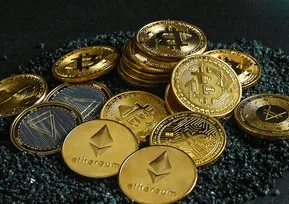
Photo by Ayiman Mohanty on Unsplash


STA crypto token

The mastermind behind the Ponzi scheme had adeptly evaded capture by frequently changing locations. The scheme, operating across India, revolved around the STA crypto token, a digital asset at the heart of the fraudulent activities.

Similar to the infamous OneCoin scandal, where billions were swindled from unsuspecting investors, the STA token scheme exploited victims who had invested in the token and then recruited others under the guise of a multi-level marketing initiative. Promised bonuses and extravagant returns were used as bait to lure individuals into the scheme, which eventually unraveled, leaving numerous investors financially devastated.


Unregulated token offering

Reports highlight that the STA token was not authorized by any regulatory body. This glaring absence of oversight enabled the scammers to continue their operations unchecked. The nature of the scheme involved recruiting victims in various Indian states who were promised substantial returns. These victims, in turn, were enticed to bring in new investors, creating a vicious cycle of recruitment and investment.

The investigation into the scheme revealed that the STA token offering attracted individuals through aggressive promotional strategies. This allowed the scheme to establish a vast network across India, involving approximately 200,000 individuals. The victims were led to believe that their investments would yield significant bonuses and returns, a tactic that echoes the tactics used by OneCoin promoters.


False claims

The STA token was introduced in September 2021 and rapidly established a presence on social media platforms, presenting itself as a legitimate cryptocurrency. It falsely claimed to be a blockchain-based platform connecting users with local farmers. This facade lent an air of legitimacy to the scheme, effectively deceiving unsuspecting investors.

The scheme’s audacity was further highlighted by a grand event hosted by STA criminal promoters in a luxurious hotel in Goa. This extravagant affair aimed to further legitimize the project and attract more victims.

This incident adds to a series of cryptocurrency-related scams that have plagued India. The GainBitcoin scam, which came to light last year, led to the loss of over $1.25 billion for around 100,000 victims. The Indian authorities have responded by issuing public advisories warning citizens against falling victim to such schemes that promise quick wealth through cryptocurrency investments.

In a recent parliamentary session, Minister of State for Finance Pankaj Chaudhary revealed that the Enforcement Directorate (ED) is actively investigating multiple instances of cryptocurrency-related fraud. These investigations have uncovered proceeds of crime amounting to over $130 million.

More to Read
View All
Policy & Regulation·

Sep 13, 2023

Compliance and Cooperation — A Necessary Formula for Combatting Crypto Crimes

Compliance and Cooperation — A Necessary Formula for Combatting Crypto CrimesFrom common scams like voice phishing to threats of violence, the involvement of cryptocurrencies in crimes against the general public is steadily on the rise both in South Korea and abroad.Photo by Bermix Studio on UnsplashAccording to blockchain data analysis firm Chainalysis, the scale of cryptocurrency-related crimes and hacking on a global scale has decreased by 45.2% and 23.5%, respectively, compared to last year. However, financial losses resulting from smaller ransomware attacks, including phishing scams, are showing an upward trend.Authorities and industry figures alike are increasingly emphasizing the need for close cooperation to combat this growing issue, as existing regulations and legal frameworks remain insufficient to do so.Chainalysis and crypto exchange Binance co-hosted a policy summit in Seoul on Tuesday called “Securing the Future of Crypto,” where experts gathered at the Courtyard Marriott hotel to discuss compliance and cooperation between the public and private sectors in fighting crypto crimes.Challenges and complexities in crypto investigations“The Korean National Police Agency receives dozens of reports of financial losses and urgent requests for account freezes every day, with 80% of them pertaining to Binance,” said Kim Min-jae, an investigator at the National Police Agency’s International Cyber Cooperation Division.Citing a recent case of a voice phishing scam targeting a woman in her 60s, Kim said that authorities were able to proceed with the investigation within 30 minutes after receiving information from the exchange. However, addressing crimes beyond large cryptocurrency exchanges like Binance, such as those involving decentralized finance (DeFi) systems or foreign exchanges, poses a more difficult challenge due to the lack of proper measures to deal with them.Lee Soo-pyeong, a cybercrime investigator at the Korean National Police Agency’s Cyber Investigation Division, also noted that although domestic cases are relatively easier to investigate, there have been many cases — such as the appalling Nth Room case that caused an uproar throughout Korea in 2020 — that involved overseas accounts and exchanges.Steps for effective crime controlWhat measures, then, should authorities and corporations take in order to deal with such issues? Lee stressed the importance of cooperation among international judicial bodies and adherence from businesses to enhance the response to increasingly sophisticated crypto crimes.Know Your Customer (KYC) standards — the guidelines used in investment and financial services to verify customers’ identities and assess their risk and financial profiles — play an important role in this regard. However, “There are no platforms yet, including major exchanges like Binance, that provide us with personal information through KYC measures when funds are laundered,” Kim explained. He expressed hopes for a system jointly established by relevant entities, including local exchanges, that will enable swift criminal investigation.Lee also highlighted the importance of compliance from foreign companies, stating, “While it’s possible to request mutual legal assistance in criminal matters from the International Criminal Police Organization (Interpol), active cooperation from foreign companies is essential.”From an international point of view, Jarek Jakubcek, Head of Intelligence and Investigations APAC at Binance, pointed out that upholding international standards and standardized processes is important, given the fact that crypto crimes transcend borders. While some countries excel in compliance and enforcing anti-money laundering (AML) policies, others fall short, leading criminals to exploit these disparities.Recently, there have been criminals who move their funds through blockchain networks. The development of bridge technology, which facilitates cross-chain asset transfers, has led to laundering techniques becoming more and more sophisticated. However, he assured that tracing funds is still possible, although doing so has become harder than before.The amalgamation of these circumstances has thereby ushered in the era of Know Your Transaction (KYT). While exchanges have traditionally been obligated to perform Know Your Customer (KYC) procedures to prevent money laundering, they must now go beyond verifying user information and analyze customer transaction data in order to understand where money is coming from and how it flows, Jakubcek said. To achieve this, he argued, they must request information from users and work with on-chain data analysis solution companies like Chainalysis to secure real transaction data. Alec Zebrick, Manager of Investigations in the Asia-Pacific region at Chainalysis, added that leveraging on-chain data allows the verification of most transactions.In the rapidly evolving crypto landscape where crimes are still a force to deal with, experts agree that reinforcing compliance and cooperation between exchanges and authorities is imperative.

news
Web3 & Enterprise·

Jun 09, 2023

Shinhan Bank Advances into Metaverse with the Launch of Shinamon Season 3

Shinhan Bank Advances into Metaverse with the Launch of Shinamon Season 3According to a report by local news media Dailian, Shinhan Bank, a prominent financial institution in South Korea, has made a stride in its metaverse endeavors. The bank announced yesterday the launch of Shinamon Season 3, a metaverse platform, accompanied by a series of celebratory events to mark its implementation.Photo by Richard Horvath on UnsplashMerging financial & non-financial realmsShinhan Bank claims it is the first Korean bank to independently develop a metaverse platform. With the launch of Shinamon Season 3, the bank has merged the financial and non-financial realms, providing customers with access to a user-friendly platform that offers fun and engaging experiences.In Shinamon Season 3, Shinhan Bank has enhanced its financial services by replacing mobile gifts with reward points and providing additional benefits to customers who make transactions through the bank.Personalization and enhanced servicesAfter gathering customer feedback over the past two seasons, Shinhan has made enhancements to the platform’s environment and interface. Additionally, they have introduced the ability for customers to personalize their characters’ costumes. Looking ahead, the bank intends to leverage NFT wallets to help customers reach other platforms.To celebrate the release of Shinamon Season 3, Shinhan Bank is organizing special events that will grant rewards to customers who join the metaverse. Participants of Shinamon Season 3 who engage in daily quests will have an opportunity to win enticing prizes, including electronic devices, free fried chicken coupons, and reward points.A Shinhan Bank official said that customer feedback was given top priority in the preparations for the launch of Shinamon Season 3. The official added that will continue to reflect customer needs and integrate a diverse range of financial services. This approach aims to create a metaverse platform that closely resonates with real-life experiences, making it more relatable for customers.

news
Policy & Regulation·

May 27, 2023

Study Places Hong Kong as Leader in Crypto Readiness

Study Places Hong Kong as Leader in Crypto ReadinessHong Kong, according to a recent study conducted by Forex Suggest, has emerged as the leading jurisdiction worldwide in terms of its readiness for cryptocurrencies. The study evaluated various factors such as the number of blockchain startups per 100,000 people and the density of crypto ATMs in relation to the population.Photo by Traxer on UnsplashZero capital gains taxThe attractiveness of Hong Kong for investors in the crypto space stems from its advantageous tax policies. The study noted that Hong Kong does not levy capital gains taxes on cryptocurrency, making it an appealing destination for crypto enthusiasts. The United States and Switzerland secured the second and third positions, respectively, in the rankings of the most crypto-ready countries.In recent times, Hong Kong has actively embraced investments from digital asset companies and is poised to implement new regulations for the industry. Effective from June 1, the city’s new rules aim to establish Hong Kong as a global hub for digital assets. These regulations permit licensed cryptocurrency trading platforms to offer services to retail investors while incorporating measures to safeguard individual traders.Global crypto firms are gearing up for that new licensing approach, carving out separate corporate entities in order to meet the regulatory requirements which the Hong Kong regulator, the Securities Futures Commission (SFC), has set. Another Hong Kong regulator, the Hong Kong Monetary Authority (HKMA), is also opening up to embrace digital asset innovation through a pilot project implicating the tokenization of real world assets.Regarding the number of blockchain startups, Hong Kong boasts three startups per 100,000 individuals, securing the second position globally. Topping the list is Switzerland, with an impressive count of 12.9 blockchain startups per 100,000 residents, amounting to a total of 1,128.The study also highlighted that countries such as Hong Kong, Switzerland, Panama, Portugal, Germany, Malaysia, and Turkey impose the lowest taxes on cryptocurrencies. These nations exempt individuals from capital gains taxes on profits derived from cryptocurrency trading.Crypto ATM proliferationWhen considering the prevalence of crypto ATMs, Hong Kong ranks third globally, with two ATMs per 100,000 people, totaling 149 ATMs. The United States takes the top spot with nearly 34,000 crypto ATMs, but when normalized to the population, it has 10.1 ATMs per 100,000 individuals.Regressive measures in USIn contrast to Hong Kong’s favorable environment, regulators in the United States have intensified their efforts to tighten regulations on cryptocurrency exchanges, leading many within the industry to advocate for clearer guidelines. Consequently, several exchanges are exploring jurisdictions that offer more favorable conditions.Forex Suggest emphasized that the report’s findings were based on extensive data analysis, taking into account factors such as tax regulations, legislation, the presence of blockchain startups, and the level of interest in cryptocurrencies. Each jurisdiction received a normalized score out of 10 for each factor, and the overall rankings were determined by averaging these scores.Hong Kong’s position as the most crypto-ready jurisdiction in the world showcases its commitment to fostering innovation and becoming a global leader in the digital asset space. With its advantageous tax policies, growing number of blockchain startups, and forthcoming regulations, the autonomous Chinese territory is solidifying its position as an attractive destination for businesses and investors in the cryptocurrency space.

news
Loading