Top

Study Places Hong Kong as Leader in Crypto Readiness

Policy & Regulation·May 27, 2023, 12:58 AM

Hong Kong, according to a recent study conducted by Forex Suggest, has emerged as the leading jurisdiction worldwide in terms of its readiness for cryptocurrencies. The study evaluated various factors such as the number of blockchain startups per 100,000 people and the density of crypto ATMs in relation to the population.
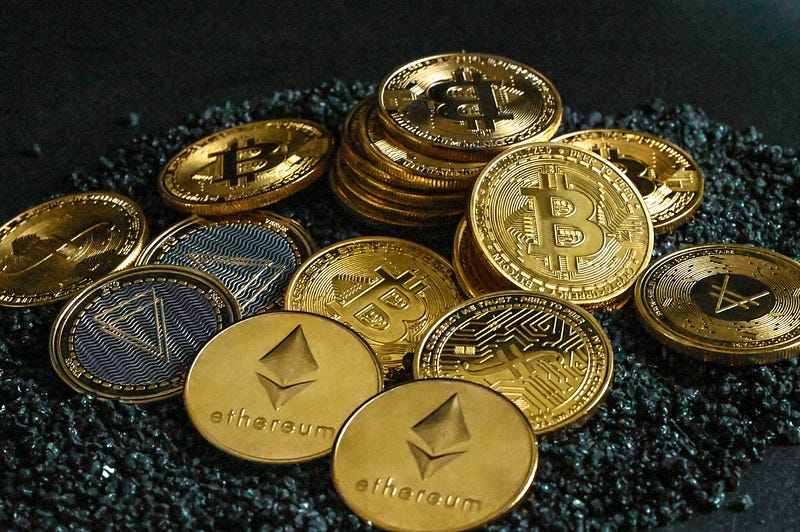
Photo by Traxer on Unsplash


Zero capital gains tax

The attractiveness of Hong Kong for investors in the crypto space stems from its advantageous tax policies. The study noted that Hong Kong does not levy capital gains taxes on cryptocurrency, making it an appealing destination for crypto enthusiasts. The United States and Switzerland secured the second and third positions, respectively, in the rankings of the most crypto-ready countries.

In recent times, Hong Kong has actively embraced investments from digital asset companies and is poised to implement new regulations for the industry. Effective from June 1, the city’s new rules aim to establish Hong Kong as a global hub for digital assets. These regulations permit licensed cryptocurrency trading platforms to offer services to retail investors while incorporating measures to safeguard individual traders.

Global crypto firms are gearing up for that new licensing approach, carving out separate corporate entities in order to meet the regulatory requirements which the Hong Kong regulator, the Securities Futures Commission (SFC), has set. Another Hong Kong regulator, the Hong Kong Monetary Authority (HKMA), is also opening up to embrace digital asset innovation through a pilot project implicating the tokenization of real world assets.

Regarding the number of blockchain startups, Hong Kong boasts three startups per 100,000 individuals, securing the second position globally. Topping the list is Switzerland, with an impressive count of 12.9 blockchain startups per 100,000 residents, amounting to a total of 1,128.

The study also highlighted that countries such as Hong Kong, Switzerland, Panama, Portugal, Germany, Malaysia, and Turkey impose the lowest taxes on cryptocurrencies. These nations exempt individuals from capital gains taxes on profits derived from cryptocurrency trading.


Crypto ATM proliferation

When considering the prevalence of crypto ATMs, Hong Kong ranks third globally, with two ATMs per 100,000 people, totaling 149 ATMs. The United States takes the top spot with nearly 34,000 crypto ATMs, but when normalized to the population, it has 10.1 ATMs per 100,000 individuals.


Regressive measures in US

In contrast to Hong Kong’s favorable environment, regulators in the United States have intensified their efforts to tighten regulations on cryptocurrency exchanges, leading many within the industry to advocate for clearer guidelines. Consequently, several exchanges are exploring jurisdictions that offer more favorable conditions.

Forex Suggest emphasized that the report’s findings were based on extensive data analysis, taking into account factors such as tax regulations, legislation, the presence of blockchain startups, and the level of interest in cryptocurrencies. Each jurisdiction received a normalized score out of 10 for each factor, and the overall rankings were determined by averaging these scores.

Hong Kong’s position as the most crypto-ready jurisdiction in the world showcases its commitment to fostering innovation and becoming a global leader in the digital asset space. With its advantageous tax policies, growing number of blockchain startups, and forthcoming regulations, the autonomous Chinese territory is solidifying its position as an attractive destination for businesses and investors in the cryptocurrency space.

More to Read
View All
Web3 & Enterprise·

May 30, 2023

Dunamu’s Q1 Revenue Drops 28.6% Amid Global Liquidity Contraction

Dunamu’s Q1 Revenue Drops 28.6% Amid Global Liquidity ContractionDunamu, the operator of Upbit, a major cryptocurrency exchange in South Korea, announced today the release of its Q1 2023 report.Photo by Tiger Lily on PexelsDeclining revenueAccording to the Data Analysis, Retrieval and Transfer System (DART) of the Financial Supervisory Service (FSS), Dunamu’s consolidated sales revenue for the first quarter of 2023 was 304.8 billion KRW ($231.3 million). This figure represents a 28.6% decrease from 426.8 billion KRW ($323.9 million) recorded during the same period last year. Additionally, its operating income declined by 26.3% to 211.9 billion KRW ($160.8 million) from 287.8 billion KRW ($218.4 million). However, its net income showed an increase of 54.9%, reaching 326.3 billion KRW ($247.6 million).Global liquidity contractionDunamu attributed the decline in revenue to several factors, including the ongoing global liquidity contraction, economic downturn, and reduced investor confidence. These factors collectively impacted the company’s financial performance during the first quarter of 2023. On a positive note, Dunamu linked the net income increase to the recovery and upward movement of digital asset prices in comparison to the previous quarter.Established in April 2012, Dunamu has enjoyed noticeable growth by offering a range of services related to digital assets, securities, and asset management. In recent years, it has been tapping into new technology trends like non-fungible tokens (NFTs) and metaverses to adapt to the era of Web3 and enhancing transaction security and convenience for valuable assets.As a company with a shareholder base exceeding 500, Dunamu has been disclosing its business reports as well as quarterly and semiannual reports since 2022 in line with the Korean Capital Markets Act’s requirements.

news
Web3 & Enterprise·

Jul 09, 2025

Metaplanet aspires to acquisition of digital bank

The CEO of Japanese hotel operator turned Bitcoin treasury company, Metaplanet, has suggested that the firm may consider acquiring a digital bank in the future. Simon Gerovich, the firm’s CEO and a former Goldman Sachs banker, told the Financial Times that part of the second stage of its overall strategy may involve “acquiring a digital bank in Japan and providing digital banking services that are superior to the services which retail now is getting.”Photo by Kanchanara on UnsplashBitcoin gold rushGerovich explained that phase one of Metaplanet’s plan involves participating in what he considers to be “a bitcoin gold rush.” He added: “We need to accumulate as much bitcoin as we can . . . to get to a point where we’ve reached escape velocity and it just makes it very difficult for others to catch up.” Other firms are jumping on the bandwagon, as within a very short timeframe, 140 companies around the world have adopted a Bitcoin treasury strategy. Metaplanet currently weighs in as the fifth-largest corporate holder of Bitcoin globally. Right now, the company holds 15,555 BTC. Its target is a holding of 210,000 BTC, which equates to around 1% of the total Bitcoin supply. Based on current pricing, such a holding would be worth in the region of $23 billion. Acquiring cash-generating businessesOnce the company has accomplished its Bitcoin accumulation goals, it plans to move on to phase two, acquiring cash-generating businesses while leveraging its Bitcoin holdings in order to do so. Using Bitcoin as collateral, Gerovich said that Metaplanet will “get cash that we can use to buy profitable businesses.”  While inroads are being made with regard to the acceptance of Bitcoin as a corporate reserve asset, it is earlier days still for its acceptance as collateral. Last month, the Federal Housing Finance Agency (FHFA) in the United States, ordered Fannie Mae and Freddie Mac, key government-sponsored players in the American mortgage market, to explore the treatment of Bitcoin as eligible collateral for mortgages. Standard Chartered and crypto exchange OKX launched a pilot program earlier this year geared towards the use of crypto for collateral purposes. Gerovich talks in terms of Metaplanet’s phase two plan playing out at a time “when bitcoin, like securities or government bonds, can be deposited with banks and then they’ll provide very attractive financing against that asset.” The Metaplanet CEO stated that he expects the Bitcoin accumulation phase of the plan to play out over a period of between four and six years. The Tokyo-listed firm started accumulating Bitcoin in 2024. Some market participants are backing Metaplanet’s strategy with their own money. Global investment management firm Capital Group recently became Metaplanet’s second-largest investor. Bitcoin treasury criticsHowever, the emergence of Bitcoin treasury firms has also drawn quite a few detractors. Some critics point out that many of these companies have a negative operating income. Market analyst Caleb Franzen asserted that even after buying Bitcoin, they’re still junk companies. Others point out that too many firms have jumped on the Bitcoin treasury bandwagon, making the prospect no longer attractive. Fakhul Miah, managing director of GoMining Institutional, is also concerned about copycats. He told Cointelegraph that ”if these smaller firms crash, we could see a ripple effect that hurts Bitcoin’s image.”

news
Policy & Regulation·

Aug 04, 2025

Hong Kong taxis likely test case for stablecoin payments

With the Chinese autonomous territory of Hong Kong having introduced its new Stablecoins Ordinance on August 1 and local taxi operators required to facilitate two forms of digital payment from April 1, 2026, a case is being made that this eventuality lends itself to an ideal test case for stablecoin payments.Photo by The Transport Enthusiast DC on UnsplashA perfect test caseIn an opinion piece published by Bloomberg on Aug. 3, columnist Andy Mukherjee asserted that Hong Kong taxis would be “a perfect stablecoin test case,” suggesting that the timing is ideal for stablecoins, given that a new licensing regime has come into effect via the city’s Stablecoins Ordinance.  In an interview, Franz Bergmueller, CEO of Switzerland-headquartered crypto bank AMINA Bank, said that “stablecoins for me are a killer use case.” On social media, AMINA Bank claimed that it would be “a major step in the right direction” if Hong Kong taxis start to accept stablecoin payments from customers. It emerged last December that the city’s taxi drivers would be required to install both electronic payment facilities and navigation systems, based on a filing made to Hong Kong’s Legislative Council. The filing outlined that while some taxi drivers currently offer electronic payment options, many insist on cash payment. The city’s Transport and Logistics Bureau suggested that “drivers offer at least two electronic payment options, including both QR code and non-QR code methods.” Stablecoin payments overseasThere has been some limited use of stablecoins as a payment method by taxi services in places with unstable currencies such as Argentina and Venezuela. The world’s most popular ride-hailing service, Uber, is understood to be studying the feasibility of offering stablecoin-based payments. In 2024, Asian rival Grab commenced accepting crypto, including the USDT and USDC stablecoins, as a means of payment for ride-sharing and food delivery services in Singapore. Last month, it extended that facility to its platform users in the Philippines.In June it emerged that Tawasul Transport, a taxi service in Abu Dhabi in the United Arab Emirates (UAE), had partnered with Al Maryah Community Bank (Mbank) and Abu Dhabi’s Department of Municipalities and Transport to launch a pilot program implicating the use of AE Coin, a UAE dirham-pegged stablecoin, as a means of payment. Bloomberg’s Mukherjee suggests that for entities now applying for stablecoin licensing, this new digital payment requirement for Hong Kong’s taxi services could provide an immediate segue to onboard users and make a new stablecoin product popular. Mukherjee places specific emphasis in this regard on what actions Ant Group may take. It emerged recently that Ant Group, an affiliate of the Alibaba Group, intends to apply for stablecoin licensing across Asian markets, including Hong Kong. The company is already a leader in Asia in digital payments through Alipay, which serves 1.3 billion users.Although Ant Group is based in mainland China, Hong Kong would offer the company the opportunity to test the establishment of a stablecoin for retail payments.

news
Loading