Top

NEOPIN Strengthens Japanese Market Strategy for Its Global Expansion

Web3 & Enterprise·August 07, 2023, 3:50 AM

NEOPIN, the global CeDeFi platform of South Korean investment holding company Neowiz Holdings, announced the strengthening of its strategy to enter the Japanese market as part of its global expansion plan.

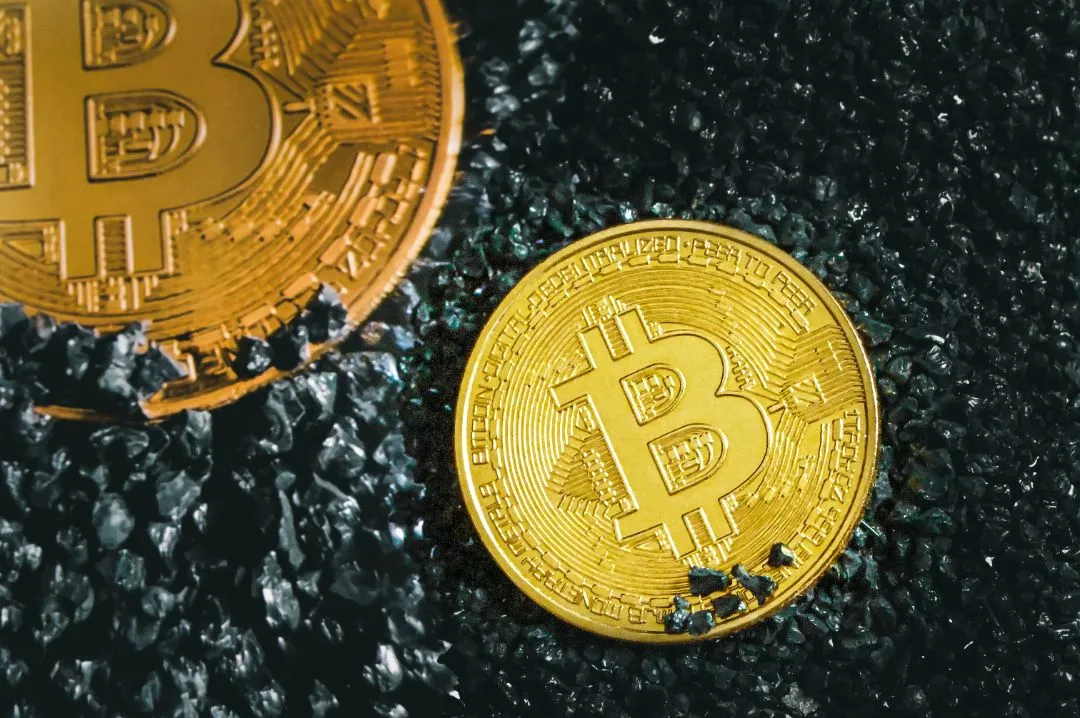
Photo by Aditya Anjagi on Unsplash


Three key initiatives

To achieve this goal, NEOPIN has devised three key initiatives. Firstly, it will make investments in Japanese partners and provide support for their entry into other markets such as Korea, the Middle East, and Africa. Secondly, NEOPIN aims to facilitate the entry of its existing partners into Japan. Lastly, the Korean platform plans to collaborate closely with the Finschia Foundation and its members to effectively drive its expansion efforts in Japan.


Web3 landscape in Japan

Since the Mt. Gox incident in 2014, wherein the major Tokyo-based cryptocurrency exchange went bankrupt due to hacking attacks, Japan has responded by implementing stricter regulations. However, in recent times, the Japanese government has displayed a more positive stance towards Web3 technology, aiming to attain dominance in this sector. Illustrating this commitment, the Web3 project team, operating under the ruling Liberal Democratic Party’s (LDP) Working Group for Digital Society Promotion, released the Web3 White Paper in April. The document underscores Japan’s determination to lead the global market by fostering a business-friendly environment for Web3 innovation.

Moreover, Prime Minister Fumio Kishida recently delivered a keynote speech at Japan’s annual Web3 conference, WebX, reaffirming the government’s dedication to establishing a Web3-friendly ecosystem. These initiatives signal Japan’s potential to contribute to the growth of the cryptocurrency and decentralized finance (DeFi) industry.


Adaptation to regulations

NEOPIN’s operator Neowiz Partners, formerly known as NEOPLY, became part of the Innovation Programme of the Abu Dhabi Investment Office (ADIO) in the United Arab Emirates (UAE), with an aim to become the world’s first regulated DeFi platform. It is also working with the Abu Dhabi Global Market (ADGM) to develop a DeFi regulatory framework for the Gulf nation. In a similar vein, NEOPIN strives to respond quickly to the changing regulatory landscape in Japan to ensure the Korean CeDeFi protocol firmly establishes its presence in the Japanese market.

In addition to providing direct and indirect service offerings in Japan, NEOPIN will also invest in and partner with local Web3 projects. One significant step taken by NEOPIN was its participation in IVS Crypto 2023, a high-profile Web3 startup event held in Kyoto in June. At this event, NEOPIN engaged with various Japanese businesses, initiating important connections. Since then, the Korean platform has been making progress in advancing communication and collaborations with Japanese enterprises.


NEOPIN as blockchain validator

Collaboration with the Finschia Foundation will also be strengthened to achieve success in the Japanese market. In July, the blockchain mainnet Finschia launched its governance consortium and revealed its members. Within just four hours of the consortium’s launch, NEOPIN, as a governance member, received more than 1 million delegated votes, maintaining its position at the top spot in terms of voting power ever since. The Finschia mainnet was established by Line Tech Plus, a blockchain subsidiary of Tokyo-based messaging app giant Line Corporation.

Serving as validators on various blockchains, including Ethereum, Tron, Cardano, and Cosmos, since 2017, NEOPIN has acquired blockchain and technical expertise. Last month, NEOPIN launched liquid staking products for ETH and KLAY, making it Korea’s first blockchain project to introduce an ETH liquid staking product. Liquid staking is a mechanism that allows users to deposit their cryptocurrencies into a staking pool, where they receive liquidity provider tokens in exchange. By holding these tokens, users can further redeposit them to earn additional yield.

In light of this development, NEOPIN CEO Kim Yong-ki emphasized the CeDeFi protocol’s global expansion strategy, establishing its bases in the UAE, Japan, and Indonesia. These locations will serve as hubs for NEOPIN’s expansion efforts in the Middle East and Africa, Northeast Asia, and Southeast Asia. Kim added that NEOPIN will leverage its physical and human resources to achieve notable outcomes in the Japanese market.


More to Read
View All
Web3 & Enterprise·

Apr 10, 2023

Alchemy Pay Gearing Up for Expansion into South Korea

Singapore-based payments provider Alchemy Pay has secured $10 million in investment from market maker DWF Labs at a valuation of $400 million, as the company looks to expand its business in South Korea.©Pexels/Ivan Samkov Korean expansionTaking to Twitter, Alchemy Pay stated that it “will continue to enhance [its] global market presence by bringing forward [its] payment solutions and services to the Korean market, providing an easy onboard from fiat to cryptocurrencies for more Korean companies.” It’s understood that the high level of acceptance of digital assets in Korea is attractive to Alchemy as something it can capitalize on.Alchemy’s Ecosystem Lead, Robert McCracken, stated in a Medium blog article that while this investment was pursued relative to a specific and strategic decision to enter the Korean market, the company is otherwise well funded. DWF funding spreeDWF Labs’ investment of $10 million in Alchemy Pay marks its eighth investment or funding round of at least $10 million into Web3 and crypto projects in the past six weeks, with a combined total of $165 million.According to DWF’s managing partner Andrei Grachev, the current bearish market is an opportune time to enter the investment space. Grachev stated to CoinDesk that the company has accumulated enough profits to invest in projects at present.With offices in Singapore, Switzerland, Hong Kong, the United Arab Emirates, South Korea and the British Virgin Islands (BVI), DWF Labs fits the role of a global multi-stage Web3 investment firm. It collaborates and partners with portfolio companies with regard to activities such as market making, token listing and Over The Counter (OTC) trading solutions. $ACH boostAlchemy Pay’s native token, $ACH, has a market capitalization of around $188 million. Buoyed by today’s announcement, the token was trading at $0.03885 at the time of publication. That’s a surge in value in dollar terms of around 16%, although it’s still quite a ways off its all time high of $0.18468, achieved on August 6, 2021, at the height of the last crypto bull run.In a press release published on Monday, Alchemy Pay described itself as “a payment gateway that seamlessly connects crypto and global fiat currencies for businesses, developers, and users.”Founded in 2018, the company has previously collaborated with Visa, Mastercard, Google Pay, and Apple Pay for this purpose. Cryptocurrency and derivatives exchange OKX recently integrated Alchemy Pay into its platform, in order to simplify the process of purchasing cryptocurrency using local currencies for its customers. NFT CheckoutApart from its payment services, Alchemy Pay has also launched its innovative NFT Checkout service. The service allows customers to purchase NFTs using fiat payment options, making it as easy as any other standard online payment method. This function enables users to acquire NFTs with their local domestic currencies, providing a seamless purchasing experience.The platform offers over 300 local alternative payment channels, enabling it to extend its reach beyond traditional credit cards into local mobile wallet options. The footprint of the business now extends across Northern and Latin America, Europe and Southeast Asia.

news
Web3 & Enterprise·

Oct 31, 2023

Korean Crypto Exchange Giants Lead Market Expansion With Increased Listings

Korean Crypto Exchange Giants Lead Market Expansion With Increased ListingsSouth Korea’s top three cryptocurrency exchanges Upbit, Bithumb and Coinone have all increased the number of cryptocurrencies they listed for trading this year compared to last year, making them responsible for leading the market’s activity and expansion.Photo by Maxim Hopman on UnsplashDynamic shifts in listing and delisting trendsA recent analysis by local news outlet News1 on the number of cryptocurrencies listed and delisted this year on the country’s major fiat-to-crypto exchanges Upbit, Bithumb, Coinone, Korbit and Gopax — listed in order of market share size — revealed that Upbit and Coinone have increased their number of listings and delistings compared to last year.The remaining three exchanges, on the other hand, showed differing results. Bithumb increased its number of listings by 47 compared to the number listed last year, while delistings decreased by three, and Gopax listed eight fewer tokens and delisted one more token. Meanwhile, Korbit’s listings decreased by 37 tokens, while delistings decreased by only one.Among the five exchanges, Bithumb listed the highest number of new cryptocurrencies this year, with 80 new currencies in total added as of Monday (local time). This represents a more than double increase compared to the 33 currencies added last year. It is also 18 more than Coinone’s 62 new currencies and 50 more than Upbit’s 30.Differing approaches based on situational factorsGopax and Korbit have taken a more conservative approach compared to Upbit, Bithumb, and Coinone, which have been more aggressive in their listing strategies. In particular, as of Oct. 4, Bithumb has also been offering free transaction fees in an effort to regain its market share. This aggressive approach can be interpreted as an effort to weather the recent crypto winter, although it hasn’t been very successful.Conversely, the exchange that delisted the most cryptocurrencies this year was Coinone, with 38 taken down as of Monday, marking a significant increase compared to last year when it delisted 26. This can be accredited to the platform’s efforts to improve its reputation and operating system following an incident earlier this year where two former employees were booked for taking bribes in exchange for listing certain cryptocurrencies. Coinone CEO Cha Myung-hun subsequently issued an apology and pledged to take proper measures to prevent such an event from recurring. Since then, the exchange has been actively looking into carrying out delistings tied to issues like the amount of currency in circulation or market price manipulation.Bithumb and Upbit came in second and third for most delistings this year, with 22 and 18, respectively.However, Korbit showed the least fluctuation in the number of listings and delistings this year — nine and three, respectively — among the five exchanges. This is a sharp contrast owing to its conservative listing policy. Speculation suggests that the platform might adopt a more aggressive stance if market conditions improve in the second half of the year.On the other hand, Gopax listed 10 tokens and delisted eight tokens. The exchange has notoriously been dealing with operational difficulties due to regulatory roadblocks despite optimistic outlooks after its acquisition by Binance, one of the world’s most prominent exchanges. Along with the recent appointment of Cho Young-joong as the new CEO of CityLabs, the company that acquired an 8.55% stake in Gopax, the exchange has been working on resolving regulatory issues and improving the state of operations.

news
Markets·

Feb 03, 2025

StashAway opens access to Fidelity crypto ETFs in Malaysia

StashAway Malaysia, a Malaysian Securities Commission (SC)-licensed digital investment platform, has extended its market offering to include crypto exchange-traded funds (ETFs) within the Southeast Asian nation. Malaysian daily English language newspaper the Sun reported on Jan. 22 that StashAway will enable Malaysians to invest in two top-tier cryptocurrencies, Bitcoin (BTC) and Ethereum (ETH), through its regulated platform.Photo by Traxer on UnsplashFidelity productsThe company is providing its Malaysian clientele access to crypto investment products offered by American multinational financial services company Fidelity Investments. These include the Fidelity Wise Origin Bitcoin Fund (FBTC) and the Fidelity Ethereum Fund (FETH). StashAway Malaysia Country Manager Wong Wai Ken explained the company’s rationale in adding the two products. He stated: “Many of our clients have expressed interest in the long-term potential of major cryptocurrencies like Bitcoin but have been hesitant because of security concerns or the complexities of navigating crypto exchanges. We’re now offering them a familiar and safe way to diversify their portfolios by incorporating crypto through a platform they already know and trust.” On a previous occasion, Wong told the Sun that its role is to help investors to diversify their portfolios. Adding access to cryptocurrency fits that objective. The StashAway executive believes that while there may be growing mainstream adoption of cryptocurrency, many investors are turned off gaining exposure due to the risks involved with self-custody or the fees and counterparty risk involved with cryptocurrency exchanges. StashAway charges management fees ranging from 0.2% to 0.8%. The Fidelity crypto ETF products will be offered with a 0.25% annual management fee.  Last June, Malaysian commercial bank Affin Bank became the first entity to offer a crypto ETF in Malaysia. The bank partnered with local fund management company Cross Light Capital to launch the actively managed digital asset fund. Titled the “Performa Digital Asset Fund,” the product incorporates investment in Bitcoin and Ether exchange-traded products (ETPs), with the remaining third invested in blockchain-related equities. The approval of eleven Bitcoin ETFs in the United States led to greater consideration for the approval and addition of such products internationally. However, in the first few months following the launch of these products, regulators, exchange platforms and asset management firms still remained cautious.  In March of last year, Bursa Malaysia, Malaysia’s stock exchange, dismissed the notion of adding cryptocurrency to its multi-asset exchange. Within the region, regulators in Singapore and Thailand both dismissed the idea of enabling Bitcoin ETFs within their markets.  Since then, Thailand’s regulator has moved closer in its consideration of such a product offering. In the case of Malaysia, earlier this month, the country’s Prime Minister, Datuk Seri Anwar Ibrahim, called for stakeholders such as the central bank to focus on cryptocurrency so that the Southeast Asian nation doesn’t get left behind. StashAway is headquartered in Singapore. Besides Singapore and Malaysia, the company also serves investors in Thailand, the United Arab Emirates (UAE) and Hong Kong. The digital platform has 50,000 users in Malaysia, where it serves retail and accredited investors. The company was the first robo-advisor platform to acquire a Capital Markets Services License from the SC in Malaysia.

news
Loading