Top

Axie Infinity Teams Up with CyberKongz in Blockchain Gaming Revival

Web3 & Enterprise·July 26, 2023, 12:17 AM

In a bid to reinvigorate the world of blockchain gaming, Sky Mavis, the company behind the groundbreaking play-to-earn (P2E) blockchain game Axie Infinity, has announced an exciting partnership with CyberKongz, an Ethereum-based non-fungible token (NFT) collection.

Together, they are set to develop a more comprehensive gaming ecosystem for the Ronin blockchain. Sky Mavis originated in Vietnam and came to prominence for developing the first major breakthrough for blockchain gaming within the crypto space. The company’s ties with Vietnam continue although it has since established its headquarters in Singapore.

While the announcement, made via a blog post published on Tuesday, has sparked curiosity about a brand-new game on the horizon, specific details remain under wraps. Kathleen Osgood, Sky Mavis’ Head of Business Development, revealed that the upcoming game will be designed to be interoperable, seamlessly integrating with existing Axie Infinity experiences.
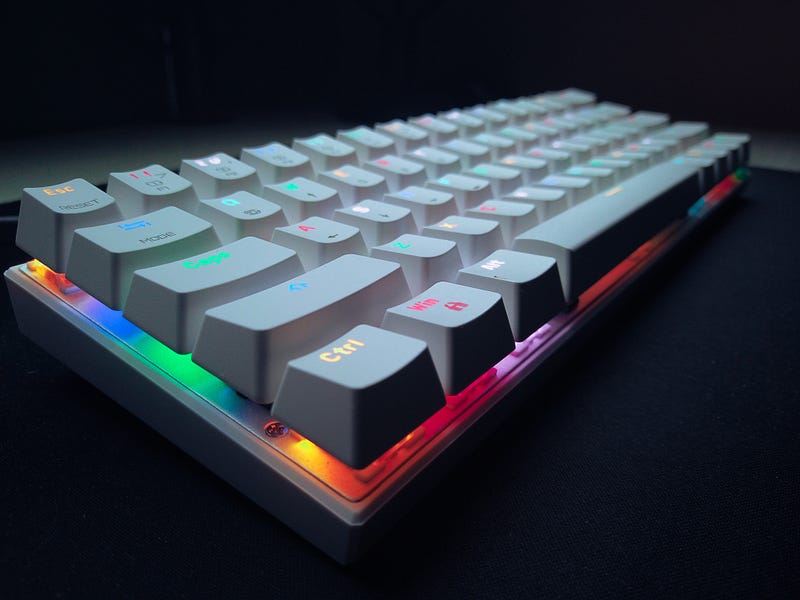
Photo by Bestami Sarıkaya on Unsplash


Moving to the Ronin blockchain

But the partnership goes beyond just creating a new game. It also includes the migration of CyberKongz’s popular Play & Kollect game, which is based on the Polygon blockchain. The move to the Ronin blockchain opens up new opportunities for CyberKongz to expand its user base and tap into Ronin’s thriving gaming community.

Axie Infinity first captured the gaming world’s imagination in 2021 when it introduced the “play-to-earn” concept. This groundbreaking model allowed players to earn valuable cryptocurrency tokens while playing the game. It quickly became the leading project by sales volume in the burgeoning NFT space, according to data from CryptoSlam. On the other hand, CyberKongz also made headlines in 2021 when it impressively burned $4 million worth of Ether.

However, since the NFT craze of 2021, interest in blockchain gaming has seen a decline, with some crypto-based games, such as Neopets, even transitioning to a non-crypto approach.


Play-to-earn deficiencies

Sky Mavis Co-Founder, Aleksander Larsen, acknowledged earlier this year that the play-to-earn model needed improvement to thrive. He emphasized that games must prioritize fun and feature a robust economic system that enables players to earn rewards. Despite this, Kathleen Osgood remains optimistic that the blockchain gaming space can experience a revival through an experience that truly understands the motivations driving users towards Web3.

According to Osgood, many teams in the space have merely attempted to replicate what worked in Web2, which may not be enough to drive explosive growth. Instead, she believes that attracting a massive audience lies in taking an innovative approach to leverage the unique offerings of Web3, appealing to users who are naturally drawn to its decentralized and rewarding nature.


Gaming evolution

Sky Mavis has started opening up its infrastructure to the Web3 ecosystem through the Ronin blockchain. By doing so, it hopes to create gaming communities that are not only more rewarding but also longer-lasting, fostering an environment of engagement and enthusiasm among players.

As blockchain gaming continues to evolve, partnerships like the one between Sky Mavis and CyberKongz signal renewed efforts to iteratively improve on previous blockchain gaming models. With a new game on the horizon and the migration of CyberKongz to the Ronin blockchain, the stage is set for a new era of immersive and rewarding blockchain gaming experiences, building upon past efforts.

More to Read
View All
Web3 & Enterprise·

Sep 02, 2023

TRYB Emerges as Turkish Alternative to Dollar-Pegged Stablecoins

TRYB Emerges as Turkish Alternative to Dollar-Pegged StablecoinsIn a market typically dominated by dollar-backed stablecoins like Tether (USDT) and USD Coin (USDC), a new player has emerged in Turkey to operate alongside those dominant stablecoins.According to a report by CoinDesk on Friday, BiLira’s TRYB stablecoin, pegged to the Turkish lira (TRY), has rapidly climbed the ranks to become the world’s second-largest non-US dollar-pegged stablecoin. It currently trails Tether’s euro-pegged EURt, which according to Coingecko data, currently holds a market cap of $221 million. In just three weeks, TRYB has skyrocketed, quadrupling its market cap to $136.10 million.Photo by Oleksandr P on PexelsMarket cap volatilityHowever, TRYB's market cap had fallen off a cliff on Friday, dropping from $135 million earlier in the day to $40 million. TRYB, an Ethereum-based stablecoin, offers a unique proposition in that it is pegged to the Turkish lira, allowing users to exchange 1 TRYB for 1 TRY. The stablecoin offering, which is administered by Istanbul-based BiLira, is underpinned by 100% fiat reserves held in Turkish banks.The Turkish lira has earned its reputation as one of the most volatile fiat currencies globally, often experiencing fluctuations against the US dollar. Over the course of the last five years, the currency has lost 94% of its value when benchmarked against the performance of the US dollar.In response to this volatility, TRYB has found its purpose as a medium of exchange. It can act as a gateway to transition user’s Turkish lira into cryptocurrencies and vice versa. This trend aligns with the global use of stablecoins as the foundation of crypto trading pairs, providing traders with a stable asset while sidestepping fiat currency’s unpredictability.Exiting the liraThe US Federal Reserve acknowledged the significance of stablecoins in December 2022, highlighting their role in facilitating crypto trades, serving as collateral for crypto loans, and minimizing inefficiencies tied to fiat-to-crypto conversions. In fact, stablecoins account for over 80% of the trading volume on centralized exchanges, attesting to their pivotal role in the crypto ecosystem.It’s likely that the Lira-pegged stablecoin will act as a means to access other cryptocurrencies and US dollar-pegged stablecoins like USDT and USDC, rather than be considered as a rival or replacement. That’s by virtue of the ongoing difficulties of the Turkish sovereign currency which it tracks. So long as the lira continues to erode in terms of buying power, it’s likely that citizens will be looking for avenues to escape from that erosion of value.Increased interest in cryptoGiven this monetary backdrop in Turkey, it shouldn’t surprise anyone to learn that interest in crypto is on the rise. In a recent report published by Seychelles-based cryptocurrency exchange KuCoin earlier this week, a significant increase in the number of crypto investors in Turkey over the course of the past eighteen months has been identified.The report found that 52% of the adult Turkish population have participated in crypto-related investments. Over the past 18 months, the number of Turkish adults embracing crypto has risen to that 52% level from 40%.

news
Policy & Regulation·

Jun 04, 2024

Hong Kong lawmaker criticizes strict crypto exchange regulations

Duncan Chiu, a member of Hong Kong's Legislative Council, has expressed concerns over the stringent regulations imposed on cryptocurrency exchanges by the Securities and Futures Commission (SFC). In an opinion piece for the Hong Kong Economic Journal, Chiu argued that these rigorous standards have deterred major global exchanges from entering the Hong Kong market, undermining confidence in the region's commitment to developing Web3 technologies. He highlighted the recent withdrawal of license applications by prominent exchanges such as OKX, Gate.io and HTX as indicative of the flaws in the current regulatory framework.Photo by Chapman Chow on UnsplashLicensing system and industry developmentChiu criticized the fragmented approach to policy development for Hong Kong’s virtual asset market, noting that various aspects like VATP (Virtual Asset Trading Platforms), stablecoin issuance and virtual asset over-the-counter trading are managed by different departments without strategic industry consideration. He also mentioned feedback from license applicants who feel that the authorities lack a forward-thinking vision for fintech and are applying traditional financial principles too rigidly to the dynamic and innovative sector of Web3. Furthermore, Chiu pointed out the disconnect between the industry and regulators, particularly in the experience required of management in licensed crypto operations versus the practical experience of regulators in Web3, complicating effective communication and progress. 

news
Markets·

Oct 08, 2025

Korean crypto faces retail slowdown while eyeing institutional future

South Korea’s retail-heavy crypto market is losing momentum ahead of broader institutional access to trading. Data from the Financial Services Commission (FSC) and the Financial Supervisory Service (FSS), cited by Financial News, shows that in the first half of 2025, Korean-won balances held at the country’s five licensed fiat-to-crypto exchanges sank 42% to 6.2 trillion won ($4.4 billion), signaling less dry powder waiting on the sidelines for trading. Only five platforms are permitted to support won-denominated trading, and the drop in parked cash underscores a broader cooling. By the end of June, the Korean crypto market cap stood at 95.1 trillion won ($67.5 billion), down 14% from six months earlier. The global market also contracted, but the decline was more modest at about 7% over the same period.Photo by Y K on UnsplashTrading slows but retail base expandsTrading activity eased as well. Average daily volumes across 25 domestic virtual asset service providers (VASPs) fell 12% to 6.4 trillion won ($4.5 billion) in the first half. Paradoxically, the number of market participants climbed 11% to 107.7 million across those platforms. Nearly all were individuals, as only 220 were institutions, reflecting long-standing restrictions on institutional won trading. That retail skew has consequences. Data submitted by the FSS to a lawmaker, cited by Digital Asset, reveals that the top 10% of users by trading volume accounted for roughly 90% of activity at the five fiat on-ramps. By exchange, the figures were Upbit (89.36%), Bithumb (97.97%), Coinone (97.54%), Korbit (97.52%), and Gopax (97.95%).  Market lawyers warn that this concentration heightens manipulation risk. Lee Seung-min of SEUM Law Firm said volatility may be more pronounced in tokens listed only on Korean venues, but added that deeper institutional participation could help reduce such volatility and support longer market cycles.  Regulators are inching in that direction. Earlier this year, authorities allowed universities and nonprofits to sell their crypto holdings. By year-end, the FSC plans to let about 3,500 publicly traded companies and professional investors, excluding financial institutions, open accounts at the licensed platforms for trading. Exchanges pour cash into promotionsWhile regulators are preparing to bring more institutional players into the fold, exchanges continue their long-running effort to draw in retail users. Another Digital Asset report noted that from 2023 through July 2025, promotional outlays by the five won-enabled platforms totaled 190.3 billion won ($135 million). Bithumb alone accounted for 180.3 billion won ($128 million), far outspending Upbit (9.4 billion won), Coinone (1.7 billion won), Korbit (1.6 billion won), and Gopax (100 million won). The gap suggests Bithumb, which ranks second in market share, has pursued a particularly aggressive approach to expand its customer base. Taken together, the numbers depict a subdued market, with less capital parked on exchanges and lighter trading while activity remains heavily concentrated among a small cohort of traders. Even so, the expanding base of individual accounts represents a bright spot, underscoring the market’s continued dependence on retail investors. If policymakers follow through on opening the door to a broader set of corporate and professional players later this year, Korea’s crypto landscape could shift from retail-driven fluctuations toward steadier, institution-supported flows. 

news
Loading