Top

e-CNY Payments Enabled for Hong Kong Visitors From Mainland China

Policy & Regulation·July 22, 2023, 1:06 AM

Bank of China’s Hong Kong arm recently launched a digital yuan shopping festival, aiming to spur local consumption and promote the adoption of central bank digital currencies (CBDCs). The festival, which commenced on July 18, allows visitors from mainland China to make purchases in Hong Kong using the digital yuan.

Bank of China (Hong Kong) Limited (BOCHK), a subsidiary of China’s central bank, initiated trials of e-CNY cross-border payments in Hong Kong last year, paving the way for the current shopping festival.
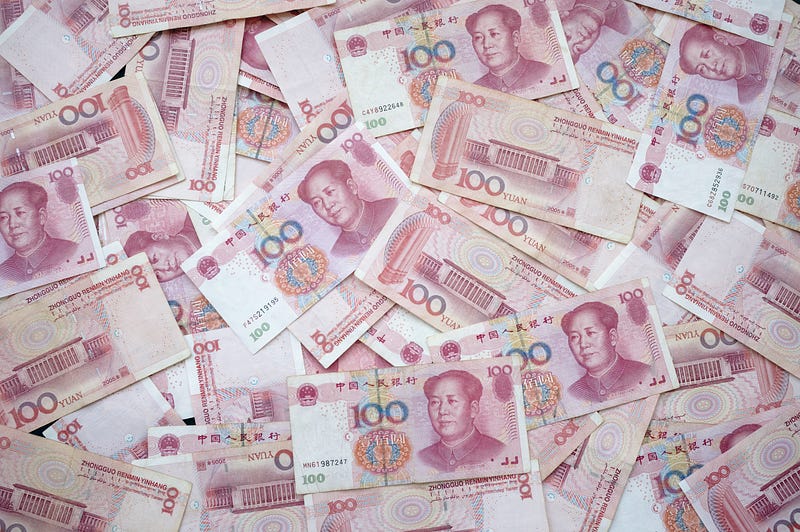
Photo by Eric Prouzet on Unsplash


Subsidized use

According to a press release published by BOCHK earlier this week, as of July 18, digital yuan wallet holders have been able to use China’s CBDC to make payments at over 200 participating merchants across Hong Kong. Furthermore, consumers have the opportunity to receive shopping subsidies in digital yuan by scanning QR codes at specific stores, as stated in the BOCHK press release.

The range of merchants accepting e-CNY payments spans from electronics sellers and pharmacies to supermarkets. Among the participants is U Select, a Hong Kong-based supermarket chain with a wide presence of more than 90 stores throughout the city.

BOCHK strategically chose the summer tourist season for the expansion of e-CNY payments in Hong Kong. Chen Guang, representing BOCHK, mentioned the influx of tourists to the special administrative region, presenting a prime opportunity to attract more users and bolster local consumption through this cross-border shopping festival.

The move makes BOCHK the first institution to partake in the cross-border e-CNY trial in Hong Kong. In December 2022, the bank initiated the first phase of its “digital yuan exclusive experience,” which allowed a limited number of BOCHK consumers to shop in the city using the digital yuan.


Adoption strategy

The digital yuan has witnessed robust adoption in recent times, with China leading the global development of CBDCs. The Bank of China has been actively striving to advance and popularize the use of digital yuan in the country. Various initiatives, including business loans, trial expansions, and partnerships with prominent technology firms, have been undertaken to propel the widespread adoption of the digital currency.

The introduction of the digital yuan shopping festival in Hong Kong signifies yet another significant step in China’s efforts to promote its CBDC and drive its usage in both domestic and international transactions. With over 200 merchants already participating and a seamless payment experience for tourists, the festival has the potential to encourage further adoption and shape the future of digital payments in the region.

As this initiative gains momentum, it will be crucial to observe its impact on local consumption and the broader implications for CBDC adoption in the global financial landscape.

The rate of China’s CBDC development and beyond that, the intent with which it is striving to drive adoption through a seemingly never-ending series of initiatives has been unmatched by any other nation. With that, the first real results of the active and widespread use of a CBDC are going to come from the country that makes up one-fifth of the world economy.


More to Read
View All
Markets·

Apr 06, 2023

Asian Market Surge for XRP Amid Broader Market Implications

Asian Market Surge for XRP Amid Broader Market ImplicationsXRP, the cryptocurrency and native token used by real time gross settlement system, Ripple, has seen renewed activity in recent weeks in terms of trading volume. That trading volume appears to be more pronounced in Asian markets such as South Korea.©Pexels/RODNAE ProductionsThe XRP token has traded up 22% over the course of the past seven days, with a current unit price of $0.54. Trading volume has surged on South Korean exchanges such as Bithumb UpBit and Korbit where volume spiked 18%, 37% and 50% respectively over the past 24 hours. This trading activity is irregular as ordinarily the trading volume of Bitcoin and ether would account for the vast bulk of trading on the three leading Korean exchanges.Speculative interestXRP has under-performed in recent years and at the heart of its difficulties has been a multi-year legal battle with the Securities and Exchange Commission (SEC) in the United States. In its complaint, the SEC has claimed that XRP is an unregistered security. Speculation in recent weeks suggests that this highly litigated battle may be drawing to a conclusion. Many commentators have suggested that either a deal will be struck or the court could soon decide to rule on the matter.During the 2017 bull market, the token reached the heady heights of a $3.40 unit price. That’s a target that the cryptocurrency has never been able to reach ever since. During the last bull market, it rose to around $1.76 for a short time in April 2021. There’s little doubt but the regulatory cloud hanging over it has suppressed the price. Much depends on the outcome of this lawsuit, not just for XRP but for crypto as a whole.Another notion driving speculative interest is the idea that the Commodity Futures Trading Commission (CFTC) may classify XRP as a commodity. That line of thought is more recent and follows the CFTC classifying a number of cryptocurrencies as commodities in its lawsuit against global crypto exchange Binance. In follow up comments earlier this week, CFTC Chair Roistin Behnam reiterated the claim.The very fact that the CFTC has made this claim is significant in terms of the case being pursued by the SEC, potentially weakening the SECs case. Lawyers for Ripple have made the court aware of the CFTCs claims.Crypto moving forwardCrypto traders in South Korea have been notorious in the past for pursuing speculative trends within the industry with the Kimchi Premium on Bitcoin back in the day as a stand out example. Whether speculative or not, the outcome for XRP, Ripple and the broader cryptocurrency space relative to the cryptocurrency’s regulatory status will be significant.A positive result will not just be a fillip for XRP, Ripple and Asian and other crypto traders who have speculated on such an outcome. It will also serve to provide a level of regulatory protection for all other crypto projects within the United States. A negative outcome to the lawsuit will not be ideal for XRP, Ripple and US-based crypto projects. However, Ripple CEO Brad Garlinghouse has said in the past that if innovation is driven overseas, Ripple will focus on developing its product overseas.In an interview this week Ripple President Monica Long suggested that over and above the lawsuit, crypto innovation is generally being pushed outside of the United States. Long cites Asia as taking the lead on “thoughtful crypto policy”. On that basis, it’s likely that one way or another crypto moves forward and maybe South Korean speculators will be proven right regardless of the outcome of the XRP..

news
Markets·

Feb 23, 2024

KODA’s crypto assets in custody surpass $6B

Crypto custodian Korea Digital Asset (KODA) has seen its custody assets exceed the $6 billion mark, equivalent to about KRW 8 trillion, according to game media outlet Kyunghyang Games.  Established in November 2020 through a collaboration between KB Bank, the blockchain venture capital firm Hashed and blockchain tech company HatchLabs, KODA provides custodial services for crypto assets. A custodial service provider refers to a third-party institution that manages virtual assets on behalf of clients. Several big banks overseas such as Goldman Sachs and Citibank provide asset custodial services. Photo by Chris Liverani on UnsplashA leading provider of crypto asset custodial services Having been offering one-stop crypto asset custodial services for companies and institutional clients since March 2021, KODA has become a notable virtual asset business operator in South Korea with it being registered with the Financial Intelligence Unit (FIU). By the end of June 2023, KODA made up nearly 80% of the local custodial service market share, per FIU data. At the time, out of the total KRW 2.9 trillion in crypto assets held by 49 local custodial service providers registered with the FIU, KRW 2.3 trillion was managed by KODA. By December 2023, KODA announced it was managing KRW 8 trillion in crypto assets, with over 200 custodial wallets and about 50 institutional clients using its services.  Bracing for the potential approval of spot bitcoin ETFs in KoreaThe demand for crypto asset custodial services is expected to rise as Korea’s ruling and opposition parties are pledging to integrate crypto assets into the traditional financial system, leading up to the general election in April. Major political parties are considering the possibility of allowing transactions of spot bitcoin ETFs and legalizing investment in crypto assets by private companies. Cho Jin-seok, CEO of KODA, said that the integration of digital assets into the traditional financial system is an unstoppable global trend that no one can resist, and that KODA will be able to serve as a key crypto infrastructure if the local financial authority approves trading spot bitcoin ETFs.  Kim Seo-joon, CEO of Hashed, stressed the significance of preparing for the potential approval of spot bitcoin ETF transactions, noting how a number of spot bitcoin ETFs were released in the U.S. right after the approval. He added that KODA’s commitment to regulatory compliance and technological expertise would make it an essential partner in introducing virtual asset ETFs to the local market.

news
Policy & Regulation·

Dec 23, 2023

China’s GAPP proposes ban on gaming crypto token conversion

China’s GAPP proposes ban on gaming crypto token conversionChina’s gaming industry hit a significant speed bump on Friday as the General Administration of Press and Publication (GAPP) unveiled a draft proposing substantial changes to the regulation of in-game tokens, signaling a strategic shift in the country’s stance on digital currencies in gaming.Photo by blurrystock on UnsplashImplementing more stringent controlsThe proposed regulations by GAPP bring about a ban on the conversion of game tokens into physical goods or legal tender. These guidelines, spanning 64 articles, impose stringent requirements on gaming companies. These include mandatory licensing in China, a two-year data retention policy, adherence to national and socialist values in content and the eradication of anonymous user registrations.One significant aspect of the guidelines is Article 23, which specifically addresses the use of game tokens. It proposes restrictions on exchanging them for physical goods, services or legal tender.The regulatory landscape becomes more complex due to the ambiguity surrounding cryptocurrencies, which are not recognized as legal tender in China. Although a warning was issued about the risks inherent in non-fungible tokens (NFTs), they remain legal in China. NFTs feature prominently within blockchain-based gaming.Game providers are also confronted with new limitations on inducements, such as bonuses for registration or daily logins, and are mandated to implement measures against irrational consumer spending.Gaming sector falloutIn the wake of these developments, several Chinese tech giants experienced a significant market downturn in Hong Kong. Tencent, a global gaming powerhouse and one of China’s most valuable companies, saw a 12.4% drop on Friday, marking its worst day since October 2008. This decline erased a massive 367 billion Hong Kong dollars ($47 billion) from Tencent’s market value.NetEase, another gaming giant, witnessed a 25% dive in Hong Kong afternoon trade, recording its most substantial daily loss since its listing in June 2020. Additionally, Bilibili and Kuaishou, prominent players in video-sharing and short-video platforms, experienced declines of 9.7% and 7.2%, respectively, given their involvement in online gaming.Market uncertaintyWith this latest development, the future of gaming crypto tokens remains uncertain in China, with investor confidence having been hit hard. Putting the matter in context on Friday, Stansberry Research Analyst Brian Tycangco took to the X social media platform, stating:”Govt regulation will effectively render prevailing business models irrelevant due to uncertainty regarding monetization. Games are inherently reward-based and if you clamp down on the use of rewards/incentives, you turn an entire industry on its head.”The guidelines, open for public consultation until Jan. 22, 2024, have not yet been legally enacted. This time frame allows for feedback and potential adjustments before enforcement.Notably, the Web3 gaming sector has witnessed substantial activity, with approximately a million unique active wallets engaged daily over the past three months, according to DappRadar. Industry experts, including Yat Siu of Animoca Brands, anticipate a potential surge in user engagement, emphasizing the potential impact of these regulations on the gaming industry’s trajectory.

news
Loading
