Top

Blockchain Firm NEOPLY Rebrands as Neowiz Partners to Focus on Investment

Web3 & Enterprise·July 17, 2023, 5:17 AM

Neowiz Holdings, a South Korean investment holding company, announced today that its blockchain subsidiary NEOPLY held an extraordinary general meeting of shareholders and rebranded itself as Neowiz Partners, according to local news outlet News1. Upon this name change, the company will participate as a liquidity provider in the industry through strategic partnerships with investment firms such as venture capital firms and private equity funds.

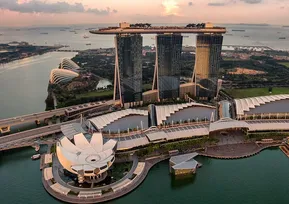
Photo by Precondo CA on Unsplash


Abu Dhabi’s support

Earlier, it was revealed that Neowiz Partners became a part of the Innovation Programme offered by the Abu Dhabi Investment Office (ADIO) in the United Arab Emirates (UAE). This program offers incentives to various businesses operating in high-growth areas like financial services and technology.


Diverse portfolio

Under its new name, Neowiz Partners aims to build a diverse portfolio of investments in promising companies committed to emerging technologies such as artificial intelligence (AI) and robotics. This strategic move is intended to foster future growth and seize the potential offered by these innovative sectors.

Neowiz Partners’ global headquarters, known as H-Lab, located in the Abu Dhabi Global Market (ADGM), will oversee investment and management related to its blockchain businesses. Meanwhile, the operations of these blockchain projects will continue to be managed by NEOPIN, a subsidiary of H-Lab and a CeDeFi protocol that operates as a one-stop solution for those seeking a non-custodial wallet.

Earlier reports highlighted NEOPIN’s achievement in launching Korea’s first liquid staking products for ETH. This approach enables users to deposit their cryptocurrencies into a staking pool and receive liquidity provider tokens in return. These tokens can then be deposited again to generate additional yields.

On the occasion of this renaming, Neowiz Partners will establish itself as a dedicated investment company, while H-Lab will concentrate on serving the blockchain industry and associated ventures.

More to Read
View All
Policy & Regulation·

Jul 14, 2025

Shanghai officials potentially signaling openness to stablecoins

The Shanghai office of a Chinese regulatory body which oversees assets belonging to state-owned enterprises (SOEs) is reported to have held a session dedicated to the topic of digital assets and in particular, stablecoins, fueling speculation of a positive shift in outlook on crypto in China.Photo by Hanny Naibaho on UnsplashOn July 11, Reuters reported that the State-owned Assets Supervision and Administration Commission (SASAC) held the meeting in Shanghai on July 10, with the publication suggesting that the event represented “a marked shift in tone” in the consideration of digital assets in China, bearing in mind that crypto trading and mining are banned within the country. Following the “development trend and response strategies” study session, He Qing, director of the organization, said that there was a need for "greater sensitivity to emerging technologies and enhanced research into digital currencies." The regulator called on Chinese state-backed agencies to consider the adoption of blockchain technology for use cases like real-world asset (RWA) tokenization, supply chain finance and cross-border trade. A policy expert from Shanghai-headquartered securities firm, Guotai Haitong Securities, attended the meeting, outlining details on the history, characteristics and categories of cryptocurrencies and stablecoins, while also discussing global regulatory frameworks. Last month, a subsidiary company of Guotai Haitong Securities, Guotai Junan International (GTJAI), became the first company from the Chinese mainland to be given approval by the Hong Kong securities regulator to offer digital asset trading services. Adapting to the stablecoin trendIn June, state-owned financial newspaper, Securities Times, called on Beijing to adapt “to the trend of stablecoins.” The publication claimed that industry insiders “generally believe that, as an emerging payment tool, the unique advantages and potential risks of stablecoins cannot be ignored, and that the development of [yuan-backed] stablecoins should be sooner rather than later”. The same month, Pan Gongsheng, governor of the People’s Bank of China, acknowledged that stablecoins are playing a role in disrupting global payments infrastructure.  It also emerged recently that JD.com, a Chinese e-commerce giant, and Ant Group, an affiliate company of the Alibaba Group, have been lobbying the Chinese authorities for the authorization of yuan-based stablecoins. On X, Shanghai Macro Strategist, a China strategist, claimed that the recent surge in the Bitcoin unit price had come about as a consequence of this stablecoin-focused SASAC meeting in Shanghai. At the time of writing, BTC has appreciated 9.3% over the course of the past seven days. The strategist suggests that the event is fueling speculation that “the Chinese government may be in the early stages of reassessing its official stance on the crypto industry.” In their monthly report for May, the strategist pointed out that “Beijing’s outright rejection of [Bitcoin] as a legitimate asset” was holding the leading asset back on its path to “reserve status.” The strategist added: “Over the longer term, a shift in China’s stance could prove to be the single most powerful bullish catalyst—elevating Bitcoin from a fringe asset to a globally recognized store of value.”

news
Policy & Regulation·

Oct 07, 2023

Taiwan Aims to Propose Special Crypto Law by Late November

Taiwan Aims to Propose Special Crypto Law by Late NovemberIn a bid to address growing concerns surrounding offshore crypto exchanges and prevent regulatory arbitrage, Taiwan is actively working towards proposing a draft special crypto law for its first reading by the end of November.Yung-Chang Chiang, a member of the Legislative Yuan, the Taiwanese parliament, emphasized the need for a dedicated crypto asset act to effectively regulate crypto businesses in discussion with The Block on Friday. Chiang believes that cryptocurrencies, as an asset class, significantly differ from traditional financial products and require oversight through a separate, specialized legal framework.Photo by Ian Chen on UnsplashPublic hearingThe Taiwanese politician recently organized a public hearing within the parliament to discuss the draft proposal with key stakeholders, including virtual asset service providers, legal experts, and academics. He argued that while Taiwan’s Financial Supervisory Commission (FSC) had released guidelines for the crypto sector to establish self-supervisory rules through a potential industry association, these measures lack legal enforceability.Chiang pointed out:“In this case, under the authority of this special law, regulatory authorities can impose administrative penalties on operators who violate these self-regulation rules. Without such a special law, the regulators would lack the ability to impose penalties.”Under the proposed special law, all crypto platforms operating in Taiwan would be required to obtain a permit. Failure to do so could result in regulatory orders to cease operations. Presently, Taiwan mandates that virtual asset service providers comply with anti-money laundering (AML) laws, which were introduced by the FSC in July 2021. However, the broader crypto industry in Taiwan remains largely unregulated.It is unlikely that the special law will pass through all three readings during the current legislative session, which is expected to conclude by the end of this year. Chiang noted: “An election is coming up, and the current legislative session focuses more on reviewing the government’s budget.”Chiang also mentioned the possibility of Taiwan’s FSC proposing its version of the special crypto law, but this is not anticipated until at least mid-2024. He explained: “It’s hard to say exactly when the special law will be enacted, but it should likely occur sometime after the middle of 2024.”Binance, the world’s largest crypto exchange, is understood to be in the process of registering in Taiwan for AML compliance, despite not currently being regulated in the country. The exchange has formed a local entity named “Binance International Limited Taiwan Branch (Seychelles),” as indicated in the Taiwanese Ministry of Economic Affairs’ database.Banking difficultiesDuring the public hearing, Damien Ho, Representative of Global Partnerships at Binance, raised concerns about the challenges faced by crypto platforms in Taiwan in securing suitable banking services. Despite the FSC’s efforts to discourage banks from treating crypto platforms as high-risk entities, crypto platforms still encounter difficulties in their interactions with banks. Ho suggested that the Taiwanese government should encourage private or public banks to become more crypto-friendly, facilitating the regulated and effective development of crypto businesses.At the public hearing, Winston Hsiao, Co-Founder and Group CRO of Taipei-based crypto exchange XREX, suggested a step-by-step approach to regulation, with smaller entities adhering to self-supervisory rules formulated by the industry association after registration. For larger entities, he proposed obtaining a permit under the special law and potentially applying for other relevant financial licenses.

news
Web3 & Enterprise·

Jul 31, 2023

Strategic Shift Sees Wintermute Expand Singapore Base

Strategic Shift Sees Wintermute Expand Singapore BaseCrypto market maker Wintermute is making a strategic shift towards Asia, specifically in Singapore, following the digital asset industry’s growing interest in the region’s growth opportunities.Photo by Hu Chen on Unsplash4% of staff moving to SingaporeIn an interview with Bloomberg last week, Wintermute Co-Founder Yoann Turpin said he will move from London, where the company is currently headquartered, to Singapore in the coming months. Additionally, approximately 4% of the company’s workforce, which currently comprises around 85 staff members, will also relocate to the city-state, where Wintermute conducts its derivatives business.At the time of publication, the company was also actively recruiting for an open position in the city-state. In further publicizing Wintermute’s developing presence in Singapore, Turpin took to social media recently to invite people to meet Wintermute’s Singapore-based team in September at Token 2049 Singapore. Evgeny Gaevoy, Wintermute Co-Founder and CEO, is scheduled to appear as a speaker at the event.Turpin emphasized the company’s focus on Asia and highlighted the significance of having a co-founder based in the region to drive the business forward. The move comes as the crypto industry faces the aftermath of a crackdown in the United States, triggered by bankruptcies at platforms like FTX and Celsius Network.Exploring global opportunitiesIn response, crypto businesses are exploring opportunities in Asian markets, with countries like Singapore, Hong Kong, Japan, and the United Arab Emirates vying to attract companies while ensuring robust regulatory frameworks in the wake of the market turbulence in 2022.Although tokens like Bitcoin and Ether have partially recovered from the crash experienced last year, spot digital-asset trading volumes and volatility have remained low, indicating reduced investor engagement. That said, demand for crypto futures and options has proven to be more resilient.Possible Dubai expansionWintermute established an office in Singapore in 2021, adding to its existing base in London. Turpin also confirmed to Bloomberg that the company is weighing up the possibility of establishing a third office in Dubai as part of its expansion plans. Dubai, like Singapore and Hong Kong, has been actively trying to attract crypto businesses over the course of the past twelve months.During the 2021 crypto bull market, the company reported trading volume worth $1.5 trillion and generated $1.05 billion in revenue. However, the market maker also faced challenges during the market turmoil, including exposure to around $55 million of assets on FTX. Moreover, in September of the same year, Wintermute experienced a hack that resulted in a loss of about $160 million from its decentralized finance operations.Despite the hurdles faced in 2022, Turpin expressed confidence in the company’s resilience and stated that they do not have immediate plans to raise funds. The company just celebrated six years in business, and has executed 8.4 million OTC trades over the course of the past twelve months.By relocating key personnel and expanding its presence in Singapore and possibly Dubai, the company aims to strengthen its foothold in the Asian market and navigate the challenges and opportunities that lie ahead.

news
Loading