Top

Strategic Shift Sees Wintermute Expand Singapore Base

Web3 & Enterprise·July 31, 2023, 11:50 PM

Crypto market maker Wintermute is making a strategic shift towards Asia, specifically in Singapore, following the digital asset industry’s growing interest in the region’s growth opportunities.
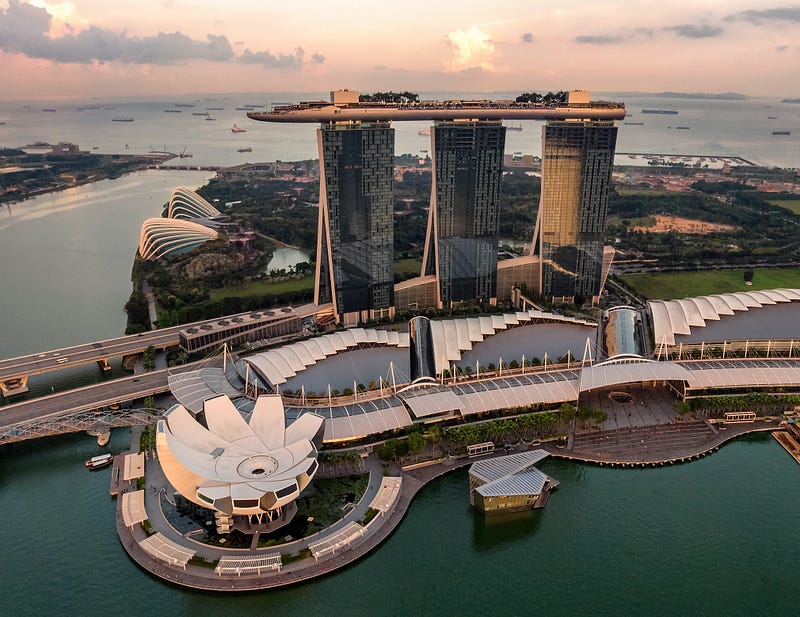
Photo by Hu Chen on Unsplash


4% of staff moving to Singapore

In an interview with Bloomberg last week, Wintermute Co-Founder Yoann Turpin said he will move from London, where the company is currently headquartered, to Singapore in the coming months. Additionally, approximately 4% of the company’s workforce, which currently comprises around 85 staff members, will also relocate to the city-state, where Wintermute conducts its derivatives business.

At the time of publication, the company was also actively recruiting for an open position in the city-state. In further publicizing Wintermute’s developing presence in Singapore, Turpin took to social media recently to invite people to meet Wintermute’s Singapore-based team in September at Token 2049 Singapore. Evgeny Gaevoy, Wintermute Co-Founder and CEO, is scheduled to appear as a speaker at the event.

Turpin emphasized the company’s focus on Asia and highlighted the significance of having a co-founder based in the region to drive the business forward. The move comes as the crypto industry faces the aftermath of a crackdown in the United States, triggered by bankruptcies at platforms like FTX and Celsius Network.


Exploring global opportunities

In response, crypto businesses are exploring opportunities in Asian markets, with countries like Singapore, Hong Kong, Japan, and the United Arab Emirates vying to attract companies while ensuring robust regulatory frameworks in the wake of the market turbulence in 2022.

Although tokens like Bitcoin and Ether have partially recovered from the crash experienced last year, spot digital-asset trading volumes and volatility have remained low, indicating reduced investor engagement. That said, demand for crypto futures and options has proven to be more resilient.


Possible Dubai expansion

Wintermute established an office in Singapore in 2021, adding to its existing base in London. Turpin also confirmed to Bloomberg that the company is weighing up the possibility of establishing a third office in Dubai as part of its expansion plans. Dubai, like Singapore and Hong Kong, has been actively trying to attract crypto businesses over the course of the past twelve months.

During the 2021 crypto bull market, the company reported trading volume worth $1.5 trillion and generated $1.05 billion in revenue. However, the market maker also faced challenges during the market turmoil, including exposure to around $55 million of assets on FTX. Moreover, in September of the same year, Wintermute experienced a hack that resulted in a loss of about $160 million from its decentralized finance operations.

Despite the hurdles faced in 2022, Turpin expressed confidence in the company’s resilience and stated that they do not have immediate plans to raise funds. The company just celebrated six years in business, and has executed 8.4 million OTC trades over the course of the past twelve months.

By relocating key personnel and expanding its presence in Singapore and possibly Dubai, the company aims to strengthen its foothold in the Asian market and navigate the challenges and opportunities that lie ahead.

More to Read
View All
Policy & Regulation·

May 03, 2024

Identity forgery suspect captured in StarkNet airdrop scam

Chinese authorities have apprehended an individual suspected of identity forgery in connection with the StarkNet (STRK) airdrop. The suspect, identified as Lan Mou, allegedly assumed the identities of others to submit false Early Community Member Program (ECMP) airdrop forms. Through this scheme, the suspect claimed over 40,000 STRK tokens that originally belonged to the victims. After successfully claiming the tokens, the suspect transferred them to an OKX wallet. Subsequently, the tokens were converted into over $91,000 worth of Tether, as reported by local media on April 30. Lan Mou was apprehended by police in Guangdong Province on April 25. Authorities seized a computer and two mobile phones during the arrest.Photo by Tamara Gak on UnsplashUnprecedented scale of identity theftWhile cryptocurrency scams and phishing attacks are prevalent, the scale of identity theft observed in this case is unprecedented. The suspect's method involved claiming airdrops using stolen identities, marking a novel approach to fraudulent activity in the cryptocurrency space. A crypto airdrop is a method used to distribute new cryptocurrency tokens, typically targeting early users who engage with a specific protocol. In the case of the StarkNet Foundation's airdrop, which launched on Feb. 20, a total of 700 million STRK tokens were distributed to various participants, including Ethereum solo and liquid stakers, Starknet developers, users, external projects and developers within the Web3 ecosystem. Concerns raised by developerFollowing the StarkNet airdrop, concerns were raised by pseudonymous Yearn.finance developer Banteg regarding the eligibility criteria. Banteg warned that the eligibility list mainly consisted of airdrop squatters, individuals who exploit airdrop opportunities for financial gain. These individuals often control multiple addresses to maximize their rewards. This incident is not the first instance of airdrop exploitation. In March 2023, it was revealed that airdrop hunters consolidated $3.3 million worth of tokens from the Arbitrum (ARB) airdrop into just two wallets, highlighting the prevalence of such fraudulent activities within the cryptocurrency community. 

news
Policy & Regulation·

Apr 28, 2023

Hong Kong to Issue Digital Asset Licensing Guidelines in May

Hong Kong to Issue Digital Asset Licensing Guidelines in MayAccording to Hong Kong’s Securities and Futures Commission (SFC), the Commission will issue new guidelines for virtual asset exchanges within the Chinese autonomous special administrative region (SAR).© Pexels/Jimmy ChanSFC CEO Julia Leung made that announcement while speaking at an event in the city on Thursday, indicating that the guidelines are due to be released next month. Additionally the autonomous region intends to introduce a new licensing system from June 1 onwards, enabling the retail investors among Hong Kong’s populace to trade leading cryptocurrencies like Bitcoin and Ethereum.Hong Kong authorities had provided an insight into this approach back in February, when plans to provide retail access to digital assets were first set out. At the time, they outlined the need for retail customers to pass a knowledge test relative to digital assets or otherwise only being allowed to trade such assets once the customer had completed a certain level of training relative to digital assets, provided by a regulated crypto service provider.This latest announcement has arrived amid a backdrop of a series of recent indications that signify the intent of authorities in Hong Kong to make the autonomous region a major financial hub centered around digital assets.Leung articulated that the further development of this digital assets framework follows a consultation process that attracted more than 150 responses. Although virtual asset service providers (VASPs) will need to await the complete rollout of the licensing system, a handful of crypto businesses such as OSL and Hashkey, under the supervision of the Hong Kong regulator, have already started to offer their services.Crypto as propertyA Hong Kong court recently recognized cryptocurrency as property. The ruling emerged in a bankruptcy hearing pertaining to failed cryptocurrency exchange Gatecoin. In presiding over the case, Justice Linda Chan outlined that the autonomous region takes a broad view of what constitutes property. In finding crypto to meet the definition of property, she went on to clarify that it therefore has the capability of being held in trust.The finding has particular relevance in the crypto world right now given the consequences of an “in trust” custodianship of customer’s digital assets relative to numerous ongoing bankruptcy processes involving failed crypto businesses, and the pecking order of creditors in those instances, in their efforts to recover their digital assets.Positive approachWhile mainland China remains an adverse territory relative to digital assets, Hong Kong has taken to welcoming the sector and with that, enticing crypto firms to relocate to the autonomous region from the mainland. Leadership in the city has been making all the right soundings to demonstrate that it is actively trying to nurture the nascent sector.While recent months have seen the Biden administration in the United States attempt to close off banking from the crypto sector, in contrast, Hong Kong’s largest virtual bank, ZA Bank, was recently given permission to act as a settlement bank for regulated Web3 businesses located within Hong Kong.

news
Web3 & Enterprise·

May 09, 2023

Artifact Labs Raises $3.25M

Artifact Labs Raises $3.25MArtifact Labs, a Hong Kong-based start-up company that concerns itself with Web3 and metaverse products from leading brands, has raised $3.25 million in a recent funding round.Photo by Pixabay on PexelsThe NFT-focused company, which was spun out of Hong Kong’s South China Morning Post (SCMP) in 2022, has received funding from Blue Pool Capital and Animoca Ventures, with Blue Pool leading the funding round. Blue Pool Capital is the investment vehicle of Alibaba founders Jack Ma and Joe Tsai.The company was borne out of a decision taken by the SCMP in 2021 to launch an NFT standard called artifact, which was geared toward recording historical data. Its starting point in that endeavor was the sale of NFTs of its very own historical front pages. That included iconic historical snapshots such as the return of Hong Kong to the Chinese in 1997, the outbreak of avian flu, the onset of the Asian financial crisis and the death of the UK's Princess Diana in 1997.Expansion of operationsArtifact Labs has said that it intends to use the funding to expand company operations. Executing on that, the firm intends to fill multiple developer positions.Phillip Pon, CEO of Artifact Labs commented on the development via a press release:“It’s not about creating new IPs for speculation — for example NFT hype projects — it’s about driving new engagement with historically significant collections by using Web3. We want to carve new space in the younger public’s consciousness for historical brands and artifacts, while supporting these important organizations with new revenue streams to fund their preservation work, we are also solidifying immutable on-chain data preservation through NFTs.”It appears that the firm will release NFT collections on behalf of preservation organizations, while at the same time developing technology to assist institutions in preserving their archives on the blockchain.NFTs with inherent valueLast year, Artifact Labs Founder and former CEO of the SCMP, Gary Liu, said in an interview that NFTs need to contain a certain inherent value beyond just being endorsed by a number of people. Liu stated: “There has to be intrinsic value in the asset itself or the underlying asset that it represents. That’s what is going to drive NFT innovation.”That philosophy is borne out by one of Artifact’s recent collaborations. In February, the firm partnered with RMS Titanic, Inc, a company that’s dedicated to preserving the legacy of the infamous sunken ship. Central to the partnership was an intention to mint NFTs based upon over 5,500 artifacts that have been recovered from the sunken wreckage.In January Artifact Labs partnered with Dubai-based data intelligence and marketing technology firm, MEmob+. The objective of the firms in teaming up is to have the complete range of expertise necessary between them in order to offer brands and companies a strategic advisory service when it comes to delving into the metaverse. Artifact’s art platform Materia, will be harnessed by MEmob+ to assist brands who want to develop art projects in the metaverse.

news
Loading