Top

Blocore Determined to Expand Global Presence in Web3 from Korea and Singapore

Web3 & Enterprise·July 12, 2023, 2:30 AM

South Korean blockchain investment firm Blocore has announced its strategic plans to expand into the global market and advance Web3 technology, with South Korea and Singapore serving as its forward bases.

According to a report by local news agency News1, starting the second half of this year, the company aims to expand its presence in the Asia-Pacific region and establish strong connections with liquidity providers worldwide, positioning itself as a leader in the Web3 industry.

Photo by Shubham’s Web3 on Unsplash


Investment portfolio

Blocore has primarily focused on investing in promising enterprises, projects, and games during their early stages. This investment approach has resulted in a successful portfolio consisting of about 60 entities, including digital game developer Animoca Brands, metaverse platform The Sandbox, blockchain game platform WEMIX, and public blockchain platform Klaytn.

To spearhead the company’s growth, Blocore CEO James Lim will be based in South Korea, overseeing the company’s operations and ventures. Meanwhile, Partner KH Min, former Country Director for Google Play, will actively contribute to the company’s activities from Singapore.


Expanding horizons

The investment firm is determined to invest in various projects dedicated to advancing the Web3 ecosystem, encompassing blockchain, metaverse, gaming, and generative artificial intelligence. Partner KH Min emphasized that their objective is to build a comprehensive Web3 ecosystem for everyday use by widely incorporating blockchain technology. Singapore, known for its advanced technology and cryptocurrency regulations, will serve as the starting point for Blocore’s initiatives. The company also has ambitions to expand its investment scope to North America and Europe, promoting the cutting-edge industry through digital innovation.

More to Read
View All
Web3 & Enterprise·

May 22, 2023

Funding Round Sees HashKey Target Unicorn Valuation

Funding Round Sees HashKey Target Unicorn ValuationLeading financial technology company, Hong Kong-based HashKey Group, is looking to raise between $100 million and $200 million based on a $1 billion dollar company valuation that sees it take on unicorn status.According to an initial report by Bloomberg, early stage talks on the fund raise are progressing positively. It cites sources familiar with the matter in suggesting that as the fund raise negotiations progress, the terms of the offering, extent of the capital raise, and the valuation upon which its all based could change.Photo by Annie Spratt on UnsplashLeveraging a crypto-friendly environmentThe Web3 infrastructure developer and digital asset management firm has decided to take advantage of favorable conditions in Hong Kong in order to raise capital. The current business backdrop in the Chinese autonomous territory is particularly positive, and something that’s likely to make the capital raise a much easier task.Hong Kong has sought to create a crypto-friendly environment by way of both word and deed over the course of the past six months. With that being the case, it’s logical that there is tremendous opportunity for businesses like HashKey to achieve rapid growth in the nascent digital assets sector.Under the supervision of the Hong Kong regulator, Hashkey has already started to offer its services, one of only two companies (alongside OSL) to be permitted to trade in advance of the full implementation of licensing next month.While there have been some difficulties relative to banking the digital assets sector in Hong Kong, ZA Bank, Hong Kong’s largest virtual bank, has stepped up with the aspiration of banking the sector. ZA Bank is expected to facilitate crypto-fiat conversions with both of the currently licensed exchanges, HashKey and OSL, where customers can swap crypto into fiat currencies. The bank will also offer basic banking services to local web3 startups, a category that is currently underserved by traditional financial institutions.HashKey itself is cognizant of the conditions being right on the ground in Hong Kong and the opportunity that presents. Its chairman, Xiao Feng stated that Hong Kong is “very serious about building an international virtual asset center,” when speaking at the city’s Web3 Festival recently, an event that drew 13,000 attendees on its first day.Diversified service offeringThe firm’s activities in Hong Kong extend to HashKey Pro, a Hong Kong-compliant virtual asset exchange, and HashKey Capital, an investment firm. In April, the company established HashKey Wealth.This wealth management service offers investors access to a wide range of digital assets, including Bitcoin, Ethereum, and other cryptocurrencies, together with alternative investments such as decentralized finance (DeFi) projects and non-fungible tokens (NFTs).The program is designed to meet the needs of both institutional and high net worth individual investors. The investment strategies offered vary, ranging from passive to actively managed portfolios. Different risk profiles are employed to suit investors’ preferences. The program also provides a range of other services, including custody, trading, and portfolio rebalancing, to ensure that investors can manage their investments with ease.

news
Policy & Regulation·

Apr 07, 2025

Former Binance CEO advising Kyrgyzstan on blockchain & crypto

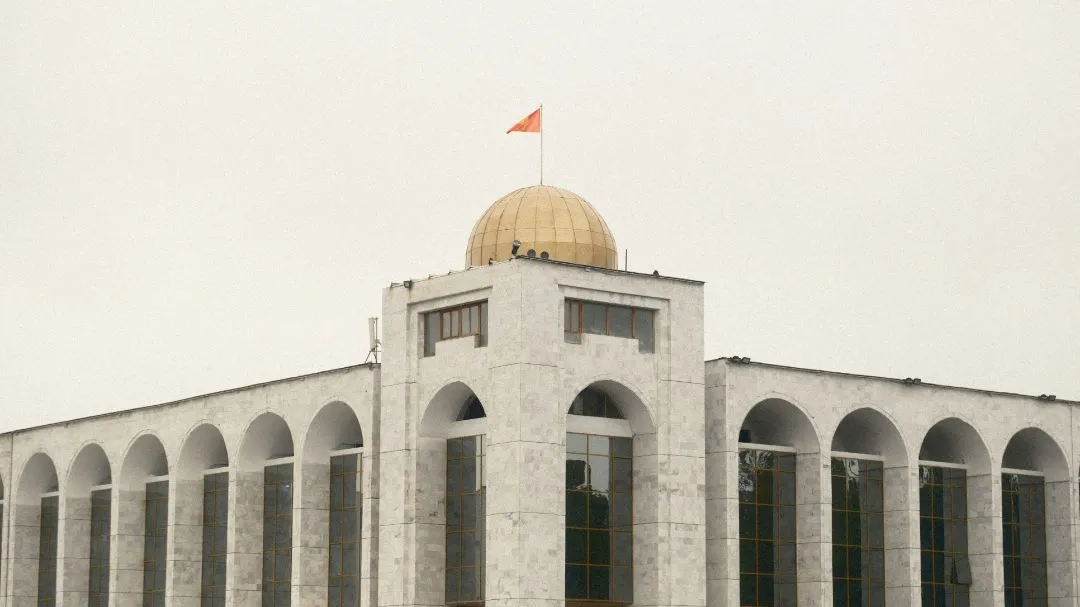
Binance co-founder and former CEO, Changpeng Zhao (CZ), has partnered with the authorities in the Central Asian republic of Kyrgyzstan to provide advice on crypto regulation and the development and adoption of blockchain technology. It’s understood that CZ has signed a memorandum of understanding (MOU) to this effect with the National Investments Authority (NIA), a state authority that falls under the direction of the President of the Kyrgyz Republic. The NIA promotes foreign direct investment, assisting foreign companies in developing business opportunities within Kyrgyzstan. Photo by Abai K on UnsplashCrypto & blockchain ecosystem developmentIn a statement published on X on April 3 by the President of the Kyrgyz Republic, Sadyr Zhaparov, the president outlined that in accordance with the MOU, the parties will cooperate on the development of the crypto and blockchain ecosystem. Breaking that down further, the president said that this cooperation will involve the provision of technical, infrastructural and technological support and expertise. Additionally, it will involve collaboration towards the implementation of related educational initiatives. Zhaparov added: “This cooperation marks an important step towards strengthening technological infrastructure, implementing innovative solutions, and preparing highly qualified specialists in blockchain technologies, virtual asset management, and cybersecurity. In light of the rapid global evolution of digital technologies, such initiatives are crucial for the sustainable growth of the economy and the security of virtual assets, ultimately generating new opportunities for businesses and society as a whole.” ‘Crypto adoption one country at a time’CZ reacted to this X post by the President of the Kyrgyz Republic, stating: “Kyrgyzstan. Crypto adoption, one country at a time.” He also remarked that this event had brought Zhaparov to X, given that this was his first post on the platform, with an account registered last month. Steve Milton, co-founder and CEO of Web3 wallet project Fintopio and a former Binance marketing executive, commented on the development. Milton stated that Kyrgyzstan is a forward-thinking country, while interpreting CZ's involvement as a step that will help move adoption forward. Additional advisory activityIn another X post, CZ provided details on his advisory activity. He stated: “I officially and unofficially advise a few governments on their crypto regulatory frameworks and blockchain solutions for gov efficiency, expanding blockchain to more than trading. I find this work extremely meaningful.” Reports emerged in January that Malaysian Prime Minister Datuk Seri Anwar Ibrahim had discussed digital finance policy matters with CZ. The Binance co-founder said that those discussions revolved around digital asset regulation and risks related to such assets. Furthermore, cross-border collaborations and collaborations between industries were discussed. In December CZ met with the King of Bhutan. Prior to that visit, he posted a link to an article on X that outlined that the Kingdom of Bhutan has accumulated in excess of $1 billion in Bitcoin. At that time, the Binance co-founder said that many nation states will use Bitcoin and other cryptocurrencies as reserve assets. In the past, commentators have identified Kyrgyzstan as having considerable potential for crypto mining, given ample hydroelectric generation within the mountainous country. However, crypto mining tax receipts as of the end of last year suggest that crypto mining still remains a niche activity in the Kyrgyz Republic.

news
Policy & Regulation·

Jun 08, 2023

Korean Financial Watchdog Takes Action to Prevent Abnormal Foreign Currency Transfers

Korean Financial Watchdog Takes Action to Prevent Abnormal Foreign Currency TransfersAccording to yesterday’s press release, the South Korean Financial Supervisory Service (FSS) has undertaken measures to tackle the issue of abnormal foreign currency transactions disguised as cross-border trade transactions. After identifying suspicious transactions of a total of approximately $7.2 billion involving 83 companies, the FSS has collaborated with the Korea Federation of Banks and domestic financial institutions to establish a task force. The objective is to improve the existing system and prevent such occurrences in the future.Photo by Eric Prouzet on UnsplashWeaknesses in internal controlsDuring inspections conducted within the banking industry since June 2022, the FSS uncovered weaknesses in internal controls related to foreign currency transfers. These included instances where banks neglected to verify the required documents for transfers and failed to detect abnormal transactions that had been ongoing for an extended period of time. The abnormal foreign currency transfers primarily involved funds flowing out of Korean virtual asset exchanges and being sent overseas under the pretense of trade transactions.Three-line defense internal control systemTo address these vulnerabilities, the task force has engaged in discussions and decided to build an internal control framework within the banking industry, rather than to add a new procedure. This was to minimize the disruption that the new system can pose to banks regarding foreign exchange transactions. The dedicated group has introduced a three-line defense internal control system.The new internal control system comprises three parts. Firstly, it involves standardizing a checklist of vital checkboxes that must be completed before initiating advance remittance transfers for imports. Secondly, the monitoring system employed by banks will be strengthened. Lastly, a follow-up system will be developed, clearly outlining the roles and responsibilities of banks and incorporating a review process.Implementation and timelineBanks plan to implement these improvement measures in July, following necessary preparations such as guidelines revision and rules update in the second quarter of this year. Since developing a computerized system and devising new procedures may require additional time, they will be gradually introduced in the third quarter.The FSS expects these improvements will ensure the systematic operation of banking institutions’ internal control functions related to cross-border prepayments, thereby preventing suspicious foreign currency transfers and curtailing companies’ risks of violating their obligations.

news
Loading