Top

Former Binance CEO advising Kyrgyzstan on blockchain & crypto

Policy & Regulation·April 07, 2025, 2:25 AM

Binance co-founder and former CEO, Changpeng Zhao (CZ), has partnered with the authorities in the Central Asian republic of Kyrgyzstan to provide advice on crypto regulation and the development and adoption of blockchain technology.


It’s understood that CZ has signed a memorandum of understanding (MOU) to this effect with the National Investments Authority (NIA), a state authority that falls under the direction of the President of the Kyrgyz Republic. The NIA promotes foreign direct investment, assisting foreign companies in developing business opportunities within Kyrgyzstan. 
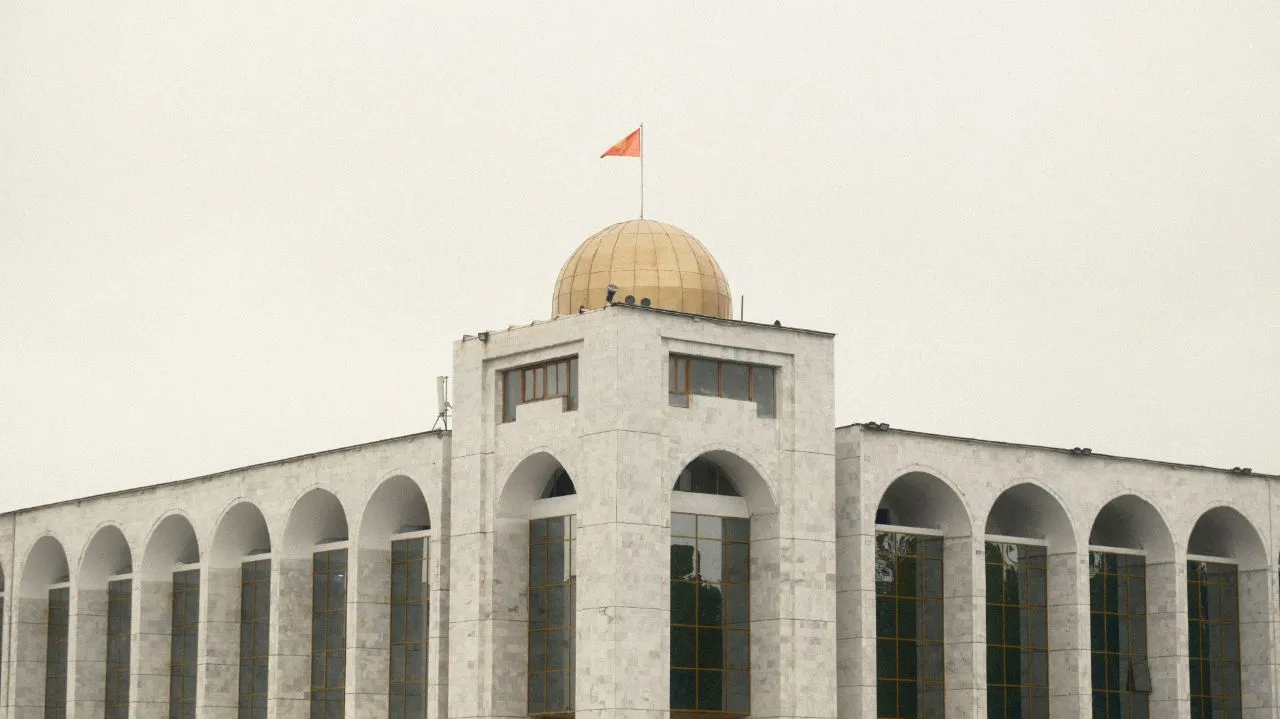
https://asset.coinness.com/en/news/3592a5bd8529dae70ba8c03b135cc96e.webp
Photo by Abai K on Unsplash

Crypto & blockchain ecosystem development

In a statement published on X on April 3 by the President of the Kyrgyz Republic, Sadyr Zhaparov, the president outlined that in accordance with the MOU, the parties will cooperate on the development of the crypto and blockchain ecosystem.


Breaking that down further, the president said that this cooperation will involve the provision of technical, infrastructural and technological support and expertise. Additionally, it will involve collaboration towards the implementation of related educational initiatives. Zhaparov added:


“This cooperation marks an important step towards strengthening technological infrastructure, implementing innovative solutions, and preparing highly qualified specialists in blockchain technologies, virtual asset management, and cybersecurity. In light of the rapid global evolution of digital technologies, such initiatives are crucial for the sustainable growth of the economy and the security of virtual assets, ultimately generating new opportunities for businesses and society as a whole.”


‘Crypto adoption one country at a time’

CZ reacted to this X post by the President of the Kyrgyz Republic, stating:


“Kyrgyzstan. Crypto adoption, one country at a time.”


He also remarked that this event had brought Zhaparov to X, given that this was his first post on the platform, with an account registered last month.


Steve Milton, co-founder and CEO of Web3 wallet project Fintopio and a former Binance marketing executive, commented on the development. Milton stated that Kyrgyzstan is a forward-thinking country, while interpreting CZ's involvement as a step that will help move adoption forward.


Additional advisory activity

In another X post, CZ provided details on his advisory activity. He stated:


“I officially and unofficially advise a few governments on their crypto regulatory frameworks and blockchain solutions for gov efficiency, expanding blockchain to more than trading. I find this work extremely meaningful.”


Reports emerged in January that Malaysian Prime Minister Datuk Seri Anwar Ibrahim had discussed digital finance policy matters with CZ. The Binance co-founder said that those discussions revolved around digital asset regulation and risks related to such assets. Furthermore, cross-border collaborations and collaborations between industries were discussed.


In December CZ met with the King of Bhutan. Prior to that visit, he posted a link to an article on X that outlined that the Kingdom of Bhutan has accumulated in excess of $1 billion in Bitcoin. At that time, the Binance co-founder said that many nation states will use Bitcoin and other cryptocurrencies as reserve assets.


In the past, commentators have identified Kyrgyzstan as having considerable potential for crypto mining, given ample hydroelectric generation within the mountainous country. However, crypto mining tax receipts as of the end of last year suggest that crypto mining still remains a niche activity in the Kyrgyz Republic.

More to Read
View All
Markets·

Mar 04, 2024

Korea’s crypto exchanges resume charging fees, shifting market shares

Korea’s prominent crypto exchanges Bithumb and Korbit have recently resumed charging trading fees, local media outlet Edaily reported. However, these changes in fee policies are reinforcing Upbit’s dominant market position while downsizing Bithumb’s and Korbit’s market shares. Meanwhile, the local banks affiliated with crypto exchanges are benefitting from an uptick in fee revenue from the recent bitcoin boom. According to crypto data intelligence platform CoinGecko on Feb. 28, Upbit accounted for 77.4% of the local market share in crypto transactions, followed by Bithumb (20.43%), Coinone (1.73%), Korbit (0.35%) and Gopax (0.09%). Photo by Markus Winkler on UnsplashShifts in market sharesAs of March 2, the market shares of Bithumb and Korbit decreased by 8.59 percentage points and 0.21 percentage points, respectively. Conversely, Upbit’s dominance grew to 86.57%, up by over 9 percentage points. A Korbit official said it’s too early to pass judgment on Korbit’s market performance, as the exchange’s policies on trading fees could change depending on the market sentiment. The person added that CoinGecko tracks only eight types of tokens traded on Korbit and does not cover all the transactions on the exchange.  Bithumb had previously benefited from charging no fees, driving up its market share to as high as over 40% in December. Following the decision to impose a fee of 0.04% on Feb. 6, however, the exchange has been experiencing a drop in transaction volume. Korbit also reinstated trading fees last Thursday, roughly four months after eliminating them on Oct. 10 as a promotional move. However, it's worth mentioning that the newly introduced trading fee is 0.07%, which is lower than the earlier rate of 0.2%. Meanwhile, Gopax currently exempts fees for users who trade BTC, ETH, XRP and USDC.  No local regulations on fees for crypto transactions At the moment, there are no local regulations on fees for crypto transactions, leaving the task of setting such fees to individual trading platforms. It is known that crypto exchanges in other countries, such as the U.S., set their own rates as well.  

news
Web3 & Enterprise·

Jan 23, 2024

Carrieverse teams up with KODA to provide investor protection

Web3 company Carrieverse has partnered with Korea Digital Assets (KODA) to facilitate robust investor protection and safe and transparent trading of virtual assets, according to South Korean news site Money Today on Tuesday (KST).Photo by Kaffeebart on UnsplashEnhancing investor securityRecently, there have been cases where corporate entities have demonstrated unstable management of the virtual assets they hold, particularly where withdrawals and distribution are concerned. Many investors have subsequently suffered losses due to incidents such as hacking. This partnership was established to protect investors from such situations. Carrieverse’s partnership with KODA is aimed at protecting investors from such troubles. The firm plans to safely store its cryptocurrency CVTX in KODA’s custody system, and vowed to boost transparency of transactions and clarify investor protection measures. "Recently, the number of Carrieverse users has exceeded 30,000 per day, and we are seeing an increase in on-chain data and CVTX holders. Our partnership with KODA will provide an environment for transparent cryptocurrency trading and bolster investor protection,” Carrieverse said. About KODA and CarrieverseKODA is a virtual asset custody service provider jointly established by KB Bank, Web3 digital wallet developer Haechi Labs and blockchain investment firm Hashed. It is known for its one-stop digital asset custody services catered to corporate and institutional clients. Carrieverse’s Web3 services include a metaverse, a blockchain gaming platform called Cling and the card strategy role-playing game (RPG) Superkola Tactics, which is playable on Cling.

news
Policy & Regulation·

Apr 20, 2023

Do Kwon Loses Fight to Conceal Singapore Records

Do Kwon Loses Fight to Conceal Singapore RecordsDo Kwon, the founder of Terraform Labs has failed in his attempt to deny the United States’ Securities and Exchange Commission (SEC) from accessing company records in Singapore.©Pexels/George BeckerIn February, the SEC filed a complaint against Terraform Labs and its founder in a US court. The move followed an investigation that the agency had carried out into the collapse of a number of digital assets established by the company. The lawsuit claims that both the company and Do Kwon had engaged in fraud, together with the sale of unregistered securities to US citizens.Jurisdictional challengeLawyers for Do Kwon had claimed that in trying to access documents related to the Singapore-domiciled company, the SEC was acting far beyond its jurisdiction. According to court filings, his defense team argued that Do Kwon is a Singapore resident while Terraform Labs is a Singapore-based company that operates on a global basis and not specifically in the United States.The filing pointed to the fact that the Terraform Labs CEO had “limited contact with the US.” “Most of the company’s business is essentially global, and it’s not specifically aimed at the United States,” it stated.His lawyers had filed a request for the SEC to withdraw its documentation request. In a recent hearing, US District Judge Jed Rokoff turned down Terraform’s request. The documents are understood to be held by the Monetary Authority of Singapore (MAS) although the specific nature of the documentation sought remains unclear.The SEC claims that in founding the Terra US dollar stablecoin (TUSD) and associated cryptocurrency LUNA, Terraform Labs and Do Kwon were responsible for wiping out more than $40 billion dollars in value following their collapse. The Luna Foundation Guard (LFG), which was established to provide funds to keep the TUSD stablecoin at a $1 value, is another entity that the SEC intends to access documents from with the court’s permission. Singaporean police had stated last month that they had launched an investigation into the collapse of the TUSD stablecoin.Meanwhile, both the South Korean and US authorities are seeking the extradition of Do Kwon to face related charges. He was arrested last month in the southeastern European country of Montenegro where he was charged with having used forged documentation to enter the country. Although he had denied it on social media, in effect Do Kwon had been on the run from the reach of South Korean authorities over the course of a number of months, spending a portion of that time in Montenegro.Asset huntAn investigation by authorities in South Korea in recent weeks revealed that they were unable to find any assets held in the country owned by the Terraform Labs founder. The trail in chasing down any such assets has led to the United States. It is understood that Do Kwon bought real estate in the United States under his mother’s name. This is a common tactic for those who attempt to evade future confiscation of assets.Earlier this week, South Korean prosecutors confirmed that they are investigating a transfer of funds by Do Kwon to a leading law firm based in Seoul.

news
Loading