Top

FPG Halts Withdrawals Following Hack

Web3 & Enterprise·June 15, 2023, 12:09 AM

Floating Point Group (FPG), a prominent crypto prime brokerage platform, has temporarily halted trading, deposits, and withdrawals following a cyber security incident that occurred on Sunday.
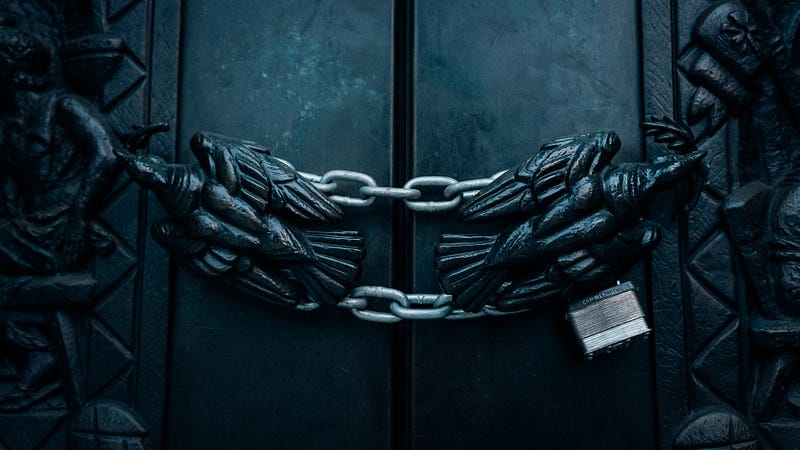
Photo by Thom Milkovic on Unsplash


Incident response

FPG, headquartered in Singapore while maintaining a base in Hoboken, New Jersey in the United States, manages over $50 billion in assets. The firm took immediate action upon discovering the incident by engaging third-party forensics experts and law enforcement agencies.

The company acknowledged the problem publicly via a tweet thread on Twitter on Wednesday. FPG stated that the company has locked all third-party accounts and secured its wallets while it investigates the extent and details of the breach. Although the full extent of the loss is still under investigation, the current estimate stands at approximately $15 million to $20 million in lost cryptocurrencies.


Investigative cooperation

In response to the incident, FPG is collaborating with the FBI, the Department of Homeland Security, regulatory bodies, and Chainalysis to comprehend the nature of the attack and initiate asset recovery measures. As the investigation involving those entities is ongoing, specific details are not being disclosed at this stage, but FPG has pledged to provide updates as new information becomes available.

The cyber security incident comes six months after FPG obtained a SOC 2 certification, which verifies the implementation of robust security, privacy, and control measures by service organizations to ensure the reliable handling of sensitive data and systems.

Originally founded in 2018 at the Massachusetts Institute of Technology (MIT) in the US, FPG functions as both a crypto prime brokerage platform and an agency trading desk for asset managers, offering access to liquidity across various markets. In December, FPG announced that its blockchain foundation customers accounted for 5% of the total treasury management market.

Backed by prominent investors such as Coinbase Ventures, Anthony Scaramucci of SkyBridge Capital, and Naval Ravikant, the founder of AngelList, FPG has raised a total of $12 million in funding thus far.

In August of the previous year, FPG successfully registered as a virtual asset service provider (VASP) in the Cayman Islands. This registration ensured the secure custody of customer assets and safeguarded them from the company’s creditors in the unlikely event of bankruptcy.


Broader crypto issues

It has not been a good couple of weeks for the crypto sector relative to hacks and platform withdrawal pauses. Within the past twenty four hours, two Asia-based crypto lending platforms, Haru Invest and Delio, have suspended withdrawals. In those cases, the issue is suspected to relate to platform contagion and solvency issues.

Earlier this month, the Atomic Wallet platform was hacked despite the understanding that the project offered self-custodial wallets. Originally, the loss was estimated at $35 million, but more recent reports are now estimating that figure to be in excess of $100 million.

As FPG continues its efforts to mitigate the aftermath of the cyber attack, industry participants eagerly await further updates and measures undertaken by the company to recover from this incident and restore trust among its clients.


More to Read
View All
Web3 & Enterprise·

May 10, 2023

SafePal Delves Into Korean Market Through Klaytn Partnership

SafePal Delves Into Korean Market Through Klaytn PartnershipThe Seychelles-based team behind non-custodial digital asset wallet provider, SafePal, has made its first attempt at conquering the Korean market through a partnership with South Korean enterprise blockchain, Klaytn.The collaboration will see the wallet provider support digital assets native to the Klaytn blockchain network. For Klaytn ecosystem users, it also means that they can access in excess of one hundred blockchains, which are already supported by SafePal’s non-custodial wallet. Both entities articulated their thoughts relative to the partnership, with SafePal doing so via a blog post published late last week. Meanwhile, the Klaytn project team expanded on the development in a post to its website on Tuesday.Photo by Mathew Schwartz on UnsplashKorean expansionKlaytn-native digital assets will be supported via SafePal’s mobile app, hardware wallet and its browser extension-based wallet. SafePal acknowledges the leading position that the Klaytn network takes in Korea, relative to the metaverse, blockchain gaming and other Web3 verticals. While SafePal already has 10 million users, this move demonstrates that it has plans on expanding that user-base to incorporate millions more, in this case Korea-based Klaytn network users.Alluding to that Korean expansion, Veronica Wong, Co-Founder and CEO of SafePal stated: “Klaytn is a leading blockchain in Korea for Web3 and DeFi, so this partnership made perfect sense, as we want users to access exciting opportunities in all established ecosystems globally.”Bringing Klaytn dApps to SafePal usersThe Klaytn project team is viewing the hook-up in the same manner. In its announcement it outlines that the collaboration can serve its purpose in “bringing in Klaytn’s next 10 million users with SafePal.” The partnership also serves to bring leading Klaytn dApps to that new user-base of 10 million. That includes on-chain instant swap protocol, Klayswap, blockchain play-to-earn game DeFi Kingdoms, Korean NFT marketplace Pala, leveraged yield farming project, Kleva Protocol and DEX aggregator Swapscanner.Conceived by the dominant messaging app provider in Korea, KAKAO, in 2018, the development of the Klaytn blockchain is now guided by the Klaytn Foundation. The project has set out a governance roadmap that will see the project achieve decentralization later this year.SafePal growth trajectorySafePal has been hitting its numbers when it comes to expanding its user base. Over the course of the past year, it has grown its user-base from 8 to 10 million. Its support for 100 blockchains results in overall support for in excess of 200,000 token types, including NFTs. That growth strategy belies further comments that Wong made relative to this latest collaboration:“While the self-custody offered by Web3 and DeFi is increasingly important amidst growing concerns about traditional financial systems, adoption is still hindered by language and geographical barriers. Klaytn is a leading blockchain in Korea for Web3 and DeFi, so this partnership made perfect sense, as we want users to access exciting opportunities in all established ecosystems globally.”With no let up in its growth strategy, SafePal followed up on Friday with an announcement that it had integrated the recently launched low latency, high throughput layer one SUI network and its native token, $SUI.

news
Policy & Regulation·

Jan 27, 2024

Hong Kong raises red flag on 'Floki' and 'TokenFi' staking programs

Hong Kong's financial watchdog, the Securities and Futures Commission (SFC), has issued a stern warning against two crypto investment schemes, namely the "Floki” and “TokenFi” staking programs. Offering high annual returnsThese programs, luring investors with enticing promises of annual returns ranging from 30% to over 100%, have triggered concerns within the regulatory authority due to their lack of authorization and questionable nature. In an update issued on Friday, the SFC emphasized that both Floki and TokenFi's staking offerings have not been granted approval for public offerings. Furthermore, the administrators of these programs have failed to provide convincing explanations about the feasibility of achieving such unusually high returns. The SFC cautioned that engaging in staking arrangements involving virtual assets without proper authorization may constitute unauthorized collective investment schemes.Photo by Sigmund on UnsplashUnsustainable yieldThe watchdog expressed its worry about the legitimacy of these staking programs, highlighting that neither has received the necessary authorization to provide services to the public in Hong Kong. Investors participating in these programs would not be protected under the SFC's regulations, potentially exposing them to significant financial losses. With the failure of many crypto platforms in 2022, a number of industry commentators began to question the sustainability of some public offerings. One such commentator, Allen Farrington, General Partner at bitcoin-native venture capital firm Axiom, repeatedly asked, “Where does the yield come from?” That appears to be the SFC’s concern in this instance. In its statement, it reaffirmed its commitment to upholding regulatory standards and safeguarding investors from fraudulent schemes. It warned that any breach of the law, including the promotion of unlicensed collective investment schemes, will result in appropriate legal action. Elon Musk-inspired meme coinFloki, initially conceived as a meme-coin inspired by Dogecoin, a project associated with Elon Musk, has evolved into a comprehensive Web3 project spanning decentralized finance, NFTs and the metaverse. TokenFi is a crypto and asset tokenization platform under the Floki umbrella, which aims to capitalize on the booming trillion-dollar tokenization industry. TokenFi, denoted by the ticker TOKEN, seeks to simplify the crypto and asset tokenization process with aspirations of becoming a leading platform globally. Launched last October, TokenFi operates as a multichain tokenization platform on both Ethereum and Binance Smart Chain. While both Floki and TokenFi offer distinct staking programs, they share a close integration. Stakers under the Floki scheme gain access to a significant portion of TokenFi's supply, while TokenFi stakers earn TOKEN rewards through a user-friendly interface. In the broader context of crypto staking, the practice allows users to earn rewards by contributing to a blockchain's security through the proof-of-stake mechanism. By staking cryptocurrency, users participate in a staking pool, similar to depositing money into a savings account. Staking rewards typically range from 5-20%, attracting investors seeking profitable opportunities. However, caution is advised against schemes promising unrealistic returns. The SFC, in collaboration with the Hong Kong Police Force, established a dedicated working group last year to enhance vigilance and enforcement in the evolving crypto sector. 

news
Policy & Regulation·

Dec 10, 2025

New Kyrgyzstan, Malaysia initiatives reflect Asia’s shift to asset-backed stablecoins

Kyrgyzstan and Malaysia are advancing separate stablecoin initiatives, signaling a regional shift toward digital assets backed by tangible state reserves. While the projects differ in their underlying assets, gold in Kyrgyzstan and sovereign debt in Malaysia, both employ a hybrid model that combines public-sector oversight with private operational management.Photo by Zlaťáky.cz on UnsplashKyrgyzstan introduces gold-backed stablecoinOn Dec. 9, the Kyrgyz Republic’s state-owned OJSC Virtual Asset Issuer launched USDKG, a stablecoin pegged 1:1 to the U.S. dollar, according to a press release. The initial issuance comprises 50 million tokens, which the issuer says are fully backed by physical gold reserves. The project structure separates regulatory authority from asset management. While the issuer operates under the Ministry of Finance, management of the gold reserves has been contracted to a private company registered in the Central Asian nation. Officials say this arrangement distinguishes USDKG from a central bank digital currency (CBDC) and that the stablecoin is intended to operate alongside the national monetary system rather than compete with it. According to the statement, the token is currently issued on the Tron blockchain, with future support planned for Ethereum. The project cites an audit by ConsenSys Diligence and says it complies with Financial Action Task Force (FATF) standards, including identity verification for redemptions. The private operator aims to raise the reserves to $500 million in the next phase and later to $2 billion. Malaysia develops bond-backed tokenIn a parallel development, a Malaysian infrastructure firm with ties to the monarchy is preparing a ringgit-pegged stablecoin. According to Bloomberg, Bullish Aim is introducing the RMJDT token, which will be backed by Malaysian ringgit deposits and short-term government bonds. The company is owned by Ismail Ibrahim, son of Malaysia’s king. The token is designed to operate on Zetrix, a layer-1 blockchain developed by Malaysian firm Zetrix AI Bhd. The network currently supports the Malaysian Blockchain Infrastructure, a government-endorsed platform for digital public services and part of the country’s National Blockchain Roadmap. This places the stablecoin on the same technical foundation used for state-level digital identification and trade facilitation. Bullish Aim also intends to establish a digital-asset treasury (DAT), beginning with an investment of 500 million ringgit ($121 million) in Zetrix tokens. A DAT is a type of company that purchases and holds cryptocurrencies on its balance sheet. The initiatives in Kyrgyzstan and Malaysia suggest that stablecoin development in Asia may continue to evolve through state-anchored, asset-backed models. As each country tests its own approach to reserve management, issuance, and compliance, the next phases of both projects will offer early indications of how such frameworks perform in practice. 

news
Loading